DSCR vs. Conventional for Rental Properties: The Real Cost Comparison
Conventional and DSCR loans qualify rental buyers in very different ways — here's a side-by-side look at how they actually compare.
Quick answer
Conventional rental financing qualifies you on your personal income and tax returns, while a DSCR loan qualifies the property on its own rental cash flow instead. It depends on your situation: conventional usually asks for less money down, but DSCR carries no property-count ceiling and skips the tax-return paperwork.
6 min read

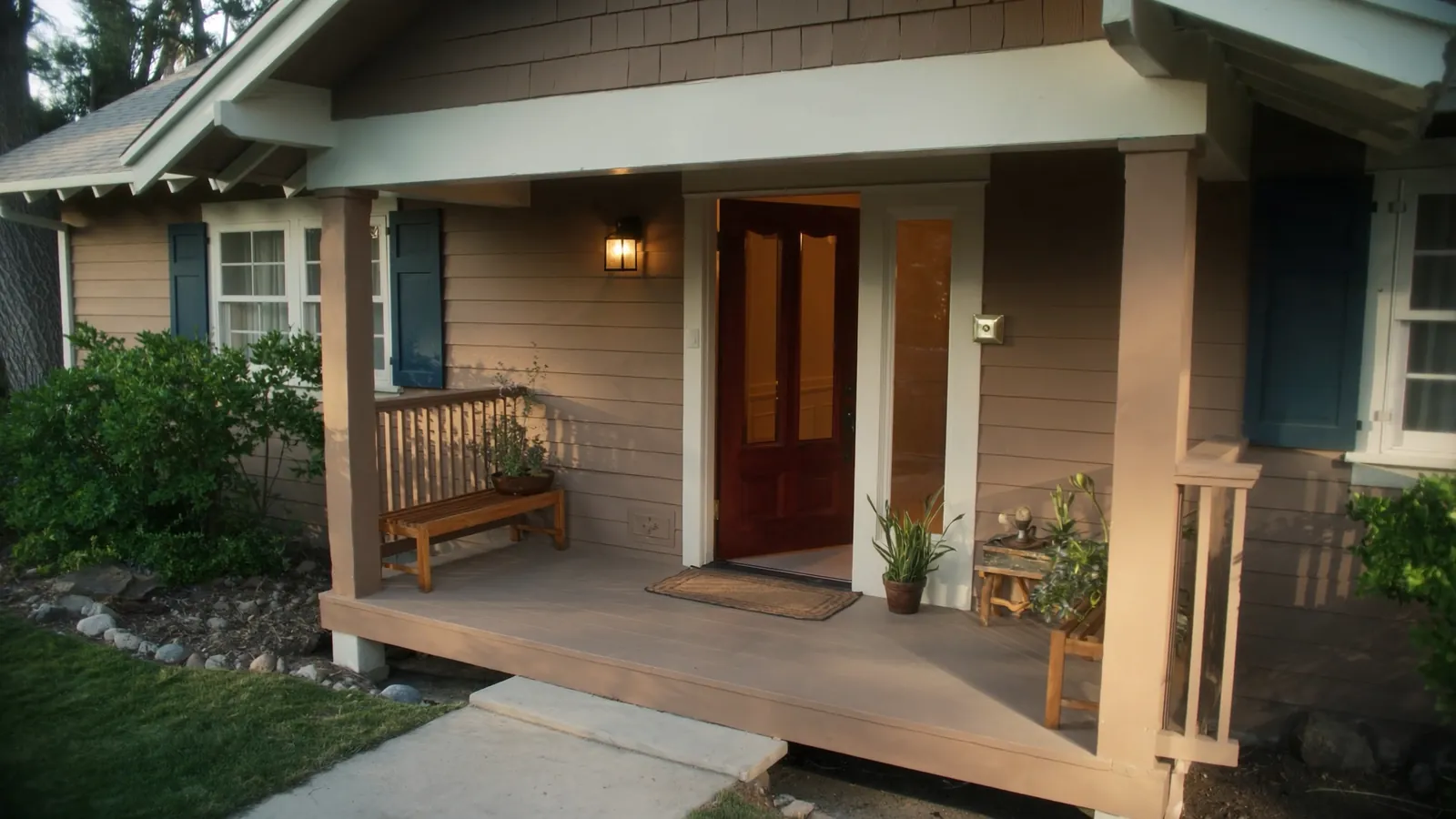
Photo: Jonathan Cooper / Pexels
In this article
Rental property owners eventually run into the same question: conventional financing or a DSCR loan? Both can finance the same duplex or single-family rental, but they get there in very different ways — and the "cheaper" option depends less on the interest rate than on your income situation and how many properties you already own.
This is a side-by-side look at how the two actually compare, not just in rate but in down payment, documentation, and how far each one scales. For current pricing on either program, check the live mortgage rates page — this article intentionally won't quote numbers that move daily.
The core difference: whose income gets underwritten
Conventional investment property loans — the kind sold to Fannie Mae or Freddie Mac — qualify you the way a primary-residence mortgage does: tax returns, W-2s or 1099s, employment verification, and your full debt-to-income picture, with a portion of the subject property's rent typically allowed to offset the new payment. A DSCR loan skips almost all of that. The property's own rent, measured against its own payment, is the qualifying number — your personal income doesn't factor into the ratio at all.
That single difference is what drives most of the tradeoffs below.
Have a property in mind? Run the DSCR numbers →
Get startedDown payment and loan-to-value
Conventional investment loans generally ask for less money down than DSCR loans — commonly in the 15% to 25% range depending on property type and unit count, with the lowest tiers reserved for strong credit and a single-unit property. DSCR down payments typically run higher, commonly landing in the 20% to 25% range across most lenders, since there's no personal income backstop if the rent underperforms. If minimizing cash to close is the priority and your income documents cleanly, conventional usually has the edge here.
The property-count ceiling
This is where the comparison flips. Fannie Mae's guidelines generally cap conventional financing at around 10 financed properties per borrower — a limit that includes your primary residence and any other mortgaged real estate, not just rentals. Some lenders apply tighter overlays well before that. DSCR loans are portfolio products, held by the lender rather than sold on the secondary market, so they aren't subject to that ceiling. Rental property owners scaling past a handful of doors often end up on DSCR financing simply because conventional stops being an option, regardless of how strong their income looks. Our rental property loan options guide walks through how financing typically shifts as a portfolio grows.
Documentation and time to close
Conventional underwriting means assembling tax returns (often two years), pay stubs, W-2s or 1099s, and an employer verification — more paperwork, and more places for a self-employed borrower's numbers to complicate the file. DSCR documentation is dramatically shorter: proof of funds for reserves and the down payment, a lease or the appraisal's rent schedule, and entity paperwork if you're closing in an LLC. For a rental property owner with straightforward W-2 income, that difference may not matter much. For a self-employed borrower whose tax returns understate real cash flow, it can be the deciding factor — see our DSCR requirements checklist for the full documentation list.
A closer look: two owners, one duplex
Say two rental property owners are each buying the same $400,000 duplex renting for a combined $3,200 a month. Owner A is a W-2 employee buying their third rental property, well under any financed-property ceiling, with clean tax returns. Owner B is self-employed, already holds nine financed properties, and whose tax returns — after write-offs — understate their actual cash flow.
Owner A is generally the better fit for conventional financing: a lower down payment, a full income picture that supports the loan easily, and no property-count concern. Owner B runs into two problems with conventional at once — tax returns that would likely shrink their qualifying income, and a financed-property count that may already be at or near the ceiling. DSCR financing sidesteps both: the duplex's own rent-to-payment ratio carries the file, and the loan doesn't count against a secondary-market property limit. Owner B's down payment will likely run higher and the rate will likely carry a premium, but for this owner, DSCR may be the only path that works at all — the cost comparison only matters if both options are actually on the table.
The 4Homes weekly email
Every Tuesday: what changed for rental owners this week, plus our newest DSCR guides.
No spam. Unsubscribe anytime.
Pricing: what you're actually trading
DSCR loans generally carry a rate premium over conventional investment financing — that premium is the cost of skipping personal income documentation and the property-count limit. How large that premium is depends on your DSCR ratio, credit score, and down payment, and it moves with the broader rate environment, so it isn't something to pin down here. Check the current mortgage rates page and ask a loan specialist to run both scenarios side by side — the gap is sometimes smaller than owners expect, especially at a strong DSCR ratio.
A simple way to think about which one fits
Choose conventional if: your personal income documents cleanly, you're under (or well under) the financed-property ceiling, and minimizing your down payment matters more than underwriting speed.
Choose DSCR if: you're scaling past the conventional property-count limit, your tax returns don't reflect your real income, the property is occupied or rent-ready and cash flows well on paper, or you simply want underwriting built around the deal instead of your W-2s.
Plenty of rental property owners use both at different points in the same portfolio — conventional for the first few properties while the count and paperwork stay simple, DSCR once the portfolio or the income picture gets more complex.
Getting started
The fastest way to know which one actually costs less for your specific deal is to run both scenarios against the same property — the down payment difference, the rate premium, and your real documentation burden rarely all point the same direction. A DSCR loan specialist or a conventional loan specialist can walk through your numbers on either path, and our DSCR by state data study is a useful starting point if you're still comparing markets.
FAQ
Frequently asked questions
Is a DSCR loan always more expensive than conventional?+
Not always — DSCR loans generally carry a rate premium, but the gap narrows at a strong DSCR ratio and can be offset by a lower down payment need in some scenarios. Run both against your actual numbers rather than assuming.
How many rental properties can I finance conventionally?+
Fannie Mae guidelines generally cap conventional financing around 10 financed properties per borrower, including your primary residence, though some lenders set tighter limits of their own.
Do DSCR loans have a property-count limit?+
No — because they're portfolio loans held by the lender rather than sold to Fannie Mae or Freddie Mac, DSCR financing generally isn't subject to a financed-property cap.
Can I refinance a conventional rental loan into DSCR later?+
Yes, this is common once a portfolio grows past the conventional ceiling or an owner's tax returns no longer reflect their cash flow. The property's current rent and payment are what matter at refinance time.
Does my personal income matter at all for a DSCR loan?+
Not for the qualifying ratio, though lenders still verify credit, reserves, and identity. The property's rent versus its payment is the number that determines eligibility.
Which loan closes faster, DSCR or conventional?+
DSCR loans often close faster on average because there's less documentation to underwrite, but actual timelines vary by lender, file complexity, and how quickly you can supply reserves and entity paperwork.