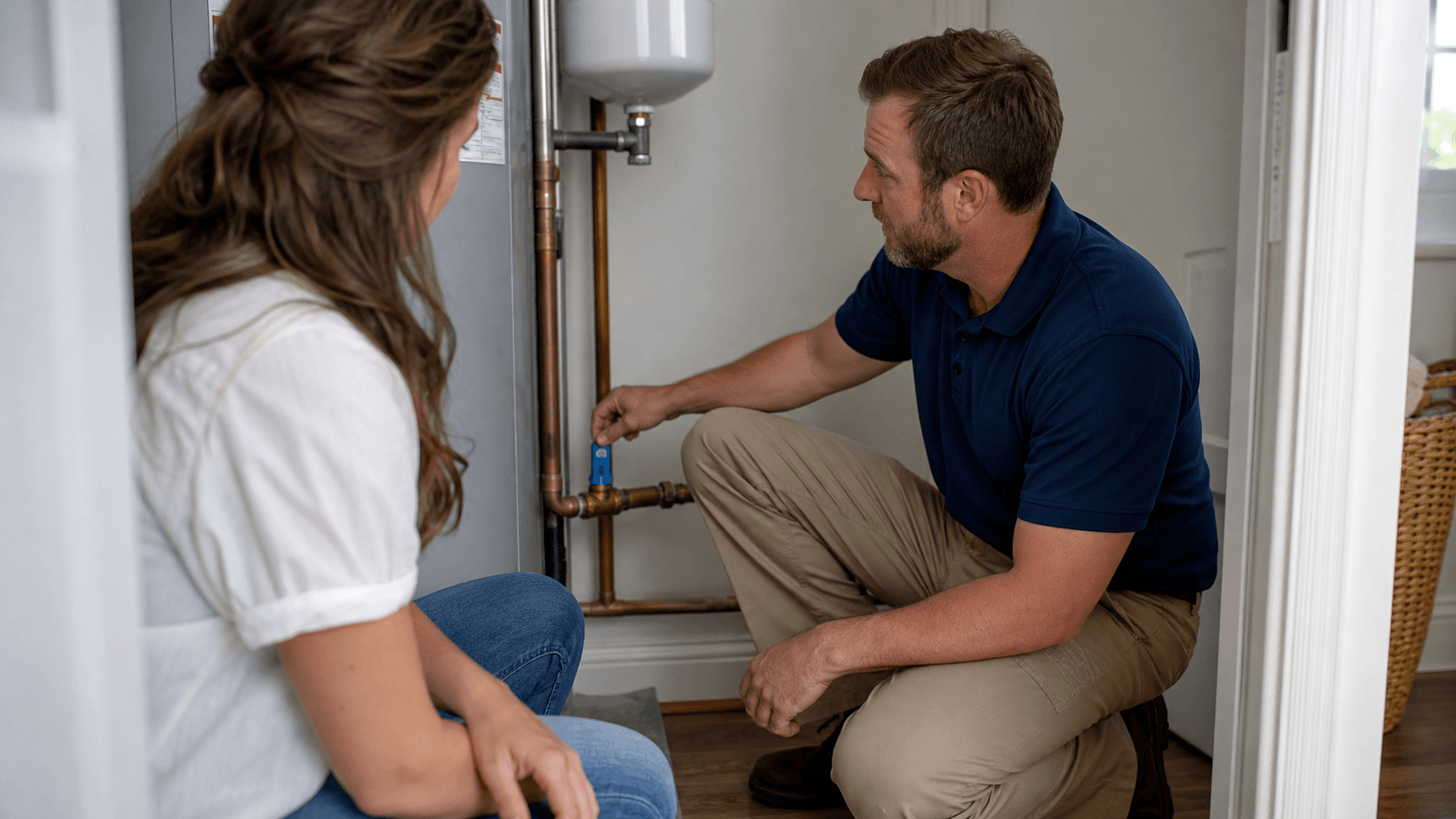
The first minute is easier when the household already knows what to shut off, what not to touch, and who does what next.
In the first minute, protect people and stop more water only if you can do both safely.Keep everyone away from a sagging ceiling, wet electrical equipment, contaminated water, or a room where the floor or structure looks unstable. If the path to a water valve is dry and familiar, close the nearest fixture valve or the home's main water valve. Otherwise, leave the area and call the utility, fire department, plumber, electrician, or building manager that fits the hazard.
The first-minute sequence
- Move people and pets. Block access to the wet area, especially when water is falling through a ceiling or running near outlets, cords, appliances, or a service panel.
- Identify the likely supply. A running toilet, split appliance hose, leaking sink connection, water heater, or visible pipe may have a nearby shutoff. Do not spend the first minute opening walls or guessing.
- Stop the water if the route is safe. Use a known fixture valve for a local problem or the main valve for an uncontrolled supply leak. Do not wade through water to reach either one.
- Call for the hazard in front of you. Active electrical danger, fire, gas odor, structural movement, sewage, or rapidly rising water needs emergency or qualified help before cleanup.
Once the flow stops, take a breath. A quick response matters, but rushing into an unsafe room can turn property damage into an injury.
Water and electricity set a hard boundary
Treat water around receptacles, wiring, powered equipment, the electrical panel, or an unknown circuit as an electrical problem too. The Centers for Disease Control and Prevention says never switch power on or off or use an electrical tool while standing in water. If the main disconnect can be reached only by crossing a wet area, stay out and call an electrician or emergency responder.
Unplugging a wet appliance is not a harmless shortcut. Neither is using a household vacuum on standing water. Electrical equipment that got wet may need inspection before it goes back into service, even after the outside looks dry.
Dry shoes do not make a wet electrical area safe. Distance is the useful control until qualified help clears it.
Ask where the water came from
Water from a supply line is a different cleanup problem from a backed-up drain, toilet overflow containing waste, stormwater, or groundwater. If the source is uncertain, keep bare skin, children, pets, food, and clean belongings away. Sewage and floodwater can carry biological or chemical contamination that a towel and household spray do not settle.
For contaminated water, a large affected area, or anyone with asthma, allergies, breathing problems, or a weakened immune system, use public-health guidance and qualified cleanup help. Do not run an HVAC system that may have taken in contaminated water or mold; CDC guidance calls for an experienced service professional to check a flood-affected system before it is turned on.
Give each job a clear owner
| Job | What it means | Who may need to handle it |
|---|---|---|
| Stop the source | Close a safe, known valve or stop the failed fixture from receiving water. | Homeowner, building manager, water utility, or plumber. |
| Make the area safe | Address electrical, gas, structural, access, and contamination hazards. | Emergency responders and the appropriate licensed trade. |
| Find the failure | Trace the water to the failed pipe, seal, drain, appliance, roof detail, or exterior entry point. | Plumber, appliance service company, roofer, drainage specialist, or other qualified contractor. |
| Document the loss | Record affected rooms, materials, belongings, and emergency work before conditions change. | Homeowner or tenant, with the insurer or property manager notified as appropriate. |
| Remove water and dry | Set a safe scope, track hidden moisture, and decide what can be cleaned, dried, or must be removed. | Homeowner for a small clean-water event; restoration or environmental help for larger or contaminated losses. |
The 4Homes weekly email
Every Tuesday: what changed for homeowners this week, plus our newest guides.
No spam. Unsubscribe anytime.
Document without delaying damage control
When it is safe, make one slow video from the edge of the affected area. Add wide photographs of each room and close photographs of the source, wet materials, damaged belongings, and water line. Note when the leak was found, when the supply was stopped, who responded, and what was moved or removed. Save receipts and written instructions.
FEMA guidance supports photographing damage and cleanup efforts, but documentation is not a reason to leave water running or postpone reasonable steps that protect the home. Ask the insurer or property manager what they want preserved before discarding major items. If something must move immediately, photograph it in place first when that can be done safely.
Drying is a measured job, not a promise
Remove standing water only after electrical and contamination hazards are controlled. Move dry belongings out of the path. Open cabinets and interior doors when doing so will not spread contaminated air. Fans and dehumidifiers can help in suitable clean-water situations, but they do not prove that wall cavities, insulation, subfloors, or cabinets are dry.
CDC materials urge prompt drying after a flood and use a 24-to-48-hour window as an important mold warning. That is not a warranty that mold cannot grow before then, or that every material saved inside that window is safe. Material, temperature, air movement, contamination, and how long hidden areas stayed wet all matter. A moisture meter can help track change, but the reading needs to match the material and the correct use of the tool.
- Get qualified help when water has crossed several rooms, entered wall or floor assemblies, affected HVAC, or cannot be removed safely.
- Do not cover staining, close a wall, reinstall flooring, or repaint until the source is repaired and the assembly has been assessed as dry enough for the planned work.
- Skip universal spray treatments and guaranteed drying claims. Removing the moisture source and dealing with materials according to their condition comes first.
Close the incident, then reduce the next one
Before repairs disappear behind finishes, save photographs of the failed part and the completed work. Label the main water valve and make sure the household can reach it without moving storage. Check the hoses, pans, drains, and connections serving the failed area. EPA WaterSense also recommends checking leak-detection or flow-monitoring equipment periodically so a silent device does not create false confidence.
If earlier warning would have changed this event, use the smart leak detector buying guide to match a device to the actual failure. A sensor beside the water heater cannot hear a pipe fail inside a wall, and a phone alert cannot close a valve by itself.