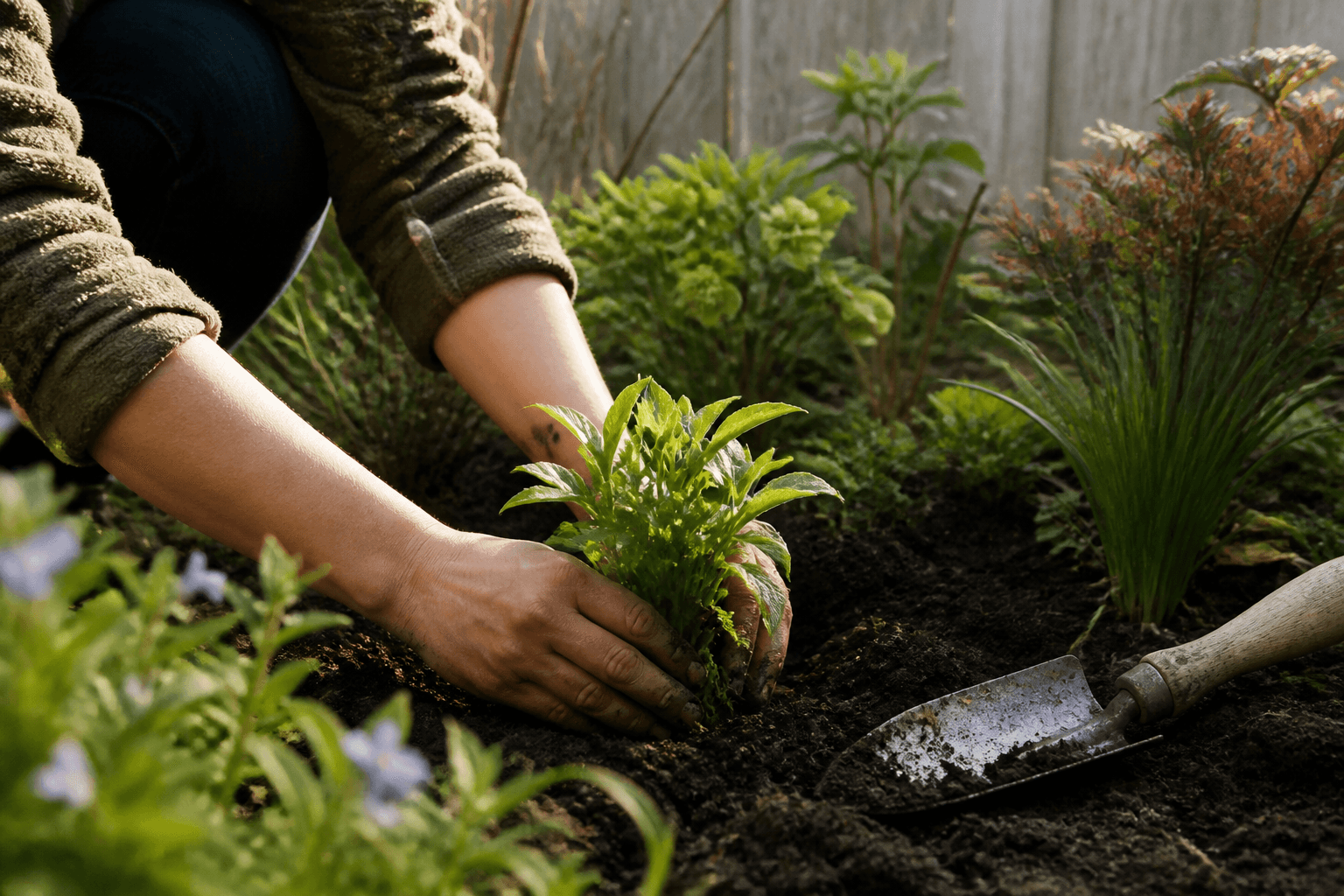
Build around the light, water, soil, and free time you actually have—not the garden you feel obliged to maintain.
Observe first and plant second. Map sun, shade, wind, drainage, water access, foot traffic, and the time you want to spend outside. Then choose one manageable area. A garden that fits its site and its caretaker will usually be more satisfying than a beautiful planting plan that needs constant rescue.
Read the yard like a room
Stand in the same places at different times of day. Mark where direct light reaches the ground, where buildings or trees create shade, where wind funnels, and where people naturally walk. Watch ordinary rain. Note downspouts, low spots, compacted paths, dry areas under eaves, and water that sits after nearby ground has drained.
Add the practical features: hose connections, gates, utility equipment, play areas, pet routes, trash access, views you want to keep, and views you hope to soften. These are not details to work around later. They are the bones of the plan.
Know what the climate maps leave out
The USDA Plant Hardiness Zone Map is based on average annual extreme minimum winter temperature. It can help screen plant cold tolerance, but it does not describe summer heat, rainfall, humidity, wind, drainage, soil, reflected heat, or a plant’s water needs. Two yards in the same zone can behave very differently.
Combine the map with a simple soil test and guidance from a local Cooperative Extension or similarly grounded regional source. Identify the plant precisely before acting on care advice. A broad label such as “native,” “drought tolerant,” or “shade plant” is not enough to know whether it fits one particular bed.
The right plant is not merely hardy somewhere. It fits this light, this soil, this water, this space, and this household.
Decide what each part of the yard needs to do
Give every area a job before giving it a shopping list. It might need to guide guests, hold a table, slow runoff, screen a view, make shade, support pollinators, leave room for a dog, or simply remain open. A bed with no purpose tends to collect unrelated plants and maintenance.
| What you observe | What it changes |
|---|---|
| Strong afternoon sun and reflected heat | Plant tolerance, surface choices, shade, and watering demand. |
| Water collects after ordinary rain | Drainage investigation comes before decorative planting. |
| Established tree roots | Digging, irrigation, plant competition, and the need for arborist advice. |
| A narrow daily walking path | Mature plant width and clear access matter more than the nursery size. |
| Limited weekend care time | Fewer plant types, grouped needs, and restrained bed size. |
Plan for mature plants and ordinary weeks
Nursery containers make almost every plant look compact. Use credible mature height and width for the exact plant, and leave room around walkways, siding, meters, vents, and equipment. Check potential hazards for children and pets. Keep thorny, irritating, or toxic plants away from the routes where contact is likely.
Group plants that need similar water and care. This is easier on the plants and easier on the person holding the hose. If irrigation exists, understand what each zone actually reaches before planting. Water-smart does not mean no water; new plants generally need an establishment plan suited to the species, soil, and weather.
The 4Homes weekly email
Every Tuesday: what changed for homeowners this week, plus our newest guides.
No spam. Unsubscribe anytime.
Use a seasonal rhythm, not a dated calendar
- At the start of active growth: inspect winter or weather damage, identify plants before pruning, refresh records, and address access or drainage.
- During active growth: watch irrigation coverage, weeds, pests, crowding, and which plants thrive without extra attention.
- As growth slows: record successes, protect vulnerable systems, manage leaves according to the site, and make notes for future changes.
- During the quiet period: study structure, paths, views, and drainage; compare plans without rushing to buy.
The timing will differ by climate and plant. The rhythm stays useful because it is tied to what the garden is doing, not to a generic month printed on a checklist.
Begin with one bed
- Choose a visible area you can reach easily with water and tools.
- Record its light and drainage before changing it.
- Choose a simple purpose and a restrained palette of compatible plants.
- Place plants for mature size, then confirm underground utility requirements before digging.
- Photograph the bed from the same angle and record watering and care.
- Wait long enough to learn from it before repeating the plan across the yard.
If lower water use is the goal, continue with the lower-water yard guide. The starting point is still the same: learn the property, decide what the space needs to do, and build only what you want to maintain.