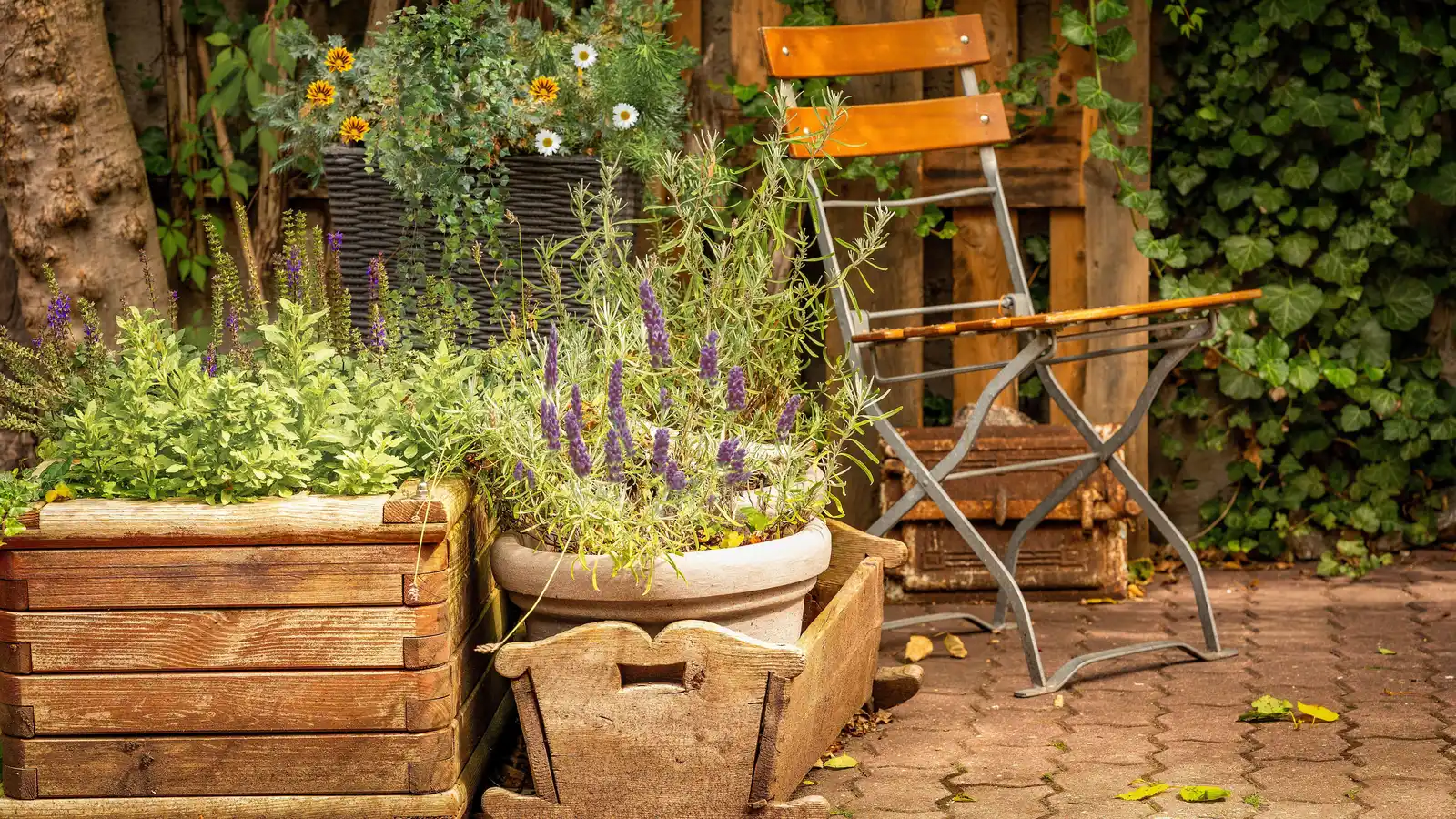
Choose one main use, preserve the route, and reduce visual stops with fewer well-scaled pieces, grouped planting, and controlled light.
Making a small patio feel bigger means reducing visual stops and physical obstacles so the space reads as one useful outdoor room. It is not a trick that creates square footage. It is a layout decision: protect the route, choose one main use, and make every object earn the floor area it occupies.
My opinion: most small patios need one less piece of furniture, not a set of smaller pieces. A crowded collection of narrow chairs, plant stands, side tables, and bins creates more edges for the eye and more things for feet to avoid.
Choose the patio's main job
Decide what you want to do outside most often. Two people having coffee needs a different layout from family meals, reading, container gardening, or a route to the yard. Give the patio one primary job and one secondary use that can happen with movable pieces. Do not ask a compact slab to be a dining room, lounge, garden center, grill station, and storage shed at the same time.
Stand at the door and identify the destination beyond the patio. That line of movement comes first. Keep the door swing, gate, steps, hose connection, electrical equipment, drainage route, and utility access clear. The existing patio comfort and drainage plan is the right starting point if water ponds, surfaces rock, or runoff moves toward the house.
Draw the route before placing the furniture
Remove loose furniture and pots, sweep the surface, and use painter's tape or chalk that the surface manufacturer permits to mark the route. Then mark each proposed chair, table, bench, and planter at full footprint. Include the space a chair uses when someone sits down and stands up. Open the door. Carry a tray through. Water the plants. If ordinary use requires turning sideways, the drawing is telling you what to remove.
Keep one continuous patch of floor visible. Matching small gaps around every object can make a patio look chopped into pieces. Pushing an anchor bench or loveseat to a suitable edge may preserve a larger open center, but never block a railing, required egress, drainage opening, or access panel.
Use fewer pieces at the right scale
Choose the seating first. One bench or compact loveseat can be calmer than several separate chairs if it fits the wall, the people, and the route. For dining, a table with a simple base and chairs that tuck in may use the space better than a bulky set with wide arms. Folding furniture helps only when there is a real place to store it folded.
Avoid buying by patio label alone. “Bistro,” “balcony,” and “space-saving” do not tell you how the piece works at your door. Measure the actual product and mock it up, using the same full-size thinking as the small living-room layout guide. Check comfort too. Furniture that looks airy but is unpleasant to sit in will become expensive outdoor clutter.
Move planting to the perimeter
Gather pots instead of scattering them. A small group along one edge reads as a garden zone; individual pots placed at every corner break the floor into obstacles. Put the heaviest containers on a stable surface where they will not tip, overload a balcony, block drainage, or require carrying across the route when full.
Vertical planting can release floor area, but attachment matters. Do not drill into siding, waterproofing, masonry, railings, or shared structures without permission and the correct method. Confirm the loaded weight, wind exposure, drainage, and watering path. For plants themselves, choose around sun and water conditions with the lower-water plant guide instead of buying a vertical rack full of plants the site cannot support.
The 4Homes weekly email
Every Tuesday: what changed for homeowners this week, plus our newest guides.
No spam. Unsubscribe anytime.
Simplify what the eye has to process
Repeating a small set of materials and colors helps the separate objects read together. You do not need everything to match. Keep the largest surfaces quiet, then repeat one finish or color in cushions, pots, or a table. Remove faded packaging, empty nursery pots, unused stands, and storage containers that have become permanent scenery.
An outdoor rug can unite a seating zone when it fits flat, dries as intended, and does not cover a drainage problem. A rug that curls, traps moisture, or requires furniture to pinch its edges is not making the patio work better. Fix the surface issue or skip it.
Light the use, not the whole yard
At night, glare makes a small area feel harsher and can erase the view beyond it. The U.S. Department of Energy describes glare as excessive luminance that causes discomfort or reduces visibility, and notes that uplight contributes to sky glow. Use shielded, downward light for the table, step, or route that needs it. Aim and test from seated eye level and from the neighboring property line.
Start with the existing circuit and listed outdoor products; do not run an indoor extension cord through a wet route. The backyard-lighting guide compares the simplest options without assuming a bigger system is better.
Run a no-purchase trial
Live with the cleared and taped layout before ordering anything. Move existing chairs into the proposed zone. Use a box at the planned table size. Notice where drinks land, where feet go, where the door catches, and whether the route still works with another person seated.
Take a photo from inside the house and another from the far edge of the patio. The photos make clutter and blocked sightlines easier to see. If the layout works, buy only the missing piece. If you are considering permanent hardscape or built-ins, first read how patio usefulness and resale fit together. A small patio feels generous when it serves real life without fighting the house around it.
Frequently Asked Questions
What makes a small patio feel bigger?
A clear route, one main use, fewer correctly scaled pieces, visible floor, and a simple edge treatment make the space easier for the eye and body to read. Removing one obstacle often helps more than adding another small accessory.
Should all furniture on a small patio be tiny?
No. Several undersized pieces can create more legs, gaps, and clutter than one comfortable anchor piece. Mark the full footprint and the space needed to use it, then choose the fewest pieces that support the patio's main job.
How can I improve a small patio without remodeling it?
Clear the walking route, rearrange before buying, group planters at the edge, use wall or railing space only where attachment is allowed, simplify the color palette, and add controlled downward light for the area you actually use. Keep drainage paths and required access open.