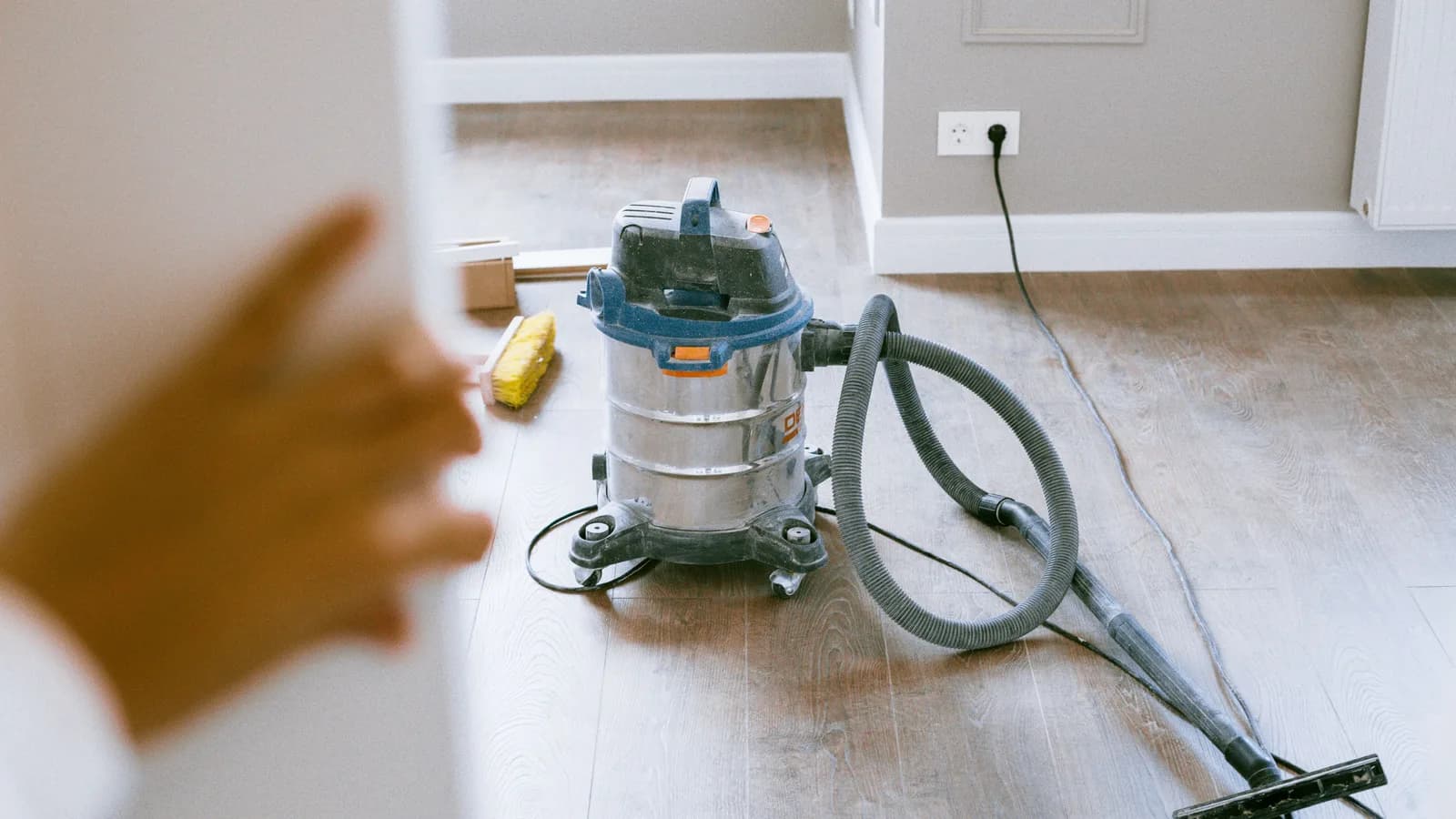
A wet/dry vac can be useful for shallow, clean surface water after a contained leak, but it is not a solution for every water event. Choose one that is easy enough to move when full, has appropriate water-pickup components, and can handle the debris you expect. Stop and get help when water is contaminated, widespread, or absorbed into building materials.
Choose a wet/dry vac for a water leak by matching its tank size and hose setup to a shallow, contained cleanup job, then stop using it as the situation becomes more like flooding or building-material damage. The tool is useful for collecting water. It does not make moisture inside carpet padding, walls, cabinets, or flooring disappear.
My view: portability matters more than the largest tank for most homeowners, because a wet tank becomes difficult to move, empty, and clean long before its advertised capacity sounds inconvenient.
First, stop the water source if you can do so safely. A wet/dry vac is cleanup equipment, not leak repair equipment. Turn off the appliance or fixture supply where appropriate, protect yourself from electrical hazards, and do not step into water around outlets, cords, electrical panels, or equipment.
Then look at the actual water. A small amount of clean water on a hard floor is one situation. Water that has spread through rooms, soaked into carpet, risen against walls, come from an unknown source, or mixed with sewage is another. The right response changes fast.
Never use a regular vacuum on water
A standard household vacuum is designed for dry debris. Using it to collect water can damage the machine and create electrical danger. Its filters, motor arrangement, and collection system are not intended for wet pickup.
A wet/dry vac is built differently. It has a collection tank intended for liquids and solids, and many models use a float mechanism that helps shut off suction when the tank reaches capacity. That feature is useful, but it is not a reason to walk away while the machine runs or assume overflow cannot happen.
Before picking up water, check the manufacturer’s instructions for the unit you own or plan to buy. Some units require a particular filter configuration for wet use. Others use a foam sleeve or a removable dry filter arrangement. Using the wrong setup can reduce performance or harm the vac.
Keep the power connection away from standing water. Use grounded, appropriate electrical connections, and inspect the cord before use. If there is any doubt about electrical safety, do not improvise. The cleanup can wait until the area is safe.
Balance tank size with the ability to empty it
A larger tank means fewer trips to empty water. That sounds ideal until the tank is full. Water is heavy, awkward, and prone to spilling during transport. A large unit is only helpful if you can roll it through the space, lift or drain it safely, and get it to an appropriate disposal point.
For a contained leak near a sink, appliance, or small plumbing fixture, a smaller or mid-sized wet/dry vac may be easier to manage. It can be moved close to the water, emptied promptly, and cleaned afterward without turning the job into a hauling problem.
A larger tank can make sense when you have broad, shallow water on a hard floor and enough room to maneuver. It can also be useful for regular workshop or garage use. But do not choose size only by imagining fewer emptying trips. Consider storage, stairs, doorways, and whether a single person will be using it.
Look for a usable drain method as well. Some tanks are easier to empty through a low drain connection, while others must be tipped or lifted. The best design is the one you can actually empty without straining yourself or sending dirty water across the floor you just cleaned.
A leak on an upper floor is a good example of why portability changes the calculation. A very large tank may collect more water before it needs attention, but moving it down stairs while full may be difficult and unsafe. A smaller unit that can be emptied often may be the more useful tool for the actual job.
Hose diameter affects both pickup and frustration
The hose is more important than it looks. A wider hose can move water and larger debris more easily, which can be useful in a garage, utility area, workshop, or cleanup involving leaves, insulation fragments, or bits of material. It may also be bulkier to store and less convenient in tight spaces.
A narrower hose can be easier to direct around appliances, under cabinets, and in cramped areas. It may clog more readily if debris is present. If the leak area includes wet paper, loose dirt, pet hair, insulation, or other material, be prepared to clear the hose and attachment carefully.
Attachments matter too. A broad floor nozzle is useful for shallow water across hard flooring. A crevice tool can help around appliance bases, trim, and corners. Do not use a narrow attachment as if it were a drain snake. If water is trapped under flooring or inside a wall cavity, surface suction will not solve the underlying problem.
Keep the hose as straight as practical while working. Tight bends reduce flow and make clogs more likely. If pickup suddenly weakens, stop and check the tank level, hose, filter arrangement, and attachment before assuming the vac has failed.
The 4Homes weekly email
Every Tuesday: what changed for homeowners this week, plus our newest guides.
No spam. Unsubscribe anytime.
Set up the filter and foam sleeve correctly
Wet/dry vacs may use different configurations for dry debris and water pickup. Some use a foam sleeve during wet operation to protect the motor while allowing airflow. Some require removal of a paper-style dry filter when collecting water. Others have instructions that differ by model.
Do not guess. Read the manual before the leak happens if you already own a unit, or before the first use if you just bought one. This is a small step that prevents a messy cleanup from becoming a damaged tool.
The float shutoff mechanism also needs attention. It can stop suction when the tank is full, but it may not behave as expected if the unit is tilted, used improperly, or not assembled correctly. When suction changes sharply, assume the tank could be full and turn the machine off before inspecting it.
After wet pickup, empty the tank promptly. Rinse it if needed, remove damp accessories, and leave the unit open enough to dry. A sealed, wet tank becomes a source of odor and microbial growth. The cleanup is not complete until the tool itself is dry and ready for later use.
Know when a wet/dry vac is not enough
A wet/dry vac is appropriate for shallow surface water from a limited, clean leak when the affected area can be dried quickly. It may help after an appliance connection drips, a small plumbing leak is caught early, or water collects on a non-porous floor before it spreads.
It is not enough for real flooding, extensive standing water, or water that has entered walls, flooring systems, cabinets, insulation, or carpet padding. Surface water may disappear while materials underneath remain wet. That hidden moisture can lead to swelling, odors, mold growth, staining, and later repairs.
Carpet is a common point of confusion. A wet/dry vac may remove some water from the surface, but it cannot tell you whether the pad beneath remains saturated or whether moisture has reached the subfloor and nearby wall edges. If water has moved beyond a small, quickly caught spill, treating the situation as ordinary surface cleanup can delay the drying work that matters.
Call professional water-mitigation help when water is contaminated, came from sewage or an unknown source, has spread widely, or has saturated absorbent materials. The same applies if the source may involve a roof leak, hidden plumbing leak, structural damage, or water near electrical systems. This is not overreacting. It is recognizing that extraction and drying are separate jobs.
For a small leak, act calmly: stop the source, make the area safe, remove shallow water with the right tool, dry nearby surfaces, and watch for continued moisture. A wet/dry vac is valuable when it stays in its lane.
Frequently Asked Questions
Can I use a regular vacuum to clean up water?
No. Regular household vacuums are not designed for water pickup and can create equipment damage and electrical risk. Use a wet/dry vac that is set up according to its instructions for liquid collection.
Is a bigger wet/dry vac always better for a leak?
No. A larger tank reduces emptying trips but becomes much harder to move when full. Choose a size you can maneuver and empty safely in the spaces where you expect to use it.
When should I call a water-mitigation professional instead?
Call when the water is contaminated, widespread, has soaked carpet padding or building materials, or may involve electrical danger or a hidden source. A wet/dry vac removes visible water, but it cannot confirm that the structure is dry.