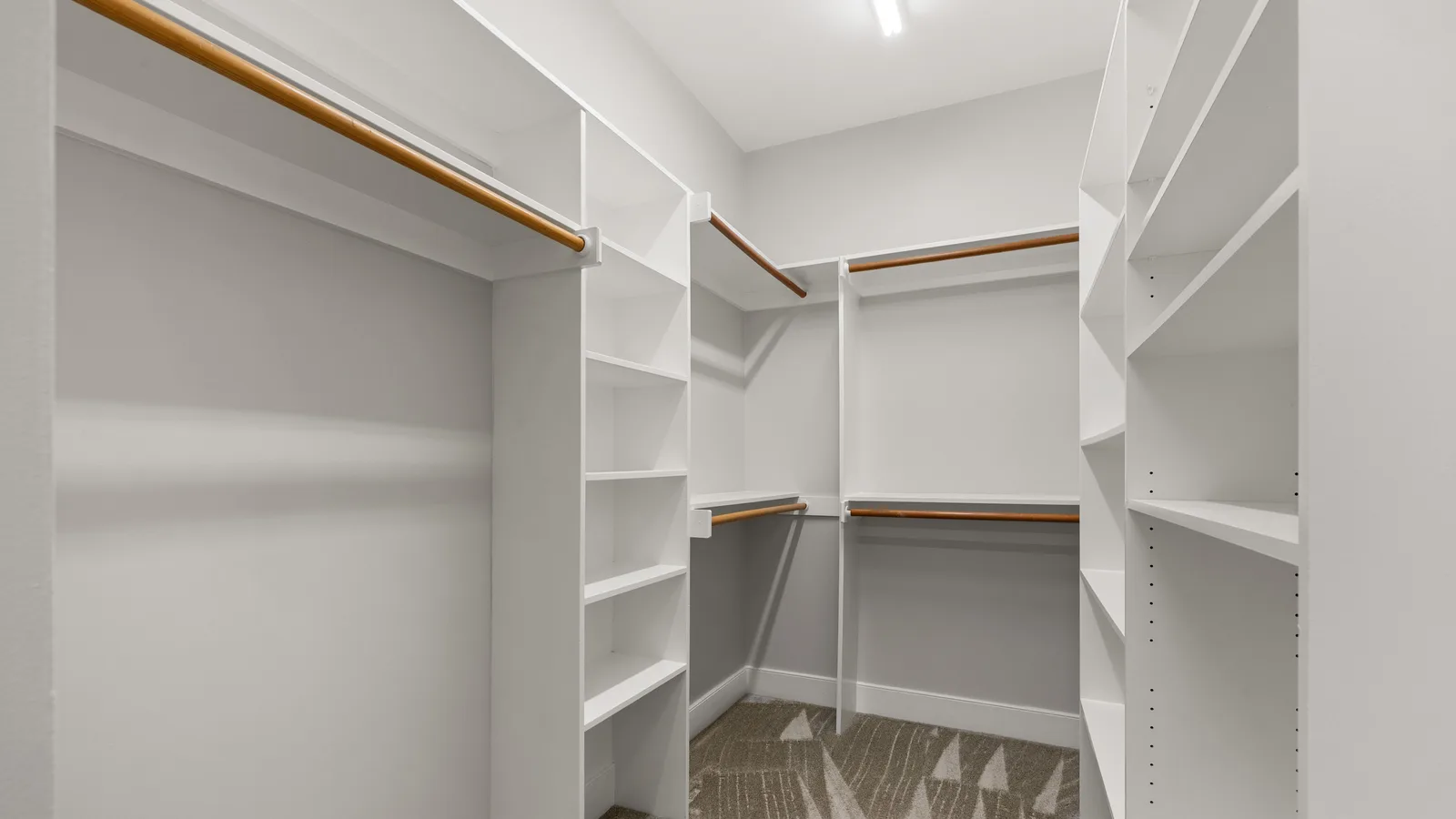
A basic kit is often enough for a straightforward reach-in closet with ordinary clothing storage needs. A custom system makes more sense when the closet has awkward dimensions, multiple users, unusual items, or a layout that wastes substantial space. The real comparison is not appearance alone; it is usable capacity, fit, durability, disruption, and how long you expect to live with the result.
A closet system is worth the extra cost when it solves a real layout problem that a standard kit cannot solve, but a well-installed kit is genuinely enough for many ordinary closets. The decision is less about whether custom closets look nicer and more about whether the finished storage works for the life you actually live.
My take: homeowners too often buy custom closets for the showroom image, then discover they needed fewer decorative shelves and more plain hanging space.
A closet can look expensive and still function badly. Drawers may be too shallow for what you own. Shoes may sit in tight cubbies that collect dust. Long garments may drag on a lower shelf. The useful question is simple: does the design make it easier to put away, find, and maintain your belongings?
Start with the closet empty. That is where the useful answers are.
What a basic closet kit can do well
A basic wire or wood closet kit can make a major difference from a single rod and shelf. Most kits let you add shelves, double hanging sections, shoe storage, and adjustable components. In a standard reach-in closet with flat walls and a predictable layout, that may be all you need.
Wire systems tend to be quick to install, adjustable, and forgiving in utility closets, children’s closets, guest rooms, and laundry-adjacent storage. Air circulates through them, which some homeowners appreciate for clothing. The downside is that small items can tip, folded clothing may leave pressure marks, and the visual effect is more functional than finished.
Wood or laminate kits usually offer a more built-in appearance. They can hold folded clothing more comfortably and often provide cleaner shelf surfaces. Quality varies widely, though. A lightweight panel system may look solid at first but sag under heavy stacks of jeans, bags, or boxes. Examine how it attaches to the wall and how much support long shelves receive.
A kit is often the right choice when you need an immediate improvement without turning a closet into a construction project. It is also sensible when the closet serves a changing need. A child’s closet, a guest room, or a temporary home office storage area may look different in a few years. Adjustable storage has value.
What custom changes in a meaningful way
Custom-built closet systems earn their place when standard sizes leave too much unusable space. This is common in closets with sloped ceilings, unusual corners, deep side returns, offset doors, windows, low soffits, or narrow walls that cannot accommodate standard modules cleanly.
A custom layout can use wall height better. It can place hanging rods at the right lengths for the actual clothing in that closet, create drawers where drawers will be used, and build around architectural obstacles instead of pretending they are not there. That can increase usable capacity without making the closet feel crowded.
Durability is another factor. A thoughtfully built system can use stronger materials, more secure anchoring, better drawer hardware, and supports placed where loads actually occur. This matters in a primary closet used every day, especially when two people are sharing the space. Long rods loaded with clothing and drawers filled with dense items reveal weak construction quickly.
Custom work also allows more control over details. You can match room finishes, preserve access to vents and outlets, make room for luggage, include a hamper area, or build sensible storage for unusual items. Those features are not automatically necessary. But when they solve an everyday problem, they stop being decorative upgrades.
Consider a narrow walk-in closet with one short wall interrupted by a door and another wall broken up by a return. Standard modules may technically fit, but leave awkward gaps or force the hanging rods into the wrong places. Custom work can turn that leftover space into a shallow shelf for bags, a luggage bay, or a small drawer stack without blocking the path through the closet. That is a practical gain, not simply a prettier finish.
Capacity matters more than the catalog
Before choosing any system, make an inventory. Count neither hangers nor shoes with perfect precision. You do not need a spreadsheet. Instead, separate what needs short hanging space, long hanging space, folded storage, drawers, shelf storage, and occasional access.
Most people need more hanging room than they initially plan. Double-hang sections are efficient for shirts, folded trousers, skirts, and shorter jackets. They are useless for dresses, coats, long robes, or anything that will bunch against the shelf below. Plan a section for long items before filling every wall with double rods.
Drawers are convenient, but they take up room and add cost. They are best for items you would otherwise fold into messy stacks or store in bedroom furniture. If the closet is small, open shelves with baskets may offer more flexible capacity. They also make it easier to change the setup later.
Do not confuse a closet packed with compartments with a closet that holds more. Small cubbies can force your belongings into rigid shapes. A few wider shelves and properly sized hanging zones often work better than an elaborate grid.
Think about seasonal items separately. Heavy coats, special-event clothing, luggage, extra bedding, and rarely used bags do not need the most convenient space in the closet. Put daily items at hand height and reserve high shelves or deeper corners for things you retrieve occasionally. A closet feels more spacious when its easiest-to-reach areas are not occupied by items used a few times a year.
Consider the installation, mess, and resale question
A kit can often be installed with modest disruption. You may remove old shelving, patch holes, paint, mount rails or supports, and be done in a relatively short stretch of work. The quality of the installation still matters. A closet system is a load-bearing storage project, not wall decoration. Locate studs when required and follow the mounting instructions for the wall type.
Custom installation can involve a longer planning process and more activity in the home. There may be measuring appointments, design revisions, demolition, wall repair, painting, delivery, and installation. Some projects are clean and contained. Others reveal old drywall damage, uneven walls, or electrical details that require attention.
For resale, a well-designed primary closet can improve a buyer’s impression because it signals order and finish. But do not expect every dollar spent to return directly through a sale price. Buyers differ. One person sees built-ins as a benefit; another has a different wardrobe and may find a rigid configuration limiting.
If you expect to move soon, choose a durable, neutral solution that improves the closet without overfitting it to your personal habits. If you expect to stay for years, everyday convenience matters more. You are the person using it every morning.
Compare the complete cost, not the display price
HomeGuide reports a national planning range of about $400 to $2,200 installed for a prefabricated closet system and about $1,000 to $8,000 for a custom organizer. Its material-only range is roughly $200 to $1,400 for prefab and $700 to $6,500 for custom. Those are broad budgeting figures, not quotes. Closet size, wall condition, finish, drawers, doors, lighting, removal, painting, delivery, and local labor can move the total well outside the middle of the range.
| Cost line | What to include | Where budgets drift |
|---|---|---|
| System | Rails, uprights, panels, rods, shelves, drawers, doors, trim, and mounting hardware | Drawers, decorative doors, backing, lighting, and specialty inserts |
| Preparation | Removal, disposal, drywall repair, paint, baseboard cuts, and floor protection | Hidden wall damage, uneven corners, old fasteners, and matching existing paint |
| Installation | Measurement, delivery, assembly, anchoring, leveling, cleanup, and adjustments | Plaster, masonry, difficult access, high walls, and missing framing |
| Other trades | Electrical work, new lighting, outlets, ventilation changes, or door work | Permits, wall opening, concealed conditions, and finish repair |
Ask every bidder to price the same drawing and storage list. One quote may include removal, wall repair, paint, delivery, and final adjustment while another stops at assembled cabinets. The totals cannot be compared until the boundaries match. Use the contractor quote comparison guide to normalize the scope.
For composite-wood panels, look for the required TSCA Title VI compliance label. The U.S. Environmental Protection Agency regulates formaldehyde emissions from hardwood plywood, medium-density fiberboard, particleboard, and finished goods containing them. Compliance does not tell you whether the shelf is thick enough, well supported, or moisture resistant, but it is a basic material check worth making before installation.
The 4Homes weekly email
Every Tuesday: what changed for homeowners this week, plus our newest guides.
No spam. Unsubscribe anytime.
Know when a kit stops being a DIY project
A careful homeowner can often install a light modular system on a sound, straightforward wall after locating framing and following the complete instructions. Stop when the wall is damaged, crumbly, damp, badly out of square, or made from a material you cannot identify. Do not drill blindly near outlets, switches, plumbing walls, ducts, or an electrical panel. A closet rail is load-bearing hardware, and guessing at an anchor is not a safe workaround.
Call a qualified carpenter or closet installer for long unsupported spans, heavy cabinets, a sloped ceiling, unusual corners, masonry, fragile plaster, or a layout that requires cutting several panels accurately. Use a licensed electrician for new wiring, hardwired lighting, receptacles, or switch changes. Structural wall changes, door relocation, or ventilation work can require permits and separate trades under local rules.
Freestanding drawer units need separate attention. The U.S. Consumer Product Safety Commission recommends anchoring clothing-storage furniture securely to the wall because unstable units can tip. Follow the unit’s instructions and use restraints and wall fasteners suited to both the furniture and the wall. A built-in appearance does not prove that an item is anchored.
Decide based on use, not aspiration
A basic kit is usually fine for a simple reach-in closet, a low-use guest closet, a child’s closet that will change, or a storage area where adjustability matters more than finish. Spend time on the layout, buy sturdy components, and install them carefully. That can be a substantial improvement.
Custom is more compelling for a shared primary closet, a difficult footprint, a closet with substantial wasted vertical space, or a household where the current setup creates a daily pileup. It can also be worthwhile when you need drawers, integrated hampers, tailored hanging sections, or storage that standard modules cannot provide.
Ask what will annoy you six months after installation. If the answer is “nothing, because a basic kit fits the wall and holds what I own,” stop there. If the answer is “we will still be fighting for rod space and leaving half the closet unusable,” custom may be the more honest answer.
Save money before the design appointment
Empty and sort the closet first. Measure what remains, reuse sound baskets and hangers, and sketch a plain rod-and-shelf layout before adding drawers or doors. Drawers are useful, but every drawer replaces simpler storage and raises the price. Keep one long-hang zone, favor adjustable shelves, and avoid tiny compartments sized to belongings you may not own in a few years.
Handle demolition, patching, or painting yourself only when the old system is simple, the wall is sound, and you can do the work without damaging wiring or plumbing. Bundle installation with another closet if the provider has a minimum trip charge. Keep the expensive custom work for the awkward wall and use compatible modular parts on the easy wall. The deep-shelf organizing guide and off-season clothing guide offer lower-cost storage ideas that can reduce how much built-in capacity you actually need.
Photograph wall conditions and save the final drawing, product labels, spare hardware, paint color, and load instructions. Recheck fasteners and shelf level after the closet has been loaded. A small adjustment is cheaper than replacing a torn-out rail or a sagging shelf.
Frequently Asked Questions
How much does a closet system cost?
HomeGuide gives broad national planning ranges of about $400 to $2,200 installed for a prefabricated system and about $1,000 to $8,000 for a custom organizer. Size, material, drawers, doors, wall repair, electrical work, and local labor can move a real quote outside those ranges.
Are wire closet systems durable enough?
A properly installed wire system can be durable for ordinary clothing and household storage. Check the mounting method, support spacing, stated load guidance, wall condition, and how much weight will sit on each shelf or rod.
Should I add drawers to a closet system?
Add drawers when they replace a storage problem you currently have, such as unstable folded stacks or missing room for smaller clothing. In a tight closet, shelves and bins may provide more flexible storage at a lower cost.
When is a custom closet worth it?
Custom work is most defensible when a shared or awkward closet wastes usable wall height, standard modules do not fit, or tailored rods, drawers, and access features solve a daily problem. A basic adjustable kit is usually enough for a straightforward reach-in or a closet whose use will change.