4Homes desk
Home Care Guides for Homeowners
A house rarely fails all at once. It shows small signs first — a slow drain, a musty smell after rain, a filter that has been in place too long — and catching those signs early is usually the difference between a five-minute fix and a five-figure repair. This desk covers the recurring work that keeps a home running: a seasonal maintenance calendar you can actually repeat, a two-hour weekend reset routine for the rooms that see the most wear, and how to document a drainage or water problem well enough that a contractor can scope the job instead of guessing at it.
None of this requires a big block of time. Most guides here break a task into what to check, what to watch for, and what to do next, so you can walk a room or a system in minutes and know whether something needs attention now or can wait for the next seasonal pass. Start with the seasonal calendar if you are not sure where to begin, or go straight to whichever guide matches the issue in front of you.
30 guides in this desk · see every desk · all homeowner guides
How to use this desk
Most of the guides on this desk exist to support one habit: a short, repeatable walk-through of the house, often enough that small problems get caught while they're still small. That's a different approach than treating maintenance as a once-a-year spring project, and it's the reason the reading path below starts with the calendar rather than any single task.
Set the system up before you chase a specific job. Read the seasonal calendar first so you know the rhythm, then the first-30-days checklist if you're new to the house, since it covers the things a previous owner's habits won't have told you about. After that, the weekend reset keeps the system running between seasonal passes, and the drainage guide shows what to do once the calendar or the reset turns up an actual problem instead of a routine check.
None of these guides assume a free weekend or a toolbox full of specialty equipment. A seasonal pass through gutters, filters, and the attic takes under an hour once you know what you're looking for, and most of the value is in noticing early rather than fixing skillfully. If a task on this desk turns up something beyond a simple check — active water intrusion, a cracked foundation, exposed wiring — that's the signal to move to the Fix It desk for the repair decision itself; Home Care is about catching the problem, not necessarily solving it yourself.
Start here, in order
- 1A seasonal home maintenance calendar: four checks that catch problems early
Use four seasonal home maintenance checks to spot water, safety, drainage, and equipment problems early, then decide what to fix, schedule, or watch.
- 2The new homeowner maintenance checklist for your first 30 days
Map shutoffs and safety devices, follow water, test major systems, organize records, and build a first-month priority list around the house you bought.
- 3The two-hour weekend home reset
A quick room-by-room home reset for catching small issues in the kitchen, bathroom, and laundry before they turn into calls, claims, or a lost Saturday.
- 4Turn drainage trouble into a contractor-ready scope
Document foundation exposure, divide gutter and site-drainage responsibility, and require a written scope with closeout proof.
A simple seasonal rhythm
- Spring: gutters, grading, and the attic after winter
- Summer: HVAC filters and the attic for heat buildup
- Fall: gutters again before leaf-fall, plus weatherproofing
- Winter: pipe insulation and a walk-through after any freeze
Section 01
Care & upkeep
Small routines that keep the house working and prevent avoidable surprises.

How to clean an air purifier filter without ruining it
Identify the pre-filter, HEPA, and carbon layers, then clean only model-approved parts and replace spent media without damaging the purifier.
Open guide
How to Clean a Wood-Burning Fireplace Safely
Clean a cold wood-burning fireplace at the firebox boundary, handle ash safely, and know when the chimney needs professional inspection.
Open guide
How to Clean Gutters From the Ground and Know When to Stop
Compare blower, vacuum, brush, and hose methods for ground-level gutter cleaning, verify downspout flow, and know when to hire help.
Open guide
How to Clean Mineral Buildup From a Showerhead Without Damaging It
Clean showerhead mineral buildup with a model-safe method, protect the finish, restore an even spray, and know when to call a plumber.
Open guide
Garage Door Bottom Seal Installation: Safe Steps and Costs
Install a garage door bottom seal by matching the retainer and gap, avoiding tensioned hardware, and testing closing and reversal.
Open guide
How to Clean Ceiling Fan Blades Without a Mess
Clean ceiling fan blades without spreading dust, damaging the finish, overreaching, or spraying liquid into the motor housing.
Open guide
How to Clean Baseboard Heaters Without Damaging Them
Clean baseboard heaters safely by identifying the system, shutting it down correctly, vacuuming approved areas, and spotting damage.
Open guide
Clean Oven Racks Without Ruining the Finish
Clean oven racks safely by identifying chrome, coated, or sliding hardware first, then using model-approved soap, tools, and heat.
Open guide
Sliding Glass Door Hard to Open? Check the Track Before Forcing It.
Identify a gritty track, one-point bind, scraping panel, latch issue, or water problem before forcing a sliding glass door or choosing a repair.
Open guide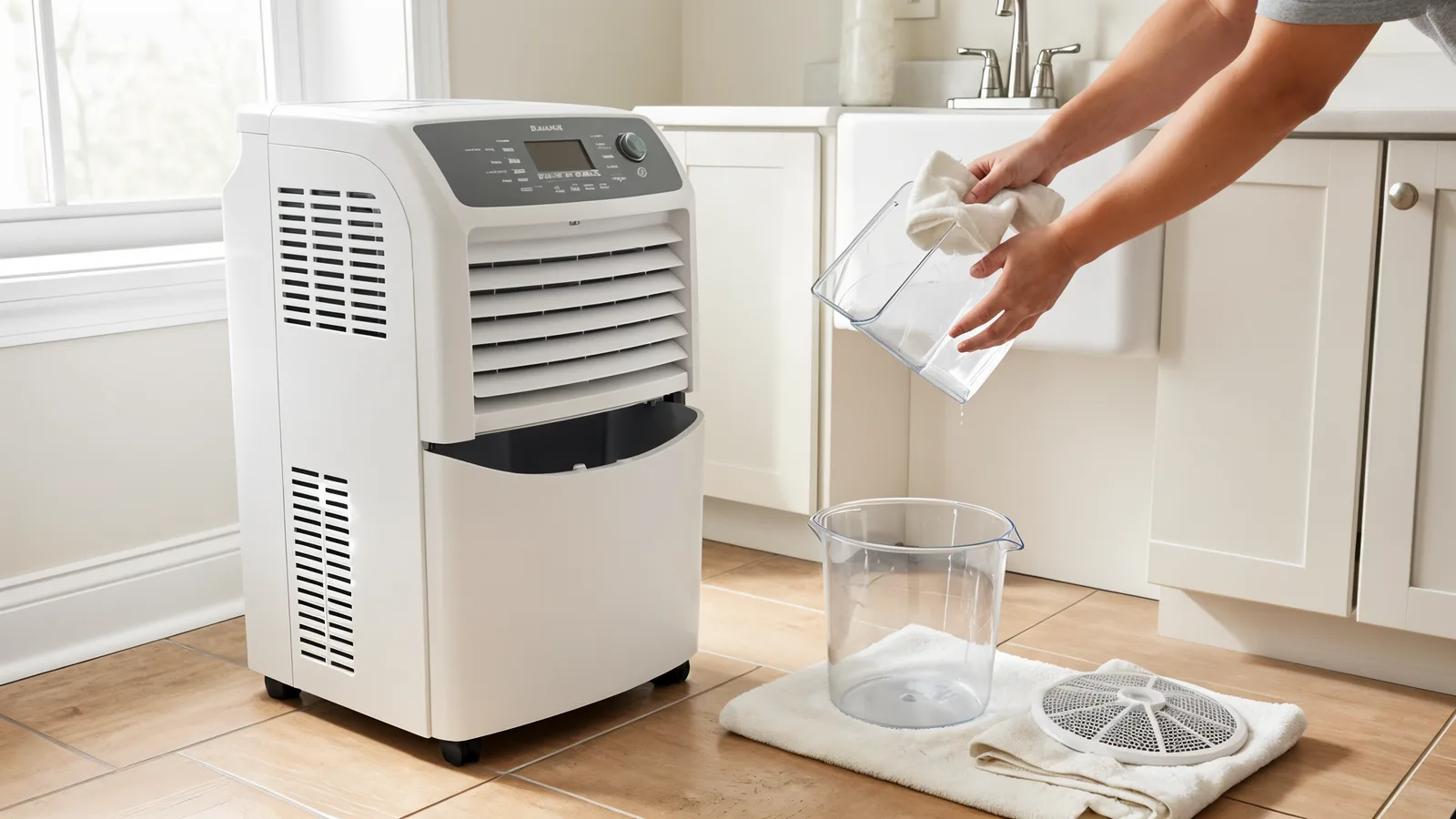
How to Clean a Dehumidifier Filter and Bucket Safely
Clean a dehumidifier filter and bucket safely with model-specific steps, a humidity target, and clear stop points for service.
Open guide
How to clean a window air conditioner filter without damaging it
Clean a window AC filter by unit type, tell washable from disposable, avoid mesh damage, and reinstall the fully dry filter correctly.
Open guide
How to Stop Window Condensation Without Replacing Every Window
Condensation on your winter windows? Find out whether it is inside, outside, or between the panes before you buy new windows.
Open guide
A seasonal home maintenance calendar: four checks that catch problems early
Use four seasonal home maintenance checks to spot water, safety, drainage, and equipment problems early, then decide what to fix, schedule, or watch.
Open guide
How to replace washing machine hoses before they leak
Replace washer supply hoses safely: inspect the pair, match the manual, avoid forcing old valves, test all four couplings, and record the date.
Open guide
How to clean a portable humidifier safely without leaving residue
Clean a portable humidifier safely with daily water care, model-approved descaling, complete rinsing, and clear replace-or-service limits.
Open guide
How to clean a dishwasher filter without damaging it
Clean a removable dishwasher filter with the model manual, running water, and a soft brush, then reinstall and lock every piece correctly.
Open guide
The two-hour weekend home reset
A quick room-by-room home reset for catching small issues in the kitchen, bathroom, and laundry before they turn into calls, claims, or a lost Saturday.
Open guide
Turn drainage trouble into a contractor-ready scope
Document foundation exposure, divide gutter and site-drainage responsibility, and require a written scope with closeout proof.
Open guide
The new homeowner maintenance checklist for your first 30 days
Map shutoffs and safety devices, follow water, test major systems, organize records, and build a first-month priority list around the house you bought.
Open guide
How to Clean Refrigerator Coils Without Damaging the Fridge
Clean refrigerator coils safely by finding the model-specific condenser, using a soft brush and vacuum, and knowing when to stop.
Open guideSection 02
Projects & value
Choose improvements around real life, lasting usefulness, and the home as a whole.

Choose the next renovation with a whole-home plan
Prioritize safety, durability, daily friction, and future work before picking finishes or chasing a generic resale-value checklist.
Open guide
Small upgrades that make a home easier to live in
Low-disruption improvements focused on lighting, storage, controls, hardware, comfort, and how you actually move through each room.
Open guide
Why a home's estimated value changes
Understand automated estimates, comparable sales, property condition, and why one number should not drive a major decision.
Open guide
Make a garage-door replacement quote cover the whole moving system
Specify the opening, sections, tracks, springs, cables, opener, safety controls, structure, electrical handoffs, permits, testing, and disposal.
Open guide
What a siding-replacement quote should show behind the finish
Compare the wall map, tear-off, sheathing rules, drainage plane, opening flashings, lead-safe work, warranty, and closeout—not only the siding product.
Open guide
What a roof-replacement quote should settle before tear-off
Settle the roof map, exact assembly, flashing, ventilation, deck-repair prices, protection, warranties, and change rules before tear-off.
Open guide
Make an attic-insulation quote show the hidden work
Compare existing conditions, air sealing, ventilation, hazards, material, installed depth, and closeout before comparing totals.
Open guide
What should a gutter-cleaning service include?
Define included runs, downspout checks, safe access, approved extras, discharge findings, cleanup, and photo closeout before hiring.
Open guide
Compare replacement-window quotes opening by opening
Compare the exact product, rating, installation method, water-management scope, finish work, warranty, and closeout record for every opening.
Open guide
Use this remodel change-order checklist before work continues
Document the new condition, added and deleted scope, complete price, schedule effect, approvals, and closeout records before changed work begins.
Open guideFAQ
Frequently asked questions
How often should a home actually get a maintenance check?+
A seasonal pass -- four times a year -- catches most of what matters: gutters and grading in spring and fall, HVAC filters before the heaviest-use seasons, and a walk-through after any hard freeze or major storm. A shorter weekly or monthly look at high-wear rooms catches the rest between seasonal passes.
What should a new homeowner check first in the first month?+
Locate the main water shutoff, the electrical panel, and every HVAC filter before anything else -- a previous owner's habits won't be documented anywhere, and you want that information before an emergency, not during one. From there, a first walk-through of the attic, crawl space, and any visible drainage path rounds out the basics.
Is DIY home maintenance actually cheaper than paying for a service plan?+
For routine, low-risk tasks -- filter changes, gutter checks, caulking -- yes, the labor is the only thing you're saving on and the skill required is low. For anything involving the roof, electrical panel, or gas lines, the cost of a mistake usually outweighs what a DIY attempt saves, so that's where paying a licensed pro makes more sense.
What's the single highest-value home maintenance habit?+
Keeping gutters and downspouts clear and directing water away from the foundation. Water is behind a disproportionate share of expensive home repairs -- foundation issues, basement moisture, rot -- and most of it traces back to a drainage problem that went unnoticed for a season or two.