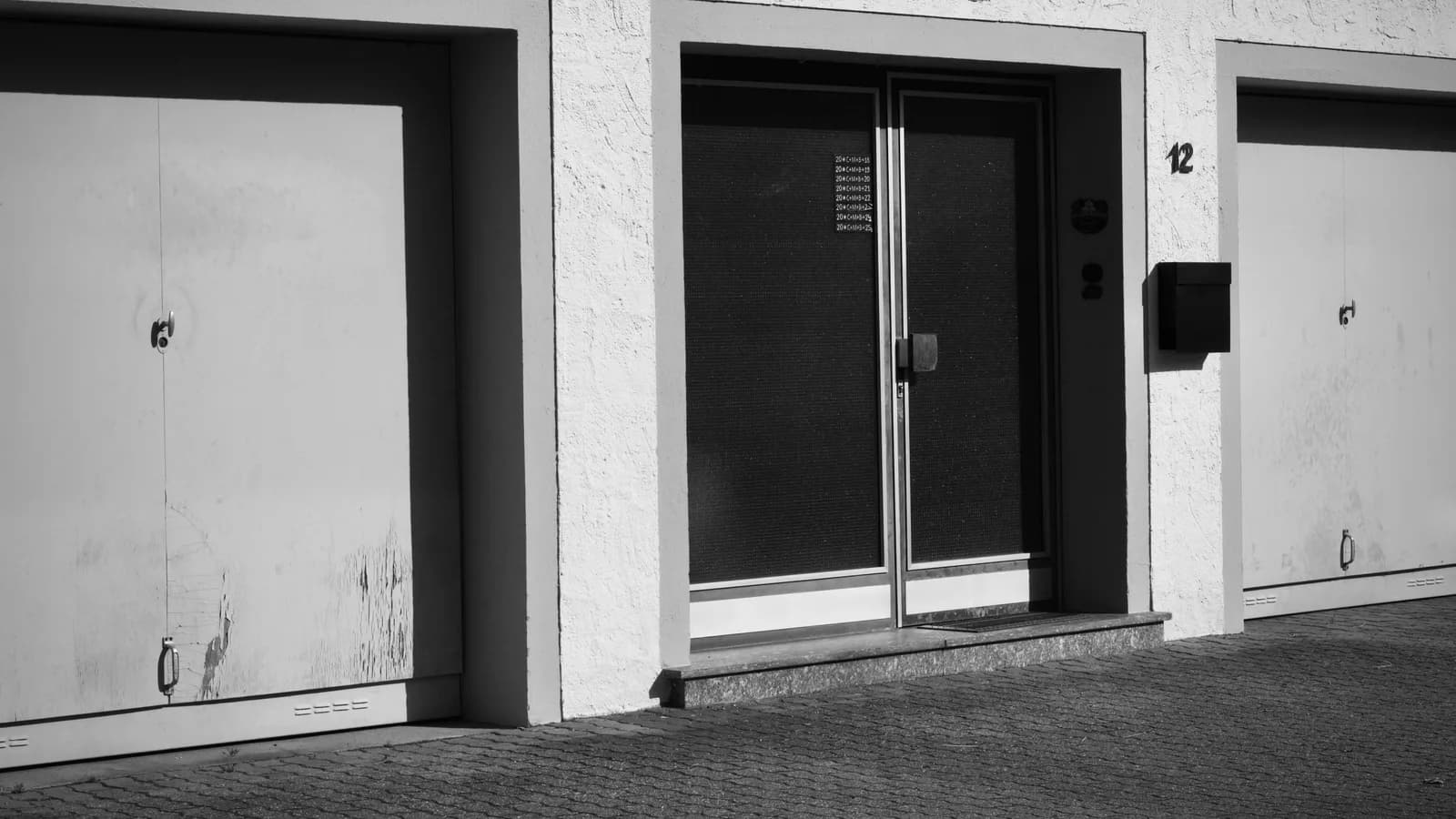
Specify the opening, door, hardware, opener, safety controls, structural and electrical handoffs, testing, and disposal as one working system.
A garage-door replacement quote should describe one working system: opening, door sections, tracks, springs, cables, rollers, opener, controls, entrapment protection, trim, weather seals, structure, electrical handoff, permits, testing, and disposal. A door model and an installed total do not tell you which old parts stay or whether the finished door will be balanced and safe.
Separate the reason for replacement from the sales package
Record why you are shopping: damaged sections, corrosion, repeated hardware failures, poor fit, wind requirement, missing safety features, insulation or comfort, opener problems, or a change in vehicle and storage use. Photograph the opening and every component from a safe distance. Do not touch springs, cables, bottom brackets, a door off its tracks, or hardware marked as being under tension. Keep people, pets, and vehicles away from an unstable door.
A door that will not close calls for safe troubleshooting; replacement is a different decision. Ask the bidder to state which condition requires a new door, which parts are repairable, and whether the opener itself must change. My view: “old system” is not a diagnosis. A planned replacement deserves a condition record and at least one repair-versus-replace explanation before the catalog comes out.
Measure the opening and the room around it
Require field measurements for finished opening width and height, side room, headroom, back room, floor slope, jamb and header condition, ceiling conflicts, track geometry, opener mounting, electrical outlet, and the clearance needed by the selected lift and spring system. List framing, blocking, jamb repair, trim, flashing, sealant, painting, masonry, electrical work, and storage relocation as included, excluded, or separately priced.
Record the exact door manufacturer, collection, model, section construction, material, thickness, finish and color, windows, glass, insulation method, published R-value if relevant, wind or impact rating where required, panel reinforcement, track, hinges, rollers, cables, spring system, cycle rating, bottom seal, perimeter weather seal, handles, locks, and decorative hardware. “Insulated steel door” is a category, not a specification.
Do not let the opener disappear between quotes
State whether the existing opener is removed, reused, reconnected, or replaced. For a new opener, name the model, drive type, rated application, rail, controls, remotes, keypad, lighting, battery backup if offered, connected features, subscription or app requirements, and warranty. If the opener stays, the installer should confirm in writing that it is compatible with the new door and that adjustment and final safety testing are included.
CPSC's garage-door opener safety guidance says openers manufactured or imported for U.S. sale after January 1, 1991 must have reversing systems, with external entrapment protection required beginning in 1993. CPSC also says a door that is severely unbalanced, binds, or sticks should be serviced by a professional. The replacement scope should include balance, travel, force, controls, manual release, photo-eye or other required entrapment protection, and reversal testing under the model instructions. Do not accept “opener works” as the test record.
Price removal, structure, and electrical work before installation day
List removal and disposal of the old sections, tracks, springs, opener, controls, packaging, and unused hardware. Define what happens if demolition exposes rot, cracked masonry, loose framing, inadequate backing, water entry, damaged wiring, or an opening that is not square. Include unit prices or a written pause for repair. A garage-door technician should not improvise structural or electrical work that needs another qualified trade.
Confirm permit, HOA, wind-zone, fire-separation, glazing, and local electrical requirements before ordering. Assign responsibility for product approvals, engineering or anchorage documents, permit fees, inspection, utility or electrician scheduling, wall and ceiling patches, trim finish, and touch-up paint. Custom size, color, windows, and high-wind products should have written order dimensions and an approval step because return rights can be limited.
The 4Homes weekly email
Every Tuesday: what changed for homeowners this week, plus our newest guides.
No spam. Unsubscribe anytime.
Make installation-day control part of the contract
The quote should cover vehicle and contents clearance, floor and property protection, equipment placement, weather limits, door security if work pauses, daily cleanup, expected downtime, and supervision around children and pets. Set a written change-order rule before the old door is removed. No substitute model, reused component, added framing, or opener upgrade should proceed on a verbal price.
The FTC's contractor guidance recommends multiple written estimates and says the estimate should describe the work, materials, completion date, and price. It also warns against pressure for an immediate decision and full payment up front. Use the change-order checklist if opening conditions change the job.
Watch the finished door operate before sign-off
Closeout should include permits and inspection, product labels and serial numbers, approved order sheet, final hardware list, installer-performed balance and safety tests, opener and remote setup, entrapment-protection demonstration, manual-release demonstration, weather-seal review, keys and controls, manuals, warranty documents, care schedule, haul-away, cleanup, and unresolved exceptions. Keep the test results with the model information.
Do not stand or walk under the moving door during the demonstration. The useful finish line is not a quiet first cycle. It is a correctly specified door, matched hardware and opener, documented safety functions, and a written path for service if any part of that system stops working.