A roof decision gets easier when the problem, the scope, and the proposed fix are written down separately.
Start with the cause, not the age of the roof. An isolated flashing failure can call for a focused repair; widespread wear, repeated leaks, soft decking, or several failing details can make replacement the more coherent job. Stabilize active water entry, stay off the roof, and ask for a written inspection that connects every proposed repair to something observed.
First, separate the leak from the roof decision
A drip in the ceiling needs attention now, but it does not prove the entire roof has failed. Move belongings, place a container if it is safe, photograph the affected rooms, and note when the water appeared. If water is near electrical equipment, a sagging ceiling, or a damaged structure, keep people away and call qualified help.
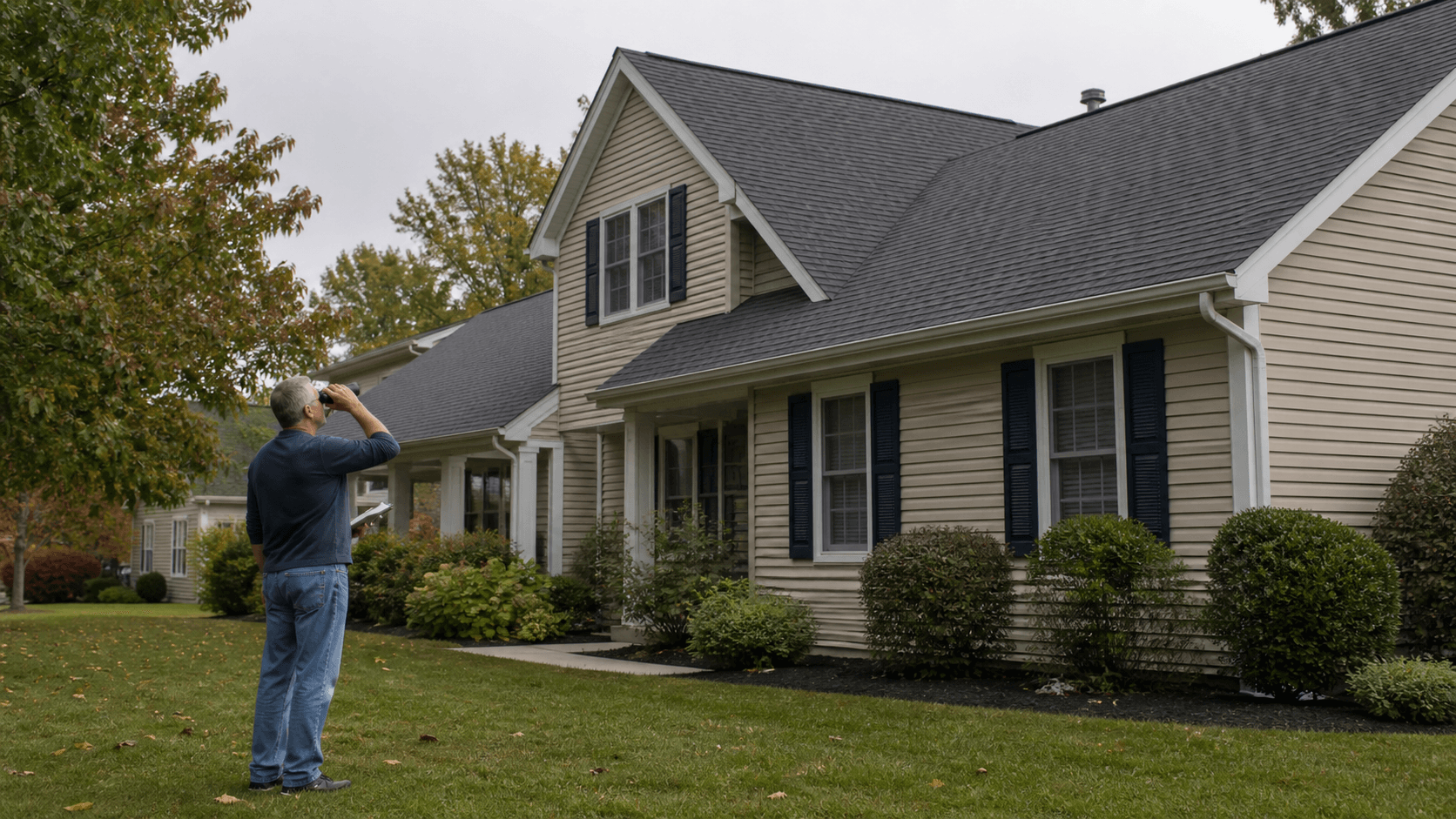
From the ground, look for a missing section, a displaced edge, debris impact, or a branch touching the roof. In the attic, only if it is safely accessible, note damp materials, staining, daylight, and the path water may have taken. Water often travels before it becomes visible downstairs, so the stain is a clue—not necessarily the source.
Do not climb onto a wet, steep, damaged, or unfamiliar roof to settle the question yourself.
What roof age can—and cannot—tell you
Age is useful background. It helps you locate old permits, warranties, invoices, and product information. It does not create a universal expiration date. Sun, wind, slope, ventilation, workmanship, material, prior repairs, and nearby trees all affect how a roof behaves.
Avoid making a large decision from a generic lifespan chart. Ask the inspector to describe the current condition of the field material, flashings, penetrations, edges, drainage, ventilation, and visible deck. The useful question is not “Is this roof old?” It is “Which parts are failing, why, and how far does the problem extend?”
When a focused repair may be reasonable
- The problem is localized and the surrounding material remains serviceable.
- The source is identified, not merely guessed from the interior stain.
- The repair can integrate with the existing system without creating a new weak point.
- Matching materials and a clear workmanship warranty are available.
- The proposal explains what happens if opening the area reveals damaged decking.
A small repair is not automatically the cheap choice if it has to be repeated. Keep a roof file with photographs, leak locations, storm notes, invoices, and the exact work completed. Patterns become much easier to see when the history is in one place.
When replacement deserves a closer look
Replacement becomes more plausible when problems are widespread, several details are failing together, repairs no longer hold, or a large portion of the system must be disturbed to make one fix. It can also make sense when the underlying deck, ventilation, or flashing needs coordinated correction.
That still does not mean accepting the first replacement pitch. Ask each contractor to show how the findings support the scope. Photographs should identify locations. Moisture observations should explain what was measured and where. If there is structural movement or uncertain deck capacity, a roofing salesperson is not a substitute for the right building professional.
The 4Homes weekly email
Every Tuesday: what changed for homeowners this week, plus our newest guides.
No spam. Unsubscribe anytime.
Make every proposal price the same roof
| Scope item | What should be clear |
|---|---|
| Tear-off and disposal | Layers removed, protection, hauling, and cleanup. |
| Decking | Inspection method, included allowance, and unit price for additional replacement. |
| Water-shedding layers | Underlayment, edges, valleys, penetrations, and flashing details. |
| Ventilation | What changes, why, and whether the full intake-and-exhaust path was considered. |
| Permits and closeout | Who obtains permits, inspection steps, cleanup, and final documents. |
| Warranty | Separate material and workmanship terms, exclusions, and responsible company. |
If one quote says “replace roof” and another lists twenty components, the totals are not ready to compare. Use the same written scope for every bidder, then bring the proposals into the contractor quote comparison guide.
A calm way to make the call
- Address immediate water and safety concerns.
- Collect the roof history, permits, warranties, and prior repair records.
- Get written findings with labeled photographs.
- Ask for both repair and replacement reasoning when both are plausible.
- Normalize the scopes, exclusions, allowances, and warranties.
- Check local licensing, permit, and insurance requirements yourself.
The goal is not to keep an old roof at any cost or replace one at the first sign of trouble. It is to understand the failure well enough that the work you buy actually addresses it.