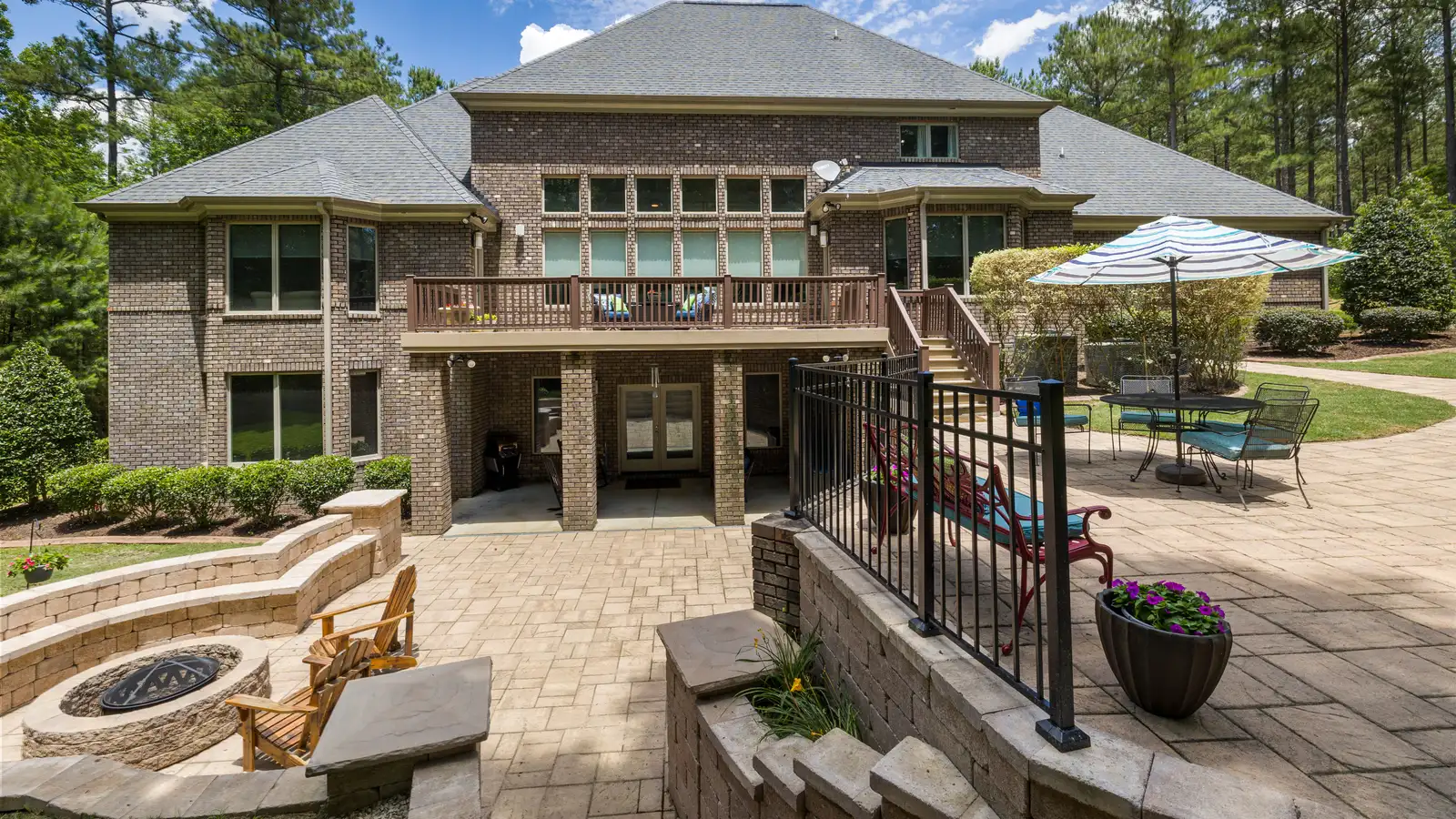
A patio rarely creates a guaranteed dollar-for-dollar return at resale. It can make a home feel more complete, easier to use, and better suited to the neighborhood, which may help buyers respond more positively. The best patio projects look like they belonged with the house from the start.
Adding a patio can help resale, but mostly because it improves how buyers experience the home rather than because it produces a fixed return on construction cost. A clean, well-placed patio can make a yard feel usable the moment a buyer walks through the back door. A poorly planned one can make the same yard feel smaller, harder to maintain, and strangely disconnected from the house.
My view: homeowners should build the patio they will genuinely use, then keep it restrained enough that the next owner can see it as an asset rather than a personal statement.
A patio is part hardscape, part staging. Buyers do not inspect it as an isolated receipt. They notice whether the back of the house has a place to sit, eat, supervise children, host friends, or simply step outside without standing on mud or uneven ground. That reaction matters.
It also has limits. A patio does not fix an awkward layout, a neglected yard, failing exterior paint, or a home priced beyond comparable properties. It can improve the whole impression. It cannot carry the sale alone.
The patio’s strongest value is often buyer perception
When buyers compare homes, outdoor space is usually judged quickly. They look through a window, open a door, and decide whether the yard seems usable. Bare grass can be perfectly fine, but it asks buyers to imagine the next step. A finished patio answers that question for them.
That is why a modest, tidy patio can sometimes feel more valuable than a much larger but empty yard. It gives the space a purpose. Furniture is not required for the patio to work, though simple outdoor seating during showings can make the intended use more obvious.
This is different from saying a patio “adds value” in the same way people talk about a direct financial calculation. The sale price is still determined by the local market, the home’s condition, competing listings, and what buyers can find nearby. A patio may support a stronger impression and fewer objections. It may not create a clearly separable amount in the final sale price.
It can also help a home show better. Those are related outcomes, but they are not identical. Showing better means photographs are stronger, tours feel more complete, and buyers have one less unfinished project to picture. Selling faster can follow when a home feels ready and coherent. Neither result is guaranteed.
Match the project to the neighborhood
The neighborhood sets the reference point. In an area where similarly sized homes commonly have simple outdoor sitting areas, a home without one can feel behind. In an area where lots are compact and outdoor space is prized, preserving enough open yard may matter more than maximizing paved surface.
Walk the neighborhood with an observant eye. Look at homes that appear well cared for, not only the largest or most expensive ones. Notice whether patios are typically small and functional, large enough for dining, covered, screened, tucked beside the house, or built farther into the yard. You are not copying a design. You are learning what feels normal there.
Overbuilding is the common mistake. A sprawling patio might suit a large lot with a broad rear elevation. On a smaller property, it can leave almost no green space, make drainage more complicated, and create the impression that the owner paved over the yard. Buyers who wanted outdoor room for gardening, pets, play, or privacy may see less opportunity, not more.
The same caution applies to elaborate built-in features. A permanent cooking area, fire feature, raised seating wall, or decorative structure can be attractive when it is well designed and common for the setting. When it dominates the yard or reflects a narrow personal taste, it can become a negotiation point. Buyers may wonder what they will need to remove.
Size matters less than connection
A patio should feel connected to how the house is used. The strongest location is often near a kitchen, family room, dining area, or main rear door because people can move between indoors and outdoors without a long detour. That makes even a smaller patio feel purposeful.
Think about the actual path. Can someone carry food outside without navigating steps, tight turns, or uneven ground? Is there enough room to pull a chair back? Does the door swing create an awkward pinch point? Will the patio interfere with a basement window, utility equipment, hose connection, or yard gate? These details are easy to miss on paper and obvious in daily use.
A patio placed far from the house is not automatically a bad idea. A separate seating area can work well if it has a real reason: a view, shade, privacy, a garden setting, or distance from a busy part of the yard. It needs a clear path and a sense of intention. Otherwise it can read as a leftover slab.
Large patios are not inherently more valuable than small ones. A well-proportioned patio that fits a household’s likely use is more persuasive than a giant surface with no shade, no furniture zone, and no relationship to the home. Buyers usually respond to usefulness before square footage.
The 4Homes weekly email
Every Tuesday: what changed for homeowners this week, plus our newest guides.
No spam. Unsubscribe anytime.
Materials and condition carry real weight
Materials influence how permanent and cared for the patio appears. That does not mean every project needs the most expensive finish. It means the finish should suit the house, be installed correctly, and remain in good condition.
A simple surface can look excellent if the edges are straight, the grade is right, and the transitions are clean. A more decorative material can look disappointing if it settles, cracks, stains badly, grows weeds through joints, or creates uneven walking surfaces. Buyers often notice condition before they identify the material.
Integration matters. The patio should meet the house cleanly without blocking drainage or creating a strange height difference at doors. It should not trap water against siding or foundation walls. If there are steps, railings, retaining edges, or lighting, they should feel deliberate rather than added in stages.
Maintenance affects perception too. A patio covered with mildew, leaf debris, loose joints, and neglected furniture sends a different message than the same patio after basic cleaning and repair. Before listing, address visible stains where practical, reset obvious loose pieces, trim plants that have grown over the edges, and make sure water does not pool after rain.
Build for use, then prepare it for sale
Start with the question that matters now: what would make the yard better for your household? Perhaps it is a spot for a small table. Perhaps it is a stable place outside a back door. Perhaps it is space for several people to sit while still leaving room for the yard to function.
Then check whether that answer is reasonable for the property. A patio should leave enough room for the rest of the lot to breathe. It should not make access harder, crowd out practical yard functions, or force expensive changes to drainage and grading merely to achieve a larger footprint.
When it is time to sell, present the patio as part of a usable outdoor setting. Clean it. Keep furniture scaled to the space. Remove damaged items, tangled cords, and storage clutter. Buyers do not need a perfect outdoor magazine spread. They need to understand the space in seconds.
Before starting a patio project for the sake of resale, get a clear read on where the home’s value stands today. That baseline is what makes it possible to judge later whether the finished project actually changed a buyer’s impression, rather than guessing.
Frequently Asked Questions
Does a patio always increase a home’s sale price?
No. A patio can improve buyer appeal and make the property feel more complete, but the sale price still depends on local comparable homes, condition, demand, and the rest of the property. It is better viewed as one part of the home’s overall presentation.
Is a larger patio better for resale?
Not necessarily. Buyers usually prefer outdoor space that feels useful and balanced with the lot. A smaller, well-integrated patio may be more appealing than one that consumes most of the yard.
Should I add a patio before selling?
It depends on what is missing from the property and what similar homes offer. If the yard already functions well, cleaning, landscaping, and minor repairs may do more than a rushed construction project.