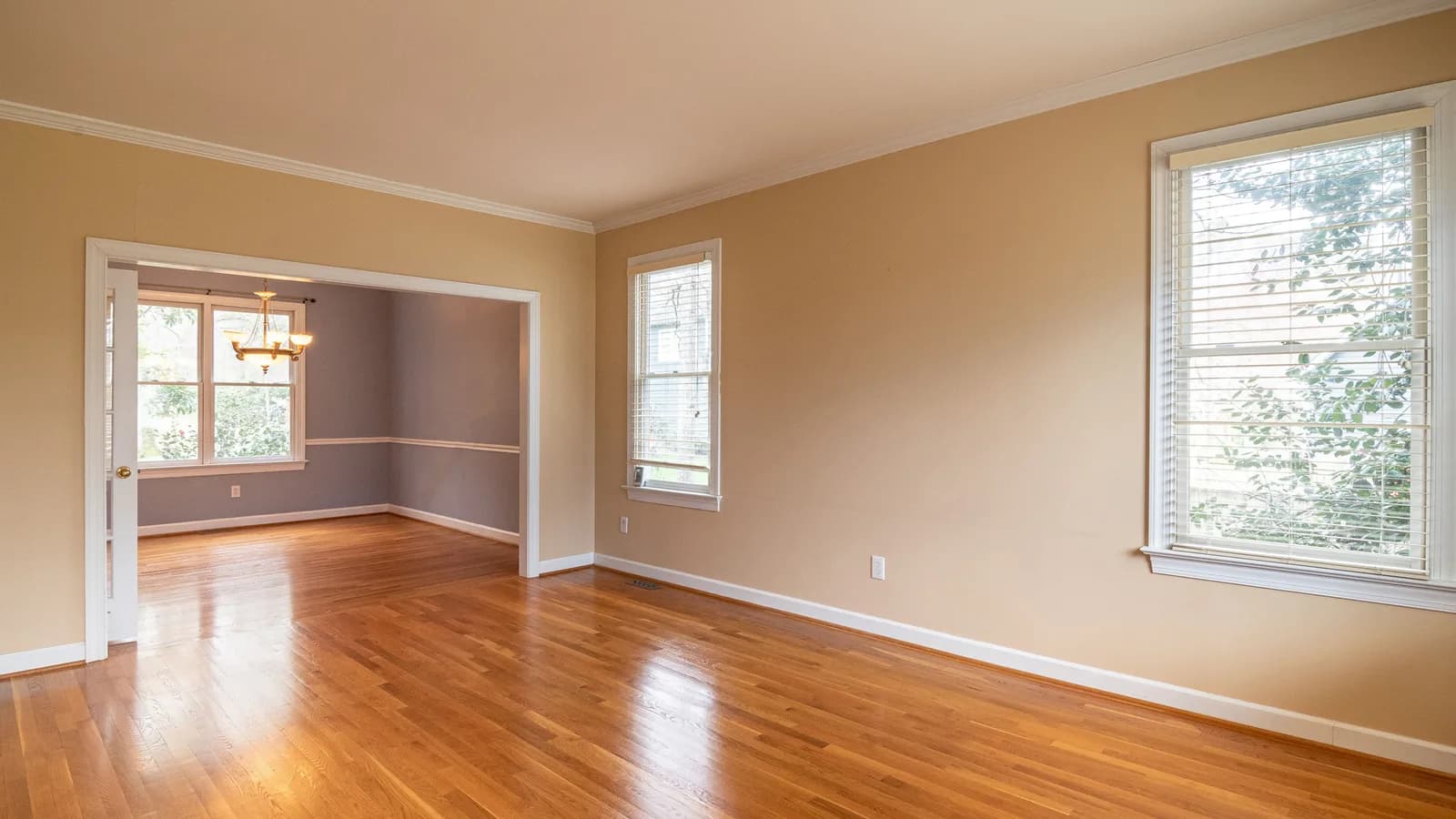
Measure more than the wall where the sofa will sit. You need the room footprint, the route from the truck to the room, the sofa’s full dimensions, and the walking space left after placement. Tape or cardboard on the floor turns a vague estimate into a useful test before you order.
Measure the room, the delivery route, and the walking space after placement before buying a sofa; a sofa that merely fits against a wall may still be the wrong sofa. Length is only one dimension. Depth, height, arm shape, leg clearance, doorways, turns, and existing furniture can all decide whether the purchase works.
My view: sofa depth causes more expensive mistakes than sofa length because people tend to measure the wall and forget that the sofa will project into the room.
Start with a paper sketch. It does not need to look polished. Draw the room, then mark doors, windows, radiators, built-ins, vents, stairs, and anything else that cannot move. Add rough measurements as you go. The point is to see the room as a path and a usable area, not a blank rectangle.
Measure the room’s actual usable footprint
Measure wall to wall in both directions. Then measure the sections that matter around the intended sofa location: from wall to doorway, from sofa wall to coffee table area, from sofa edge to the path through the room, and from the back wall to any window trim or baseboard heater.
Include baseboards and trim. Furniture dimensions generally describe the widest parts of the piece, but room measurements can become misleading if you measure only drywall-to-drywall and ignore projections. A sofa pressed against an exterior wall may leave a small gap because of baseboards. That is normal, but it should be part of your plan.
Record the sofa’s length, depth, height, arm width, seat depth, and, if relevant, chaise projection. Do not rely on a lifestyle photo or a label such as “apartment size.” Ask for or locate the complete dimensions. Some models also list packaged dimensions, detachable leg information, and whether a back or arm can be removed for delivery.
Depth affects the entire room. A deeper sofa can be wonderfully comfortable, but it pushes traffic farther out into the space. If the room is narrow, that difference can turn a comfortable circulation route into a sideways shuffle.
Also measure clearance for anything that opens or moves nearby. A low cabinet drawer, a closet door, a patio door, or a heating vent may be easy to overlook when the room is empty. A sofa can fit beautifully until someone cannot open a drawer fully, reach a window latch, or clean behind it without moving the entire piece.
Measure the path from truck to final room
A sofa can fit perfectly in the living room and still fail at the front door. Measure the route from the likely delivery point to the final spot. Include exterior doors, interior doors, entry halls, corners, stair landings, turns, elevator interiors, and the hallway immediately outside an elevator.
Measure clear openings, not just nominal door size. Door trim, handles, hinges, and door swing can reduce usable width. Note whether the door can be removed temporarily and whether that would create enough additional clearance. Do not assume delivery workers will remove a door, lift a sofa over a railing, or attempt a difficult maneuver.
For stairs, measure width, ceiling height, landing depth, and the turn at the top or bottom. A long sofa may clear a straight stair but fail at a tight landing because it cannot rotate. Low ceilings can make the same problem worse when the sofa must be tipped upward.
Apartment and condominium buyers should also check building rules. Some buildings require scheduled deliveries, use of a service elevator, protective coverings, or a particular entrance. An elevator should be measured inside, including depth, height, and door opening. A piece can be too long to turn into the car even if it fits when standing upright in the room.
A curved hallway or split-level entry creates a different problem. The issue may not be doorway width but whether the sofa can turn while tilted. If you are considering a large sectional or a one-piece sleeper sofa, compare its packaged dimensions and delivery requirements with the tightest part of the route rather than assuming the final room is the only measurement that matters.
Plan walking paths after the sofa is in place
The room is not functional just because the sofa fits. People need to walk past it, open doors, reach windows, sit down, and move around a coffee table without clipping their knees. Mark the common path between the room entrance and other areas. That route deserves protection.
Consider where people will stand when greeting guests, setting down a bag, carrying laundry, or moving through the house in low light. If the sofa extends into that path, the room may feel cramped even when the numbers technically work.
A sofa with a chaise needs special attention. Its projection may be the real limiting dimension, especially in a room where the chaise end faces a doorway or dining area. Decide which side the chaise belongs on only after looking at traffic flow. The popular choice in a product photo is irrelevant to your floor plan.
Also think about the furniture you are keeping. Measure a coffee table, side tables, media console, floor lamp, recliner, and any large plant or cabinet that will share the space. The new sofa does not arrive alone; it changes the spacing of everything around it.
The 4Homes weekly email
Every Tuesday: what changed for homeowners this week, plus our newest guides.
No spam. Unsubscribe anytime.
Test the footprint at full scale
Painter’s tape is one of the most useful tools in furniture shopping. Mark the sofa’s full length and depth on the floor. Add the chaise, if there is one. Then walk around the tape line for a few days. Open doors. Carry a laundry basket through the room. Sit in the intended spot and notice whether the television, fireplace, windows, or conversation area still make sense.
Cardboard can make the test more physical, especially for arm height or a chaise edge. Large flattened boxes taped together can show where a deep sofa will intrude. You are not building a replica. You are testing the volume your body notices.
Use a box or a chair to stand in for the sofa’s back if you are considering a tall model under a window or beneath wall art. Ceiling height matters for tall backs, shelving-style sofa consoles, and delivery maneuvers. A tall piece can visually block a window even when it does not physically cover it.
Take photographs of the taped layout from the room entrance. That viewpoint often reveals crowding that is harder to notice while standing inside the outline.
Choose between length and depth deliberately
If the room is long and narrow, a shorter, shallower sofa can preserve movement better than a long, deep sectional. If the room is wide but has limited wall length, a compact sofa paired with chairs may create more flexible seating. There is no universal best shape.
A deeper sofa favors lounging, but it requires more floor area and may make a coffee table harder to reach. A shallower sofa can suit formal conversation, smaller rooms, and spaces where people need to move behind it. Seat depth is a comfort choice as well as a layout choice; people with different heights often feel differently about the same sofa.
Before ordering, compare your final sketch and tape outline against the seller’s dimensions one more time. Confirm that the listed measurement includes arms, loose cushions, the tallest point, and any angled or curved parts. A few minutes of checking is far easier than dealing with a return, a delivery refusal, or a sofa that makes the room harder to live in.
Frequently Asked Questions
Should I measure a sofa with cushions included?
Use the full listed dimensions, including the widest and deepest points of the finished sofa. Loose cushions can extend beyond the frame, and the delivery dimensions may differ from the seated dimensions.
How do I know if a sofa will fit through a door?
Measure the clear doorway opening and compare it with the sofa’s dimensions, accounting for the angle needed to turn it through. Check the complete route, because hallways and stair landings are often the real problem.
Is painter’s tape accurate enough for planning?
Yes, if you mark the full footprint carefully. It will not show cushion softness or visual bulk perfectly, but it is very effective for testing circulation, door swings, and placement.