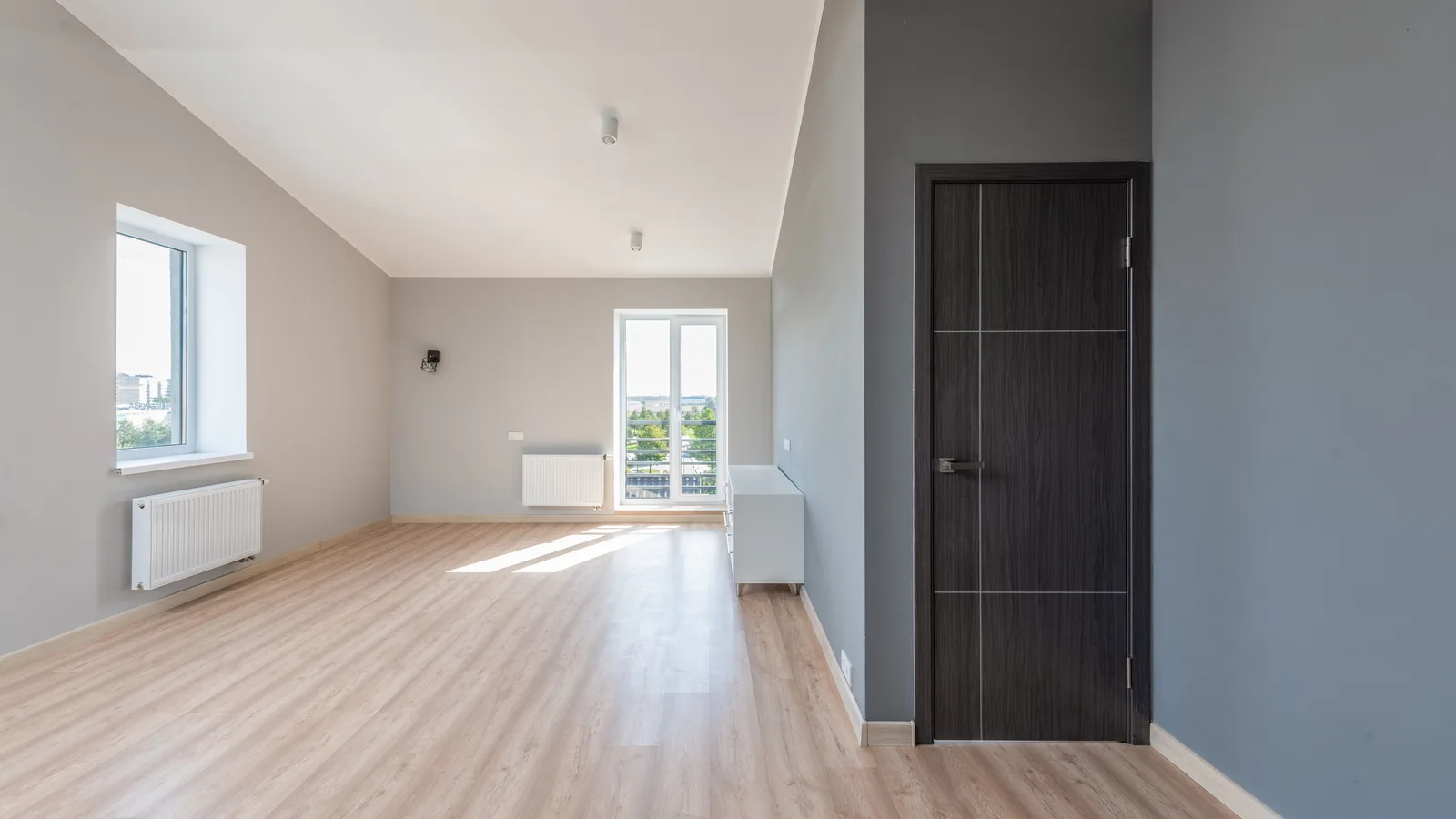
Identify the heater first, transfer its manual clearances to a room map, and keep furniture, fabric, cords, doors, and daily routes out of the heater zone.
Furniture should not block a baseboard heater. Keep the heater's air path and every clearance required by its installed model open, and arrange upholstery, wood furniture, curtains, cords, and doors outside those boundaries. There is no safe universal distance: the model's manual and local requirements control.
What a baseboard heater is
A baseboard heater is a long, low room-heating unit mounted near the floor. Many models warm room air by natural convection: cooler air enters low, passes the heated element or water-filled tube and fins, then rises from the top. Furniture in front of the unit can interfere with that circulation even when it does not touch the cover.
The U.S. Department of Energy Energy Saver guidance tells homeowners to keep baseboard heaters and radiators from being blocked by furniture, carpeting, or drapes. That is the starting rule. The installed product's instructions add the specific boundaries for combustible materials, airflow, servicing, controls, and nearby surfaces.
Identify electric versus hydronic before moving the room
Do not choose a clearance from a photo that resembles your heater. First identify the system without opening an electrical compartment or removing a hot cover. Look for a manufacturer and model label that is visible from the outside, records left with the home, a thermostat model, boiler service records, or an equipment schedule.
| Clue you can observe | What it may indicate | Safe next step |
|---|---|---|
| A long metal unit with an electrical label or dedicated line-voltage thermostat | Electric resistance baseboard heat | Match the exact heater and thermostat model to their manuals; do not open, rewire, relocate, or modify them |
| Pipes entering the enclosure and a boiler or hot-water heating record | Hydronic baseboard heat | Find the enclosure and heating-system documents; ask the boiler or heating professional if the product is uncertain |
| No readable label, mixed equipment, or an enclosure that hides the connections | Type remains unconfirmed | Treat the area as a heater zone and have a qualified professional identify it before finalizing the layout |
Electric and hydronic units can both have hot surfaces and depend on open airflow. Electric equipment adds shock, wiring, thermostat, and circuit concerns. Hydronic equipment adds hot-water, valve, pipe, air, and leak concerns. A cover style does not prove what is inside.
Make a heater-first room map
Start with the wall, not the sofa. Draw the room shell and mark every heater from end to end. Add windows, curtain stack, outlets, doors and their full swings, floor registers, thermostats, and the normal walking route. Then retrieve the exact manual and copy its clearance diagram onto the plan. If the manual lists different limits for front, top, sides, floor coverings, drapery, or thermostats, record each one separately.
Cadet's installation guidance warns against blocking heaters with furniture, bedding, paper, or drapes and says model-specific requirements can vary. King's heater instructions likewise emphasize unrestricted airflow and keeping combustible materials away. Those manufacturer examples explain why a generic internet number is not a substitute for the installed model's manual.
| Map layer | What to mark | Layout test |
|---|---|---|
| Heaters | Full length, type, model, controls, manual clearances, and access points | Nothing enters the required zone in normal use |
| Drapery | Panel length, width when stacked, tiebacks, and movement from windows or airflow | Fabric cannot fall, bow, or blow over the unit |
| Furniture | Actual width, depth, height, upholstery, skirts, recline, drawers, and sleeper extension | Every operating position remains outside the heater boundary |
| Cords | Lamp, charging, media, and extension-cord routes | No cord crosses, touches, runs above, or hides behind the heater |
| Doors and paths | Door swings, closet access, exits, and the route used while carrying household items | An open door does not block the heater and people do not brush a hot surface |
Use painter's tape to show the heater boundary and each proposed furniture footprint. The tape is not a new clearance standard; it only transfers the manual's dimensions to the floor. Test recliners fully open, sofa beds extended, drawers pulled out, and curtains loose rather than tied back for the photograph.
Choose the room layout in the right order
- Reserve the heater zones. Treat required clearances as fixed, just like a door opening or exit.
- Protect the walking route. Do not solve a heater conflict by pushing furniture into the route between doors or against a required exit.
- Place the largest necessary piece. Try the sofa or bed on a heater-free wall first. When that is impossible, reduce or change the furniture plan rather than assuming a narrow gap is enough.
- Place window treatments. Check the complete curtain, not only the rod. Fabric length, stackback, tiebacks, and movement all matter.
- Route power last. Lamps and electronics need a suitable outlet without putting a cord near heat, under a rug, through a doorway, or at a pinch point.
For a tight room, use the full-size test in our small living room layout guide. If a desk shares the room, the shared-room office plan helps account for the chair, drawers, papers, and cords. Window fabric should be planned with the curtain rod height and width guide, then checked again against the heater manual.
Stop for fire, burn, or electrical warning signs
Turn the heater off using its normal control, keep people and pets away, and get qualified help if you notice smoke, sparking, a burning or melting odor, scorching, discoloration, repeated shutoffs or breaker trips, damaged wiring, a loose control, unusual buzzing, or an object lodged inside. If there is active fire, leave the area and call emergency services. Do not reach into a hot or energized heater to retrieve an item.
Also stop the room move if a unit is loose, a cover is sharply damaged, a hydronic unit leaks, a valve or pipe looks compromised, or a child's play or sleep area would put skin against a hot surface. Surface temperature and guarding needs vary. A furniture barrier that violates the manual is not a safe guard.
Do not remove covers, alter a thermostat, splice a cord, change wiring, relocate a hardwired heater, bend fins, open a boiler, or improvise a heat shield. Keep aerosols, solvents, paper piles, bedding, pet beds, and other combustible or heat-sensitive items out of the required zone.
Plan cost before replacing equipment
Most layout corrections cost nothing beyond time and painter's tape. Replacement is not the first answer to a furniture conflict, but it may belong in a larger room or heating plan. Use exact product and local labor quotes because heater voltage, output, length, controls, circuit capacity, boiler condition, permits, and wall repair can change the scope.
| Planning item | Source-based price check | What is not included |
|---|---|---|
| Rearrange existing furniture and shorten the purchase list | $0 before tape or moving help | Repairing unsafe equipment or damaged furniture |
| Cadet 48-inch model 4F1000W electric baseboard | Check the current retailer listing and get a current installed quote | Compatible thermostat, labor, electrical assessment, permits, disposal, finish work, tax, and delivery |
| Cadet BTF2W heater-mounted thermostat | Check the current retailer listing and get a current installation quote | Compatibility confirmation and professional installation |
| Electric relocation or hydronic alteration | Written local quote after system identification | Never estimate from product price alone |
Retail prices change and are not installed-cost promises. Do not buy a heater from length or appearance alone. A qualified professional must confirm the equipment, output, voltage or water-system compatibility, controls, circuit or piping scope, and local requirements.
The 4Homes weekly email
Every Tuesday: what changed for homeowners this week, plus our newest guides.
No spam. Unsubscribe anytime.
How to save money without creating a hazard
Move what you own before shopping. Remove one low-value chair or table, swap the sofa and media wall, or use a smaller movable table instead of buying a new seating set. Photograph the heater label and save the manual with the room sketch so the next furniture purchase begins with the actual boundary.
If heat is weak, first confirm that furniture, rugs, drapes, and dust are not obstructing the unit as the manual permits you to observe or clean it. Do not assume a larger heater is the cure. Building heat loss, controls, boiler performance, circuit limits, or equipment condition may be the real issue. The room-by-room energy reset helps separate comfort problems from decorating problems. Protect wood pieces from concentrated heat using the placement guidance in our solid wood furniture care guide.
When to call a pro
Call a licensed electrician for unidentified or damaged electric equipment, repeated trips, heat or discoloration at controls, any relocation, a new thermostat or circuit question, or any work that exposes wiring. Call a qualified boiler, plumbing, or hydronic-heating professional for leaks, cold sections, valve problems, unusual pipe noise, system identification, or relocation. A qualified HVAC or heating contractor can assess room heat loss and replacement options when the existing system cannot support a workable layout.
Ask for a written scope that identifies the heater model, existing system, proposed equipment, controls, clearance requirements, permits, finish repairs, testing, and disposal. Compare scopes with the contractor quote comparison guide. Renters should report equipment concerns to the property owner and get written approval before any mounting or system work.
Baseboard-heater layout checklist
- Identify electric or hydronic equipment from labels and records without opening it.
- Find the exact installed model's manual and local requirements.
- Transfer every listed clearance to a room sketch and taped floor plan.
- Map furniture in every operating position, including recline, drawers, and sleepers.
- Keep drapes, bedding, paper, rugs, cords, doors, and walking paths out of conflict.
- Stop for smoke, odor, scorching, sparks, trips, leaks, damage, or uncertain equipment.
- Use qualified professionals for wiring, controls, relocation, piping, leaks, or system sizing.
Sources used
U.S. Department of Energy Energy Saver, Home Heating Systems; Cadet installation guidance and model-specific owner's manuals; King Electrical baseboard and heater installation guidance; The Home Depot product listings for Cadet model 4F1000W and thermostat model BTF2W; the installed heater's manual; and applicable local building, fire, mechanical, and electrical requirements.
Frequently Asked Questions
Can a sofa go in front of a baseboard heater?
Do not put a sofa in front of a baseboard heater unless the installed heater's manual explicitly permits that exact position and every required clearance remains open. A sofa can restrict airflow, expose upholstery or dropped items to heat, hide damage, and make the heater harder to inspect. Plan the sofa on another wall when possible.
How far should furniture be from a baseboard heater?
There is no universal furniture clearance for every baseboard heater. Find the manufacturer, model number, and installation or owner's manual, then follow its front, top, side, floor, and combustible-material requirements along with local rules. If the model cannot be identified, have a qualified heating or electrical professional determine a safe plan.
Can curtains hang over a baseboard heater?
Do not let curtains or drapery cover the heater, enter its required clearance zone, or move into that zone when air flows or a window opens. The exact safe arrangement depends on the heater and curtain instructions. Shorter panels, a different window treatment, or a different heater layout may be needed.
How can I tell if my baseboard heat is electric or hydronic?
Check the equipment label, thermostat documentation, home records, and visible connections without removing a cover. Electric units are commonly hardwired and may use line-voltage controls; hydronic baseboards connect by piping to a boiler or other hot-water source. Appearance alone is not reliable, so ask a qualified professional when records and labels do not settle it.