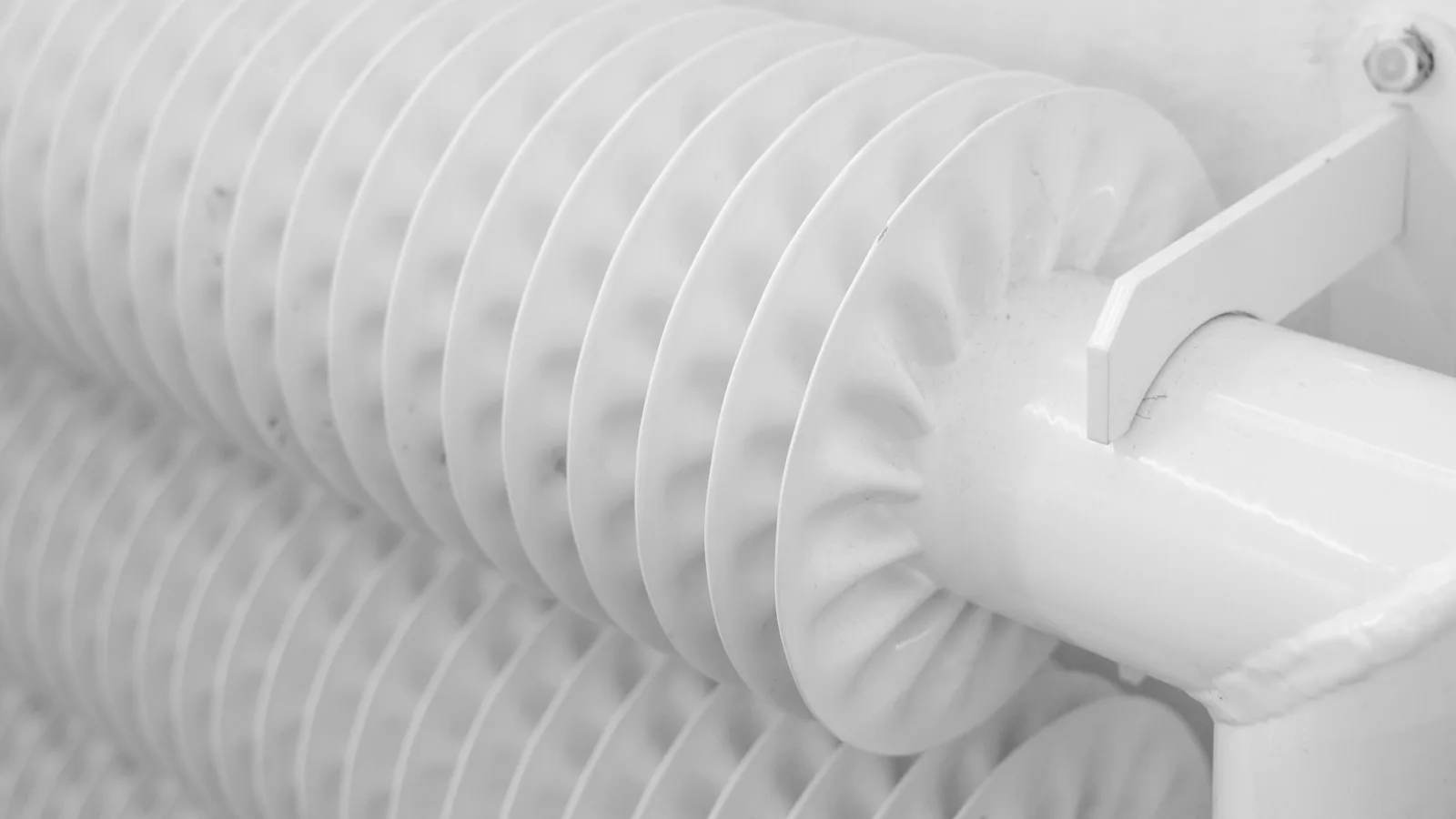
Identify the system, shut it down by the exact manual, vacuum only owner-serviceable areas, and stop for electrical damage, leakage, or persistent odor.
To clean a baseboard heater, identify whether it is electric or hot-water hydronic, shut it down exactly as its manual requires, and wait until it is completely cool. Vacuum accessible dust with the attachment and cover-removal method approved for that model, keep tools off sharp fins and electrical or plumbing parts, then reinstall every cover before restoring service.
Identify the heater before touching a cover
Long metal enclosures can hide very different equipment. An electric baseboard contains a hardwired heating element and may use a line-voltage thermostat. A hydronic baseboard carries heated water through a pipe and fin assembly connected to a boiler. Some fan-assisted or specialty units only resemble ordinary baseboard heat.
Look for a manufacturer and model label visible from the outside, the owner's manual, thermostat documents, boiler records, or an equipment schedule. Do not remove a cover merely to hunt for a label. If pipes enter the enclosure, that suggests hydronic heat; an electrical label suggests electric resistance heat. Neither clue authorizes a generic cleaning method.
| What you find | Shutdown question | Safe next step |
|---|---|---|
| Electric model and exact manual | Which breaker and control must be off? | Follow that model's owner-maintenance directions and verify the heater is cool |
| Hydronic baseboard and boiler records | Can the thermostat be lowered and the system allowed to cool without changing valves? | Use the enclosure maker's cleaning directions; leave piping, valves, and boiler controls alone |
| No reliable identification | Unknown | Clean only the exterior with the unit cool and ask a qualified professional to identify it |
The distinction matters. Turning down a wall thermostat is not the same as disconnecting an electric heater at the service panel. Closing a hydronic valve can create a system problem. If you cannot identify the equipment and its shutdown, stop there.
Gather a small, dry cleaning kit
Most routine cleaning needs a vacuum with a crevice or soft brush attachment, a dry microfiber cloth, a drop cloth, eye protection, and the exact manual. A soft natural-bristle brush can help only if the maker permits it. Keep liquids, spray cleaner, metal tools, and flammable canned-air products away from the heater interior.
Cadet's baseboard cleaning guidance tells owners to switch off the breaker, use a shop vacuum blower or hair dryer to move dust, wipe the top, and vacuum nearby debris. King Electric manuals for several models instead describe vacuuming accumulated dust after disconnecting power and waiting for the housing and element to cool. Those are manufacturer examples, not interchangeable instructions. Your model decides whether air is blown, dust is vacuumed, or a panel comes off.
Clean the heater in seven controlled steps
- Clear the work zone. Move curtains, toys, pet bedding, paper, and portable furniture away without dragging anything across the heater. Keep children and pets out of the room.
- Shut the system down. For electric heat, use the thermostat and breaker procedure in the manual. For hydronic heat, lower the control and let the system cool without operating valves unless its instructions say otherwise.
- Wait for a cold unit. Check the enclosure cautiously. If any part remains warm, wait. Never clean a heater while it cycles.
- Inspect before opening. Stop for a loose enclosure, damaged wiring, leaking pipe or valve, bent cover, scorch mark, pest evidence, or heavy corrosion.
- Open only what the manual allows. Some front panels lift away; some use fasteners; some should remain installed for owner cleaning. Support a removable panel so it does not bend.
- Remove loose dust. Vacuum through approved openings and around the floor. Keep the nozzle and brush from snagging wires, touching elements, crushing hydronic fins, or disturbing a thermostat sensor.
- Close and test. Replace every panel and fastener, remove the drop cloth and tools, then restore normal service as directed. Observe one heating cycle from a safe distance.
Thin metal fins can be sharp and easy to bend. Bent fins reduce open air space, and straightening them can damage a pipe or element. Do not put fingers, a screwdriver, or a stiff brush between them. Vacuum from the accessible side with light passes.
Clean the cover without sending moisture inside
Vacuum the exterior first so a cloth does not grind grit into the finish. Wipe with a dry cloth. If the manufacturer permits a lightly damp cloth or washing a removable grille, keep moisture away from the installed heater and let the separate part dry completely before it goes back on. Never spray cleaner toward openings.
Do not paint a heater, element, pipe, or interior fins as part of cleaning. Paint type, film thickness, ventilation openings, warning labels, and cure temperature matter. A rusty, peeling, or badly bent cover needs product-specific guidance, not a quick coat over dust.
Know when dust is a symptom, not the whole problem
A layer of ordinary household dust is maintenance. Nesting material, droppings, insects, oily residue, construction debris, or water marks change the job. Keep the unit off and use qualified help when contamination may involve pests, sewage, flooding, chemicals, asbestos-containing material, or damaged electrical insulation.
Stop immediately for smoke, sparking, buzzing, melting or persistent burning odor, scorching, a hot or discolored thermostat, a breaker that trips again, leaking water, a loose valve, or a cover that will not reinstall correctly. Do not reset a safety limit, splice wiring, tighten a valve, or keep testing a suspect heater. Use our breaker-trip stop points for an electrical warning and the home water-leak plan for active hydronic leakage.
The 4Homes weekly email
Every Tuesday: what changed for homeowners this week, plus our newest guides.
No spam. Unsubscribe anytime.
Plan the scope before replacing anything
Routine cleaning may require no new purchase when you already own a suitable vacuum attachment, dry cloth, and eye protection. If you need an attachment, replacement cover, or professional service, compare the exact compatibility and written scope rather than relying on a generic online price. Heater dimensions, local labor, minimum service charges, diagnosis, and repairs can all change the total.
| Cost choice | What to verify | Possible savings |
|---|---|---|
| Use an existing vacuum attachment | It is clean, dry, fits the hose, and can reach without touching components | Avoid buying a single-purpose cleaning tool |
| Buy a brush or crevice kit | Hose diameter, return policy, and manual-approved use | Reuse it for registers and other household crevices |
| Replace a cosmetic cover | Heater type, dimensions, clearances, compatibility, end caps, and installation method | Keep a sound heater rather than replacing equipment for appearance alone |
| Hire service | Identification, cleaning scope, diagnosis, parts, labor, testing, and permits if work expands | Combine with scheduled boiler or electrical-heating maintenance when appropriate |
Cleaning may improve airflow that dust was obstructing, but it does not change the heater's rated output. Do not promise an energy-saving percentage. The practical savings are avoiding an unnecessary replacement, catching damage before a heating emergency, and keeping the existing air path open. Our room-by-room energy reset helps separate heater maintenance from insulation, draft, and control problems.
When to call a pro
Call a licensed electrician for unidentified or damaged electric baseboard heat, inaccessible disconnecting means, repeated trips, hot controls, loose wiring, or any work beyond owner maintenance. Call a qualified boiler or hydronic-heating professional for leaks, corrosion at piping, cold sections, valve trouble, air or unusual noise in the system, or a heater that stays hot when the thermostat is lowered.
A heating professional should also handle a unit that will not operate normally after its covers are restored. Ask the written scope to separate cleaning from diagnosis, repair, cover replacement, and system balancing. Compare proposals with the contractor quote comparison guide. For furniture and curtain placement after cleaning, use the separate baseboard-heater layout guide.
Baseboard heater cleaning checklist
- Identify electric, hydronic, or specialty equipment and find the exact manual.
- Use the documented shutdown and wait until every part is cool.
- Protect eyes, clear the room, and keep all cleaning tools dry.
- Remove only the cover or panel the owner instructions permit.
- Vacuum lightly without touching fins, elements, wiring, pipes, or valves.
- Reinstall every dry cover and fastener before restoring service.
- Stop for odor, smoke, heat damage, trips, leakage, corrosion, or uncertain equipment.
Sources used
Cadet, How To Clean a Baseboard Heater; King Electric KCA maintenance instructions and Comfort Guide; U.S. Department of Energy Energy Saver guidance on cleaning baseboard heaters and keeping them unobstructed; the installed heater's manual; and applicable local electrical, mechanical, fire, and building requirements.
Frequently Asked Questions
How often should baseboard heaters be cleaned?
Use the installed heater's manual. King Electric calls for at least annual cleaning on several models and recommends more frequent cleaning where pets or heavy dust add buildup. A sensible time is before the heating season, with another inspection whenever airflow weakens, dust appears, or the heater smells unusual.
Can I vacuum inside a baseboard heater?
Only when the exact heater instructions permit it, the power or heat source has been safely shut down as directed, and the unit is completely cool. Use a vacuum attachment without touching or bending sharp fins, wiring, elements, valves, or pipes. Replace every permitted cover before restoring service.
Why does my baseboard heater smell like burning dust?
Dust on a heater can smell when heat first returns, but smoke, sparking, melting odor, scorching, repeated breaker trips, or an odor that persists after approved cleaning is not a normal cleaning issue. Turn the unit off using its normal control, keep the area clear, and have the correct heating or electrical professional inspect it.
Can I clean a baseboard heater without removing the cover?
That depends on the model. Some manuals permit vacuuming through openings; others direct the owner to remove a front panel after power is disconnected. Do not force a panel, remove an electrical compartment, or copy another model's procedure. Clean only the areas the installed heater's instructions identify as owner serviceable.