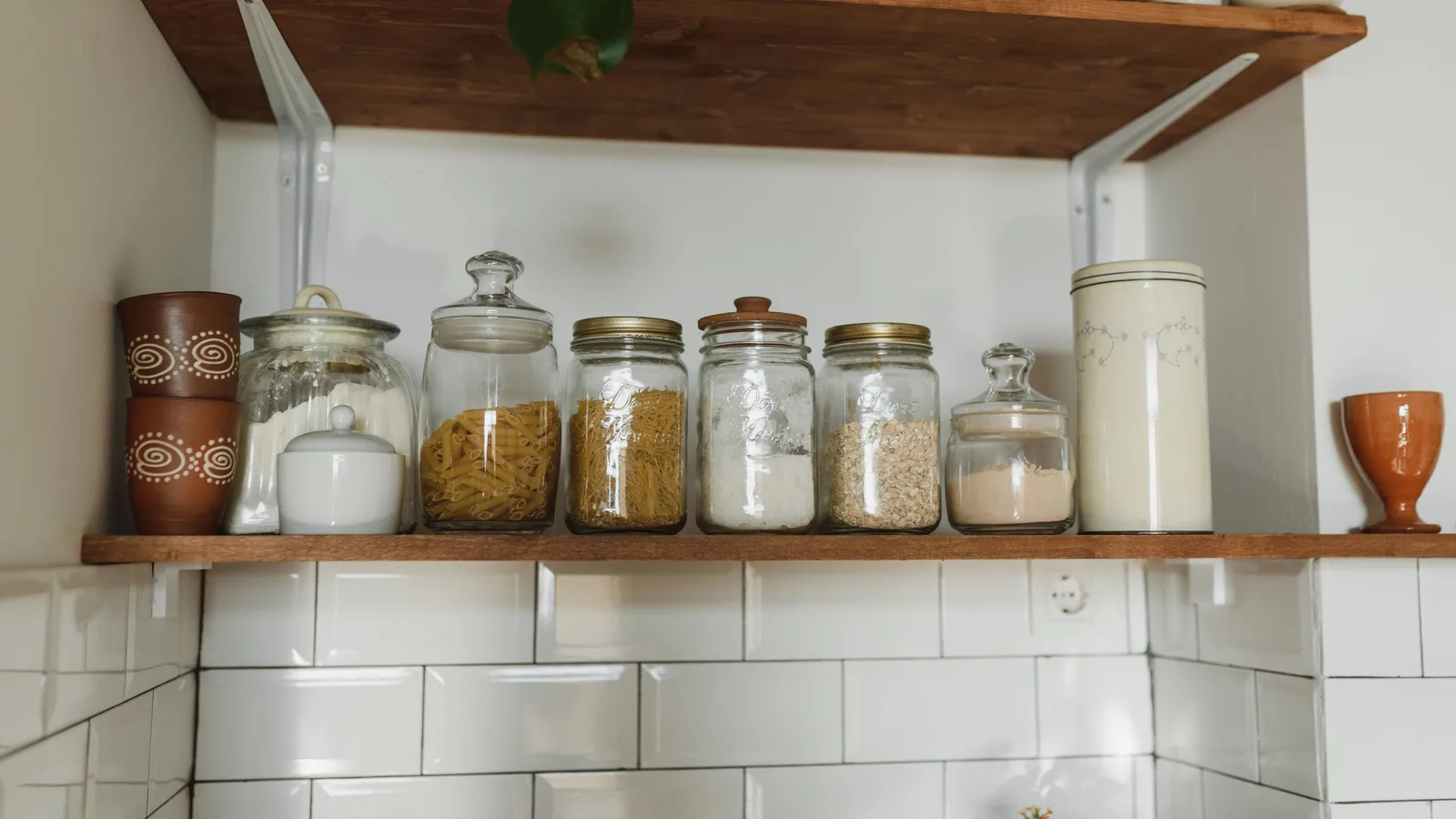
Deep pantry shelves work best when you stop treating them like shallow shelves. Put everyday items at the front, use containers that bring back items forward, and reserve the rear for backstock or rarely used supplies. Measure first, then buy only storage that solves a specific reach or visibility problem.
A deep pantry becomes manageable when the front is for current use and the back is treated as a controlled reserve, not a place where groceries disappear. You do not need a wall of matching containers. You need a way to see what you own, pull it forward safely, and put it back without turning dinner preparation into a scavenger hunt.
My view: most small pantries get worse when people buy storage products before they decide what belongs on each shelf.
A deep shelf creates a false sense of capacity. You can fit more there, certainly, but the useful part of that capacity drops fast when you cannot see past the first row. Bags slump. Cans migrate. A forgotten jar becomes a fossil behind the cereal. The answer is not to make every inch look styled. The answer is to give every inch a job.
Start with the shelves, not the products
Take everything out one shelf at a time. This is less dramatic than emptying the whole pantry onto the kitchen floor, and it lets you make better decisions while keeping the rest of the room usable. Wipe the shelf, inspect the space, and notice what has been hiding behind the first row.
Measure each shelf’s inside width, usable depth, and height between shelves. Do not assume the pantry is square or that every shelf is identical. Older shelving can vary. Also measure the opening of the pantry door and any hinge or trim that narrows access. A bin may fit the shelf but catch on the door frame when you try to remove it.
Write down what you actually store. Food is only part of the picture in many homes. You may have paper goods, lunch supplies, pet food, small appliances, baking pans, reusable containers, and bulk purchases competing for the same shelves. A pantry does not have to hold all of them. If a rarely used appliance is consuming the best reachable shelf, that is a storage decision worth questioning.
Divide the pantry by frequency of use
The best shelves are the ones between about waist and eye level. Put the food and supplies used most often there: breakfast items, school-lunch ingredients, coffee supplies, snacks, cooking staples, or whatever moves through your house quickly. Keep these categories shallow at the front whenever possible.
The back half of a deep shelf is useful for unopened duplicates and less frequent items. Think extra pasta, a second jar of cooking oil, holiday baking ingredients, surplus canned goods, or the backup box of tea. That reserve should be intentional. When you bring home groceries, the new item goes behind the current one or in a designated backstock area. Then the oldest item moves forward as you use it.
Low shelves suit heavier goods. Cans, beverages, bulky bags, and large containers belong there because lifting them from high shelves is awkward and unsafe. High shelves are for light, infrequent things: serving paper goods, seasonal cookie cutters, spare napkins, or unopened bags that do not create a falling hazard.
Do not build categories around what looks balanced. Build them around the rhythm of your household. A person who cooks every night needs cooking ingredients close at hand. A family packing lunches needs a zone that lets children reach approved snacks without pulling down the entire pantry.
Use pull-forward storage where it does real work
Pull-forward bins are one of the simplest fixes for deep shelves. A sturdy, open-front bin can hold packets, pouches, snack bags, baking supplies, tea, soup mixes, or small jars. You pull the bin forward, choose what you need, and slide it back. The contents stay together instead of scattering across the shelf.
Choose bins with low enough sides that you can see inside. Tall opaque bins can become another version of the deep-shelf problem. Clear bins are useful, but they are not mandatory if the front is labeled clearly and the category is stable. What matters is that the container can be removed without lifting it over other items.
Turntables, often called lazy susans, are useful for bottles, jars, condiments, vitamins, and small baking ingredients. They work particularly well in corners or on shelves where a line of containers would hide the rear items. Before buying one, measure its diameter and test whether it can rotate with your tallest likely item on it. A turntable filled with tall bottles can jam against the shelf above.
Shelf risers can help with short canned goods or stacked plates, but use them carefully. They add another support structure inside an already limited space. If the riser is flimsy, cans can roll or tip. If it is too tall, you lose the ability to see what is behind it. Use risers only where they create a clear second level, not because an organizer promised to maximize space.
The 4Homes weekly email
Every Tuesday: what changed for homeowners this week, plus our newest guides.
No spam. Unsubscribe anytime.
Label the part you can see
Labels are most useful when they answer the question you ask while standing in front of the pantry: where does this go? Put labels on the front edge of bins, baskets, or shelf zones. A label on a lid does little good when containers are stacked.
Keep the wording ordinary. “Breakfast,” “Baking,” “Lunch snacks,” “Pasta,” “Backstock,” and “Paper goods” are better than elaborate category names that no one else in the house will follow. If people routinely put an item back in the wrong place, the category may be too narrow or located in an inconvenient spot.
A simple date marker can help with backstock. You do not need to label every grocery item. For shelf-stable items you buy in multiples, place newer items behind older ones. If you decant food into containers, keep the original package or note the use-by information somewhere easy to find. Containers can make a pantry calmer, but they should not remove information you need.
Avoid labeling a system before you have lived with it. Use temporary labels for the first few days. Your first idea may be close, but the test is whether everyone can return items without asking where they go.
Make high shelves safe and realistic
High pantry shelves are not a place for things you need every day. Reaching upward with a glass jar or oversized bulk package is how pantry projects become cleanup projects. Keep the high shelf light, stable, and boring.
Use a proper stepstool with a wide, secure base. Do not stand on a chair, a storage bin, or the pantry shelf itself. Keep the stepstool where it can be retrieved without stretching around obstacles. If it lives elsewhere, people will often improvise instead.
Place heavy items low and close to the front. If a high shelf must hold a bin, use a lightweight one and avoid loading it with dense canned goods. Pull it down with both hands. One-handed reaching while holding a door open is a poor arrangement.
The pantry should feel easier after groceries arrive, not only right after you organize it. Leave a little open room for the weekly flow of food. That small amount of empty space is not wasted. It is what keeps the system from collapsing when someone brings home an extra bag of snacks or a seasonal baking ingredient.
Frequently Asked Questions
Should I use clear bins for every pantry category?
No. Clear bins help when you need to see small loose items, but a clearly labeled open bin can work just as well. Choose based on access, cleaning, and how likely the category is to change.
What should go in the back of a deep pantry shelf?
Put unopened duplicates and items used less often in the back. Keep the currently open or active item at the front so you do not buy the same thing repeatedly.
How do I organize a pantry if several people use it?
Use broad, plainly labeled categories and keep the most-used items easy to reach. A system that everyone can reset is more valuable than one person’s perfectly arranged shelf.