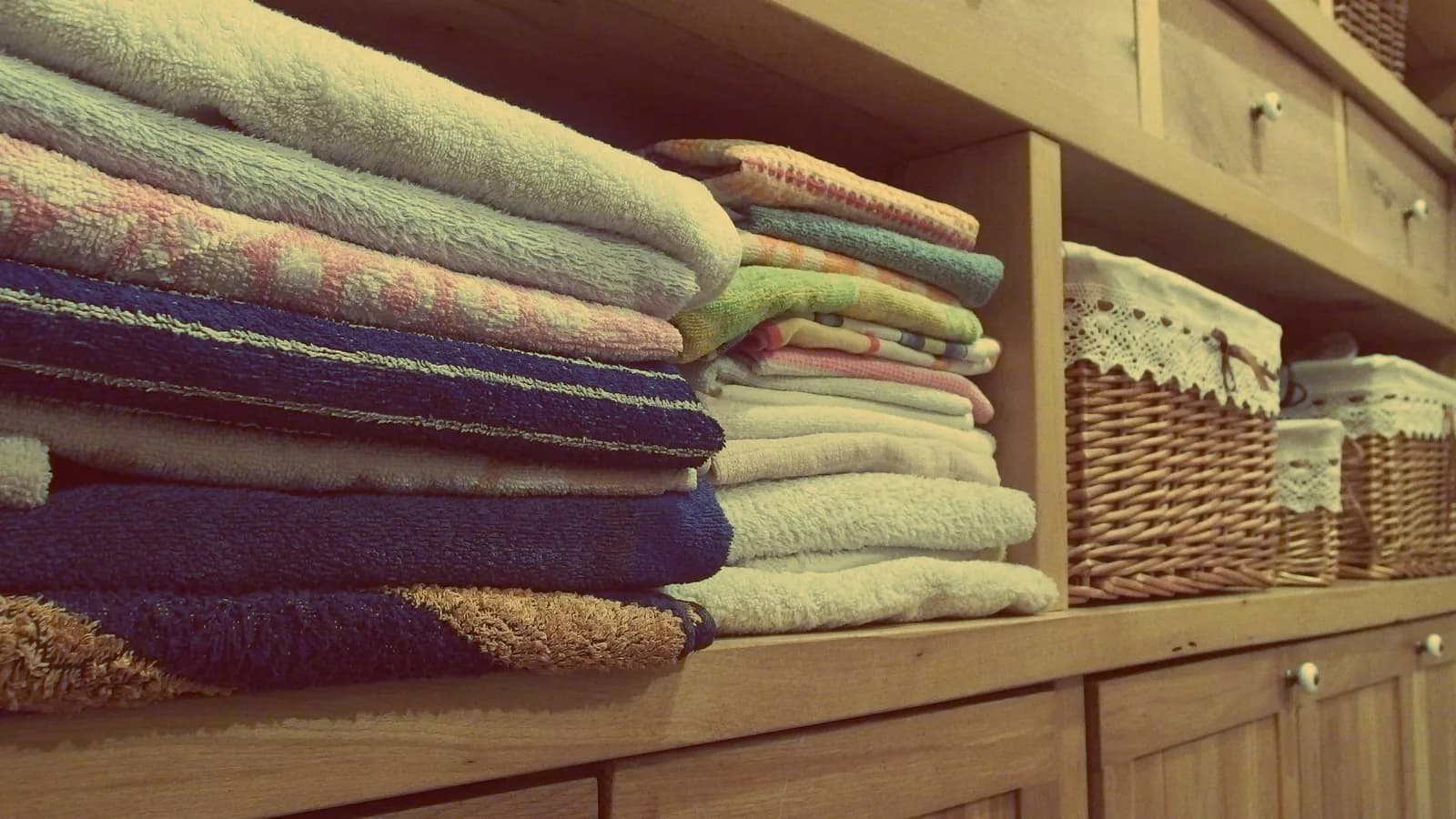
Keep linens organized through a return routine, fixed shelf limits, dry storage, and one landing shelf that absorbs laundry day without wrecking the finished stacks.
A long-term linen closet system is a repeating return routine that gives each bed, bathroom, and textile type a fixed limit and a dry place to come back to. Folding is only one step. The system has to absorb laundry day, houseguests, damp towels, and the extra blanket that someone puts away in a hurry.
My view: the most useful linen-closet feature is one intentionally empty landing shelf. Without it, clean laundry gets pushed into finished stacks and the whole closet unravels in a week.
Clear the closet and check why it drifts
Empty one shelf at a time. Sort by destination before textile type: primary bed, child's bed, guest bed, main bathroom, and extra warmth. Then separate worn-out, stained, wrong-size, and rarely used pieces. An unlabeled fitted sheet is not reserve capacity if nobody knows which mattress it fits.
Wipe the shelves and let them dry. Look for a musty odor, staining, condensation, a plumbing route, an exterior wall, or a supply register blocked by stored fabric. The U.S. Environmental Protection Agency identifies moisture control as the key to controlling mold and says indoor relative humidity should stay below 60 percent, ideally between 30 and 50 percent when possible. A damp closet needs a moisture diagnosis, not scented sachets.
Do not put freshly washed linens away while they are still cool and damp from an incomplete dry. If a closet repeatedly feels clammy or linens develop odor, move the textiles and investigate the room, nearby plumbing, ventilation, and building surface before reorganizing. The moisture source-map method shows how to track timing and location without guessing from smell alone.
Assign capacity by bed and bathroom
Give each regularly used bed one shelf section or one clearly labeled bin. Keep a complete sheet set together. Folding the fitted sheet neatly is optional; containing the correct pieces is not. Put the fitted sheet, flat sheet, and pillowcases inside one pillowcase or a breathable bundle so the set leaves the closet as one unit.
Divide towels by the bathroom or person if they differ in size or use. Everyday bath towels and washcloths belong at hand height. Guest towels can sit farther away. Beach towels, picnic blankets, and pet towels deserve separate categories because they return on different schedules and often bring more sand, hair, or moisture.
Set a shelf limit instead of chasing a universal number of sets. The limit should cover ordinary laundry turnover and realistic guests without turning the closet into a textile warehouse. When a new set arrives, choose which set leaves or moves to a clearly defined emergency rag supply. Do not let worn sheets quietly become a second full inventory.
Fold for retrieval, not display
Use one folding width that fits the shelf depth. Towels stacked with their folded edge facing out are easier to identify and return. Keep stacks short enough that removing the bottom item does not topple everything above it. If stacks keep falling, add a simple shelf divider or use an open bin. Do not solve a tall unstable stack by pushing it against the wall.
Heavy blankets belong low. Light, infrequently used bedding can sit higher in a labeled container that one person can bring down safely. Keep a stable stepstool nearby if the shelf requires one; the ladder and step-access guide explains why furniture and boxes are poor substitutes for proper access equipment.
Delicate quilts, family textiles, and antique linens do not belong in the same routine as bath towels. The Smithsonian recommends storing antique textiles clean, cool, dry, dark, and protected from sharp folds and crushing. Use the care appropriate to the specific textile rather than packing an heirloom under a stack of daily bedding.
The 4Homes weekly email
Every Tuesday: what changed for homeowners this week, plus our newest guides.
No spam. Unsubscribe anytime.
Keep a return shelf for the unfinished step
The return shelf holds clean, fully dry linens that are waiting to be folded or assigned. It is not a permanent miscellaneous shelf. Empty it before the next laundry cycle. This small buffer keeps an imperfect Tuesday from destroying the whole arrangement.
Put a simple inventory card on the inside of the door: bed sizes, which shelf serves each room, and where guest bedding lives. Anyone returning laundry can finish the job without asking. If the household mixes sizes frequently, use a small washable label on each bundle rather than relying on color memory.
Keep medicine, cleaning chemicals, paper goods, luggage, and tools out unless the closet has a deliberate, safe zone for them. Unrelated inventory is what turns a linen closet into the place where lost things go. The cabinet should answer one question quickly: where is the clean textile for this room?
Use a five-minute monthly reset
Once a month, straighten the front edge of the stacks, return items from the landing shelf, and smell and look for moisture clues. Check whether one category is overflowing while another is untouched. Rotate the less-used set forward instead of buying more because the favorite set is always in the wash.
At the change of season, inspect blankets and less-used linens before sealing or stacking them for months. Penn State Extension notes that clothes moth larvae can feed on wool, fur, feathers, and similar animal materials, and that stains from food or body oils can make some other textiles vulnerable. Clean susceptible items according to their care labels, inspect folds, vacuum closet lint, and address an infestation before returning textiles to storage.
Add the five-minute check to the seasonal home-care calendar. The goal is not a showroom fold. It is a dry, bounded inventory that returns to order before a small pile becomes another full cleanout.
When the closet itself runs out of shelf space, the overflow usually becomes off-season clothing storage elsewhere in the apartment — see storing off-season clothes in a small apartment for where that excess should actually go.
Frequently Asked Questions
How do I stop a linen closet from becoming messy again?
Set a limit for each shelf, give every bed a labeled sheet bundle, and leave a return shelf for clean laundry that has not been folded yet. Put linens away only when they are fully dry. A short monthly check for dampness, fallen stacks, and unused extras keeps the reset small.
What should go on the easiest-to-reach linen closet shelf?
Keep the towels, sheets, and washcloths currently in rotation at the easiest reach. Guest linens, extra blankets, and seasonal bedding can use higher or lower shelves. Heavy stacks should stay low enough to lift comfortably, and frequently used medicine, chemicals, or unrelated household supplies should have a safer location of their own.
Should linens be stored in plastic bins?
A bin can protect clean, fully dry textiles from dust and help contain a category, but it should not be used to seal in dampness or hide an active moisture problem. Choose a container that fits the shelf, does not crush the contents, and can be opened for regular inspection. Follow special care guidance for heirloom or delicate textiles.