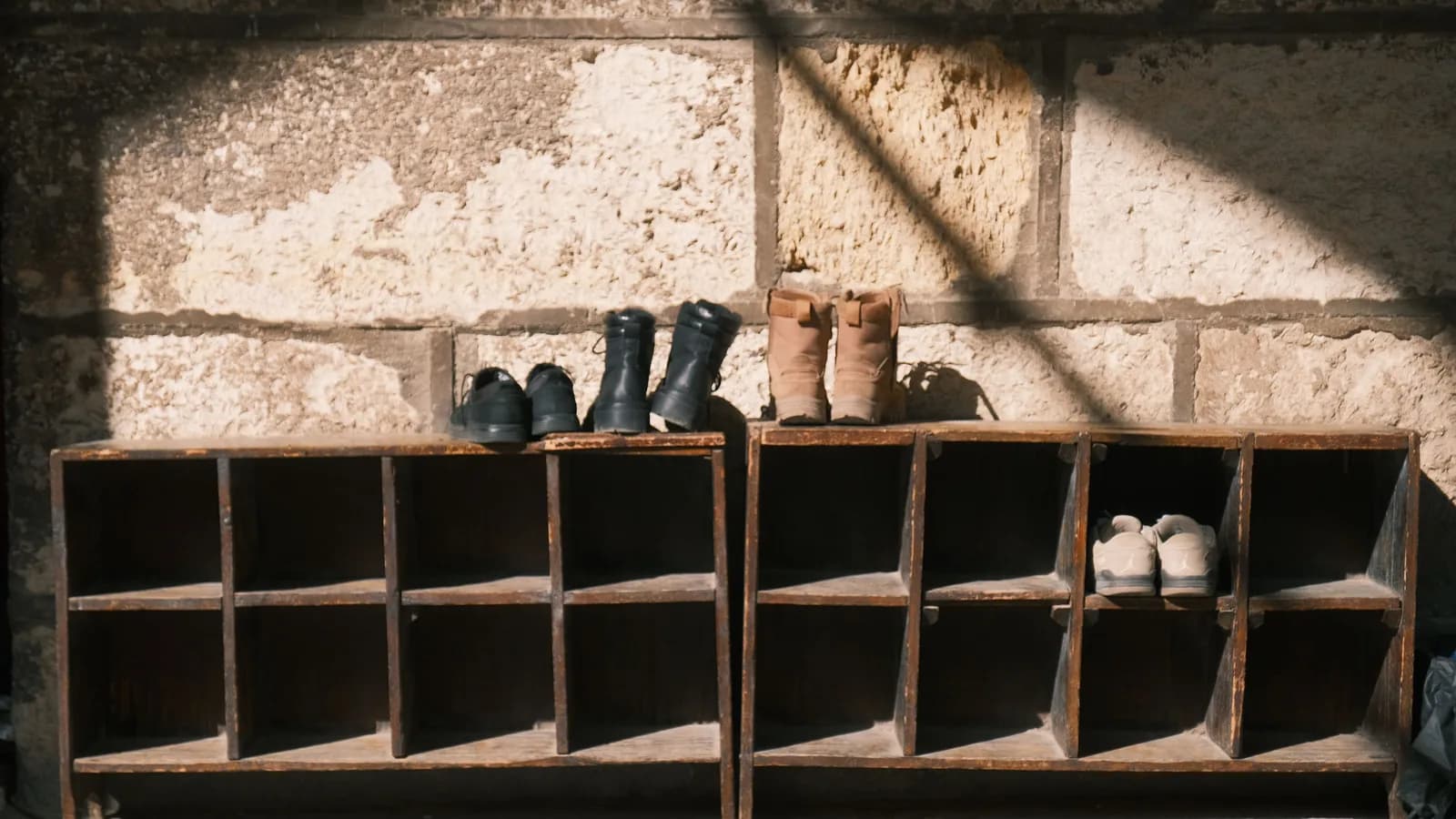
Create a four-zone drop system for keys, coats, shoes, and wet gear without stealing the door swing or the clear route through a narrow entry.
When there is no mudroom, entryway storage works best as four shallow zones: landing, hanging, shoes, and wet gear. Measure the door swing and the clear walking route first, then give each person a strict amount of space at the door instead of trying to store the household's entire season there.
My opinion: most narrow entries do not need a hall tree. They need fewer coats in active rotation and one dependable place for wet shoes.
Measure the route before the wall
Open the exterior door all the way. Open any nearby closet, bathroom, or utility door too. Measure the narrowest point between the open door, wall, railing, furniture, and any fixed obstruction. Mark a proposed cabinet, bench, or basket with painter's tape, then carry groceries through the space and test it with two people passing.
Do not cover an electrical panel, thermostat, return-air grille, radiator, baseboard heater, alarm, sprinkler, or required exit. The 2010 ADA Standards use 36 inches as a common accessible-route width, with specific exceptions, and that is a useful planning benchmark for a comfortable route. It is not a statement that every private home's entry must meet ADA rules. Local code, the building layout, and household access needs control the actual requirement.
If a wheelchair, walker, stroller, delivery cart, or mobility aid uses the entry, test the complete turn and transfer in the real space. A slim cabinet that technically fits the wall can still block the movement someone needs. When storage competes with the safe exit route, storage loses.
Build the four-zone drop system
- Landing zone. A tray or shallow shelf catches keys, wallet, transit card, and outgoing mail. Keep it away from the door edge and out of a child's reach when it holds keys or medication.
- Hanging zone. Hooks hold the current coat and daily bag, not the full closet. Put children's light items at their reach and heavy bags on properly fastened adult-height hooks.
- Shoe zone. A tray, low rack, or shallow tip-out cabinet gives each person one or two active pairs. Keep the most stable everyday shoes easiest to reach.
- Wet zone. A raised-edge boot tray and ventilated hanging area contain rain and snow until gear can dry. Wet storage is temporary.
Keep reserve coats, sports equipment, luggage, and seasonal footwear elsewhere. The rotation method in our off-season clothing guide is more useful than squeezing another tower into the entry. For a nearby closet that already exists, use the fixed limits and return shelf from the long-term closet organization guide.
Choose a layout that matches the entry
For a straight narrow hall: use the shallowest workable wall-mounted shelf or freestanding shoe cabinet, with hooks above only where coats will not brush people walking past. Tape the coat depth too. A 10-inch cabinet can become a much deeper obstruction when a winter parka hangs above it.
For a door that opens into a living room: place the landing tray and shoe zone on the latch side or the first wall the household naturally passes, provided the furniture remains outside the swing. A small closed cabinet often looks calmer than an open rack from the seating area. Use the small living room path test before adding a bench.
For an apartment: start freestanding. A shoe tray, stable low rack, weighted coat stand used within its instructions, and over-door product approved for the door can create the zones without holes. Make sure an over-door rack does not stop the door from closing, damage the weather seal, or create a head hazard. Get written permission before drilling.
For a family entry: assign one hook and one shoe position per person, plus one shared wet tray. Use pictures or names if that helps children return items. Backpacks get one tested hook or low cubby; they do not hang from a lightweight adhesive hook above someone's head.
Use budget tiers instead of a shopping spree
These planning ranges were assembled from ordinary listed prices at IKEA, Target, The Home Depot, and major home-organization retailers. They are not contractor quotes, and delivery, tax, installation, materials, and local availability can move the total.
| Tier | Typical range | Useful pieces |
|---|---|---|
| Reset what you have | $0–$50 | A washable tray, bowl for keys, labeled basket, and relocation of off-season coats. |
| Renter-friendly | $50–$200 | Low shoe rack, boot tray, landing shelf or console, and light-duty removable hooks used within instructions. |
| Family drop zone | $200–$600 | Stable bench or cabinet, properly fastened hooks, baskets, durable wet tray, and wall protection. |
| Built-in solution | $800 and up | Custom bench, closed cabinets, finished carpentry, electrical relocation, or repair and paint. |
Save money by running a two-week trial with tape, boxes, and a boot tray. Count what actually lands there. Buy only after you know the required width, depth, number of hooks, and wet-gear volume. Used benches and cabinets can be good buys, but check stability, recalls, odors, water damage, missing hardware, and whether the manufacturer's anchoring parts are available.
Make wet-weather storage temporary
Boots need a washable tray with enough edge to contain drips and snowmelt. The tray should lift easily for cleaning and drying. Do not let water sit against wood flooring, baseboards, drywall, or the bottom of a particleboard cabinet. A washable mat can catch grit, but a wet rug should not remain pressed against the floor.
Hang wet coats with space between them. A packed closet traps damp fabric and moves moisture to the wall and other clothes. The U.S. Environmental Protection Agency says moisture control is the key to mold control and recommends keeping indoor relative humidity below 60 percent, ideally between 30 and 50 percent when possible. If the entry stays damp, smells musty, or shows condensation and staining, find the moisture source instead of adding fragrance or a closed bin.
Move soaked gloves, hats, and snow gear to a rack or laundry area designed for drying. Keep wet items away from receptacles, chargers, heaters, and open flames. After a storm, empty the tray, wipe the floor, and return fully dry gear to its regular storage.
The 4Homes weekly email
Every Tuesday: what changed for homeowners this week, plus our newest guides.
No spam. Unsubscribe anytime.
Keep children and tipping hazards in the plan
Low hooks help children participate, but they should hold light coats and small bags. Store keys, dog leashes that open an exterior door, medication, and heavy totes where young children cannot access them. Avoid cords, long straps, or loose loops at a child's neck height.
Tall shoe cabinets, cubbies, and hall trees can become climbing equipment. Follow the manufacturer's wall-anchoring instructions and use fasteners appropriate to the wall construction. The U.S. Consumer Product Safety Commission warns that unanchored furniture can tip and cause fatal entrapment injuries. An adhesive strip is not a substitute for a required furniture anchor.
A bench should be designed and rated for sitting if anyone will use it to put on shoes. Test that it does not rock, slide, or block the door. Keep heavy items low, but do not place tempting objects on top of a cabinet where a child may climb to reach them.
Give the system a 90-second reset
At the end of the day, return keys to the landing tray, pair the active shoes, hang the current coat, and move wet gear to drying. Once a week, send anything that belongs elsewhere back to its room. If the entry exceeds its limit every day, reduce the active rotation. Do not reward overflow with another basket.
Add the check to the weekend home reset. Wipe the tray, vacuum grit, inspect hooks and anchors, and check for dampness behind the cabinet. The system should make leaving and returning easier without turning the exit into a storage room.
When to call a professional
Use a qualified installer or carpenter for a heavy wall cabinet, built-in bench, tall unit, or anchoring job when you cannot identify the wall structure and correct fastener. Call a licensed electrician if the plan requires moving a receptacle, switch, thermostat, heater, or wiring. Do not notch furniture around electrical equipment or cover an outlet with a wet-gear station.
Ask the landlord or property manager for written approval before drilling or making permanent changes. If the entry route already feels too narrow for safe movement, an occupational therapist, aging-in-place specialist, or qualified accessibility professional can assess the household's actual needs. Local building or fire officials can answer code questions about exits and clearances.
Frequently Asked Questions
How do I add entryway storage when I do not have a mudroom?
Create four small zones beside the door: a landing spot for keys and mail, hooks for current outerwear, a low shoe area, and a separate wet-gear tray or drying spot. Measure the door swing and walking route first, then keep each zone shallow enough that it does not narrow the exit path.
How narrow can an entryway bench be?
There is no universal safe depth. Tape the proposed bench footprint on the floor, open the door fully, and preserve the route required for your home. A shallow shoe cabinet may work where a seat will not. If someone needs a stable place to sit for shoes, choose a bench designed for seating and follow its load and anchoring instructions.
What is the best entryway storage for renters?
Start with a freestanding shoe tray, a weighted or over-door organizer that does not damage the door, a small landing tray, and removable hooks used only within their stated surface and weight limits. Get written permission before drilling, and do not depend on adhesive hooks for heavy bags, child climbing loads, or emergency items.
How do I organize a family entryway with kids?
Give each child one reachable hook or cubby and one shoe position, then keep heavy adult bags and keys higher. Anchor tall furniture according to its instructions, keep the floor route open, and use a short daily reset rather than storing every coat and pair of shoes at the door.
Where should wet coats and boots go in a small entry?
Place boots on a washable tray with a raised edge and hang wet coats where air can circulate without dripping onto an outlet, heater, wood floor, or crowded closet. Move saturated gear to a better drying area and clean and dry the tray after storms so moisture does not remain trapped against the floor or wall.