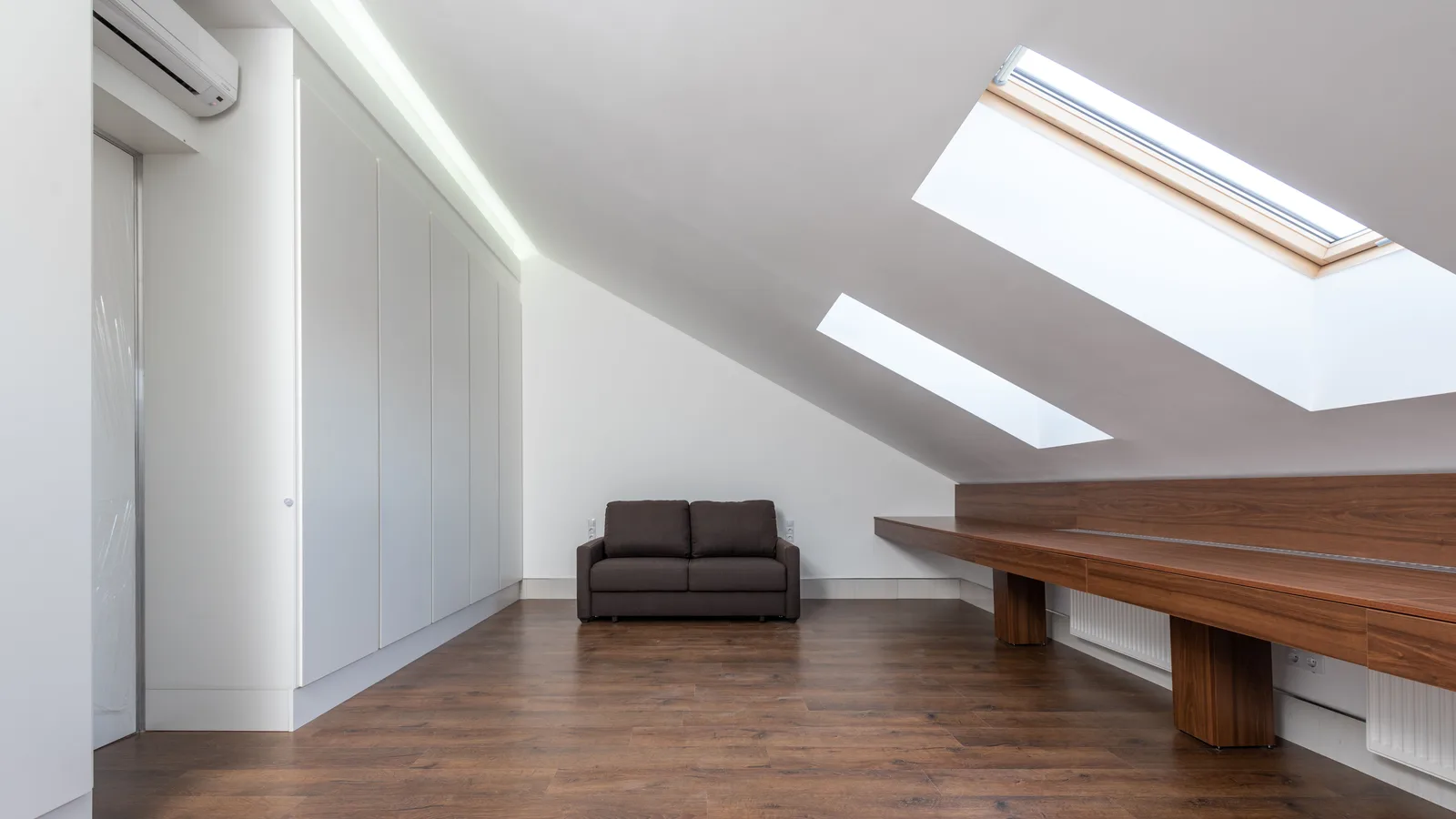
Confirm safe access, supported surfaces, storage capacity, insulation, ventilation, and system clearances before a single bin enters the attic.
Organize an attic for storage only after confirming that the access, structure, walking surface, insulation, ventilation, and electrical conditions support storage. Keep a clear path from the opening, use light climate-tolerant contents in manageable labeled bins, and leave vents, wiring, ducts, and equipment visible and serviceable. An unfinished attic with exposed joists is not automatically a storage room.
The first organization decision may be to store nothing there. Heat, cold, humidity, leaks, pests, difficult access, and limited structural capacity can damage belongings or the house. Bins and labels solve retrieval; they do not create a safe floor or add load capacity.
Pass the attic suitability check first
| Check | Acceptable starting point | Stop and get help when |
|---|---|---|
| Access | Installed stairs or ladder is stable, labeled, unobstructed, and used within its instructions | It is loose, damaged, recalled, difficult to deploy, or requires carrying a bin while climbing |
| Walking and storage surface | A defined supported surface is approved for the intended use | Joists, insulation, drywall, loose boards, or an unknown deck are exposed |
| Structure | Capacity and storage boundaries are documented | Framing is cracked, bowed, altered, damp, or capacity is unknown |
| Building systems | Vents, wiring, junctions, ducts, pipes, and equipment remain clear | Storage would cover, compress, contact, or block them |
| Conditions | The space is dry, pest-free, lit, and suitable for each item | There is staining, odor, mold, droppings, extreme heat, or unsafe visibility |
Do not walk on ceiling drywall, insulation, or unsupported space between framing. Do not move wiring, flatten insulation, block soffit or other vents, or lay loose plywood to create a path. Department of Energy guidance emphasizes complete insulation coverage and maintained attic ventilation; compressed insulation loses performance. The attic-insulation quote guide helps preserve those requirements in a contractor scope.
Check the access ladder's manufacturer, model, load label, fasteners, feet, hinges, and recall status from the floor before use. CPSC announced a 2026 recall covering more than one million named attic stairway ladders because bolts can break and create a fall hazard. That does not mean every attic ladder is affected; it means the model number matters.
Edit the contents on the living floor
Sort near the attic, not inside it. Create keep-here, keep-elsewhere, donate, recycle, hazardous-disposal, and trash groups while the exit remains clear. Anything too awkward or heavy for one controlled transfer belongs somewhere else unless a safe material-handling plan and helper are in place.
Attics are poor homes for items harmed by temperature swings or humidity: irreplaceable photographs, important records, electronics, batteries, candles, medicines, food, artwork, instruments, books, and many textiles or wood objects. Keep paint, fuel, propane cylinders, aerosols, pesticides, cleaners, and other chemicals in locations permitted by their labels and local rules, not in a hot attic. A lidded tote does not turn an unsuitable environment into conditioned storage.
Good candidates are lightweight, replaceable items used occasionally and tolerant of the actual attic conditions—for example, some seasonal decorations, empty luggage, or camping accessories after their product care rules are checked. Remove batteries before storage when the product permits, and store the batteries by the household-battery safety guide.
Build zones around retrieval, not empty corners
- Draw the approved footprint. Mark the access opening, supported walking path, storage surface, vents, equipment, lights, and no-storage clearances.
- Put frequent seasonal items nearest the access. Do not stack around the ladder or require anyone to step backward toward the opening.
- Keep loads small and low. Follow structural limits and bin ratings. A large tote filled with books can become an unmanageable concentrated load.
- Use specific zones. “Winter decorations,” “camping,” and “empty luggage” work better than “miscellaneous.” Leave visible separation between zones.
- Label without opening. Put the category, brief contents, destination room, pack date, and bin number on the top and two visible sides.
- Create an inventory. Record the bin number and attic zone in the home-inventory system. Photograph the final clear route.
- Test one retrieval. Bring one representative bin down and back without moving another stack. If the route needs a reach across insulation or a twist on the ladder, redesign it.
Container choice does not replace a safe structure
Rigid lidded totes can resist dust and minor drips better than damaged cardboard, but they can also hide leaks and encourage overfilling. Choose a container that fits through the opening with hand clearance and remains manageable at its actual loaded weight. Follow its stack-height, nesting, and load instructions. Keep heavier approved contents low; never place them near the opening edge or on top of lighter bins.
Home Depot listings checked November 9, 2026 showed 27-gallon tote examples from $8.98 to $24.98. Treat that as a dated retail planning range, not a reason to buy large bins or a local price promise. Labels, smaller containers, shelf hardware, delivery, and tax can add cost. First reuse sound containers that fit the approved area and contents.
Shelving adds concentrated load and fastening questions. Do not attach racks to trusses, rafters, wiring-adjacent framing, or uncertain surfaces. Use a qualified contractor or structural professional when storage requires new decking, shelves, lighting, access changes, or reinforcement.
Know when the project stops being organization
A professional attic inspection is appropriate when storage capacity, framing, moisture, ventilation, insulation, electrical work, or safe access is uncertain. Angi's 2026 national planning data places many attic inspections around $200 to $500, with a $350 average and a broader $100 to $1,000 range depending on condition and scope. Specialist electrical, mold, pest, HVAC, or structural reviews can be separate. Ask in writing whether the inspection covers storage loads, the access assembly, walking surfaces, framing, moisture, insulation and ventilation, wiring, ducts, equipment, and proposed storage boundaries.
Do not buy flooring first. Angi's September 2026 attic-finishing data lists about $30 per square foot for a basic finish with utility flooring and simple electrical work, but organizing an attic is not the same as finishing one, and that national figure is not a quote. The required scope could be smaller, larger, or inappropriate. Save money by reducing possessions and defining a modest supported zone before pricing construction.
Leave mold, animal waste, damaged insulation, active leaks, exposed electrical defects, and structural movement undisturbed for the right professional. Storage should never conceal a condition that needs inspection. If the attic is not suitable, improve closets or the garage with the one-car garage storage guide instead.
The 4Homes weekly email
Every Tuesday: what changed for homeowners this week, plus our newest guides.
No spam. Unsubscribe anytime.
Attic storage checklist
- The access model, condition, load label, and recall status are checked.
- A supported walking and storage surface and its boundaries are documented.
- No bin rests on insulation, ceiling material, exposed joists, ducts, or wiring.
- Vents, junctions, pipes, equipment, and inspection routes remain open.
- Heat-, humidity-, chemical-, and value-sensitive items are relocated.
- Every container fits the opening, stays manageable, and follows stack limits.
- The route from the opening remains clear with no pile at the ladder.
- Labels and a numbered inventory identify contents without opening bins.
- Moisture, pests, structure, and access are rechecked after weather or roof work.
Attic storage FAQs
Is it safe to use an unfinished attic for storage?
Only after safe access, a supported walking and storage surface, structural capacity, moisture, insulation, ventilation, wiring, and equipment access are confirmed. Exposed joists and ceiling drywall are not a storage floor. If those conditions are unknown, keep belongings out and have the space evaluated before adding weight.
What should not be stored in an attic?
Move heat-, cold-, humidity-, or moisture-sensitive belongings elsewhere, including irreplaceable photos, important papers, electronics, batteries, candles, medicines, food, paint, fuel, propane, aerosols, and household chemicals. Also avoid heavy furniture and anything that cannot be moved safely through the access opening.
Can I put plywood over attic insulation for storage?
Do not lay plywood over insulation or exposed framing as an organizing shortcut. Flooring can compress insulation, block ventilation, conceal wiring or junctions, and add loads the structure was not designed to carry. A qualified professional should define the supported storage area, insulation clearance, access, and permit requirements.
What are the best containers for attic storage?
Use manageable containers with secure lids only after confirming the attic suits the contents. Choose a size one person can safely move through the opening, follow the container's stack and load limits, label more than one side, and keep every bin on the approved storage surface rather than insulation or ceiling material.
How often should attic storage be checked?
Inspect it when seasonal items are retrieved and after severe weather, roof work, a leak, or pest activity. Check the access, walking surface, moisture, insulation, vents, equipment clearances, stacks, and labels. Remove damaged containers and update the inventory instead of filling the walkway with temporary piles.
Sources used
U.S. Department of Energy attic guidance for continuous insulation and ventilation; U.S. Consumer Product Safety Commission's 2026 Louisville Ladder attic-stairway recall for model-checking context; Angi 2026 attic inspection and attic finishing cost data; Home Depot tote listings checked November 9, 2026; and the installed access, storage, and container instructions for controlling limits.
Frequently Asked Questions
Is it safe to use an unfinished attic for storage?
Only after safe access, a supported walking and storage surface, structural capacity, moisture, insulation, ventilation, wiring, and equipment access are confirmed. Exposed joists and ceiling drywall are not a storage floor. If those conditions are unknown, keep belongings out and have the space evaluated before adding weight.
What should not be stored in an attic?
Move heat-, cold-, humidity-, or moisture-sensitive belongings elsewhere, including irreplaceable photos, important papers, electronics, batteries, candles, medicines, food, paint, fuel, propane, aerosols, and household chemicals. Also avoid heavy furniture and anything that cannot be moved safely through the access opening.
Can I put plywood over attic insulation for storage?
Do not lay plywood over insulation or exposed framing as an organizing shortcut. Flooring can compress insulation, block ventilation, conceal wiring or junctions, and add loads the structure was not designed to carry. A qualified professional should define the supported storage area, insulation clearance, access, and permit requirements.
What are the best containers for attic storage?
Use manageable containers with secure lids only after confirming the attic suits the contents. Choose a size one person can safely move through the opening, follow the container's stack and load limits, label more than one side, and keep every bin on the approved storage surface rather than insulation or ceiling material.
How often should attic storage be checked?
Inspect it when seasonal items are retrieved and after severe weather, roof work, a leak, or pest activity. Check the access, walking surface, moisture, insulation, vents, equipment clearances, stacks, and labels. Remove damaged containers and update the inventory instead of filling the walkway with temporary piles.