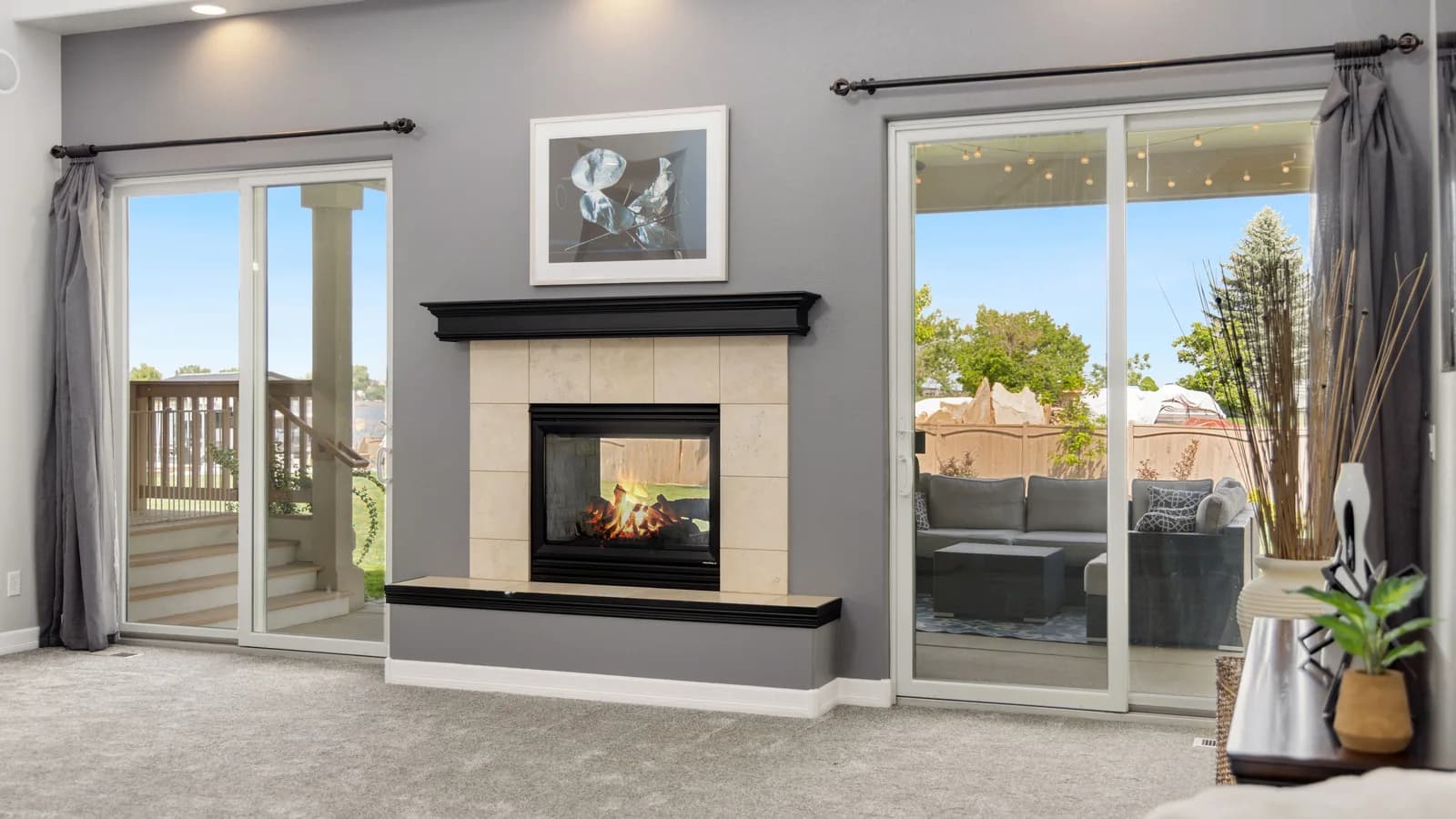
Identify whether the glass panel or screen is resisting, clean only as the exact manual permits, and stop before force turns a door problem into a safety or security problem.
When a sliding glass door is hard to open, stop pushing harder and identify the resistance pattern first. A vacuum-and-clean check may help a uniformly gritty track, but a one-point bind, scraping, tilted panel, latch trouble, cracked glass, or water at the sill needs a different response. Heavy glass can tip or break; do not lift, pry, remove, or force the panel.
A sliding glass door is the glazed operating panel in a patio-door system. The insect screen is a separate, much lighter panel on many installations. Confirm which panel resists: a screen can have a screen-track issue, while the glass panel involves its rollers, sill track, seals, latch, and frame.
First, identify the panel and the pattern
With the opening clear, use normal hand pressure once. Do not brace a foot against the frame, pull on the handle as a lever, or recruit a second person to overpower the door. Note where resistance begins and whether it changes during travel.
| What you feel or see | What it can mean | Safe homeowner scope |
|---|---|---|
| Light screen resists, but glass panel moves normally | Screen panel, screen track, mesh, or screen hardware may be involved | Confirm it is the screen; use its own maker guidance or request screen service |
| Gritty or crunchy resistance across the full travel | Loose debris or dried buildup is a reasonable first suspect | Use the model-approved cleaning sequence below; reassess after it dries |
| It binds at one repeatable spot | A localized obstruction, track damage, uneven support, or alignment issue is possible | Photograph the location; do not grind, bend, or pry the track |
| Bottom rail or frame scrapes, or the panel looks tilted | The panel may not be supported or aligned correctly | Stop operating it and arrange patio-door service |
| Handle or latch fights before the panel starts sliding | Latch alignment, strike, hardware, or panel position may be the problem | Do not bypass security hardware; keep the opening secured and call a pro |
| Water stays in the exterior sill/track or drainage slots look blocked | Debris may be impeding the drainage path; a leak can also involve the installation | Clear only accessible loose debris as the manual permits; document water after rain |
| Cracked glass, loose handle, frame movement, or visible damage | Safety, security, and weather-resistance may be compromised | Stop and get qualified repair help |
Use the model manual before any product or adjustment
Find the manufacturer label and model information before buying a cleaner, lubricant, roller, or part. Door families differ in track material, adjustment access, drainage layout, lock hardware, and maintenance instructions. Andersen's current guidance, for example, calls for a soft brush, mild soapy water, clean water, and drying time on applicable sill tracks; it says not to lubricate those tracks. Roller guidance is model-specific.
Milgard recommends occasional track vacuuming and clear sill areas. Its exterior weep openings drain outside, and water can collect on the sill or outside track. Do not copy an adjustment procedure from another brand or an online video.
Safe track-cleaning checklist
Cleaning is the first homeowner task only when the glass panel is seated, the glass is intact, the handle and latch are sound, there is no frame movement or active water intrusion, and the manual permits the work. Stop if normal pressure will not move the panel enough to expose an area safely.
- Read the exact care instructions. Confirm the operating panel, approved cleaner, brush, drainage cautions, and any lubricant instruction.
- Make the opening safe. Keep children and pets away, clear the travel path, and keep hands out of the bottom rail and roller area.
- Vacuum loose material only. Vacuum accessible dry grit, hair, leaves, and insects with a crevice attachment. Do not poke drain paths with wire or sharp tools.
- Clean one exposed section as directed. Use the approved mild cleaner and a soft brush or cloth where the manual allows. Do not use abrasive pads, blades, track grinding, or high-pressure water.
- Move, dry, and test gently. Clean a newly exposed section only if the panel moves with ordinary effort. Stop for binding, scraping, or dropping; then close, latch, and lock normally and document any damage or water pattern.
Do not make lubricant the first move. Milgard's care materials include model-specific hardware lubrication guidance, while Andersen tells owners of its gliding doors not to lubricate the track. If the manual permits a product, use that model's location and product type—not a generic oil, household spray, or a borrowed roller-adjustment method.
Map the symptom to the right scope
Grit all the way across: after cleaning, a genuine improvement supports a maintenance explanation. If it remains heavy or makes noise, the next step is an assessment, not more cleaner or pressure.
One-point binding: mark the point with removable tape on the frame, not the glass. Look for a dent, damaged cap, changing gap, or contact point. Do not file, grind, straighten, or pack the track.
Scraping or a tilted panel: stop. A rubbing bottom rail, shifted panel, or a panel that must be lifted to move needs trained support and model-specific inspection. Do not remove the panel or attempt roller replacement or adjustment.
Latch-before-slide trouble: a handle that is loose, a latch that will not release, or a lock that only works when the panel is lifted is a security issue as well as an operation issue. Do not leave the door partly locked, remove lock parts, or defeat the latch. A qualified patio-door technician or locksmith can determine whether the hardware, strike, alignment, or frame is responsible.
Water and weeps: photograph where water appears after rain and whether it drains outside. Milgard notes that exterior sill or outside-track water can be normal in a weep-designed system, but water entering the home, staining finishes, soft materials, or a persistently blocked drainage path is not a cleaning project. Preserve the evidence and call a qualified door or building-envelope professional.
What a repair visit may cost
Use national figures to plan the conversation, not to approve a repair unseen. HomeGuide's 2026 cost guide places a typical sliding-glass-door repair at $200 to $800, with a $500 national average, and lists $75 to $150 service or diagnostic fees plus $100 to $250 minimum job fees in many cases. Angi's current 2026 guide gives an average $150 to $800 range and a $400 national average. The sources use different methods, so ask what the local quote includes.
| Possible scope | National planning range | What to put on the quote request |
|---|---|---|
| Diagnosis or minimum visit | HomeGuide lists $75 to $150 diagnostic fees and $100 to $250 minimum job fees | Whether the fee applies to the repair, travel limits, and the written diagnosis |
| Roller repair or replacement | HomeGuide: $75 to $250 | Exact door model, part availability, panel handling, track condition, labor, and warranty |
| Track realignment or replacement | HomeGuide: $80 to $200 realignment; $200 to $450 replacement | Which track component is damaged, why, and whether panel removal or frame work is included |
| Handle or lock repair | HomeGuide: $50 to $200 for a handle; $50 to $300 for a lock | Secure closing and locking test, matching finish, keying if relevant, and replacement parts |
| Damaged or fogged glass | HomeGuide: $300 to $1,200 or more per panel | Safety glazing, insulated-glass specification, measurements, lead time, seals, and disposal |
| Frame repair | HomeGuide: $250 to $850 or more | Cause of movement or water entry, affected finishes, flashing or sill work, and closeout evidence |
These categories overlap. A low roller can have damaged the track, and a leaking sill can expose a frame problem. Request an itemized diagnosis before authorizing parts. For a larger opening or surrounding finish issue, use the replacement-opening quote checklist to compare scope rather than only the total.
The 4Homes weekly email
Every Tuesday: what changed for homeowners this week, plus our newest guides.
No spam. Unsubscribe anytime.
When to call a pro now
Call a qualified patio-door repair company promptly for cracked or loose glass, an off-track or tilted operating panel, a loose handle, a latch or lock that does not secure, visible frame damage, water entering the home, or resistance that remains after approved cleaning. Keep people away from a compromised opening. If security is compromised, use a temporary measure that does not drill through the door, trap the panel, or prevent emergency exit, and get professional direction.
For less urgent persistent resistance, give the technician the model, resistance location, and photos or a short video. Ask for track and roller inspection, latch and lock testing, an exterior-drainage check, and a separate scope for surrounding frame or water-management work.
How to save money without risking the door
Do the safe free work: identify the panel, find the manual, vacuum permitted accessible debris, document the pattern, and gather the model label before calling. Do not remove or lift a heavy panel, pry a rail, grind the track, replace rollers, or compromise the lock.
Ask whether the diagnostic fee is credited toward repair and whether the quote includes panel handling, track inspection, lock testing, cleanup, and warranty. Compare the same written scope when the door is secure and stable. If weather, drafts, or water around the opening are part of the concern, also read how to diagnose a drafty exterior door without hiding damage and the drainage documentation guide.
Sources used
Milgard, Window & Door Care & Maintenance and How to Clean Sliding Door Tracks; Andersen Windows & Doors, Clean and Care for Sill Track and Rollers on Andersen Gliding Patio Doors, Unable to or Hard to Close Andersen Gliding Patio Door, and model-specific gliding patio-door instructions; HomeGuide, How Much Does Sliding Glass Door Repair Cost? (2026); Angi, How Much Does It Cost to Repair a Sliding Glass Door? [2026 Data]; and the exact patio-door manufacturer installation, care, and operating manual for the door in the home.
Frequently Asked Questions
Why is my sliding glass door hard to open?
Start with the resistance pattern. Gritty resistance through the whole travel can be track debris, while a bind at one spot, scraping, a tilted panel, or a latch that fights before the panel moves points beyond routine cleaning. Do not force a heavy glass panel; have a patio-door technician assess persistent resistance.
Why is my sliding glass door hard to close?
A hard-to-close door can have the same resistance patterns as a hard-to-open one, but latch alignment can also be involved. Stop using force if the handle is loose, the latch will not engage, the panel must be lifted to meet the strike, or the lock no longer secures the opening. Keep it closed and arrange qualified repair rather than bypassing the lock.
How much does it cost to repair a sliding glass door?
HomeGuide's 2026 national planning guide lists $200 to $800 for an average sliding-glass-door repair, with rollers at $75 to $250 and track replacement at $200 to $450. Those are planning figures, not a quote: glass type, panel size, access, warranty, frame damage, service fees, and the exact parts can change the total.