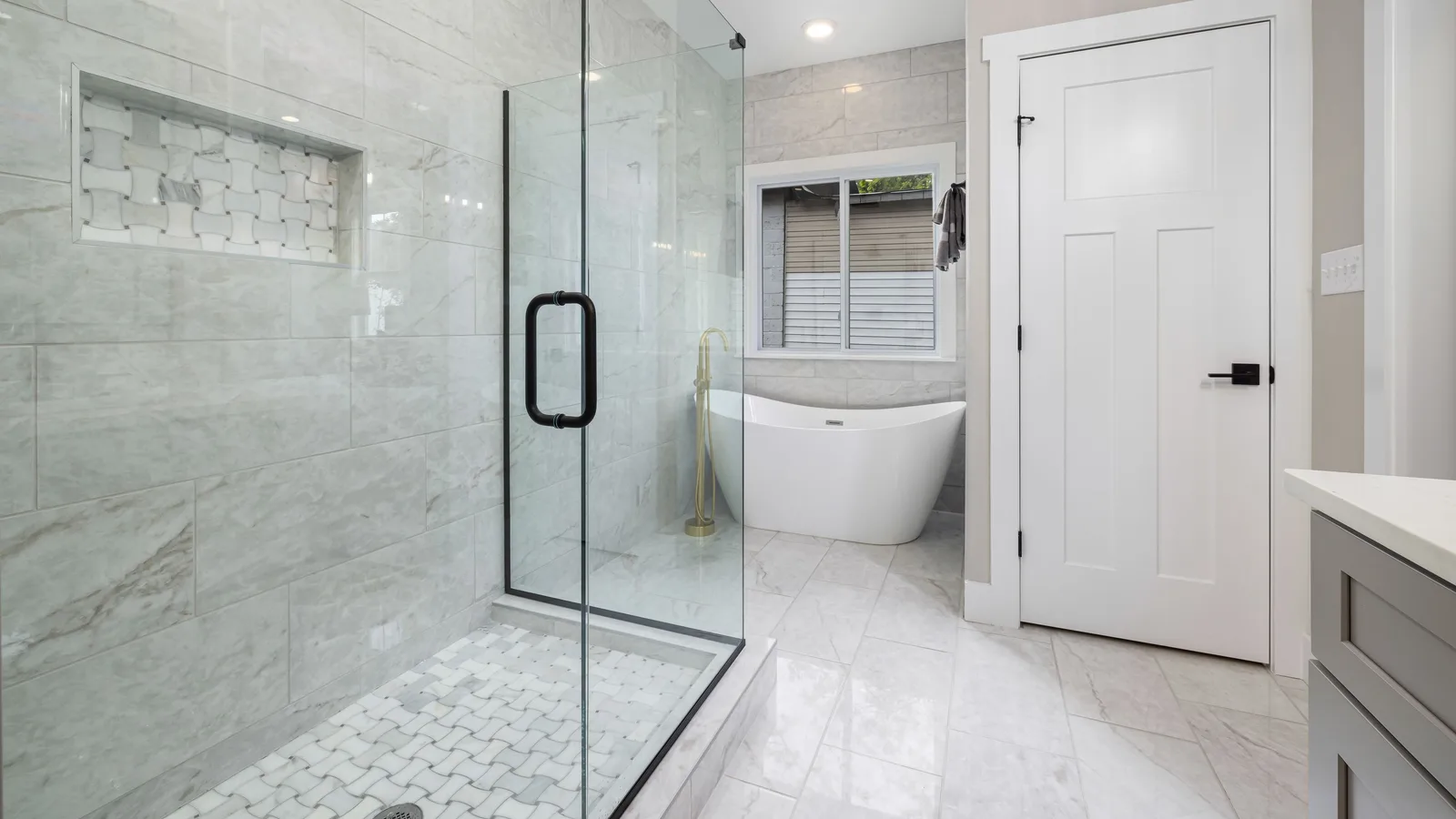
Separate removable mineral film from etched or coated glass, then use a manufacturer-safe cleaning ladder with clear stop points and prevention.
Remove hard-water stains from glass shower doors by first deciding whether you are looking at removable mineral film or permanent-looking etched glass or coating damage. On a compatible, uncoated enclosure, start with water, a soft cloth, and the gentlest manufacturer-approved cleaner; escalate one controlled step at a time. Stop if the surface is coated, the haze is smooth and unchanged, the finish reacts, or the product label does not approve the next cleaner.
The wrong instinct is to use a stronger acid or abrasive every time the door looks cloudy. A shower enclosure can include bare or coated glass, painted or plated metal, rubber seals, acrylic surrounds, stone, and tile. One product is rarely right for all of it.
Identify the surface before the stain
Find the enclosure paperwork, glass label, installer invoice, or model number. Look for a factory or aftermarket water-repellent coating and read its cleaning list. If you cannot identify the coating, act as though the glass is coated until the manufacturer says otherwise. Photograph the cloudy area, frame, hardware, seals, and any nearby natural stone before trying a new product.
| What you find on a dry panel | Most likely branch | Safe next move |
|---|---|---|
| Chalky, speckled, or slightly raised film that changes when damp | Mineral deposit or soap-and-mineral film | Use the mild, approved cleaning pass and reassess |
| Smooth cloudiness that remains after an approved gentle pass | Possible etching, worn coating, or damage below the surface | Stop escalating; contact the enclosure maker or a glazier |
| Rainbow, dull, peeling, or patchy coating appearance | Possible coating or finish damage | Use only coating-maker guidance; do not polish or abrade |
| White crust in tracks, seals, or metal corners | Deposits where finishes and drainage matter | Use the hardware and enclosure instructions, not a glass-only recipe |
Feel is only a clue, not a diagnosis. Never scrape the glass with a blade or use steel wool, a stiff abrasive pad, or a drill attachment to prove the point. Those methods can scratch glass, strip a coating, and damage metal or seals faster than the deposits come off.
Set a safe cleaning boundary
Ventilate the bathroom according to every product label. Run the exhaust fan if it vents outdoors, open the door or window when appropriate, and keep children and pets out. Wear the eye and skin protection the label calls for. Keep products in their original containers and work with one cleaner only.
Never mix bleach with vinegar, a descaler, acid, ammonia-containing product, or unknown residue. Do not combine cleaners in a spray bottle, bowl, or drain. If another product was used recently, rinse the glass, frame, tray, and nearby surfaces thoroughly with water, dry the area, and read the labels before beginning. The cleaning-supply safety guide explains why original labels and separated products matter.
Keep acidic or abrasive products off unapproved stone, metal, painted trim, rubber sweeps, and caulk. Do not assume a cleaner marketed for “bathrooms” is cleared for every part of your enclosure. A small, hidden test patch is a test of appearance and compatibility, not permission to use the product everywhere.
Use a manual-safe escalation ladder
- Rinse and wipe. On a cool panel, rinse away loose soil and use a soft, clean cloth with water or the mild cleaner named by the enclosure maker. Rinse and dry completely. This may be all recent spotting needs.
- Repeat an approved mild pass. Work in a small section so liquid cannot dry on the glass. Follow the label's dilution and contact time exactly. Light pressure is enough; aggressive scrubbing changes the surface you are trying to protect.
- Use a manufacturer-approved mineral remover only on confirmed compatible surfaces. Acidic products can dissolve mineral scale on bare glass, but the coating, frame, seals, and adjacent finishes decide whether they belong in your shower. Keep contact time within the label limit, rinse thoroughly, and dry.
- Consider an abrasive cleanser only when both the enclosure instructions and cleanser label permit it. Bar Keepers Friend Soft Cleanser is a low-cost example sold for hard-water and shower-door cleaning, but it is not a coating-safe default. Use a soft cloth, a small test area, light pressure, and its directed rinse time; never leave it to dry.
- Stop instead of escalating further. If smooth haze, scratches, coating change, stubborn spots, or finish damage remain, do not move to a razor, power tool, stronger acid, or longer soak. Ask the glass or coating maker, a qualified glass-restoration professional, or a glazier whether the condition is removable film, etching, or a replacement issue.
Wirecutter's testing notes that even mild-seeming abrasive cleaners can leave fine scratches under close inspection. That is why a product's success at making a cloudy door look clearer is not the same as an approval to use it on coated, treated, or unknown glass.
Tell mineral film from damage before spending more
Do one controlled comparison: clean a small test spot using the gentlest approved method, rinse it fully, dry it, and inspect it in normal and side light. If a raised or chalky deposit recedes, repeat the same compatible process across small sections. If the glass remains evenly frosted but smooth, cleaning may not be the remedy. A coating can also fail unevenly, so a clearer center and patchy perimeter does not prove you need a stronger cleaner.
Do not polish an unknown coating or chase a haze for hours. Many coating makers prohibit abrasives, strong acids, or strong alkalis. A glazier can assess whether professional restoration is reasonable, but even professional polishing has limits and may not be appropriate for coated safety glass. Get the product and warranty facts before authorizing it.
Clean the whole water path without creating another problem
Hard-water residue often collects in tracks, around seals, and at the bottom sweep. Preserve any designed weep holes or drainage channels; do not caulk them shut because they look dirty. Follow the enclosure manual for track cleaning, and do not soak hinges, pivot hardware, or silicone joints with a cleaner that is not approved for them.
If cleaning exposes a loose door, broken sweep, blackened caulk, leaking frame, soft wall material, or water outside the shower, stop treating it as a glass-cleaning project. Use the home water-leak plan to document water and safe shutoff information, then get appropriate service. A better-looking panel does not repair failed waterproofing.
The 4Homes weekly email
Every Tuesday: what changed for homeowners this week, plus our newest guides.
No spam. Unsubscribe anytime.
Costs, savings, and prevention
The low-cost path is a squeegee or soft cloth already suited to the enclosure plus a compatible mild cleaner. Current Walmart listing data put a 13-ounce Bar Keepers Friend Soft Cleanser at $4.99; a dedicated glass hard-water remover can cost substantially more, and neither is a substitute for confirming surface compatibility. Treat any retailer price as a planning snapshot, not a guaranteed local price.
Save money by preventing a thick film: after each shower, pull water off the glass with a rubber squeegee or maker-approved soft cloth, dry the lower edge and hardware, and clean on a schedule that matches your water. Keep the bathroom exhaust fan working to reduce lingering moisture, and use the showerhead mineral-buildup guide for a separate fixture-care problem. If mineral deposits recur across multiple fixtures, test the water condition and discuss whole-home options separately; a shower-door cleaner cannot diagnose plumbing or water treatment.
Before replacing glass, get a written assessment that distinguishes cleaning, coating renewal, glass restoration, hardware repair, and full enclosure replacement. The contractor quote comparison guide can help compare scopes that sound similar but solve different problems.
When to call a pro
Call the enclosure maker, a qualified glazier, or a glass-restoration professional for smooth unchanging haze, suspected etched glass, damaged coating, a cracked panel, loose hinges, door misalignment, or unclear care instructions. Call a plumber or appropriate bath professional for leaking plumbing, water entering the wall or ceiling below, a failed shower pan or enclosure seal, or any electrical hazard near water. Do not keep using a door that may fail or let water migrate into building materials.
Sources used
Bar Keepers Friend product and use guidance; CDC and Poison Control cleaner-mixing guidance; EnduroShield and MAAX shower-glass care instructions; Wirecutter, I Tried Everything to Clean a Glass Shower Door; Walmart's Bar Keepers Friend Soft Cleanser listing for a planning price; and qualified glazier or installer guidance for damaged, coated, or etched glass.
Frequently Asked Questions
How do I know if shower-door cloudiness is hard-water buildup or etching?
On a dry, inconspicuous area, compare what you can feel and what changes after a gentle, approved cleaning pass. Raised or chalky residue that improves can be mineral film. Smooth, permanent-looking cloudiness that does not respond may be etched glass or a damaged coating; stop escalating and ask a glass professional.
Can I use vinegar on a glass shower door?
Only if the door, coating, frame, and seal instructions allow an acidic cleaner. Vinegar can dissolve mineral residue on compatible bare glass, but it is not universal care for coated glass, metal finishes, gaskets, or stone nearby. Never combine it with bleach or another cleaner.
Will Bar Keepers Friend remove hard-water stains from shower glass?
It may remove deposits on a compatible, uncoated surface when its label and the enclosure manufacturer allow it, but it is an abrasive cleanser and not a default for coated glass. Test a small hidden area, use light pressure and the directed contact time, then rinse fully. Do not use it to chase smooth etching.
Can hard-water stains permanently damage shower glass?
Long-standing mineral deposits can leave etched or cloudy damage that cleaning cannot reverse. Coatings can also be worn or chemically damaged. If a gentle, manufacturer-approved method does not change smooth cloudiness, stop scrubbing and get a glazier or enclosure maker's advice.
How do I prevent hard-water spots on shower doors?
Move water off the glass after each shower with a squeegee or soft cloth approved for the enclosure, then keep the door, sweep, and tracks clean and dry. Follow the coating maker's care list and address recurring whole-house mineral issues separately from the glass.