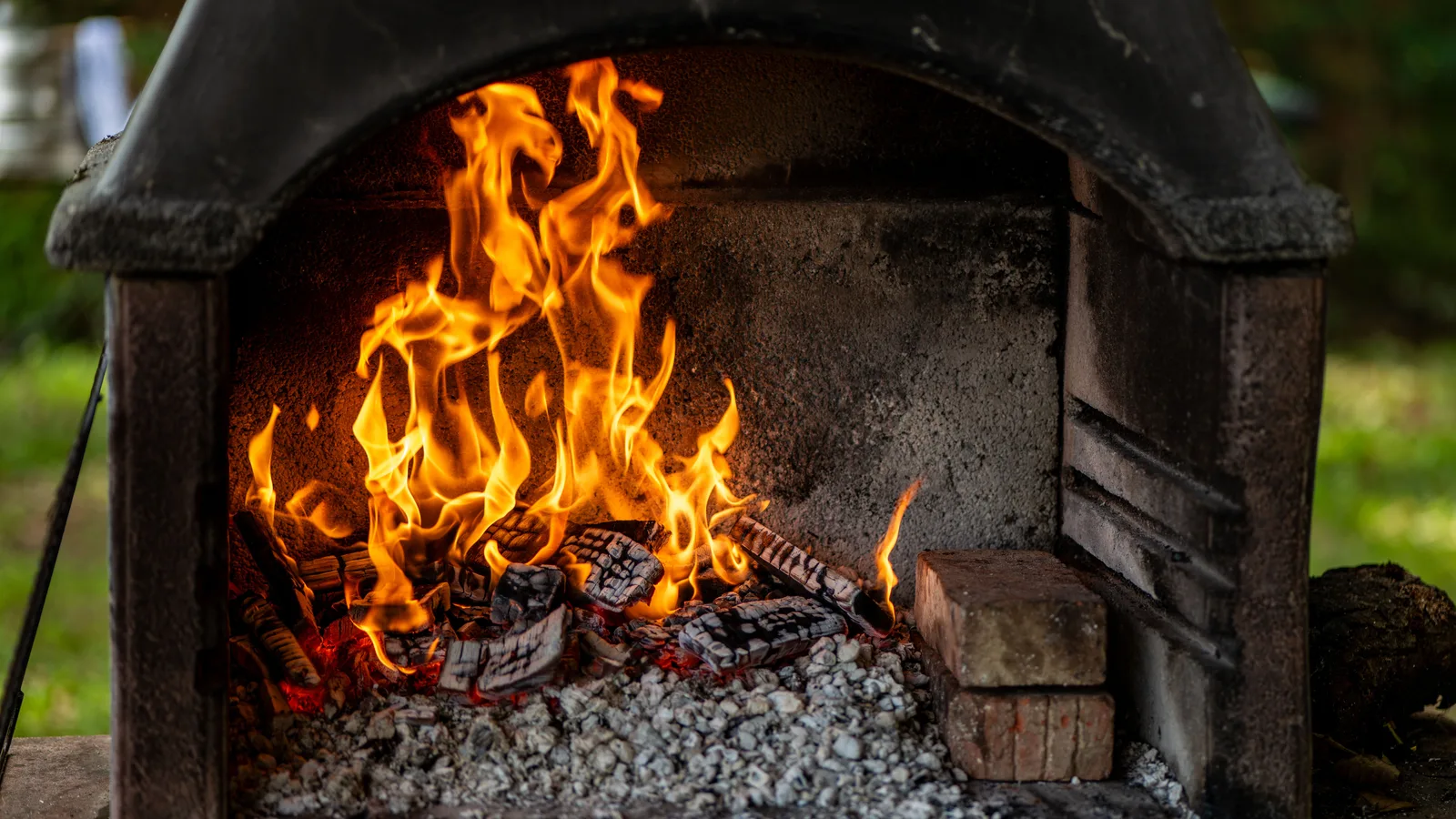
Clean a cold wood-burning fireplace at the firebox boundary, plan the ash route, and know when a chimney inspection or sweep is the real job.
Clean a wood-burning fireplace only after every ember and ash bed is cold: remove loose ash from the firebox, wipe accessible exterior surfaces, and stop before the job becomes flue, damper, roof, or masonry work. The safe result is a tidy firebox and a record of what needs an inspection. It is not proof that the chimney is clear or safe for the next fire.
A wood-burning fireplace is the visible firebox plus a smoke chamber, damper, flue, cap, surrounding masonry, and the room air path that supports combustion. Cleaning means limited owner care of reachable cold surfaces. Sweeping is removal of deposits from the flue and smoke chamber; inspection asks whether the entire system is sound and correctly clearanced.
Decide which job you actually have
| What you find | Owner-level boundary | Next move |
|---|---|---|
| Cold loose ash and ordinary dust in the firebox | Remove only with the manual-approved cold-ash method | Keep it covered outdoors and follow local disposal rules |
| Heavy soot, shiny deposits, or smoke entering the room | Do not brush or probe upward | Book a chimney inspection and scope the sweep |
| Loose brick, cracked liner, water stain, or damaged door | Do not use the fireplace | Document and call a qualified chimney professional |
| Gas log, insert, pellet unit, or factory-built fireplace | Do not borrow wood-fireplace steps | Use the exact appliance manual and service interval |
Start with the appliance label and manual. If you cannot identify whether the fireplace is masonry, factory-built, an insert, or a gas appliance, stop at dusting the mantle. A generic cleaning trick can damage a listed appliance, disturb a log set, or hide a venting issue.
Set up for cold, controlled ash removal
Choose a dry day and wait until the fireplace has been completely cold for the period stated in its manual. A gray surface is not proof that embers below are cold. Keep children and pets out of the room, move rugs and soft furnishings back, and protect nearby flooring with a noncombustible or washable cover that does not block exits.
Wear the eye and respiratory protection the manual and local conditions call for. Use a metal scoop and a metal container with a tight-fitting lid when the manufacturer permits ash removal. Never place ash in cardboard, plastic, a paper bag, a garage, or against the house. U.S. Fire Administration guidance says to keep the closed container outdoors at least 10 feet from the home and other buildings; follow local disposal rules before emptying it. Do not use a household vacuum; fine ash and hidden embers are the wrong load for it.
A careful firebox-only sequence
- Photograph the cold firebox. Record the grate, refractory panels or brick, damper area, glass, and anything unusual before moving ash.
- Read the manual's ash guidance. Some appliances specify a small ash bed; others name a different interval or tool. The manual outranks a universal cleanout rule.
- Scoop loose ash without scraping parts. Leave liners, baffles, gaskets, log sets, and dampers alone unless the manual expressly identifies them as owner-serviceable.
- Close and relocate the ash container. Keep it outside, away from combustibles, while it cools fully.
- Brush or wipe only accessible cold surfaces. A soft dry brush or cloth is for the hearth and surround, not the flue. Do not spray cleaners into the firebox.
- Recheck before use. Note new cracks, loose material, water, unusual odor, or damaged glass. Any one changes the task from cleaning to inspection.
The chimney-inspection scope guide helps define the report to request. After a chimney fire, leave the building and keep the connected appliance out of service; the chimney-fire first-response guide explains that emergency boundary.
What not to clean yourself
Do not climb to the roof, remove a cap, reach into the flue, scrape a shiny deposit, take apart a damper, or use a shop vacuum as a substitute chimney sweep. Creosote can be a fire hazard, but appearance alone does not establish its thickness or the condition of the liner. Smoke that spills into the room, a persistent odor, damp masonry, a bird or animal obstruction, or a hard-to-open damper deserves a professional diagnosis.
Keep water, ammonia, solvents, and abrasive tools away from surfaces unless the exact manufacturer permits them. Fireplace glass, refractory panels, coated metal, and gasketing have different rules. A gas fireplace, wood insert, pellet appliance, and factory-built unit have their own listed parts and cleaning procedures.
Leave a useful inspection handoff
Take a few clear photographs before and after routine firebox care: a wide room view, the hearth, the firebox, the damper area from below, and any stain or loose material. Write down the last use, the fuel burned, any smoke odor, whether the fire was hard to start, and when the system was last inspected. These observations do not diagnose a draft or liner problem, but they prevent a service visit from beginning with a blank history.
Ask a chimney company to distinguish the appliance from the chimney in its findings. A masonry repair, a cap problem, a damaged damper, a liner concern, a blocked flue, and an indoor-air problem can require different trades and scopes. Do not approve a repair just because it follows a cleaning visit; request the condition, recommended work, access assumptions, permit or inspection needs, and what the technician will test when the work is complete. The contractor-quote comparison guide can help put those answers on one sheet.
The 4Homes weekly email
Every Tuesday: what changed for homeowners this week, plus our newest guides.
No spam. Unsubscribe anytime.
Cost planning: price the service scope, not a vague cleaning
Angi's 2026 chimney-sweep planning data reports a national range of $129 to $381, with a $254 average. Treat that as a planning reference, not a local quote. Height, roof access, appliance type, deposits, a camera inspection, animal removal, repairs, and the number of flues can change the visit.
| Ask for this line item | Why it matters | Saving check |
|---|---|---|
| Inspection level and accessible areas | Shows what the technician actually evaluated | Compare the same inspection scope across bids |
| Sweep scope: flue, smoke chamber, firebox | Firebox cleanup alone is not a complete sweep | Ask what deposits or access limits change the price |
| Roof, cap, wildlife, and camera work | These can be separate services | Approve extras only after findings are documented |
| Repairs and closeout | Liner, crown, masonry, damper, and water work are not interchangeable | Keep repair scope separate from the inspection invoice |
Save money by scheduling the inspection before the first burn rather than treating smoke or odor as a midseason surprise. Burn only fuel and moisture conditions the appliance manual permits, and use the firewood-storage guide to keep an outdoor fuel supply dry without storing it against the house. Do not save money by skipping the annual inspection or using an unqualified cleaner for roof-level work.
Before-lighting checklist
- The appliance type, label, and owner manual are identified.
- Ash and all components are completely cold.
- Loose ash is in a suitable metal container away from combustibles.
- No owner work reaches into the flue, roof, damper mechanism, or gas components.
- Smoke, water, loose masonry, damaged glass, or heavy deposits have a professional path.
- The annual inspection record, repair history, and next service date are in the house file.
Sources used
Chimney Safety Institute of America guidance summarizing NFPA 211 inspection, sweeping, and post-fire principles; U.S. Fire Administration fireplace and wood-stove safety guidance for covered outdoor ash storage; Angi, How Much Does a Chimney Sweep Cost?, for national cost planning; and the installed fireplace or insert manual for appliance-specific ash handling, parts, fuel, and maintenance limits.
Frequently Asked Questions
How do I clean a wood-burning fireplace?
Wait until the appliance and ash are completely cold, confirm the owner's manual, remove only loose ash from the firebox with the listed tools, and keep the damper, flue, glass, and installed components within their stated maintenance boundaries. A fireplace cleaning is not a chimney inspection or sweeping service.
How often should a fireplace and chimney be inspected?
The Chimney Safety Institute of America summarizes NFPA 211 guidance as an annual inspection of chimneys, fireplaces, and vents for soundness, deposits, and clearances, with cleaning or repair when necessary. Usage, fuel, appliance type, and findings determine the actual service scope.
Can I vacuum fireplace ash with a regular vacuum?
Do not use a household vacuum for fireplace ash. Ash can remain hot long after a fire and fine particles can damage or escape an ordinary vacuum. Use the exact appliance manual and a purpose-built ash vacuum only if both permit it, after the ash is completely cold.
When should I call a chimney professional?
Call before using the appliance for a damaged liner, loose brick, a blocked or nesting flue, smoke entering the room, a chimney fire, heavy or glazed deposits, water intrusion, a damaged cap, or any work requiring roof access. Keep the appliance out of service after a chimney fire until a qualified inspection confirms it can return to service.