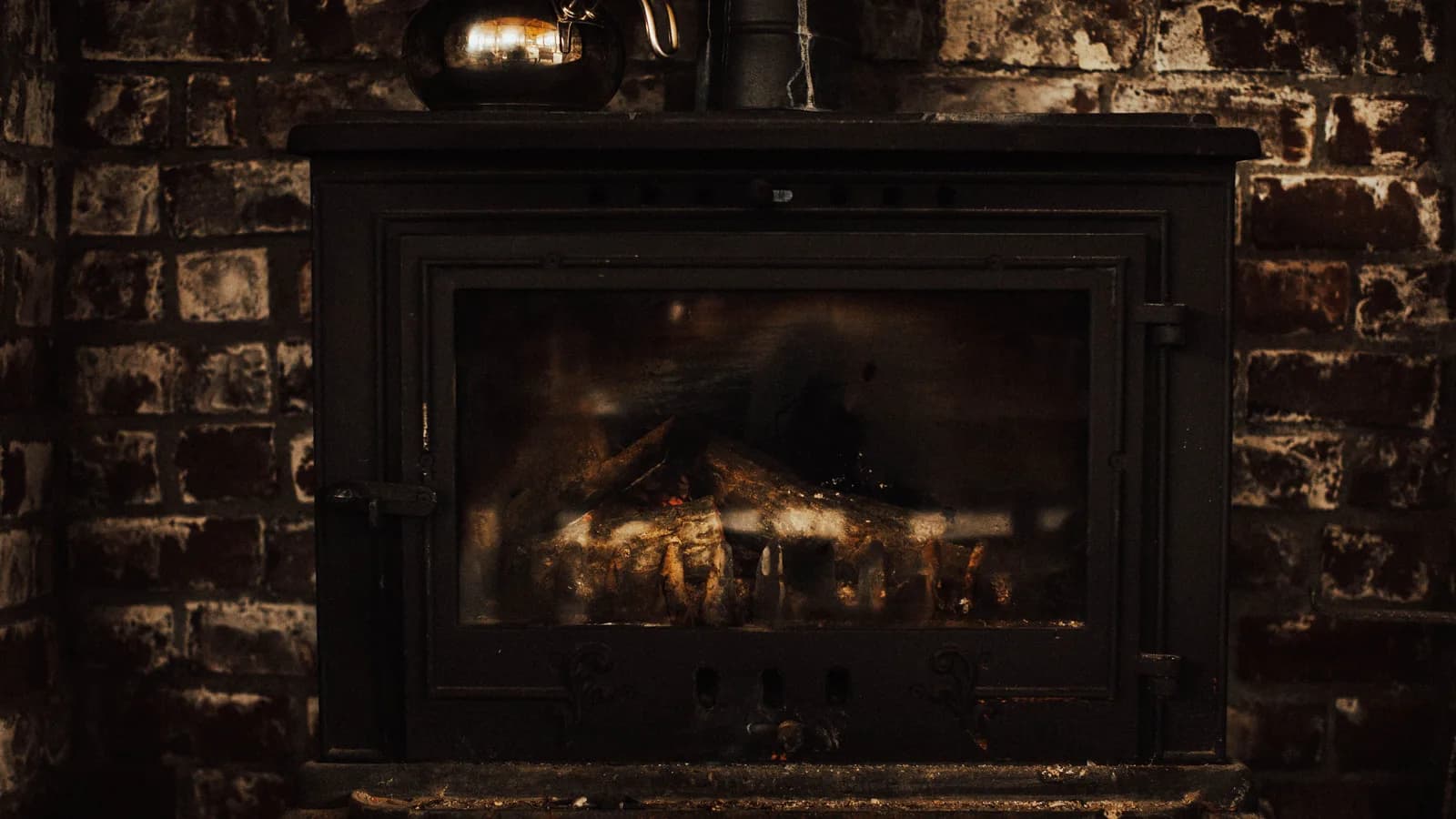
Evacuate, call 911, leave extinguishment to firefighters, and keep the chimney out of service until a qualified inspection clears it.
Treat a suspected chimney fire as a house fire: get everyone outside, call 911, and stay out. Do not climb onto the roof, open the fireplace or stove to inspect it, or try to extinguish fire inside the chimney. Keep people clear of the building and tell dispatch that the fire may be in the chimney or flue.
A loud roaring or rumbling from the flue, dense smoke, flames or sparks leaving the chimney, an intensely hot stove or fireplace area, or smoke appearing in unexpected rooms all justify that response. The absence of visible flames from the yard does not clear the walls, attic, roof, or flue.
Leave on the fire-alarm rule
Use the household fire escape route. Close doors behind you if that does not slow the exit. Do not carry burning logs or a hot ash container through the home. Do not stop for a fire extinguisher, valuables, or a view from the attic. Once outside, account for everyone and tell 911 if a person or pet may still be inside.
The U.S. Fire Administration's direction for a home fire is plain: get out, stay out, and call 911 from outside. Its heating-safety guidance also calls for working smoke alarms and a professional chimney cleaning and inspection each year. Those prevention steps matter later. During a suspected fire, evacuation wins.
Why homeowner extinguishment is the wrong job
A chimney fire can extend beyond the place you can see. Heat, flames, or embers may reach a damaged liner, a chase, nearby framing, an attic, or the roof. Opening a stove or fireplace can change airflow and expose the person standing there. Going onto the roof adds smoke, fall, and fire hazards at the same time.
My opinion is intentionally strict: there is no responsible “quick check” a homeowner can perform while a chimney fire may still be active. Even if the roar stops before the fire department arrives, stay outside. A quiet flue can still have hidden heat or fire spread.
Give firefighters a clean handoff
Tell dispatch and the arriving crew what fuel was burning, whether the appliance is a fireplace, wood stove, pellet stove, or furnace, where smoke or sound appeared, and whether anyone is missing. Mention attached structures, roof access hazards, stored fuel, propane cylinders, or oxygen equipment if present. Then follow the perimeter they set.
Do not move vehicles close to the house, block the street, or direct a hose into the chimney. Do not re-enter because the visible fire has gone down. The fire department decides when the immediate scene is safe and whether utilities must remain off.
The 4Homes weekly email
Every Tuesday: what changed for homeowners this week, plus our newest guides.
No spam. Unsubscribe anytime.
The fire ending does not return the chimney to service
Do not light another fire or restart the connected appliance until a qualified chimney professional has swept and inspected the entire system, documented the findings, and stated what is safe to use. That includes a small event that seemed confined to the flue. The Chimney Safety Institute of America warns that a chimney fire may cause cracked masonry, failed mortar joints, metal fatigue, warping, buckling, open seams, or joint separation that cannot be seen from the fireplace or chimney top.
CSIA's after-fire guidance calls for sweeping where needed to expose surfaces and an internal video inspection to examine the flue and its components. Ask the inspector to identify the appliance and venting system, areas accessed, deposits removed, camera coverage, defects, repair recommendations, and whether the system is suitable for use. A verbal “looks fine” is not a closeout record.
Keep three records, not one vague repair bill
- Incident: fire-department report number, observations, utility actions, and rooms or systems restricted after the response.
- Inspection: sweep report, internal images, damaged components, appliance condition, and written use restriction.
- Repair and clearance: materials, permits when required, photos before closure, final tests, and the signed statement that identifies what may return to service.
Contact the insurer promptly if there is fire, smoke, water, or building damage. Photograph only after officials allow access, and do not discard damaged parts before asking what must be preserved. Use the chimney inspection scope to define the examination, then the chimney repair proposal checklist if defects require a separate repair bid.