Separate crown, flashing, masonry, liner or flue, appliance, and structural work, then require evidence and a written safe-use closeout.
A chimney-repair estimate should separate the crown, flashing, exterior masonry, liner or flue, connected appliance, and structural work. Those parts face different problems and may need different trades. One line that says “repair chimney” gives you no reliable way to compare bids or check the finished job.
Start with the inspection record, not the repair package
Give each bidder the same report, photographs, appliance list, fuel types, prior repairs, leak history, and any record of a chimney fire or sudden change in draft. Ask the bidder to mark every proposed repair on those images. The chimney inspection scope explains what the condition report should cover; this checklist begins after the observed conditions and inspection limits are in writing.
CSIA's homeowner resources distinguish a complete sweeping from cleaning only the firebox and describe inspection as a separate safety function. Its post-fire guidance says a chimney should not be used until it has been swept and evaluated by a qualified chimney professional. It also identifies possible joint failure, metal fatigue, and structural cracking after a flue fire, including damage that may not be visible from either end. Keep the system off when the report says to stop use. A repair quote is not permission to test it with a fire.
Break the exterior into countable work
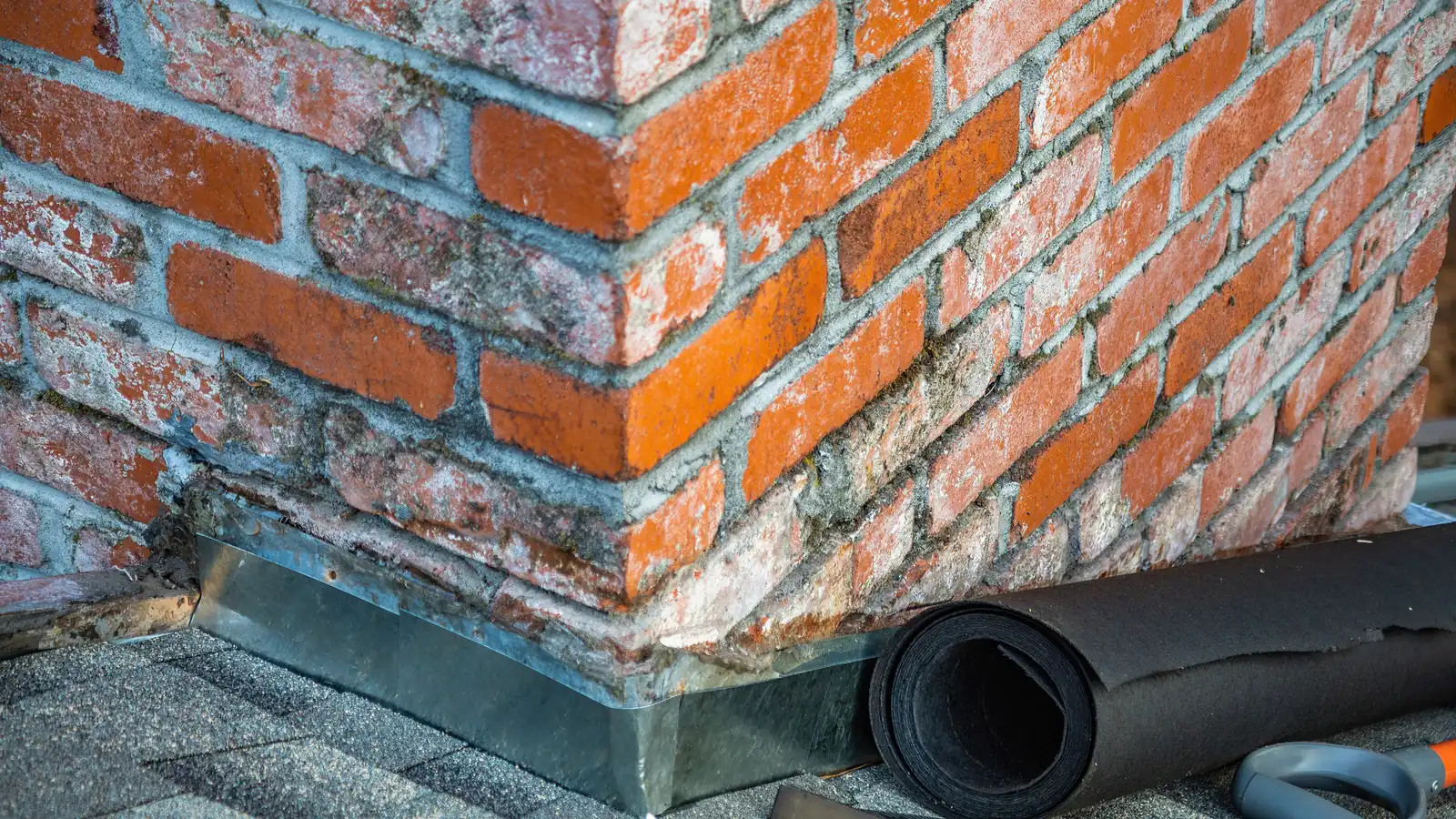
For the crown, state whether it is patched, coated, partially rebuilt, or replaced. Include dimensions, slope, overhang, drip edge, flue clearances, joint treatment, curing, and protection from weather. For masonry, map the faces, courses, joints, cracks, spalled units, loose material, and demolition limits. Name the mortar or repair material, joint preparation and depth, replacement-unit match, cleaning method, access equipment, dust control, and final water-shedding details.
Flashing deserves its own line. The proposal should identify step flashing, counterflashing, apron and back-pan or cricket conditions, what will be removed, what will be reused, and how the work ties into the roof and wall water-management layers. Assign responsibility for shingles, underlayment, siding, sealant, sheet metal, and interior stain investigation. “Seal around chimney” is maintenance language, not a durable flashing detail.
Ask what is explicitly excluded: interior plaster and paint, roof matching, damaged decking, chimney caps, animal screens, waterproofing treatments, adjacent gutters, scaffolding, utility conflicts, and landscaping. An exclusion is not automatically a defect in the bid. It becomes a problem when nobody owns the missing work or the schedule depends on it without saying so.
The 4Homes weekly email
Every Tuesday: what changed for homeowners this week, plus our newest guides.
No spam. Unsubscribe anytime.
Make the flue and appliance scope specific
If a liner is proposed, require the serving appliance, fuel, flue dimensions and route, existing liner condition, listed liner product, sizing basis, insulation, connectors, termination, cleanout access, permits, and required inspection or test. State what happens to abandoned openings and whether smoke-chamber, damper, firebox, thimble, or appliance-connector work is included. Gas, oil, wood, and listed factory-built systems are not interchangeable; product instructions and qualified trade requirements control.
Separate structural work again. Leaning, displaced masonry, failed support, large cracks, or fire damage may need an engineer or another qualified design professional before a mason prices the repair. Set a stop-and-approve rule for concealed damage discovered during demolition. Homeowners should not climb the roof, enter an unstable area, remove appliance venting, or reach into a flue to verify work.
Put proof and payment at the end
My opinion: a beautiful masonry scope is still incomplete if it never says when the connected appliance can be used again. Closeout should include before, concealed-work, and final photographs; permits and inspections; product records; liner or appliance test results; roof and interior protection; debris removal; warranty terms; remaining limitations; and a written safe-use status from the appropriate qualified professional.
The FTC recommends multiple written estimates showing the work, materials, completion date, and price, and warns against paying the full amount up front in its contractor guidance. Use the line-by-line quote comparisonfor credentials, payment milestones, and changes. Compare the same six chimney sections, not three unrelated totals.