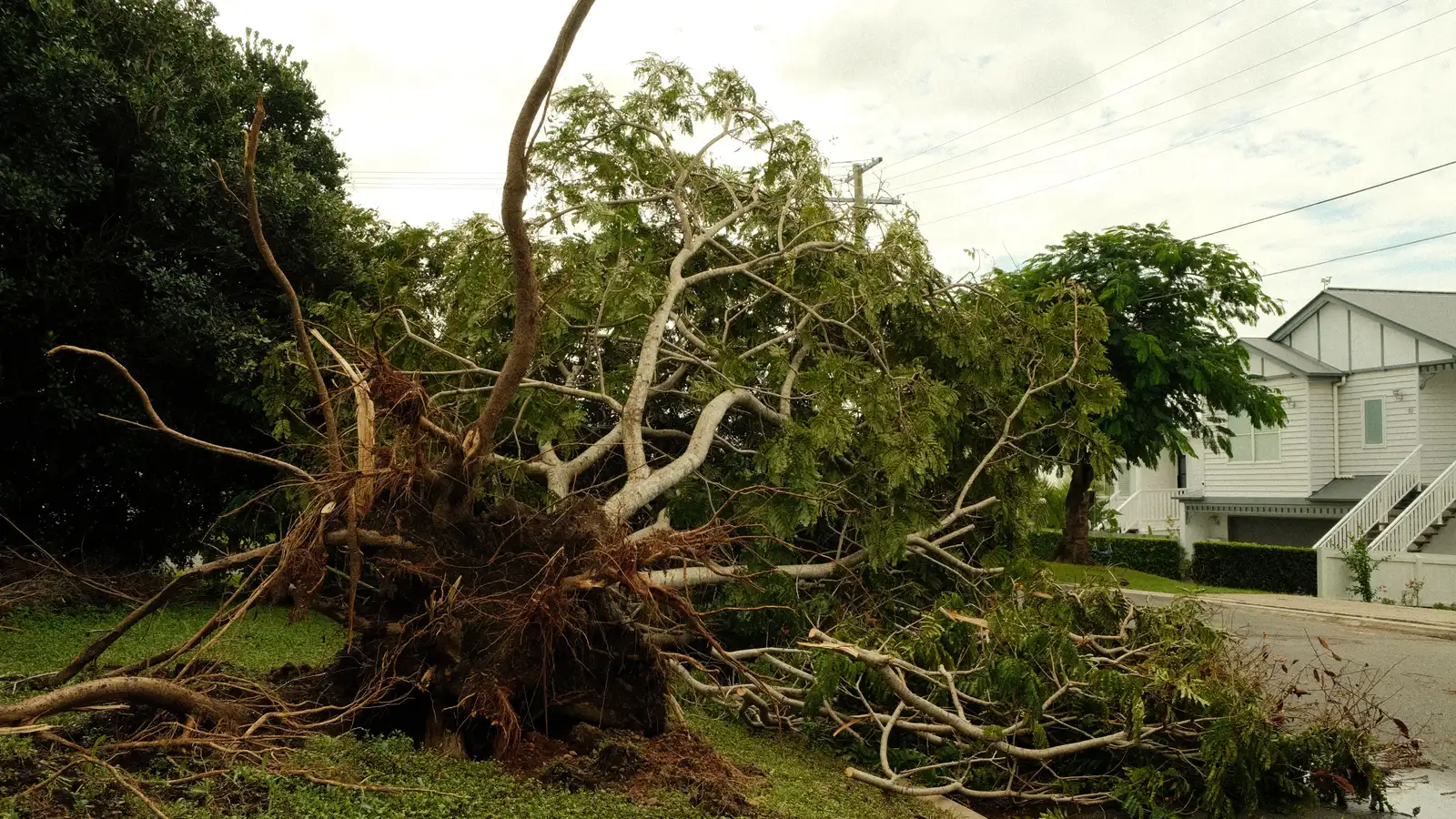
Clear the impact zone, escalate structural and utility hazards, then separate safe tree removal from emergency stabilization and permanent repairs.
If a tree has hit the house, get everyone away from the impact area and look for immediate danger from outside or another clearly safe location. Call 911 for fire, injury, collapse, trapped occupants, a gas odor, or a rapidly worsening condition. Treat every fallen or hanging power line as energized and report it to the utility.
The first decision is whether the house is safe to occupy
Do not walk under the tree, stand beneath broken limbs, climb onto the roof, or enter a room with a sagging ceiling, shifting wall, broken truss, shattered glass, or new creaking and movement. The CDC advises staying out of a damaged building until authorities determine it is safe and leaving if shifting or unusual noises suggest further collapse.
If the trunk or limbs touched the electrical service, mast, meter, or any wire, keep everyone back. Do not assume a dark wire is harmless. Call the electric utility from a safe place. If you smell gas or hear hissing, leave without operating lights, switches, appliances, or a garage-door opener, then call 911 and the gas utility from away from the building.
Use this call order
- Emergency services or utilities for injury, fire, collapse, gas, or electrical hazards.
- Your insurer to open a claim and ask what emergency protection, documentation, and vendors it expects.
- A qualified tree service or arborist for the loaded tree and hanging limbs.
- A roofer, structural professional, electrician, plumber, or restoration firm based on the actual damage.
One company may coordinate several trades, but ask who owns each risk. Cutting a loaded tree, stabilizing framing, disconnecting power, weatherproofing an opening, and drying rainwater are different jobs.
Document without turning photography into another hazard
From safe ground, take wide photos that show the tree, building, access route, nearby wires, and weather conditions. Add closer images only if you can take them without crossing a danger zone. Record when the event happened, who was present, emergency and utility call numbers, temporary lodging, and every provider who arrives.
FEMA recommends documenting a hazardous tree and damage with photos or video before contacting the insurer, and its claim guidance calls for the event’s date, time, cause, a detailed damage description, damaged-property list, and receipts. Do not move branches or discard damaged contents merely to improve a photo. Safety work comes first; document before and after when it can be done safely.
The 4Homes weekly email
Every Tuesday: what changed for homeowners this week, plus our newest guides.
No spam. Unsubscribe anytime.
Emergency stabilization is not the permanent repair
A tarp is often treated as the obvious next step. I disagree. The first repair is making the site safe enough for anyone to work there. A tarp installed under a suspended limb or on an unstable roof is not mitigation; it is a second emergency.
Ask the emergency contractor to write down:
- what was removed, braced, covered, disconnected, or fenced off;
- which rooms remain unsafe and who made that determination;
- whether rain entered and what drying began;
- what temporary materials were used and how long they are expected to last;
- which permanent inspections and repairs still remain.
Do not let the tree invoice erase the building scope
Tree removal should identify the trunk and limbs handled, equipment, access, hauling, stump work, protection of the structure, and responsibility for additional damage. The building file should separately cover roof framing, sheathing, roofing, gutters, siding, windows, electrical service, plumbing, interior finishes, water intrusion, permits, and structural review.
Keep proposals, authorizations, daily photos, receipts, hotel costs, damaged-content records, and insurer messages together. Before final payment, ask for proof that temporary openings are permanently closed, affected utilities were cleared for service, wet materials were addressed, and required inspections were completed. For the tree contractor’s permanent scope, use the tree-removal quote checklist; for the claim record, use the home inventory and claims guide.