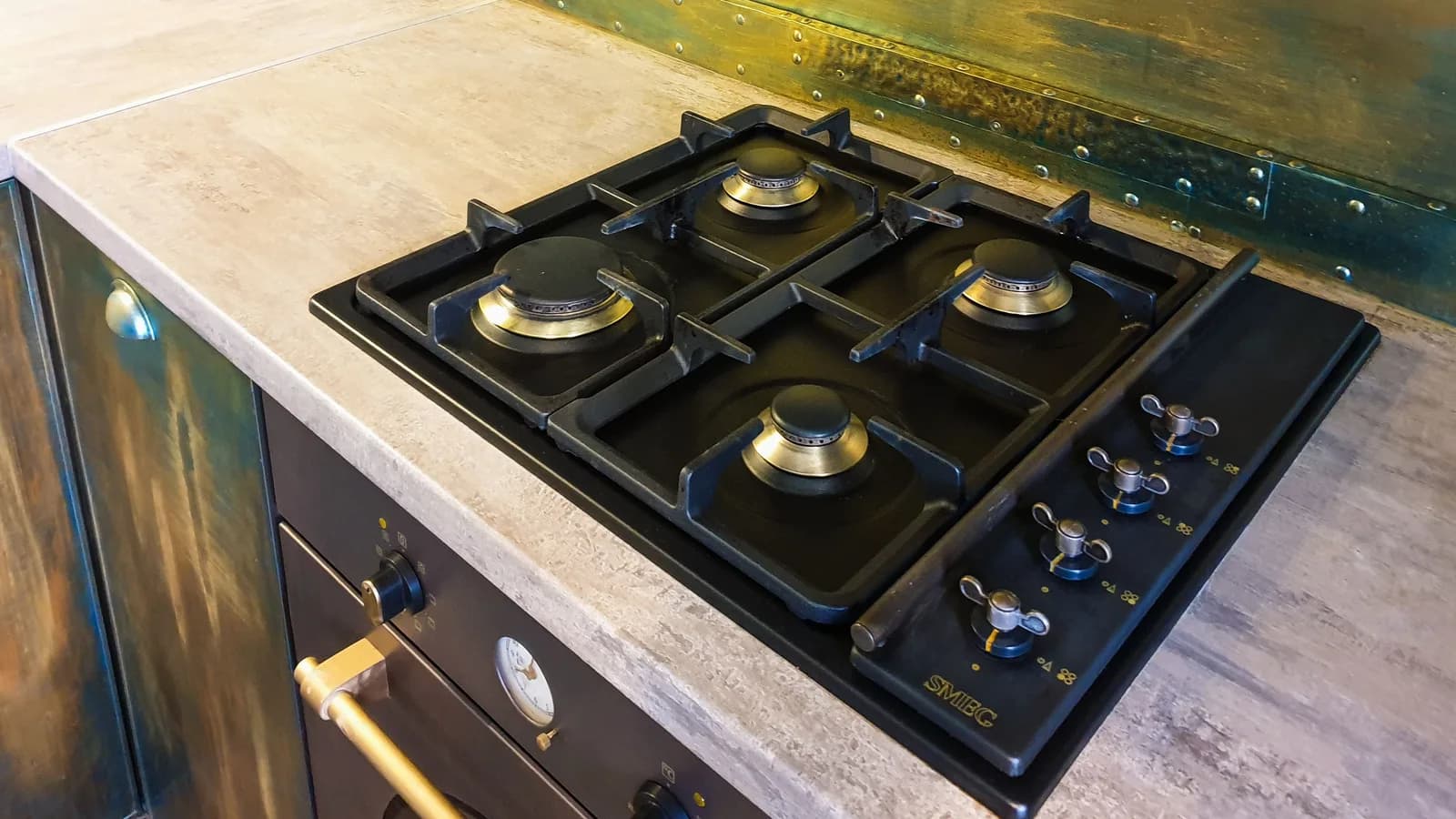
Leave without operating switches or equipment, call 911 and the gas utility from away, and wait for explicit re-entry clearance.
If you smell or suspect natural gas in the house, leave immediately. Take people and pets through the nearest normal exit without touching a switch, phone, thermostat, appliance, plug, garage-door control, or vehicle in an attached garage. Move well away on foot, call 911 and the gas utility from the safe location, and stay out until responders or the utility explicitly clear re-entry.
Use one rule on the way out: touch as little as possible
Leave lights, fans, alarms, appliances, and switches exactly as they are. Do not unplug anything, strike a match, smoke, light a candle, operate a doorbell, or start any motor. The U.S. Consumer Product Safety Commission tells households not to use a phone, turn on a light, or switch on anything electrical when a gas leak is suspected. PHMSA likewise warns that phones, electrical switches, motors, and flames can create ignition sources.
Use the nearest ordinary exit. Do not operate an automatic garage door. If the normal path is blocked, use the household escape route rather than improvising near gas equipment. Warn people as you move, but do not delay the exit to search every room. Once outside, tell 911 if anyone may still be in the building. Never re-enter for a pet, wallet, medicine, coat, or utility account number.
What counts as enough reason to evacuate?
A gas-like odor is enough. So is hissing or roaring near gas piping or an appliance, damaged pipe after digging or impact, or an unexplained vapor cloud outdoors. PHMSA identifies smell, unusual sound, vapor, bubbling, blowing dust, and disturbed or discolored vegetation as possible pipeline leak signs.
Do not remain inside to compare odor strength, look behind an appliance, find a detector, or decide whether the smell might be sewer gas. Odor can fade or be masked, and not everyone detects it the same way. A household combustible-gas meter is not permission to stay. Our view is strict: uncertainty is a reason to leave, not a reason to investigate.
What not to operate
| Leave untouched | Why it waits |
|---|---|
| Lights, switches, plugs, thermostats, appliances, fans, and alarms | Changing their state can create an ignition source |
| Phones, doorbells, remotes, and smart-home controls | Use communications only after reaching a safe location |
| Garage-door openers, cars, generators, mowers, and other motors | Do not start equipment in or near the suspected area |
| Matches, lighters, candles, cigarettes, and fireplaces | Any flame or spark is incompatible with a suspected leak |
| Meter valves, appliance shutoffs, windows, and service panels | Isolation, ventilation, and diagnosis belong to responders and the utility |
Do not flip a switch off because it seems safer than leaving it on. Do not shut down a furnace, silence an alarm, pull a hot plug, or move a range to reach a valve. Do not turn the main gas valve as a household test. Walking toward a suspected release and handling equipment creates more exposure without proving the system safe.
Call 911 and the gas utility from away
Once everyone is clear, call from well outside the building and suspected leak area. Use 911 for fire, explosion, injury, a person trapped inside, damaged piping that threatens people or property, or any immediate danger. Report every suspected leak to the gas utility's emergency line too. If local utility guidance tells you to call it first for odor alone, make that call from safety and call 911 whenever danger is immediate or the utility cannot be reached.
Give the address, where the smell, sound, or damage was noticed, whether anyone is unaccounted for, whether there is flame or visible damage, and whether recent digging, construction, an earthquake, flooding, or an appliance problem preceded it. Do not assume a neighbor has called. Stay available, but remain outside the perimeter responders set and keep other people from entering.
These calls have different jobs. Public safety handles immediate life, fire, evacuation, and scene hazards. The gas utility investigates and isolates its system, determines the service status, and explains the utility-versus-customer ownership boundary. A plumber or appliance contractor does not replace either emergency call.
Do not fight a gas fire or open windows
If gas is burning, leave it to the fire department and utility. PHMSA warns the public not to try to extinguish a gas fire because uncontrolled fuel can continue escaping. Responders must coordinate fire control with source isolation.
Opening windows is not part of evacuation. It keeps you in the building, may require touching hardware, and does not establish a safe atmosphere. Leave doors and windows as they are. Do not go around back to inspect the meter, cross a vapor cloud, or drive closer for a better view.
Re-entry is an explicit decision, not a smell test
Wait for the authority handling the incident to tell you when and how to return. A fading odor, silent alarm, open door, running exhaust fan, or neighbor going inside is not clearance. Ask who cleared the atmosphere, whether gas service is on or off, which equipment is tagged out, and what conditions apply to occupancy.
If service was shut off, do not restore it yourself. Do not relight a pilot, restart a furnace, test a burner, or reconnect an appliance. The utility may require a licensed repair, permit, pressure or leak test, and inspection before restoring service. Then a qualified provider may have to inspect and restart individual appliances under their instructions.
When to call a licensed gas professional
After the emergency and utility handoff, use a properly licensed gas contractor, plumber, HVAC technician, or appliance technician for the customer-owned part identified in writing. Ask the utility which side of the meter and which piping or equipment is yours to repair. The provider's scope should identify the failed component, access work, code or permit requirements, test method, appliance restart, and final proof of no leak.
For heating equipment, connect the findings to the HVAC diagnosis guide. If the event involved a gas range that would not ignite, do not resume the homeowner checks; use the gas burner safety boundaryonly after the utility has cleared the building and the appliance is permitted back in service. Compare repair proposals with the contractor quote checklist.
The 4Homes weekly email
Every Tuesday: what changed for homeowners this week, plus our newest guides.
No spam. Unsubscribe anytime.
Plan the post-clearance cost, not the emergency response
Evacuation and reporting come before price. A 2026 Angi cost snapshot based on reported projects placed many gas-line repairs between about $272 and $936, while hidden or buried work can cost much more. That broad range is for planning after the site is safe, not a quote and never a reason to delay 911 or the utility.
| Cost file | Keep separate |
|---|---|
| Utility response | Incident number, ownership boundary, service status, and restoration requirements |
| Licensed repair | Diagnosis, pipe or appliance scope, access, permit, test, and restart |
| Building restoration | Drywall, flooring, excavation, landscaping, cleaning, and finish repairs |
| Temporary needs | Lodging, meals, heat, pet care, and travel receipts when displacement is necessary |
How to control costs after safety is restored
Start with the utility's written boundary and restoration conditions. That keeps bidders from pricing utility-owned work, skips duplicate diagnosis, and tells you whether a permit or pressure test must be included. Give each licensed bidder the same facts and ask for separate prices for diagnosis, repair, access, permit, testing, appliance restart, and finish restoration. A low repair number is not comparable when another proposal includes wall access, inspection, and putting appliances back into service.
Ask whether a safe, code-compliant localized repair is available before approving broad replacement, but do not ask a contractor to omit a test, permit, or utility condition to cut cost. Coordinate pipe access with the drywall or flooring contractor so one opening is not made twice. Keep replaced parts only if responders, the utility, and the insurer allow it; otherwise use photographs and the written diagnosis. For an older furnace, water heater, or range, compare the complete repair-and-restart cost with a compliant replacement rather than comparing the part price alone.
Insurance documentation starts only after the all-clear
Contact the insurer promptly if there was fire, explosion, smoke, water, building damage, or displacement. But do not photograph, retrieve records, or preserve a damaged part until officials say the area is safe. Safety instructions can require disposal or movement; follow them and record who authorized it.
Save the 911 and utility incident numbers, written findings, service-off notice, repair authorization, permits, test results, appliance tags, invoices, temporary-living receipts, and insurer messages. Photograph visible damage only from approved areas after re-entry. The claim-ready home inventory guide can organize damaged property without mixing it into the gas repair scope.
Gas smell first-response checklist
- Leave immediately with people and pets through the nearest normal exit.
- Do not use switches, electronics, flames, motors, garage controls, windows, or valves.
- Move well away on foot and account for everyone.
- Call 911 and the gas utility from the safe location; report immediate hazards clearly.
- Keep others out and wait for explicit re-entry and service instructions.
- Use licensed repair and appliance providers only after the utility handoff.
- Document damage and insurance needs only after officials clear access.
Frequently Asked Questions
Should I open windows if I smell natural gas?
No. Opening windows delays evacuation, keeps you in a potentially hazardous atmosphere, and may require operating hardware. Leave doors and windows as they are, get out, and let the fire department and gas utility assess ventilation, isolation, and re-entry.
Should I turn off the gas meter myself?
Not during a suspected leak unless your utility or emergency responder gives a specific instruction from a safe position. Do not walk toward the meter, handle a valve, or try to locate the leak. The fire department and gas utility have the equipment and authority to isolate service and coordinate fire or damaged-pipe hazards.
Can I go back inside when the gas smell is gone?
No. A fading odor does not show that the atmosphere is safe, the leak stopped, or every ignition source and appliance is clear. Wait for explicit re-entry instructions from the fire department or gas utility, and do not restore service or relight appliances yourself.
Who repairs a gas leak after the utility makes the area safe?
The utility handles its system and may shut or restore service, but customer-owned piping or appliances often require a properly licensed gas contractor, plumber, or appliance technician. Ask for the utility's written findings, the ownership boundary, required test or permit, and who is authorized to return each appliance to service.