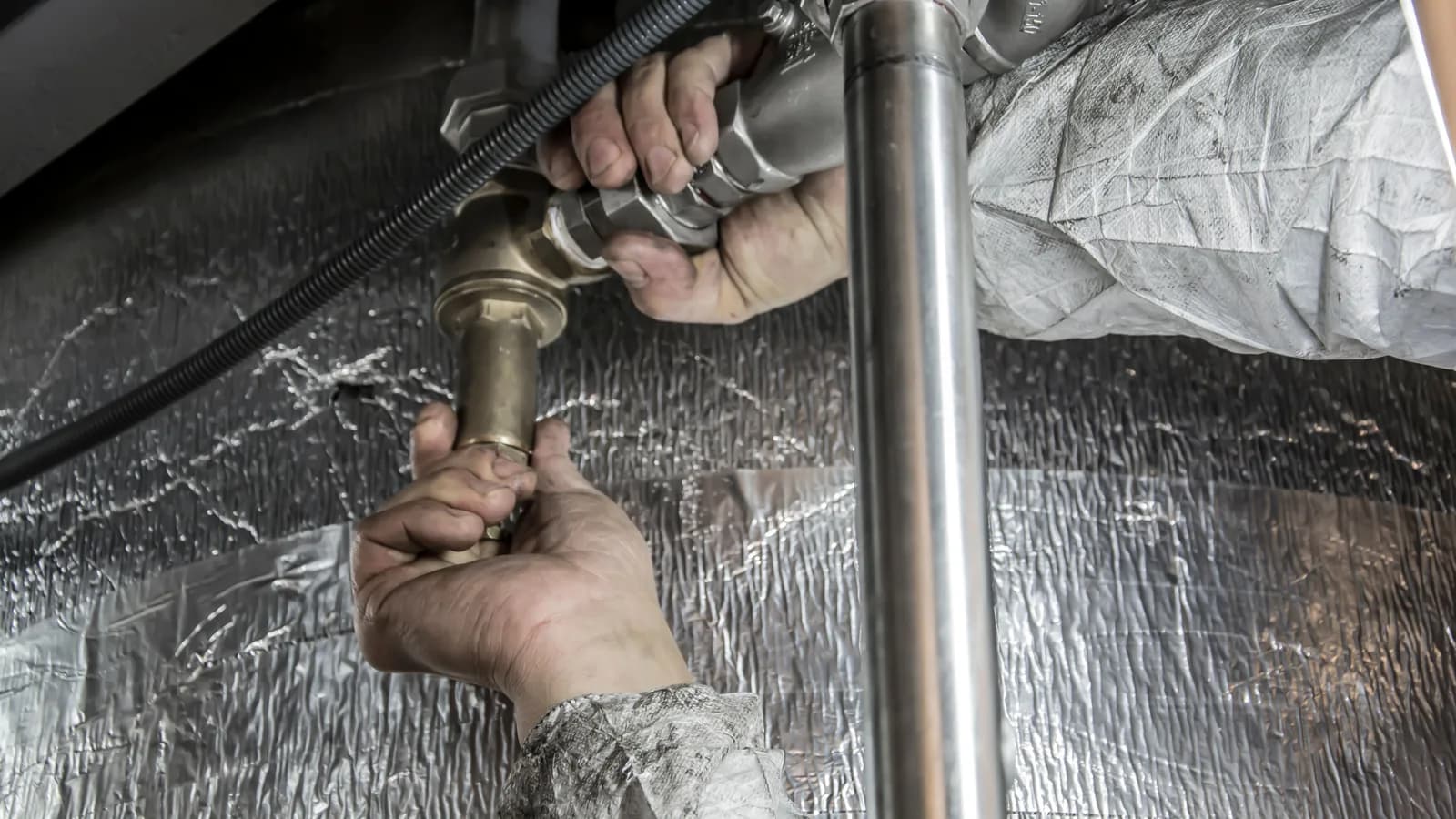
Keep the unit off, protect the cabinet, and trace the highest wet point across the sink mount, hose, drain joint, plumbing, and disposal body.
A garbage-disposal leak is water escaping at the sink mounting assembly, dishwasher inlet, discharge connection, nearby plumbing, or the disposal body itself. Water visible at the bottom does not prove the bottom seal failed. Find the highest wet point before anyone recommends replacement.
My rule: the cabinet gets protected before the appliance gets diagnosed. Stop using the sink and dishwasher, keep the disposal off, move stored items from a dry side, and place a shallow pan or absorbent material where it can be positioned without touching wet electrical equipment.
Set the electrical boundary first
Do not touch a wet plug, cord, receptacle, switch, junction box, disposal body, or metal plumbing connected to a suspect electrical area. Do not operate the wall switch, reset button, dishwasher, or disposal. If there is smoke, sparking, a burning odor, buzzing, heat, or water at electrical parts, keep clear and call emergency services or a qualified electrician as the condition requires.
Disconnecting power is useful only when it can be done from a known dry location without approaching the wet cabinet. A hardwired unit, inaccessible plug, wet floor, or uncertain circuit is not a homeowner test. Leave removal, wiring, live testing, and access inside the disposal to qualified service.
Preserve the water trail without rerunning anything
Photograph the cabinet floor, cabinet walls, disposal, hose, and drain fittings before wiping. Note whether the last event was sink use, dishwasher discharge, a full basin draining, or disposal operation. Record the water amount, color, odor, food debris, and first place it appeared. Mark swollen cabinet edges or a stain that shows the route.
From a dry position with the equipment off, blot accessible surfaces. Then inspect from top to bottom with a flashlight. Do not energize the disposal when water is near electrical parts, the cord, receptacle, switch, or disposal body, or when the unit is damaged. If the area is dry and a qualified person or the exact manufacturer instructions authorize a controlled check, use only that documented method; otherwise leave the unit and sink off and call service. The remaining trail can still show whether water began at the sink flange above the unit, the small dishwasher hose connection, the larger discharge joint, adjacent trap plumbing, or the disposal shell.
Map the highest wet point
Start where the disposal meets the sink. Moisture at the mounting assembly can run down the outside and collect underneath. Next, inspect the dishwasher inlet hose and its connection without twisting or tightening it. Then look at the discharge tube, gasket area, trap, and neighboring joints. A drip from any of these can follow the curved body and appear to come from the bottom.
InSinkErator separates disposal leaks into the top mounting assembly, discharge, dishwasher inlet, bottom, container body, motor joint, and adjacent plumbing. Its guidance says to confirm that water seen at the bottom is not coming from somewhere above. It also directs confirmed container-body and motor-joint leaks to support rather than offering a homeowner repair.
The 4Homes weekly email
Every Tuesday: what changed for homeowners this week, plus our newest guides.
No spam. Unsubscribe anytime.
Choose the service call from the map
A plumber is the likely first call for the sink flange, dishwasher hose, discharge connection, trap, or adjacent drain plumbing. Appliance or disposal service fits a confirmed body or motor-joint leak. If the cabinet also has a wet receptacle, damaged cord, heat, or protective-device trip, add a qualified electrician. Give each person the photos and the last-use timing so nobody needs to recreate the leak blindly.
Do not loosen the mounting ring, remove the unit, tighten a live-area connection, put a hand into the disposal, or use tools through the opening. Do not treat a leak as a jam or humming problem. This job is water-source mapping with the appliance off.
Dry the cabinet and verify the repair
EPA says moisture control is the key to mold control and advises drying water-damaged areas and items within 24 to 48 hours. Remove wet contents, keep safe air moving after electrical risk is cleared, and check cabinet seams, the wall, and flooring. Swollen particleboard, damp drywall, persistent odor, sewage-contaminated water, or a larger hidden wet area may require restoration help.
After the correct repair, the responsible professional should verify the repaired path under its normal operating condition while checking every connection above it. Save the photographs, diagnosis, repair, and drying record with the home water-leak plan. A washer nearby that drains but stops short of a full spin follows a different first-response path — see the washer spin guide instead of opening either cabinet further.
Frequently Asked Questions
Why is my garbage disposal leaking from the bottom?
Water seen at the bottom may have traveled down from the sink mounting assembly, dishwasher inlet, discharge joint, or nearby plumbing. Dry the area with the unit off and map the highest wet point. If the disposal body or motor joint itself is confirmed wet, leave it off for professional replacement or service.
Can I run the disposal to find a leak?
Do not energize the disposal when water is near electrical parts, the cord, receptacle, switch, or disposal body, or when the unit is damaged. If the area is dry and a qualified person or the exact manufacturer instructions authorize a controlled check, use only that documented method; otherwise leave the unit and sink off and call service.
How quickly should I dry a cabinet after a disposal leak?
Start safe drying promptly after the leak source is stopped. EPA advises drying water-damaged areas and items within 24 to 48 hours to help prevent mold growth. Porous, swollen, contaminated, or persistently damp materials may need professional assessment.