Separate urgent water and combustion warnings from the observations that make a service call more useful.
Active leaking, a carbon-monoxide alarm, fuel odor, soot, damaged venting, smoke, or sparking requires immediate attention. Move away from the hazard, follow alarm or utility instructions, and call qualified help. For less urgent changes, record where the moisture, sound, or temperature problem appears before anyone recommends repair or replacement.
A water heater can be a tank, tankless unit, heat-pump system, or part of another heating arrangement. Fuel, venting, electrical supply, pressure controls, drains, and installation rules differ. Read the equipment label and manual rather than applying a generic maintenance trick.
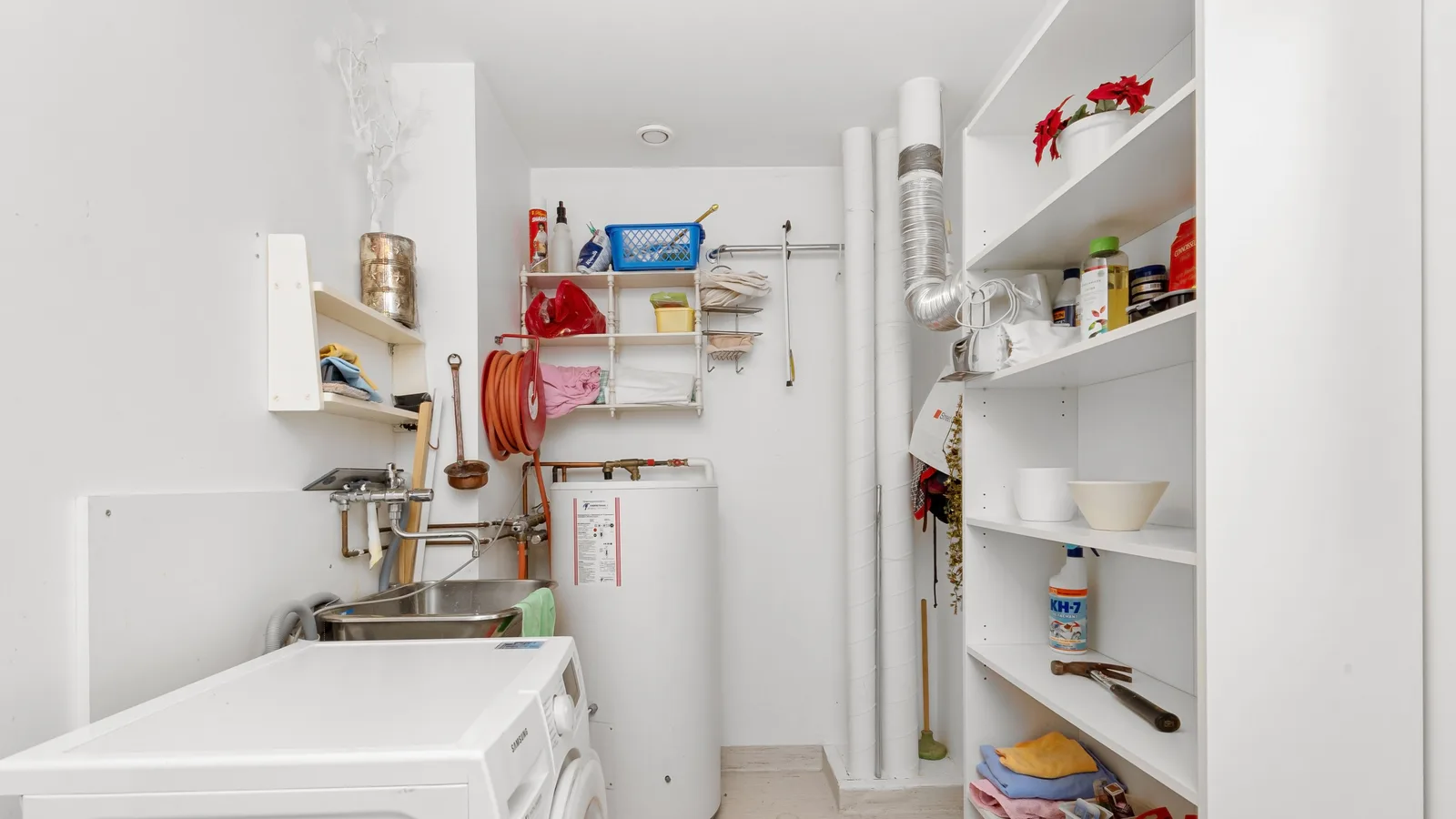
Photograph the rating label without removing a cover and keep the image with the service records. The model, serial number, energy source, installation history, and prior repair notes help a contractor bring the right information to the call. Keep stored boxes and household chemicals out of the service area so leaks, venting, and access remain visible.
Water at the base is evidence, not a diagnosis
Look without reaching behind or underneath the unit. Moisture can come from a connection, valve, drain, condensate line, nearby pipe, or the vessel itself. Note the highest point that appears wet, the color of any residue, whether the drain pan contains water, and whether moisture appears only during or after hot-water use.
Protect belongings and finished surfaces when it is safe, but do not block a drain or operate a corroded valve to experiment. Know the normal water shutoff and keep access open before an emergency. If water is approaching wiring, a gas control, a ceiling below, or a walking surface, stop using the equipment and get help. EPA WaterSense treats periodic checks for leaks around water-using equipment as part of sensible home water maintenance.
Rust and mineral deposits tell different parts of the story
Surface discoloration on a pipe is not the same as corrosion at a tank seam, and dried mineral residue is not proof that a leak has stopped. Photograph the whole connection and a close view. A qualified plumber can determine whether the source is a serviceable fitting, a control, installation stress, water chemistry, or failing equipment.
Do not scrape, tighten, cap, or plug a temperature-and-pressure relief device. Do not assume water from a discharge pipe is harmless. Pressure and temperature safety controls are not homeowner diagnostic tools. A discharge event, recurring moisture, or a blocked or improperly routed line needs professional evaluation.
Temperature changes deserve a pattern
Write down whether hot water is absent, slow to arrive, short-lived, excessively hot, or inconsistent from one fixture to another. Compare more than one faucet. A single-fixture problem can involve that fixture; a whole-house change points the service call in a different direction. Include any error code exactly as displayed and the sequence of resets already attempted.
Repeated resetting is not a maintenance plan. Stop when a breaker trips again, an ignition problem returns, or the unit shuts down repeatedly. Never remove an electrical cover, bypass a control, relight equipment contrary to the maker instructions, or keep cycling a device that smells hot or behaves unpredictably.
Sounds matter most when they change
Popping, rumbling, knocking, sizzling, fan noise, or rapid cycling can have different causes across equipment types. Record the sound from a safe distance and note whether it begins during startup, water use, recovery, or shutdown. Do not drain or flush a neglected tank merely because a generic checklist says to do so. Valve condition, sediment, installation, and manufacturer procedure matter, and a stuck or damaged valve can create a larger problem.
The 4Homes weekly email
Every Tuesday: what changed for homeowners this week, plus our newest guides.
No spam. Unsubscribe anytime.
Combustion warnings outrank the hot-water problem
A carbon-monoxide alarm, soot, scorch marks, a changed flame appearance visible through a normal viewing area, damaged venting, or exhaust odor needs qualified response. The CPSC explains that carbon monoxide cannot be seen or smelled and provides alarm guidance through its carbon-monoxide safety center. Do not enter a hazardous area to silence an alarm or restart fuel-burning equipment.
Make the service question specific
Give the contractor the model, fuel or power type, visible condition, error code, service history, and the symptom pattern. Ask for the failed part or failed function, the evidence supporting the diagnosis, and whether the cause is a component, installation issue, water condition, venting problem, or vessel failure. If replacement is proposed, ask what the new installation must change besides the equipment itself.
Ask who handles permits, required safety upgrades, drain or vent changes, removal, startup, and warranty registration. Capacity should match the household's actual hot-water pattern and the available fuel, power, space, and venting. A low headline price is incomplete if the work needed for a safe, functioning installation appears later.
Our position is simple: age alone does not diagnose a water heater, and a temporary return of hot water does not clear a safety warning. Solve the immediate hazard or leak first. Then compare a documented repair with a complete replacement scope using the contractor quote guide. If the problem is a lack of hot water rather than a leak or safety warning, the no-heat first-checks guide covers the service file to build before the appointment.