Back to homeowner guides

The House File

Roof leaking during a storm: protect the room without climbing up

Keep people clear of wet electricity and damaged ceilings, protect belongings from a safe edge, and document the leak from indoors.

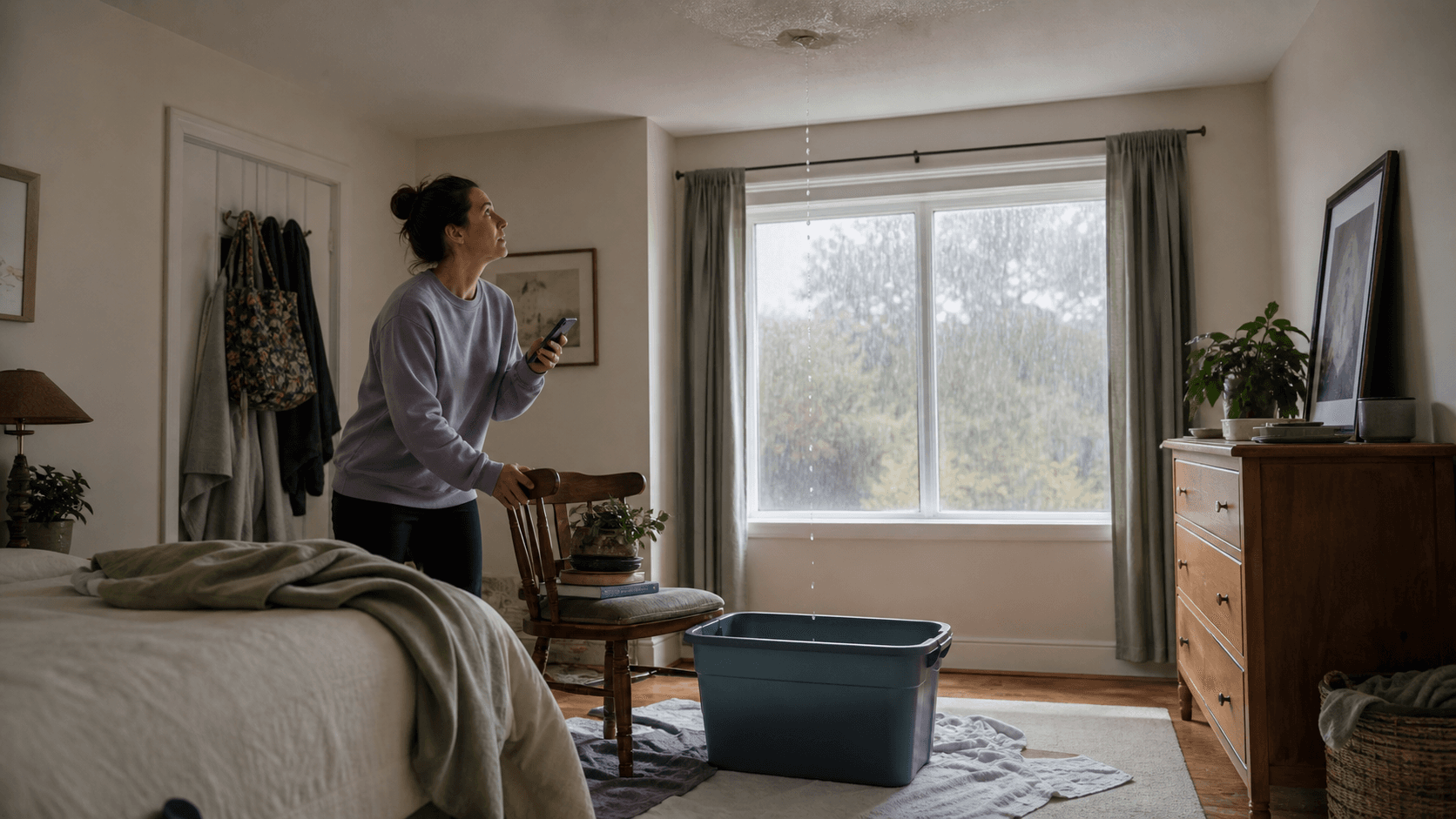
A homeowner moving belongings away from a ceiling leak during heavy rain
During the storm, the job is the room below: clear people, protect belongings from a safe edge, collect water, and stay off the roof.

Protect the room from indoors while the weather is active. The roof can wait until trained help can reach it safely.

If the roof starts leaking during a storm, work from the room below and stay off the roof. Move people away from wet electrical equipment and any ceiling that is bulging, sagging, cracking, or dropping material. Shift belongings only from a safe edge, place containers where you can reach them without standing under damaged ceiling, take a few useful photos, and call an emergency roofer from a dry location.

Start with the room, not the roof

A storm leak creates a strong urge to chase the water uphill. Resist it. Wind, rain, darkness, loose debris, wet ladders, and nearby power lines make exterior investigation a poor trade for anything you might save in the next few minutes. The Consumer Product Safety Commission warns that wind can shift a ladder into an overhead wire and that ladders used around roof repairs can become part of an electrical hazard. Its ladder and power-line safety alert is reason enough to leave storm roof access to equipped professionals.

Do not climb onto the roof. Do not lean out a window to inspect it, and do not enter an attic just to locate the drip while water, wind, electrical damage, or structural movement is still uncertain. An indoor stain can be several feet from the roof opening because water follows framing, fasteners, insulation, and other surfaces before it appears.

Clear people from the danger zone

Use the shape of the ceiling, not the size of the drip, to set the boundary. A small stream below a broad bulge is not a small problem. Keep children and pets out. If the ceiling is sagging, cracking, making new sounds, shedding material, or holding a visible pocket of water, leave the room and close the door if that can be done without walking beneath it.

If part of the structure appears unstable, a tree has struck the house, water is pouring through light fixtures, or local officials have told residents to evacuate, get out and call emergency services. The CDC's guidance for a storm-damaged home says not to enter when obvious damage, fallen lines, or wall and foundation cracks make the building unsafe. The same caution belongs in the room while the storm is active.

A container protects a floor. It does not make the ceiling above it safe.

Water near electricity changes the response

Treat water at a ceiling light, fan, outlet, extension cord, appliance, service panel, or unknown wiring path as an electrical hazard. Do not touch the fixture, pull a wet plug, flip a nearby switch, or carry a metal container through the area. Keep people back.

If the correct circuit or main disconnect can be reached from a completely dry location and you already know how to use it, follow the emergency instructions for the home. If reaching it means entering water or approaching wet equipment, do not try. Call the fire department, electric utility, or a qualified electrician. The CDC's electrical-hazard guidance specifically says not to enter standing water to reach the main switch and not to turn power on or off while standing in water.

Power being off does not prove that the ceiling is structurally sound. It also does not clear wet equipment for use. These are separate decisions.

Protect belongings from the safe side

Move furniture, rugs, electronics, papers, and fabric away from the leak if you can approach without passing below a damaged ceiling. Start with the dry side of the room and create a clear walking path. Heavy furniture is not worth a strained back or extra time in a questionable area.

Use wide, stable containers for drips that fall into a safe, open area. Put an old towel around the container to catch splash. If the container begins filling quickly, replace it from the side rather than leaning beneath the leak. Do not tape plastic to a wet ceiling, pierce a bulge, drill a drain hole, or fasten anything overhead. Those familiar internet fixes ask the homeowner to stand exactly where falling water and material may land.

Take the photographs that explain what happened

Documentation comes after people are clear and the immediate area is controlled. From a safe position, take one wide photo showing the room and leak location, then closer photos of the stain, drip, damaged contents, and any visible change over time. Record when the water first appeared, which direction the storm was coming from if known, and whether the leak changes with wind or rainfall. Do not guess at the cause in the notes.

Ready.gov recommends taking photographs and video and saving receipts after property damage in its Document and Insure Your Property guide. Call the insurer or property manager when the immediate safety work is underway. Ask what emergency mitigation and documentation the policy or lease requires, but do not wait for an adjuster before taking reasonable steps to keep people safe and limit ongoing damage.

Make a useful emergency-roofer call

Tell the roofer that the leak is active during a storm. Describe the room, the rate of entry, any ceiling movement, electrical involvement, tree impact, and whether the building has safe exterior access. Share photographs taken from inside or from the ground only if those positions were safe. Give the roof type if you know it, but do not climb or search paperwork while the room still needs attention.

Ask what the company can do now, what must wait for safer weather, and whether the first visit is emergency weatherproofing or a full diagnosis. A responsible answer may be that exterior work cannot begin until wind, lightning, or surface conditions improve. That is not poor service. It is a safety decision.

  • Confirm the business identity and the licensing or registration required where the home is located.
  • Ask for the emergency scope, authorization, and charges in writing before work begins when circumstances allow.
  • Do not sign a full replacement contract merely because someone arrived during the storm.
  • Save before-and-after photographs and the description of every temporary material installed.

Containment is not the roof diagnosis

When the storm passes, the interior response hands off to two separate jobs. The first is finding and repairing the path that admitted water. The second is assessing wet ceiling, insulation, framing, finishes, and electrical equipment. A stopped drip can leave moisture inside an assembly, and a dry-looking stain does not show which materials are ready to remain.

Use the home water-leak plan for documentation, drying roles, and contamination boundaries. Then use the roof repair-or-replace guide to separate a focused storm repair from a broader roof decision. The storm response ends when the room is safe and further water entry is controlled, not when someone has sold a new roof.

Sources

Where this advice comes from

Keep going

Related homeowner guides