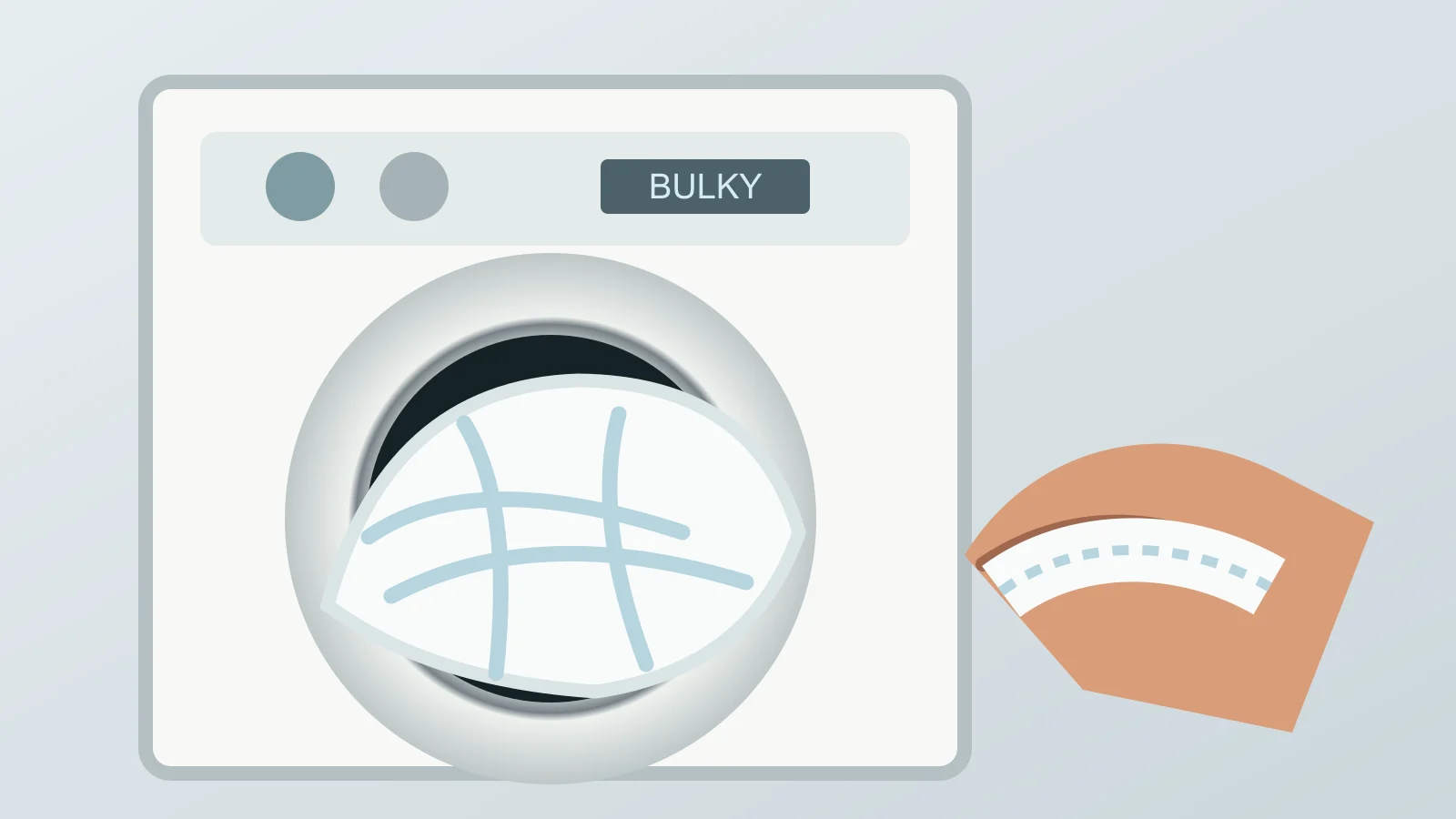
Use the care label and actual appliance capacity first, then wash and dry a comforter without overloading, damaging seams, or storing damp fill.
Wash a comforter at home only when the care label allows it and both your washer and dryer can give it room to move. Read the label, inspect seams, choose the exact appliance-approved bulky-bedding method, and keep drying until the fill is completely dry. If it is dry-clean-only, damaged, too large for the drum, or too heavy to handle wet, take the laundromat or professional-cleaning route instead.
The decision comes before the cycle. A comforter can enter a washer looking manageable and come out as an overloaded, unbalanced wet bundle.
Use the label and appliance manual as the gate
Start with the comforter's care label. It determines whether machine washing, water temperature, bleach, detergent type, agitation, and machine drying are allowed. It also tells you when a down, wool, silk, decorative, heated, or dry-clean-only item needs a different approach. The exact washer and dryer manuals set the second boundary: use the cycle, load arrangement, capacity, and detergent instructions for those models, not a generic video.
Whirlpool and Maytag both say bulky bedding needs room to move to clean effectively. Their capacity figures are product guidance, not a substitute for your own appliance manual. The practical test is visible space and free movement. If the comforter is packed tight, cannot redistribute, or already makes the drum look full while dry, do not gamble on its wet weight.
| Condition | Best route | Why |
|---|---|---|
| Machine-wash label; comforter moves freely; appliance manual supports bedding | Home wash using the label and exact cycle | The load can clean and balance without being forced |
| Machine-wash label; home drum is too small | Commercial washer and dryer | More room for washing, spin, and drying |
| Dry-clean-only label, silk, wool, or uncertain construction | Professional cleaner or label-directed care | Home cycles can damage the material or fill |
| Open seam, leaking fill, tear, or loose baffle | Repair or ask a textile professional first | Washing can turn a small failure into a lost-fill mess |
| Comforter is saturated and unsafe to lift or machine is thumping | Stop the cycle and follow the appliance manual | Wet weight and imbalance can harm people or equipment |
Inspect and spot-treat before the whole item gets wet
Remove the duvet cover and wash it separately according to its own label. Lay out the comforter where you can see the stitching. Look for holes, separated seams, loose threads, shifted fill, or a stain that needs attention. Whirlpool and Maytag both advise checking for damage before washing because a tear can worsen in the machine.
Follow the label for stain treatment. Do not use a stronger product, hotter water, or longer soak because a blog said it works on another fill. If the fill can be moved away from a small stain, that may help protect it, but only handle the item gently. A mystery stain, brittle backing, or old adhesive repair is a reason to stop and ask a cleaner rather than create a permanent mark.
Load the washer without making a laundry experiment
- Confirm the washer is empty and the drum, gasket, dispenser, and floor are dry and free of sharp debris.
- Place the comforter loosely in the drum. Do not ram it down to make the door close.
- For an agitator model, follow the manual's bulky-item loading method; the fabric may need to sit loosely around the center post rather than wrap tightly around it.
- Use the detergent type and amount on the label and washer instructions. More detergent creates a rinsing problem, not cleaner bedding.
- Select only the allowed bedding, bulky, gentle, temperature, and rinse settings. If the model lacks a suitable cycle, use another machine.
- Stay nearby long enough to notice hard thumping, repeated imbalance, leaking, burning odor, or failure to spin. Stop and follow the appliance manual if any occurs.
Do not add towels, shoes, sheets, or another comforter to fill empty space unless the exact appliance guidance says to. Whirlpool's bulky-load advice discusses even distribution and allows small balancing items in some situations, but that is model-specific. An improvised ballast load can trap detergent, shift the balance, and make drying harder.
Drying is the part people rush
Move the comforter carefully. Wet bedding is heavy and awkward; get help rather than twisting your back or dragging it over a dirty floor. Use the label's dryer direction and the dryer manual's bulky-item setting. Maytag advises low or no heat where the care instructions allow and recommends periodic removal to redistribute fill. Whirlpool likewise warns that a comforter must be completely dry before use or storage.
Pause to break apart clumps with clean hands and check corners, quilting channels, seams, and the center. Then return it to the dryer only if the label permits. A dryer ball, tennis ball, fabric softener, fragrance product, or high-heat shortcut is not universal comforter advice; use it only when the comforter label and appliance guidance allow it. If drying slows to a crawl, check the lint screen and the appliance's documented airflow path, but do not disassemble ducts or panels for a comforter load.
Cool fabric can hide moisture. Let the item rest briefly, then feel several interior areas. A cool, dense patch; a musty smell; clumping; or a heavier corner means it is not finished. Do not put it inside a duvet cover, bag, or linen closet yet.
The 4Homes weekly email
Every Tuesday: what changed for homeowners this week, plus our newest guides.
No spam. Unsubscribe anytime.
Plan the cost and the less-wasteful option
Use published local prices as route examples, not a national promise. Maytag Coin Laundry Service posts $3 to $10 for a self-service washer by machine size and 25 cents per six dryer minutes; drying time is not fixed, so add only the time the comforter actually needs. AR Laundromat lists laundry prices of $10 for a small comforter, $14 for a queen, and $16 for a king. Those named businesses are not a nationwide average, but they make the comparison concrete: a machine-washable item that fits a commercial machine has a different cost path from a label-directed professional-cleaning item.
For home washing, the honest number is your incremental detergent and utility cost, not a borrowed national figure. Compare that total with a nearby laundromat's posted washer-and-dryer prices, transport, and a written cleaner quote before washing. A low posted wash price is not a bargain if the item cannot be dried fully that day.
A duvet cover can reduce how often the comforter itself needs full laundering because the cover is the layer that contacts the sleeper. That is a practical way to save wear, trips, and drying time, provided both the cover and comforter receive the care their labels require. Do not claim a particular utility savings; appliance efficiency, capacity, energy use, and local utility pricing differ too much.
Set a simple finish line before starting: enough time for washing, several drying checks, and a final cool-down inspection. A rushed evening is a poor time to discover that the comforter needs another drying cycle or that the laundromat is closing. If the fill stays clumped after permitted drying and gentle redistribution, stop treating that as a cycle-selection problem. The label, the fill construction, and a textile-care professional decide the next move. Storing a questionable comforter in a sealed bag only hides the evidence until the next season.
Photograph the care label before it fades or separates from the bedding. That one photo can prevent a future household member from applying a different fill's washing instructions to this item.
For related home care, see the washing-machine detergent-drawer guide, washer-hose replacement guide, small-laundry-room organization guide, and linen-closet reset.
Sources used
Whirlpool, How to Wash a Comforter Without It Getting Lumpy; Maytag, How to Wash a Comforter in a Few Easy Steps; the exact comforter's care label; and the exact washer and dryer owner manuals.
Frequently Asked Questions
Can I wash a comforter in my home washer?
Only if its care label permits machine washing and the exact washer has enough room for the comforter to move without being packed in. A comforter that fills the drum, makes the machine unstable, or exceeds the appliance instructions belongs in a commercial machine or with a cleaner.
Should I wash a comforter alone?
Usually. A bulky item needs room to move and dry, and extra pieces can create an unbalanced load or hide damp areas. Follow the comforter label and washer manual; add balancing items only if the exact appliance guidance allows it.
How long does a comforter take to dry?
There is no reliable universal time. Fill, size, dryer capacity, heat allowed by the care label, airflow, and how much water the washer removed all matter. Check the filling, seams, corners, and center after a brief cool-down, and keep drying only as the label allows until no area feels cool, damp, clumped, or heavier than the rest.
Can I wash a down comforter at home?
Some down comforters are machine washable, but the label controls. Inspect for damaged seams first, use only the allowed cycle and detergent, give it enough washer and dryer room, and stop if the fill will not dry evenly. Dry-clean-only, damaged, or oversized items need a different route.