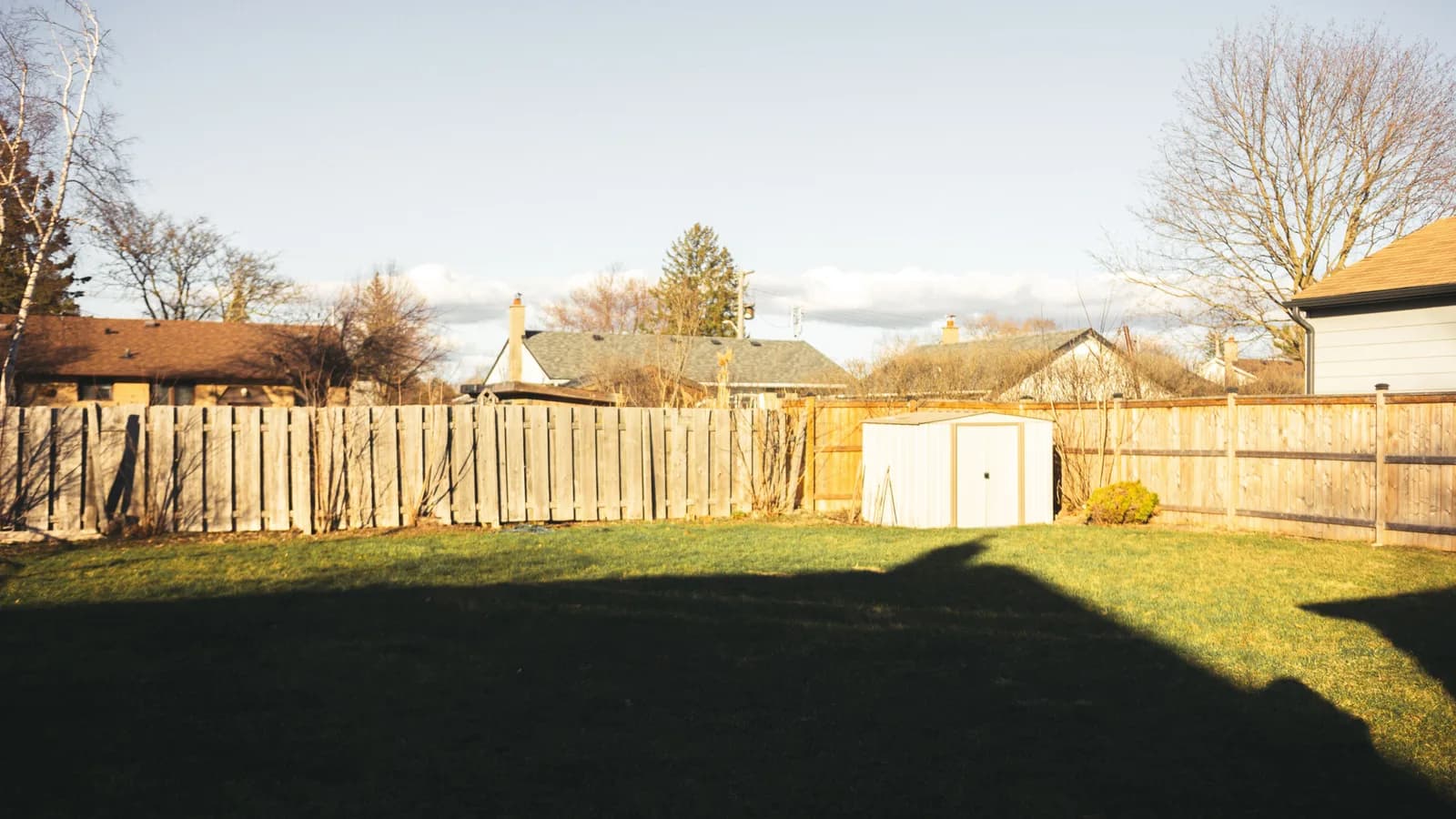
Diagnose why the turf thinned, seed in the right regional window, prepare real soil contact, and protect new grass through its first mowing.
To overseed a thin lawn, match the seed to your climate and site, mow and remove loose debris, expose small areas of soil, spread the labeled amount evenly in two directions, press the seed into contact, and keep the surface moist through germination. Do not start until you know why the lawn thinned and whether your grass is in its best seeding season. Seed cannot fix deep shade, standing water, active disease, severe compaction, or a grass type that does not belong there.
Decide whether overseeding fits the lawn
Overseeding adds grass seed to an existing stand. It works best when much of the lawn is still healthy but looks open, patchy, or worn. If weeds, bare soil, dead turf, or the wrong grass dominate the area, renovation may be the more honest project. Throwing seed across a failed site usually buys a brief green haze, followed by the same thin lawn.
Walk the yard before shopping. Mark full sun, afternoon heat, dense shade, soggy areas, hard compacted routes, pet traffic, mower scalping, and spots where downspouts discharge. Pull back a small section of turf. A thick springy layer that keeps seed from reaching soil changes the preparation. So does soil that is hard enough that a screwdriver barely enters after normal watering.
Our view: correcting the site is more valuable than buying a premium seed blend. Redirect obvious runoff with the gutter and drainage check, adjust mowing with the lawn-mower guide, and use a soil test when growth has stayed poor despite reasonable care. A university or county extension office can help identify suitable turf species and local planting dates.
Choose the right seeding window
Cool-season grasses such as tall fescue, Kentucky bluegrass, perennial ryegrass, and fine fescue generally establish best as summer heat eases and soil remains warm. Penn State Extension describes late summer as the optimum period in much of its cool-season region because seedlings face less weed pressure and gain fall and spring growth before summer stress. University of Minnesota Extension likewise centers cool-season seeding in late summer to early fall.
Warm-season grasses follow a different clock. They need warm soil and enough active growing time before temperatures fall, so late spring into early summer is the usual broad window. That does not mean one date works nationwide. Elevation, drought restrictions, rainfall, first frost, summer heat, and grass species move the schedule. Use local extension guidance for your county or climate zone, then check the seed label.
Avoid seeding when irrigation cannot be maintained, a heat wave or washout is likely, or a recent lawn treatment conflicts with germination. Read every herbicide and weed-control label. Some products require a waiting interval before or after seeding. Guessing here can waste the entire project.
Measure the actual turf area and buy seed once
Use the lawn area, not the lot size. Subtract the house, driveway, walks, beds, patios, sheds, and other non-turf space. Split an irregular yard into rectangles and simple triangles, calculate each section, and total them. The seed bag gives a coverage rate for overseeding that may differ from its rate for a new lawn.
Check the label for grass species and cultivars, test date, germination percentage, weed seed, other crop seed, and inert material. Penn State Extension notes that apparent bargain seed can cost more per pound of viable seed when purity and germination are poor. Choose a blend for the site's light, moisture, use, and maintenance level, not for the picture on the bag.
| Site condition | What the seed choice needs | What seed will not solve |
|---|---|---|
| Open sun and regular family use | A locally adapted mix with appropriate traffic tolerance | Compacted routes and mower damage |
| Partial shade | Species specifically labeled for the measured light level | Dense shade or tree-root competition beyond turf tolerance |
| Hot, dry exposure | Climate-appropriate drought and heat tolerance | No irrigation during establishment or severely poor soil |
| Low, wet section | Only a species suited to those conditions after drainage is corrected | Standing water, leaking irrigation, or concentrated roof runoff |
| Pet or play route | Wear tolerance and enough recovery time | Constant traffic before seedlings establish |
Prepare for seed-to-soil contact
Mow somewhat shorter than the lawn's normal maintained height without scalping it. Collect or rake away clippings and loose debris so seed does not rest on a dry mat. Rake bare and thin spots firmly enough to expose soil. Do not tear up healthy turf merely to make the job look aggressive.
Core aeration can help when soil is compacted and can create openings for seed, though a few decorative passes are not a cure for severe compaction. Penn State Extension describes multiple passes before overseeding in compacted turf. A slit seeder is another option because it cuts shallow grooves and places seed near soil. Mark sprinkler heads, shallow wires, invisible-fence lines, valve boxes, tree roots, and other hazards before using rented machinery.
Dethatching is useful only when a real thatch layer blocks contact. A power rake can injure healthy turf, expose soil to weeds, and turn a modest overseeding into renovation. Check the layer first. If you cannot identify the grass, disease, or cause of decline, send photos or a sample to a local extension service before using destructive equipment.
Spread in two directions, then press the seed in
- Calibrate the spreader. Use the seed label's overseeding rate and the measured square feet. Test the setting on a known area or collection sheet rather than trusting an old dial chart.
- Divide the seed. Put half in the spreader and cover the lawn in parallel passes. Spread the other half at right angles to reduce skips and stripes.
- Handle edges separately. Close the spreader while turning on pavement. Sweep stray seed back onto the lawn rather than washing it into a drain.
- Improve contact. Lightly rake open soil or use a lawn roller only as local guidance and equipment instructions allow. The goal is firm contact, not deep burial or compaction.
- Water gently. Apply enough to moisten the seedbed without moving seed downhill, making puddles, or eroding bare soil.
Keep people and pets off the seeded area as much as practical. A simple rope, flag line, or temporary route protects the new work. On a slope, use erosion-control material approved for grass establishment instead of a heavy blanket that blocks light or becomes tangled in mower blades.
The 4Homes weekly email
Every Tuesday: what changed for homeowners this week, plus our newest guides.
No spam. Unsubscribe anytime.
Water and mow based on what the seedlings are doing
The surface needs consistent moisture during germination. That may require short, light watering more than once on a dry windy day, or no irrigation after adequate rain. Watch the soil instead of watering by habit. Puddling, runoff, seed movement, and constantly saturated ground mean the application is too heavy.
Different species germinate at different speeds. Keep following the label and local extension guidance through the slowest relevant portion of the blend. As seedlings establish, water less often and more deeply so roots move downward. Follow municipal watering rules and pause automatic irrigation when rain supplies enough moisture.
Wait to mow until the new grass reaches the recommended height for that species and the soil is firm enough that wheels will not rut or pull seedlings. Use a sharp blade and remove no more than the locally recommended portion of leaf height. The seasonal home-care calendar can hold the seeding, first-mow, and follow-up soil-test dates.
What overseeding costs
HomeGuide reports a broad professional overseeding range of about $0.04 to $0.18 per square foot, or roughly $200 to $900 for 5,000 square feet. Its seed-only example for the same area is about $50 to $100. Treat those as national planning ranges, not quotes. Minimum service charges, seed species, aeration, slit seeding, access, slope, soil preparation, fertilizer, topdressing, and local labor can move the total sharply.
| Budget line | What changes it | How to control it |
|---|---|---|
| Seed | Species, blend quality, viable seed, coverage rate, and measured turf area | Use the label's overseeding rate and avoid buying by lot size |
| Preparation | Raking, mowing, dethatching, aeration, slit seeding, and debris removal | Pay only for the condition the lawn actually has |
| Water | Weather, soil, irrigation efficiency, restrictions, and germination time | Repair leaks and adjust cycles to observed moisture |
| Professional service | Minimum trip charge, lawn size, slope, gates, equipment, seed, and follow-up | Compare written scopes with seed name and application rate |
When to call a lawn professional
Call a qualified lawn-care professional or local extension service when more than a modest share of the turf is dead, the cause is unknown, disease or insects are suspected, weeds dominate, soil stays wet, erosion is active, or the site is too shaded for turf. Use a licensed irrigation professional for buried-system faults. Before core aeration or slit seeding, use the local utility-location service and identify private lines the public marking service may not cover.
Ask a contractor to name the grass seed, overseeding rate, preparation method, herbicide conflicts, irrigation expectations, areas excluded, cleanup, and what happens if weather forces rescheduling. Compare the scope with the contractor quote comparison guide. A promise to “make it green” is not a useful specification.
Save money by shrinking the failed area first
Correct the downspout, sprinkler pattern, mowing height, or traffic route before buying seed. Overseed only the measured turf that can realistically support grass. Rent equipment with a neighbor when schedules and cleaning rules permit, or bundle aeration and overseeding into one mobilization if both are justified. Do not add fertilizer without a soil test or local recommendation simply because it appears in a package.
Keep the bag label, seed lot information, spreader setting, amount used, weather, and watering notes. If a section fails, that record is more useful than another blind application. Some yards also improve when the hardest-to-grow strip becomes a path, mulch bed, or locally appropriate planting area; the lower-water yard guide explains that alternative.
Frequently Asked Questions
What is the best time to overseed a lawn?
Seed when the grass species can establish before its next period of heat, cold, or dormancy. Cool-season lawns usually establish best in late summer to early fall, while warm-season lawns are generally seeded in late spring or early summer after active growth begins. Local extension guidance and the seed label should set the exact window.
Can I overseed without aerating first?
Yes, if enough soil is exposed and the surface is not badly compacted. Rake thin areas so seed reaches soil, then spread and press it in lightly. Core aeration or slit seeding is more useful when compaction, thatch, or dense existing turf prevents good seed-to-soil contact.
Should I put topsoil over grass seed?
Do not bury lawn seed under a thick layer of soil. Light raking, rolling, or a very thin compatible topdressing can improve contact, but the seed label and local extension guidance should control depth. Too much soil can block light, hold excess water, or smother the existing grass.
How often should I water after overseeding?
Keep the seedbed consistently moist without creating runoff or puddles until germination, using short light cycles when weather makes that necessary. Then reduce frequency gradually as seedlings root. Adjust for rain, soil, slope, local watering rules, and the seed label rather than following one fixed schedule everywhere.
Why did my overseeding fail?
Common causes include the wrong grass for the site, poor timing, seed sitting on thatch instead of soil, drying during germination, washout, traffic, herbicide conflicts, and an untreated drainage, shade, disease, or compaction problem. Diagnose the thin lawn before buying another bag of seed.