Duplex, Triplex & Fourplex Financing: How Rent Counts
Learn how lenders may review rent, vacancy, expenses, reserves, occupancy, and property condition when financing a duplex, triplex, or fourplex.
Quick answer
Rent from a duplex, triplex, or fourplex counts toward financing only at the amount a lender can document and expects to continue, not the full advertised rent. It depends on whether you'll occupy one unit or treat the property as a straight investment, which changes the program and how each unit's rent counts.
10 min read

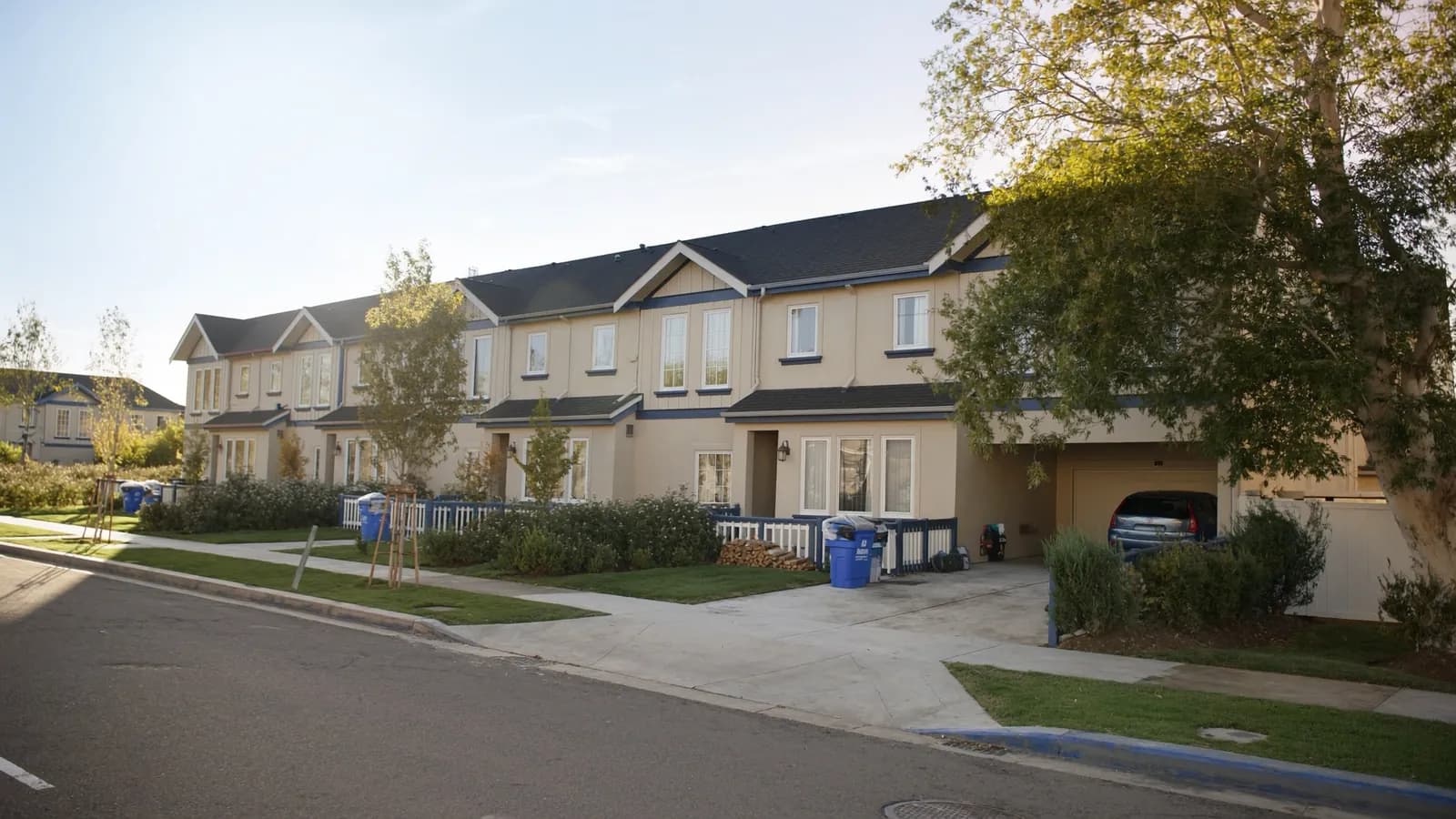
Photo: Mike van Schoonderwalt / Pexels
In this article
A duplex, triplex, or fourplex can put rent and housing expense on the same page. That is the appeal. One unit may become the owner’s home while the others produce rent, or all of the units may operate as an investment property.
But extra doors do not automatically create easier financing or better cash flow. They create more income lines, more expense lines, and more ways for the property to miss the plan.
The useful question is not whether small multifamily “beats” a single-family rental. It is whether the documented rent, complete housing payment, operating costs, reserves, occupancy plan, and property condition work together for this transaction.
First decide which transaction you are actually financing
The same fourplex can be underwritten differently depending on who will live there.
An owner-occupied purchase means the borrower intends to use one unit as a principal residence. An investment-property purchase means the borrower will not occupy the property. The occupancy statement affects available programs, required documentation, pricing, reserves, and how the file is evaluated.
Fannie Mae’s conventional rental-income guidance lists a two- to four-unit principal residence where the borrower occupies one unit and a one- to four-unit investment property among the subject properties that may produce eligible rental income when the applicable requirements are met.[1]
That is one conventional framework, not a universal rule. FHA, VA, portfolio, bank-statement, DSCR, non-QM, and individual lender programs can treat occupancy, rent, down payment, reserves, and property eligibility differently.
State the real occupancy plan. Do not call an investment property a primary residence to obtain different terms.
Have a property in mind? Run the numbers →
Get startedRent changes qualifying math, but not dollar for dollar
A buyer may look at two rented units and add the full monthly rent to income. Underwriting is usually more cautious.
The lender first decides which rent can be documented and whether it is likely to continue. Depending on the transaction and program, evidence may include leases, tax returns, an appraisal rent schedule, operating history, or other required documents. Fannie Mae’s guidance describes different methods for subject-property and non-subject-property rental income and explains that qualifying treatment depends on the borrower’s history and the documentation used.[1]
Under that framework, lease or market-rent figures may be adjusted rather than counted at 100 percent because vacancy and maintenance exist even when the current month is fully occupied.[1]
The practical lesson is simple: advertised rent is not qualifying rent.
Before relying on a unit’s income, ask:
- Which document will establish the rent?
- Will the lender use the lease, appraiser’s market rent, tax-return history, or another figure?
- Will it use the lower of multiple figures?
- What vacancy or expense adjustment applies?
- How is rent from the unit the borrower will occupy treated?
- Does the borrower need property-management or landlord experience?
- How will a vacant or renovated unit be handled?
Get those answers before building the purchase budget around every dollar of scheduled rent.
The complete housing payment belongs in the denominator
Small multifamily buyers often focus on principal and interest. The property has more obligations than that.
The monthly housing picture can include:
- Principal and interest
- Property taxes
- Homeowners and landlord insurance
- Flood insurance when required
- Mortgage insurance when applicable
- Association dues
- Ground rent or special assessments
- Existing subordinate financing
The lender’s qualifying payment and the investor’s operating budget are related but not identical. Underwriting may apply program-specific treatment to rent and housing obligations. The owner still has to pay the real bills.
Use the actual insurance indication and a current tax estimate. A policy for a two- to four-unit property with tenants can differ from a single-family homeowner policy, and a recent sale can change the tax picture.
One roof does not mean one set of expenses
A fourplex may share a roof and foundation, but it has four kitchens, multiple bathrooms, more plumbing fixtures, more appliances, more tenant turns, and more chances for an urgent repair.
Build an operating model that includes:
- Vacancy and collection loss
- Repairs and routine maintenance
- Capital expenditures
- Unit-turn costs
- Utilities paid by the owner
- Landscaping, snow, pest, or common-area service
- Property management
- Leasing and advertising
- Legal and accounting work
- Licensing and local inspection costs
- Insurance deductibles
- Replacement of shared systems
Do not hide all of this in one optimistic “maintenance” percentage. A near-term roof, sewer line, electrical panel, or heating-system replacement can overwhelm an otherwise attractive rent roll.
Separate ordinary monthly operations from irregular capital work. Then test both.
Current leases need context
A rent roll is a starting point, not the whole story.
Review each unit for:
- Lease term and expiration date
- Current rent and security deposit
- Payment history and concessions
- Utilities included in rent
- Related-party or below-market arrangements
- Delinquencies, notices, or disputes
- Local rent-control or tenant-protection rules
- Unit condition and deferred work
- Unpermitted bedrooms, kitchens, or conversions
- Vacancy and turnover history
A high scheduled rent can be less useful if it includes temporary concessions, utilities the owner forgot to model, or a unit that cannot legally be rented as represented.
Never assume a lender’s acceptance of rent replaces legal, property, lease, or tenant due diligence.
Vacant units can change the plan twice
A vacant unit affects both financing and operations.
For underwriting, the lender must decide whether and how to use market rent or a new lease. Fannie Mae’s conventional guidance allows specified documentation methods, but the result depends on the transaction, borrower history, and applicable requirements.[1]
For the owner, market rent is still a projection. The unit may need repairs, permits, appliances, marketing, or a leasing period before rent begins.
Model at least three cases:
- Current case using documented in-place rent
- Stabilized case using supportable market rent after known work
- Stress case with a longer vacancy, lower rent, and a repair during turnover
If the purchase only works in the stabilized case, identify who funds the gap and how long those funds must last.
Owner occupancy changes the household budget too
Living in one unit can reduce the borrower’s separate housing expense, but it also combines home and landlord responsibilities at one address.
The owner may lose rent on the unit they occupy while gaining rent from the remaining units. They may also become responsible for tenant calls, shared utilities, common areas, safety issues, and local landlord obligations.
Build two views:
- The lender’s qualifying calculation
- The household’s post-closing cash-flow plan
The second view should include personal living expenses, realistic unit income, property operations, taxes, insurance, reserves, and debt service. A file can meet underwriting requirements and still leave the household with too little room for vacancies or repairs.
Reserves are not leftover optimism
Closing with very little cash can turn a normal repair into a crisis.
Fannie Mae defines reserves as liquid or near-liquid assets available after closing and measures them in months of the subject property’s qualifying payment. Funds needed to close are subtracted before reserve sufficiency is evaluated.[2]
Its Desktop Underwriter framework calls for six months of reserves for a two- to four-unit principal residence and for investment-property transactions, with additional reserves possible for borrowers who own multiple financed properties or when the overall risk assessment requires them.[2]
Other programs can require different amounts. The lender minimum also may not be enough for the property’s real risk.
Consider separate reserves for:
- Housing payments during vacancy
- Insurance deductibles
- Immediate health-and-safety work
- Unit turns
- Shared mechanical systems
- Legal or compliance issues
- Planned capital replacements
- Personal income disruption
Available credit is not the same as cash reserves. Neither is projected rent from a unit that is not ready.
The 4Homes weekly email
Every Tuesday: what changed for rental owners this week, plus our newest DSCR guides.
No spam. Unsubscribe anytime.
Property condition can decide whether the financing works
A two- to four-unit property may look residential and still present issues that affect eligibility, valuation, insurance, or repair requirements.
Review:
- Legal number of units
- Zoning and permitted use
- Certificates of occupancy where applicable
- Separate or shared utilities
- Access and egress
- Health and safety conditions
- Roof, foundation, plumbing, electrical, and heating systems
- Unpermitted additions or converted spaces
- Mixed-use features
- Commercial activity
- Environmental concerns
- Insurance availability
An appraisal is not a substitute for a full property inspection, permit review, title review, or professional estimate of repairs.
If the property needs material work, determine whether the selected loan permits the condition at closing and whether repair funds are documented. Do not assume future rent will pay for immediate repairs.
Compare the main financing paths by documentation
Several structures may be available for a small multifamily property, but the label alone does not predict the best fit.
Owner-occupied conventional or government financing
This path may use personal income, liabilities, assets, credit, occupancy, and eligible subject-property rent under program rules. It can fit a borrower who truly plans to live in one unit and can document the complete file.
Conventional investment-property financing
This path generally evaluates the borrower and property as an investment transaction. Rental income may help, but down payment, reserves, financed-property count, documentation, and pricing can differ from an owner-occupied loan.
DSCR financing
A DSCR program may focus more heavily on property rent relative to the lender-defined debt service. That does not eliminate credit, asset, appraisal, reserve, title, entity, insurance, occupancy, or property review. Each lender defines its calculation and acceptable documents.
Bank-statement or other non-QM financing
This can be relevant when personal income is not well represented by conventional tax-return analysis. It is not a shortcut around the property, assets, credit, or ability-to-repay review required by the selected product.
Ask for a written document list and calculation method for each path. Compare the complete terms, not marketing labels.
A small multifamily pre-offer checklist
Before treating the extra units as a financing advantage, gather:
- Purchase contract or proposed offer terms
- Current rent roll
- Every lease and amendment
- Trailing operating statement
- Property-tax information
- Insurance indication
- Utility responsibility by unit
- Repair and capital-improvement history
- Inspection and permit information
- Unit-by-unit condition notes
- Market-rent evidence
- Occupancy plan
- Personal income and asset documents
- Cash-to-close and reserve schedule
- Management plan
- Stress-tested monthly budget
Then ask the loan specialist to show exactly which rent is being used, how it is adjusted, which payment is used, and how much cash must remain after closing.
The bottom line
Two to four units can improve the revenue side of a property, but they also multiply the records, expenses, tenant risk, repair exposure, and reserve needs.
The strongest plan uses documented rent rather than listing claims, a complete payment rather than principal and interest alone, and a stress case rather than a perfect first year.
Review an investment-property scenario, explore the 4Homes DSCR program overview, or contact a 4Homes loan specialist with the rent roll, occupancy plan, and property details. Any financing remains subject to application, documentation, appraisal, property review, product availability, and final underwriting.
FAQ
Frequently asked questions
What counts as qualifying rent on a 2-4 unit property?+
Qualifying rent is the figure a lender actually uses in its calculation, which can differ from the rent listed on a lease or advertised online. Depending on the program, a lender may rely on a signed lease, an appraiser's market-rent opinion, tax-return history, or the lower of several figures, and may apply a vacancy or expense adjustment before counting any of it toward income.
Can I count the rent from the unit I plan to live in?+
Sometimes, depending on the loan program and how the transaction is documented. Conventional guidance treats an owner-occupied two- to four-unit property differently from a pure investment purchase, and the unit the borrower occupies is generally not itself a source of rental income for that borrower. Confirm the specific treatment with a loan specialist before assuming any unit's rent will offset the household's own housing cost.
How many months of reserves are typically required for a 2-4 unit purchase?+
Reserve requirements vary by lender, loan program, occupancy, and how many other financed properties the borrower owns. Conventional guidelines have called for several months of the property's qualifying payment on owner-occupied and investment two- to four-unit transactions, with additional reserves possible for borrowers who own multiple financed properties. Ask the loan specialist for the exact months and dollar figure required for the specific transaction.
What's the difference between owner-occupied and investment-property financing for a duplex or fourplex?+
Owner-occupied financing applies when the borrower intends to live in one unit as a principal residence; investment-property financing applies when the borrower will not occupy any unit. The occupancy statement can affect which programs are available, required documentation, down payment, reserves, and how rental income from the other units is evaluated. Stating the real occupancy plan matters more than which label sounds more favorable.
What if a unit is vacant at the time I apply?+
A vacant unit generally means the lender has to rely on market rent or a new lease rather than in-place rent history, and the exact documentation allowed depends on the program. From the owner's side, a vacant unit is also still a projection — it may need repairs, marketing, or a leasing period before it produces income, so it's worth modeling a stabilized case separately from a current case.
Sources
[1] https://selling-guide.fanniemae.com/sel/b3-3.1-08/rental-income — Fannie Mae Selling Guide B3-3.8-01: Rental Income [2] https://selling-guide.fanniemae.com/sel/b3-4.1-01/minimum-reserve-requirements — Fannie Mae Selling Guide B3-4.1-01: Minimum Reserve Requirements
This article is for general education only and is not investment, financial, legal, tax, appraisal, real-estate, insurance, property-management, or lending advice. It is not a commitment to lend or an offer of credit. Rental income, expenses, reserves, occupancy, property eligibility, rates, APRs, payments, costs, and underwriting requirements vary by lender, program, borrower, property, transaction, jurisdiction, and market conditions.