Hard Money to DSCR Takeout Refinance: The Exit Playbook From Bridge Debt to Long-Term Financing
Hard money and bridge loans are built to end. See how a DSCR takeout refinance converts that short-term debt into long-term rental financing.
Quick answer
A DSCR takeout refinance pays off a hard money or bridge loan with a long-term loan sized to the finished property's rental income instead of the original flip budget or purchase price. It depends on seasoning, since a lender may require the property be held, or improvements documented, before it lends against the new, higher value.
10 min read

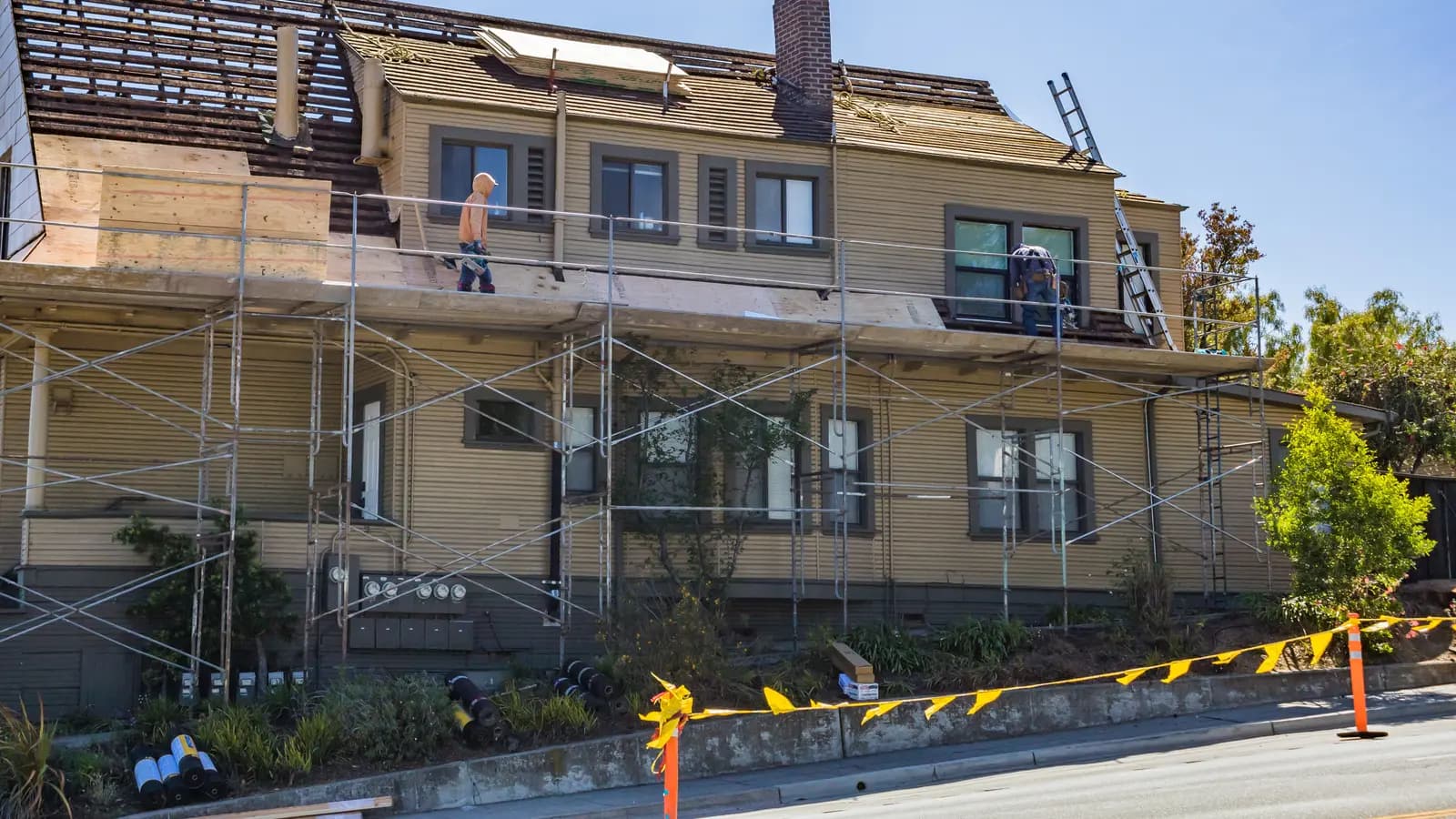
Photo: Robert So / Pexels
In this article
Hard money exists to move fast on a deal a conventional lender couldn't close in time for — an off-market acquisition, a distressed property needing rehab before it could ever qualify for long-term financing, a competitive offer that needed to close in days rather than months. That speed comes from a lender underwriting primarily to the asset and the exit plan rather than a lengthy personal-income file, and it comes at a price: short terms, interest-only payments, and a maturity date that isn't a formality.
A DSCR takeout refinance is the other half of that plan. It's the long-term loan that replaces the short-term balance once the property is finished, stabilized, and either tenanted or supportable by a market-rent appraisal — sized to what the property itself can carry, not what the borrower's flip spreadsheet projected or what a conventional lender's income-documentation rules would allow. This is the connective piece between two different worlds of investor financing, and getting the sequencing right is what separates a clean exit from a scramble against a maturity date.
Why bridge debt is built to end
Hard money and bridge loans share a structural DNA: they're short-duration, asset-based, and priced for speed and flexibility rather than for a decades-long hold. Our guides to hard money for fix-and-flip and bridge loans for buying before selling both cover the mechanics of these products in more depth — the throughline in both is that the loan has a defined, generally short maturity, and the lender's underwriting assumes the borrower has a credible plan to exit before that date arrives, either through a sale or a refinance into permanent financing.
Carrying that debt past its intended window is expensive and risky in ways a longer-term loan isn't. Interest-only payments on a short-term, asset-priced loan accrue real carrying cost every month the exit is delayed, and a maturity date that arrives without a completed sale or refinance can force a borrower into an extension (if the lender offers one, often at a cost), a rushed sale at a worse price than planned, or default. None of that is a reason to avoid hard money or bridge financing — it's a reason to plan the exit as carefully as the acquisition.
Have a property in mind? Run the numbers →
Get startedWhat a DSCR takeout actually replaces
A DSCR takeout refinance pays off the hard money or bridge balance with a new, long-term loan qualified against the property's rental income rather than the borrower's personal income, employment history, or the deal's flip-margin projections. That's a fundamentally different qualification lens than the loan being replaced — hard money looked at the deal and the exit plan; DSCR looks at what the finished property can rent for relative to its own debt service.
The 4Homes DSCR program overview covers the general qualification mechanics in more detail. What matters for this specific transition is that the takeout loan isn't approved on the strength of the original acquisition price or the rehab budget — it's approved on the strength of the finished property's appraised value and its rental income today, which is exactly why timing and property condition at the point of refinance matter as much as they do.
Seasoning: the friction point that catches investors off guard
Seasoning, in this context, refers to how long a lender wants a property held — and in a rehab scenario, how long since improvements were completed and documented — before it will rely on a new, post-improvement appraised value rather than the original purchase price for refinance purposes. This is consistently the single biggest source of friction between a hard money exit plan and a DSCR takeout closing.
Why it matters here specifically: a property bought at a discount and improved through a rehab can appraise for meaningfully more than its purchase price once the work is done — that's the entire economic premise of a value-add hard money deal. But a lender doing the takeout refinance may apply a seasoning period before it will lend against that new, higher value rather than the original acquisition cost, particularly for a cash-out-style refinance where the borrower is pulling equity out at closing rather than simply paying off the bridge balance at a matching loan amount.
Seasoning requirements, and how they're calculated, vary meaningfully by lender and program — some measure from the purchase closing date, others from when improvements were substantially completed, and some apply different rules depending on whether the refinance is rate-and-term (simply paying off the existing balance) versus cash-out (pulling additional equity at closing). This overlaps closely with the seasoning mechanics covered in our BRRRR refinance timing and seasoning guide — worth reading alongside this one, since a hard-money-to-DSCR exit and a BRRRR refinance are frequently the same transaction described from two different angles.
The practical takeaway: don't assume the DSCR takeout can close the day the rehab is finished. Confirm the specific lender's seasoning policy — and whether it's tied to the purchase date or the completion date — early enough that it can be built into the hard money loan's term rather than discovered as a surprise near maturity.
Property condition and appraisal readiness at the exit
A takeout appraisal generally needs the property to be in a condition that supports both a completed-value opinion and, where relevant, a market-rent analysis:
| Rehab work fully completed | Open permits, incomplete punch-list items, or unfinished systems (electrical, plumbing, HVAC) can complicate or delay an appraisal — and in some jurisdictions, an open building permit can itself hold up financing until it's closed out. |
|---|---|
| Documentation of the improvements | Receipts, contractor invoices, permit closeout records, and before/after photos can support the appraiser's completed-value opinion, particularly if the rehab was extensive enough that comparable sales alone don't fully capture the improvement. |
| Occupancy or market-rent support | Either a signed lease at market rent or an appraiser's market-rent opinion based on comparable rented properties, depending on the program and whether the property is tenanted by the time of the takeout. |
| Utilities and systems functional | Active utility service and working systems, since an appraiser generally needs to inspect a property that's actually operable, not one still mid-rehab. |
| Clean title | Any liens, including mechanic's liens from unpaid contractors during the rehab, resolved before or at the takeout closing — an unresolved lien can stall a refinance closing even when everything else about the file is ready. |
Investors weighing entity structure for the takeout — closing the original hard money purchase individually but holding the DSCR-refinanced property in an LLC, or vice versa — should review our guide to DSCR loans in an LLC before assuming the entity on the hard money side simply carries over to the takeout without additional documentation.
An illustrative example — not a rate quote
The figures below are illustrative only, structured around ratios rather than any specific interest rate, and are not a quote or an offer of credit. Actual terms depend on the lender, program, property, and market conditions — see the DSCR sample row on our mortgage rates page for how a current illustrative scenario is presented.
Consider a single-family rehab acquired with a hard money loan, improved, and re-leased at a projected market rent of $2,600/month. If the new DSCR takeout loan's estimated monthly debt service (principal, interest, taxes, insurance) comes to roughly $2,000, that produces a DSCR of approximately 1.30 — comfortably above many programs' minimum thresholds. Whether the takeout loan amount is large enough to fully retire the hard money balance, and whether any cash-out is available above that payoff, depends heavily on the appraised completed value, the program's maximum loan-to-value for the specific transaction type, and any seasoning restrictions on that value being used at all. A deal that pencils well on paper as a flip-to-rental conversion can still fall short at takeout if the appraised value or the seasoning rules don't line up with what the rehab budget assumed.
Building the takeout timeline before the bridge loan even closes
- Before closing the hard money loan, ask directly what seasoning period a likely DSCR takeout lender will apply, and whether it runs from purchase date or improvement-completion date.
- Size the hard money loan's term with real margin against the realistic rehab-plus-seasoning timeline, not just the optimistic construction schedule.
- Keep detailed records of every improvement — invoices, permits, before/after documentation — from day one of the rehab, since assembling this after the fact under a maturity deadline is far harder.
- Close out all permits and resolve any contractor liens as soon as work is finished, rather than leaving them open until the refinance is already underway.
- Decide early whether the takeout will be rate-and-term or cash-out, since that choice can change both the seasoning requirement and the maximum loan-to-value available.
- Line up a lease or plan for a market-rent appraisal well before the hard money loan's maturity date, not after.
- Build in a buffer before maturity to account for appraisal scheduling, underwriting turn times, and any documentation gaps discovered along the way.
Investors managing several rehab-to-rental conversions at once, rather than a single property, may also find our guide to cash-out refinancing across a rental portfolio useful for thinking about how multiple takeouts interact with reserve requirements and overall leverage, and our piece on DSCR reserves after closing for what liquidity a lender may expect once the takeout loan funds.
The 4Homes weekly email
Every Tuesday: what changed for rental owners this week, plus our newest DSCR guides.
No spam. Unsubscribe anytime.
What happens if the hard money loan matures before the DSCR takeout is ready
This is the scenario the whole exit plan is meant to prevent, but it happens — a permit delay, an appraisal that comes in below what the rehab budget assumed, or a seasoning requirement that pushes the earliest possible refinance date past the maturity date. Options in that situation generally include requesting an extension from the hard money lender (which may come with additional fees or a higher rate), seeking a short-term bridge specifically to cover the gap, or, in some cases, selling the property instead of refinancing it. None of these are ideal, which is exactly why building real margin into the original timeline — and confirming seasoning requirements before the hard money loan closes, not after — matters more here than in almost any other DSCR scenario.
Questions to bring to a loan specialist
- What seasoning period will a DSCR takeout apply to this specific property, and is it measured from purchase date or improvement-completion date?
- Does the seasoning requirement differ between a rate-and-term payoff and a cash-out refinance?
- What documentation of the rehab will the appraiser and underwriter expect to see?
- What condition does the property need to be in — permits closed, systems functional, liens resolved — before the takeout appraisal can be ordered?
- Does the property need a signed lease, or can the takeout rely on an appraiser's market-rent opinion?
- What is the realistic timeline from "rehab complete" to "DSCR takeout funded," and how does that compare to the hard money loan's remaining term?
Bring the hard money loan's maturity date, the rehab completion timeline, and documentation of improvements to that conversation as early as possible — ideally before the bridge loan even closes. Review an investment-property financing scenario, read the 4Homes DSCR program overview, browse DSCR by state — including Texas and Florida — or contact a 4Homes loan specialist to start planning the exit. Seasoning periods, loan-to-value limits, appraisal requirements, and underwriting standards vary by lender and are subject to change.
The bottom line
Hard money and bridge loans get an investor into a deal fast; a DSCR takeout refinance is how that investor gets out of short-term, high-cost debt and into financing sized to what the property actually earns. The exit works cleanly when the seasoning requirement, the appraisal condition, and the maturity date are all planned together from the start — not when the takeout is treated as an afterthought once the rehab is already finished. Confirm the seasoning rules before the bridge loan closes, keep clean documentation of every improvement, and build real margin into the timeline. That's what turns a maturity date into a routine refinance instead of a deadline.
FAQ
Frequently asked questions
How soon after closing a hard money loan can I refinance into DSCR?+
It depends on the lender's seasoning policy, which may be measured from the purchase closing date or from when improvements were completed, and it can differ between a rate-and-term and a cash-out refinance. Confirm the specific timeline before the hard money loan even closes, since it directly affects how the bridge loan's term should be sized.
Does the DSCR takeout use my original purchase price or the new appraised value?+
Programs vary. Some will lend against a new, higher post-rehab appraised value once a seasoning period has passed; others restrict how quickly that new value can be used, particularly for cash-out transactions. This is one of the most important questions to confirm early.
What if my hard money loan matures before I'm ready for the DSCR takeout?+
Options generally include an extension from the hard money lender (often at added cost), a short-term bridge to cover the gap, or selling the property. Planning the takeout timeline with real margin before the bridge loan closes is the best way to avoid this situation.
Do I need a tenant in place before the DSCR takeout can close?+
Not always. Many DSCR programs can qualify the loan off an appraiser's market-rent opinion for a vacant, freshly rehabbed property, though a signed lease can also support the file — which approach applies depends on the specific program.
Can I pull cash out at the DSCR takeout, or does it only pay off the hard money balance?+
Both structures exist — rate-and-term refinances that simply retire the existing balance, and cash-out refinances that pull additional equity at closing. Cash-out transactions are more likely to be affected by seasoning restrictions on the new appraised value, so confirm which structure applies to the specific scenario.