New-Construction and Spec-Built DSCR Financing: Takeout Timing, Rent-Ready Rules, and Appraisals
Financing a new-construction or spec-built rental? See how DSCR takeout timing at certificate of occupancy and rent-ready rules work together.
Quick answer
DSCR financing on new construction is a takeout loan that funds only after the property is finished and legally occupiable, not a construction loan itself, and the certificate of occupancy is the hinge point. It depends on the property being genuinely rent-ready, with utilities on and a lease or market-rent appraisal, since builder and inspection timelines differ.
10 min read
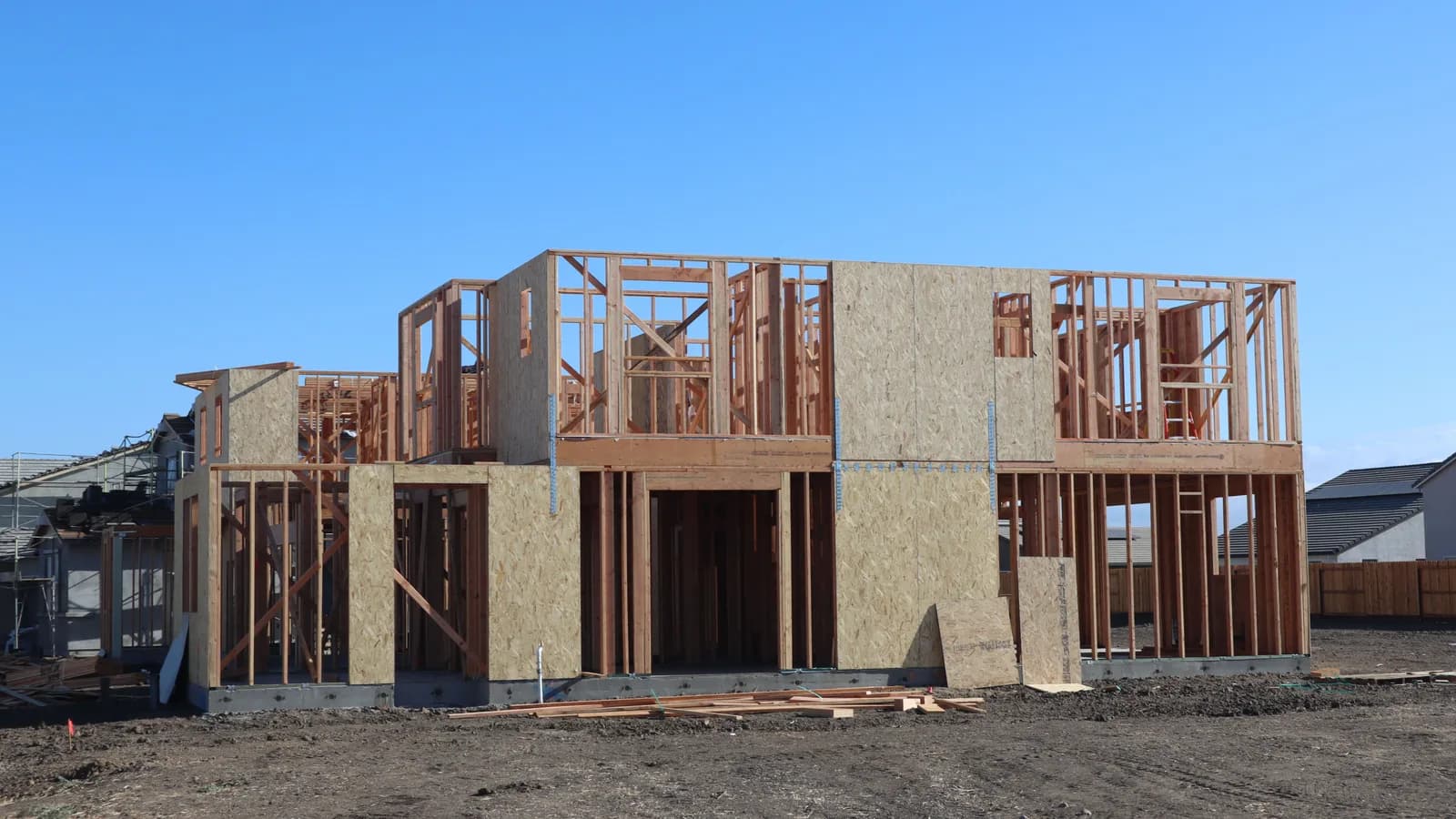
Photo: D Goug / Pexels
In this article
A spec-built duplex sits framed and roofed, six weeks from finish, and the builder wants an exit lined up. A single-family new-construction rental gets its certificate of occupancy on a Friday and the investor wants to close the long-term loan the following week. Both scenarios run into the same structural fact: DSCR financing is a takeout product built for a finished, legally occupiable asset — not a construction loan, and not a bridge for a half-built shell.
That distinction drives everything else in this article. Understanding where the construction loan ends and the DSCR loan begins, what a jurisdiction's certificate of occupancy actually certifies, what "rent-ready" means to an underwriter rather than a listing agent, and how an appraiser values a property with no closed sales of its own to lean on — that's the sequence that determines whether a new-build DSCR closing goes smoothly or stalls at the finish line.
Two different loans, two different jobs
Construction financing and DSCR financing solve different problems, and conflating them is the single most common planning mistake on a new-build deal.
| Construction or construction-to-permanent loan | Short-term, typically interest-only, funded in draws tied to completed work, and underwritten around the builder's budget, timeline, and the land-plus-improvement cost — not around rental income, because there's no tenant and often no certificate of occupancy yet. |
|---|---|
| DSCR takeout loan | Long-term financing that pays off the construction loan (or a builder's spec-build carrying costs) once the property is finished, legally occupiable, and either rented or supportable by a market-rent appraisal. This is the loan this article focuses on. |
Some construction-to-permanent structures roll both stages into a single closing with a single set of documents. Others require two entirely separate transactions with two separate lenders — the construction lender and, later, the DSCR lender doing the takeout. Which structure applies is programand lender-specific, and it changes the sequencing of everything from appraisal timing to how the builder gets paid off. Confirm this up front rather than assuming either structure applies by default.
For investors weighing whether to build versus buy an already-tenanted asset, our investment-property financing overview and the 4Homes DSCR program page cover the general qualification mechanics that apply once the property reaches takeout-ready status.
Have a property in mind? Run the DSCR numbers →
Get startedThe certificate of occupancy is the hinge point
A certificate of occupancy — commonly called a C/O — is the document a local building or code-enforcement authority issues certifying that a structure was built in compliance with applicable codes and is safe and legal for occupancy. Requirements, terminology, and issuance processes vary by state and municipality; some jurisdictions use different terms or issue conditional/temporary certificates ahead of a final one.
Why it matters so much to DSCR takeout timing: a lender generally can't originate a loan against a property that isn't legally occupiable, and an appraiser generally can't credit market rent to a unit no tenant could lawfully move into yet. That makes the C/O — not the drywall being up, not the punch list being "basically done," not the builder's verbal estimate — the real gating event for when a DSCR file can move to closing.
| Final C/O | The cleanest scenario. The building is complete, inspected, and cleared for occupancy without conditions — the file can typically proceed once other requirements (rent-ready condition, appraisal, insurance) are also satisfied. |
|---|---|
| Temporary or conditional C/O | Some jurisdictions issue these when a structure is substantially complete but minor items remain outstanding. Whether a specific DSCR program accepts a temporary C/O in place of a final one is a program-specific question — some do, many require the final document, and it's worth confirming before assuming a temporary C/O is sufficient to close. |
| No C/O yet | If the jurisdiction hasn't issued any occupancy certificate, the property generally isn't ready for a DSCR takeout regardless of how complete construction looks. Builder time estimates and actual inspection-and-issuance timelines from the local authority are two different clocks, and the second one is the one that controls closing. |
Because municipal inspection queues, reinspection cycles, and administrative processing times vary widely by jurisdiction, build the C/O timeline into the takeout schedule with real margin — not the builder's optimistic completion date. A construction loan's maturity date and a DSCR takeout's actual closing date are only the same date if nothing in the inspection queue slips, and something in an inspection queue very often slips.
What "rent-ready" actually means to a DSCR file
"Rent-ready" gets used loosely in real estate conversation. To a DSCR underwriter, it's closer to a checklist than a general impression, and the specific items on that checklist vary by lender and program:
| Utilities active | Working electrical, water, and where applicable gas or HVAC service, connected and functional — not just stubbed to the property line. |
|---|---|
| Appliances and fixtures installed | Kitchens and bathrooms functionally complete per the unit's intended finish level, since an appraiser comparing the subject to rented comparables needs a comparable finished condition to compare against. |
| Certificate of occupancy issued | Covered above — the legal precondition beneath every other item on this list. |
| Interior and exterior completion | No open punch-list items that would reasonably prevent a tenant from occupying the unit — flooring installed, doors and hardware functional, exterior grading and access complete. |
| Lease or market-rent support | Either a signed lease already in place, or an appraiser's opinion of market rent derived from comparable rented properties in the area, depending on the program and whether the property is tenanted at closing. |
Note what's absent from that list: a completed sale of an identical unit next door, a full first month of collected rent, or twelve months of stabilized occupancy history. DSCR takeout financing on new construction generally doesn't require a seasoned rent roll the way a portfolio refinance might — a signed lease or a supportable market-rent estimate is usually enough, because the property is new rather than distressed or newly stabilized. That's a materially different bar than what a BRRRR refinance's seasoning requirements typically demand, and it's worth understanding the distinction before assuming new-construction takeout timing works the same way.
Appraising a property with no sales history of its own
A resale appraisal leans heavily on the sales comparison approach — recently closed sales of similar nearby properties. New construction complicates that approach in a specific way: the subject property itself has never sold, so an appraiser working a new-build file typically draws on a broader toolkit.
| Cost approach | Estimating land value plus the depreciated replacement cost of the improvements — a method that carries more weight on new construction than it typically does on an older resale, precisely because the improvements are new and their construction cost is well-documented rather than estimated. |
|---|---|
| Sales comparison using nearby new construction | Appraisers generally look for comparable sales of similarly new, similarly specified properties in the same or a competing subdivision or micro-market, rather than relying on older resale comparables that may not reflect current construction quality or finish level. |
| Builder specifications and plans | For a spec-built or to-be-completed property, the appraiser typically works from the builder's plans, specifications, and finish schedule rather than a completed physical walkthrough, especially on any appraisal ordered ahead of full completion. |
| Market-rent analysis | Because DSCR qualification hinges on the rental-income side of the equation, the appraisal typically includes a rent schedule or market-rent opinion — comparing the subject to similar rented properties nearby, whether or not a lease is already signed. |
Builder allowances, upgrade packages, and finish-level choices can meaningfully move an appraised value on new construction in ways they wouldn't on an already-built resale with an established price history. Investors evaluating whether a specific spec-build's projected rent supports the intended loan amount may find our investment-property cash flow calculator useful for stress-testing the numbers before committing to a purchase or build contract.
An illustrative example — not a rate quote
The math below is illustrative only, built around ratios rather than any specific interest rate, and is not a quote or an offer of credit. Actual DSCR, payment, and qualifying figures depend on the property, the program, and market conditions at the time of application — see the DSCR sample row on our mortgage rates page for how a current illustrative scenario is structured.
Say a newly completed spec-built duplex appraises with a combined market rent opinion of $3,200/month across both units. If the proposed monthly debt service (principal, interest, taxes, insurance, and any association dues, depending on how the specific program defines the denominator) works out to roughly 80% of that rent figure, the resulting DSCR would be approximately 1.25 — meaning the property's income is estimated at about 1.25 times its own debt obligation. Whether 1.25 clears a specific program's minimum threshold, and whether taxes and insurance are calculated on the completed improved value versus the pre-construction assessed value, are both program- and jurisdiction-specific questions worth confirming directly with a loan specialist, since a brand-new property's tax assessment often hasn't caught up to its finished value at the time of takeout.
The 4Homes weekly email
Every Tuesday: what changed for rental owners this week, plus our newest DSCR guides.
No spam. Unsubscribe anytime.
Sequencing the file so the takeout doesn't stall
- Confirm early whether the intended DSCR program treats this as a single construction-to-permanent closing or a separate takeout transaction after an independent construction loan.
- Track the municipality's actual inspection and C/O issuance timeline, not just the builder's projected completion date, and build in margin for reinspections or administrative delays.
- Confirm which condition of C/O — final versus temporary or conditional — the specific DSCR program will accept.
- Line up the rent-ready checklist items (utilities, appliances, completed finish work) against the lender's specific requirements before ordering the appraisal.
- Decide whether a lease will be signed before the appraisal, or whether the file will rely on the appraiser's market-rent opinion instead.
- Order the appraisal with an appraiser experienced in new-construction valuation in that specific market, and expect builder specifications and plans to factor into the report.
- Confirm how property taxes will be calculated at closing given a new or not-yet-finalized assessment on the completed improvement.
Investors building out a portfolio of new-construction rentals over time, rather than a single spec property, may also want to review our guide to cash-out refinancing across a rental portfolio for how equity in completed new-builds can be redeployed into the next project, and our piece on DSCR reserve requirements after closing for what liquidity a lender may expect a builder-investor to maintain once the takeout loan funds.
Questions to bring to a loan specialist
- Is this a single construction-to-permanent closing or a separate takeout after an independent construction loan?
- What condition of certificate of occupancy — final, temporary, or conditional — does this specific program require?
- What exactly counts as "rent-ready" for this program, and does a signed lease change the requirements versus relying on appraised market rent?
- How will the appraiser value this specific property given limited or no closed sales of directly comparable new construction nearby?
- How will property taxes be calculated at closing given the improvement's new or pending assessment?
- What reserve requirements apply once the takeout loan funds, and do they differ for a builder-investor doing multiple spec properties versus a single buy-and-hold purchase?
Bring the construction timeline, the builder's specifications, and the target closing window to that conversation. Review an investment-property financing scenario, check the 4Homes DSCR program overview, browse state-specific detail on our DSCR by state page — including Texas and Florida, two of the more active new-construction rental markets — or contact a 4Homes loan specialist to start the conversation. Program availability, appraisal requirements, C/O standards, and underwriting terms vary by lender and are subject to change.
The bottom line
A new-construction or spec-built DSCR loan isn't a construction loan wearing a different name — it's a separate takeout transaction that only becomes available once a jurisdiction has certified the property as legally occupiable and the rent-ready checklist is actually complete, not just close. The appraisal leans differently than a resale appraisal would, because there's no closed sale of the subject property to point to. Plan the C/O and rent-ready timeline with real margin, confirm the appraisal approach with the lender before ordering it, and treat the construction loan's maturity date and the DSCR closing date as two separate clocks that need to be actively synchronized — not two names for the same event.
FAQ
Frequently asked questions
Can I get a DSCR loan while the property is still under construction?+
Generally no — DSCR takeout financing is underwritten against a finished, legally occupiable property with a certificate of occupancy. Financing during the build phase is typically a separate short-term construction loan, which the DSCR loan later pays off once the property is complete.
Does the property need a tenant in place before I can close the DSCR takeout loan?+
Not necessarily. Many programs will qualify the loan off an appraiser's market-rent opinion for a vacant, newly finished property, though a signed lease can also support the file. Which approach a specific program requires or prefers varies by lender.
What's the difference between a final and a temporary certificate of occupancy for DSCR purposes?+
A final C/O certifies the structure is fully complete and cleared for occupancy without conditions. A temporary or conditional C/O, issued in some jurisdictions when minor items remain outstanding, may or may not be accepted by a specific DSCR program — confirm this directly rather than assuming either version works.
How does an appraiser value new construction without comparable sales of the exact property?+
Appraisers typically combine the cost approach (land value plus depreciated replacement cost), sales comparison using other nearby new-construction sales, builder specifications and plans, and a market-rent analysis, rather than relying solely on the sales comparison approach a resale appraisal would emphasize.
Will my property taxes be based on the pre-construction or the completed value at closing?+
This depends on the jurisdiction's assessment timeline, which frequently lags behind a newly finished improvement's actual value. Confirm with the loan specialist and local tax assessor how the debt-service calculation will treat taxes at closing, since it can affect the DSCR figure a program relies on.