Foreign National DSCR Loans: No U.S. Credit Needed
No U.S. credit history? See how a foreign national DSCR loan is structured and what identification it runs on instead of a Social Security number.
Quick answer
A foreign national DSCR loan qualifies on the property's rental income instead of a U.S. credit history or tax return, using a passport, documented proof of funds, and often an ITIN or an entity's EIN in place of a Social Security number. Visa requirements depend on the lender, and FIRPTA withholding applies later, when the property is sold.
10 min read

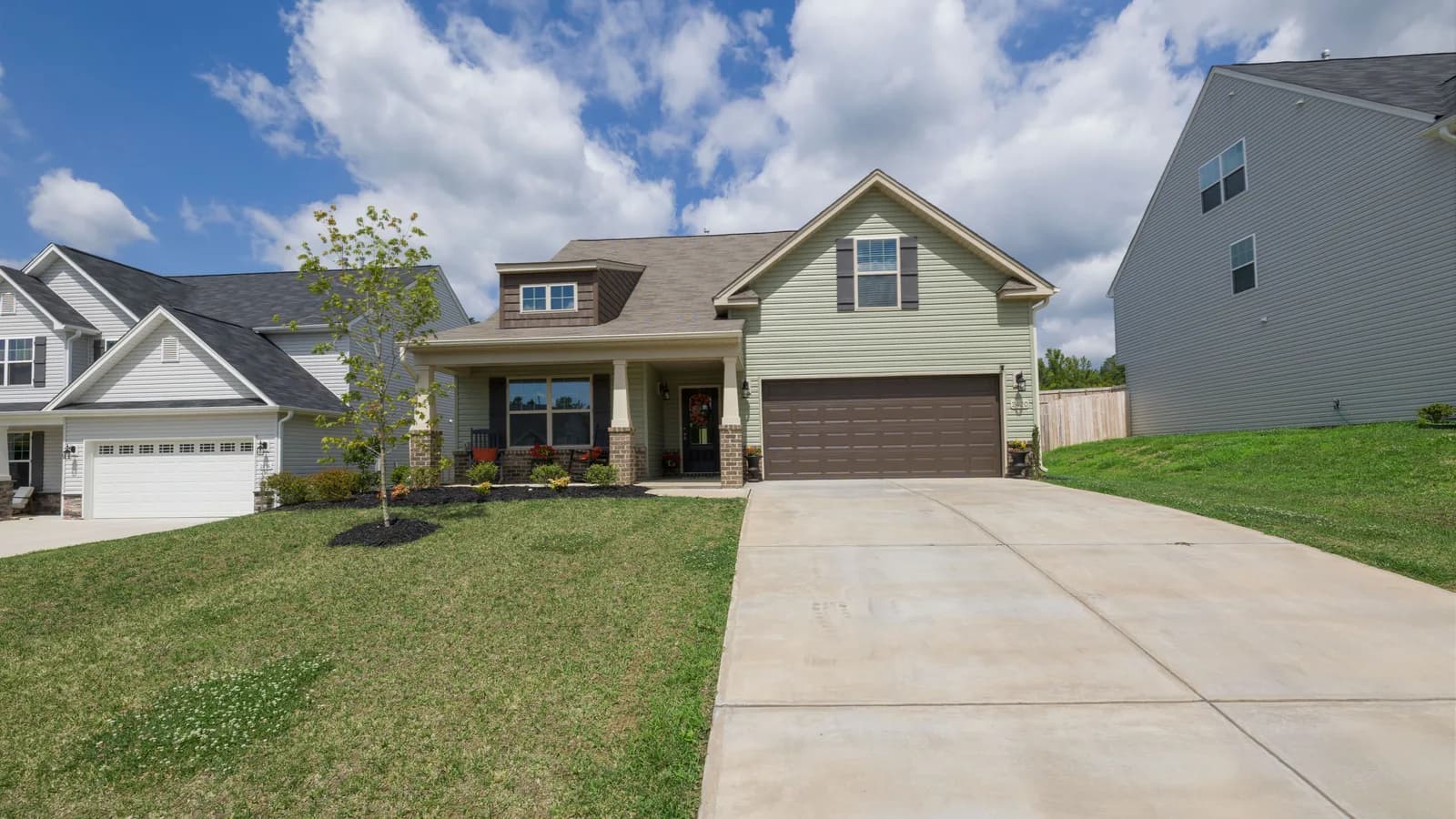
Photo: Davis Arenas / Pexels
In this article
A U.S. rental property doesn't require U.S. citizenship to own. What it requires is a lender willing to document the file differently — because the two things a conventional mortgage leans on most, a Social Security number tied to a U.S. credit history and a W-2 or U.S. tax return, often don't exist for a foreign national buyer.
That gap is exactly what DSCR (debt-service-coverage-ratio) lending was built to route around, and it's why "foreign national" has become a recognized category within non-QM and DSCR programs rather than an edge case a loan specialist has to improvise around. This article walks through how that structure actually works, what identification takes the place of a Social Security number, and the two regulatory pieces — property-ownership rules and FIRPTA — that a foreign investor should understand before and after the purchase.
Why DSCR lending fits the foreign national file
Regulation Z, the Truth in Lending Act's implementing rule, exempts credit extended primarily for a business, commercial, or agricultural purpose from TILA's consumer disclosure and ability-to-repay framework. The regulation's official commentary specifically addresses non-owner-occupied rental property: credit to acquire, improve, or maintain a rental with more than four housing units is treated as business-purpose regardless of the borrower, and smaller rental properties are evaluated case by case under the same commentary.[1]
That's the structural reason a DSCR loan can be underwritten around the property's projected or in-place rental income measured against its own debt service, instead of the borrower's personal income, employment history, or U.S. debt-to-income ratio. It isn't a marketing distinction — it's a different regulatory lane. For a foreign national buyer with no U.S. pay stubs, no U.S. tax return, and no U.S. credit file, that lane is often the only one that fits, since qualification is anchored to the asset rather than to domestic income documentation the borrower may not have. (See our DSCR loan requirements overview for how that property-income qualification works in more general terms.)
What it does not mean is that requirements disappear. Reserves, entity documentation, source-of-funds verification, and program-specific eligibility rules still apply, and they vary by lender and by the specific property. Treat any claim that a foreign national file is faster or simpler than a domestic one with caution — it's differently documented, not necessarily lighter.
Have a property in mind? Run the DSCR numbers →
Get startedIdentification without a Social Security number
Every mortgage file needs a way to identify the borrower. For a foreign national buyer, that identifier is rarely a Social Security number, and the paperwork underneath it depends on how the purchase and future tax filings are structured.
| ITIN (Individual Taxpayer Identification Number) | The IRS issues ITINs to individuals who need a U.S. taxpayer ID for federal tax purposes but don't qualify for a Social Security number, including nonresident aliens.[2] Applicants use Form W-7, generally alongside documentation proving foreign status and identity, filed by mail, through an IRS walk-in office, or through an IRS-authorized Certified Acceptance Agent.[3] The IRS maintains guidance specifically for foreign property buyers and sellers, since an ITIN is commonly needed to file the U.S. tax returns that follow from owning U.S. rental property.[4] An ITIN does not grant immigration status or work authorization — it's strictly a tax-processing number. |
|---|---|
| EIN (Employer Identification Number) | Many foreign national purchases close inside a U.S. LLC rather than in the individual's own name, and that entity generally needs its own EIN to open a U.S. bank account and file required returns. A foreign owner without an SSN or ITIN can still obtain an EIN for the entity: on Form SS-4, the responsible-party line is completed with "Foreign" rather than an SSN, and international applicants can apply by phone, fax, or mail instead of the SSN-gated online system.[5] |
| Passport and proof of funds | A valid passport is the baseline identity document across foreign national programs. Requirements around U.S. visa status vary meaningfully by lender and specific loan program — some non-QM and DSCR programs are built to not require a U.S. visa at all, since the underwriting doesn't depend on U.S. employment authorization the way a consumer mortgage's income analysis might. That's a program-by-program detail rather than an industry-wide rule, so confirm it against the specific loan specialist and product before assuming it applies. |
Which of these actually shows up in a given file depends on whether the borrower purchases individually or through an entity, and on that lender's specific program. It's worth confirming early, since an ITIN or EIN application has its own lead time that can affect a closing timeline.
Legal eligibility: mostly a green light, with state-by-state exceptions
There is no general federal law prohibiting non-U.S. citizens, including nonresidents, from purchasing and owning U.S. real property.[6] For most residential and small rental purchases, foreign national status by itself isn't a legal barrier to ownership.
Two narrower rules are worth knowing:
- The federal Agricultural Foreign Investment Disclosure Act requires foreign persons who acquire or hold an interest in U.S. agricultural land to report that holding to the USDA within a set period. It's a disclosure requirement, not a ban.[7]
- A growing number of states have passed laws in recent years restricting or requiring disclosure of foreign land ownership — most commonly targeting agricultural land, and in a smaller number of states, land near military installations. Some go further and restrict certain foreign purchasers outright. This is a fast-moving, state-specific area of law, and new legislation continues to be introduced, so a rental property investor buying from abroad should confirm current rules in the property's specific state before relying on general assumptions.[8]
Separately, the Committee on Foreign Investment in the United States has narrow authority to review certain real estate transactions near specified military installations and other national-security-sensitive sites — a location-specific review process, not a general restriction on residential or investment purchases.[9]
FIRPTA: the rule that matters later, not at purchase
FIRPTA doesn't affect buying property — it applies when a foreign person later sells. Under FIRPTA, the buyer in that future sale (not the seller) is generally the party responsible for withholding a percentage of the amount realized on the sale and remitting it to the IRS, using Form 8288 and Form 8288-A.[10] The withholding is calculated on the gross amount realized, not net gain, which is why it can exceed a seller's actual tax liability.
Because withholding is based on gross proceeds rather than net taxable gain, a foreign seller can apply for a withholding certificate on Form 8288-B to reduce the amount withheld so it more closely matches expected actual tax liability.[11]
None of this changes how the purchase itself is financed or underwritten today. It's a tax mechanic tied to the eventual exit, and it's the kind of detail worth discussing with a qualified tax professional at acquisition — not discovering for the first time once a buyer is under contract on the sale.
Funding the purchase from abroad
Sourcing and documenting funds that originate outside the U.S. is routinely the part of a foreign national file that takes the most lead time — international wires, currency conversion, and cross-border account statements all add steps a domestic file doesn't have. It's worth starting that documentation early rather than assuming it can be assembled quickly once an offer is accepted.
One data point worth knowing: the National Association of Realtors' most recent report on international transactions in U.S. residential real estate found that international buyers pay in cash at a substantially higher rate than domestic buyers.[12] That pattern is consistent with — though doesn't by itself prove — the added friction of financing and documenting funds across borders, and it's one reason a well-organized DSCR file, prepared early with a loan specialist, matters more for a foreign national purchase than for a comparable domestic one.
How a foreign national DSCR file typically comes together
The specifics vary by lender, entity structure, and property, but the general shape of the process looks like this:
- Confirm eligibility for the specific loan program, including any entity, reserve, or documentation requirements particular to foreign national borrowers.
- Decide whether to purchase individually or through a U.S. entity, and start any needed ITIN or EIN application early given the lead time involved.
- Identify and begin documenting the source of funds — including translating and organizing foreign bank or asset statements the lender will need to review.
- Get the subject property's rental income analyzed against the proposed debt service, since that comparison, not personal income, drives DSCR qualification.
- Confirm current state-level ownership or disclosure rules for the property's specific state, particularly for agricultural or rural land.
- Close, and separately plan — ideally with a tax professional — for how FIRPTA withholding will apply whenever the property is eventually sold.
A 4Homes DSCR program overview covers the underlying qualification mechanics in more detail, and the closely related non-QM program page outlines other documentation paths — useful context since foreign national files often share more in common with alternative-documentation lending than with a standard DSCR purchase by a U.S.-resident investor. Investors weighing entity structure and bank-statement alternatives more generally may also find our guide to non-QM and bank statement loans useful background.
The 4Homes weekly email
Every Tuesday: what changed for rental owners this week, plus our newest DSCR guides.
No spam. Unsubscribe anytime.
Questions to bring to a loan specialist
- Does this specific program require an ITIN, an EIN for a purchasing entity, both, or neither?
- Is a U.S. visa required for this program, or is it built around passport and proof-of-funds documentation instead?
- What source-of-funds documentation will be needed for funds originating outside the U.S., and how are foreign-currency statements handled?
- What reserve requirements apply, and can reserves be held in a foreign account or must they be seasoned in a U.S. account first?
- Does the target state have any current disclosure or ownership restriction relevant to this property type?
- What is the realistic timeline once ITIN or EIN applications, translated documents, and international wires are factored in?
Bring the property, the intended purchasing entity, and citizenship/residency status to that conversation so the loan specialist can identify which documentation path actually applies. Review an investment-property financing scenario, check current published mortgage rates, or contact a 4Homes loan specialist to start the conversation. Program availability, entity requirements, and underwriting standards vary by lender and are subject to change.
The bottom line
A foreign national DSCR loan isn't a workaround — it's a documentation path built for a real and common situation: a buyer whose income, credit history, and identification live outside the U.S. financial system, purchasing a property whose income does not. The property's rental cash flow carries the qualification. The paperwork just runs through a different set of documents: a passport instead of a driver's license, an ITIN or EIN instead of a Social Security number, and international proof of funds instead of a U.S. bank statement. Start that documentation early, confirm the state-specific ownership rules for the target property, and plan for FIRPTA before the eventual sale, not after.
FAQ
Frequently asked questions
Can a non-U.S. citizen legally buy rental property in the United States?+
Generally yes — there is no general federal law barring non-U.S. citizens or nonresidents from purchasing U.S. real property. Some states restrict or require disclosure of certain foreign purchases, particularly of agricultural land, so it's worth confirming current rules in the property's specific state before proceeding.
Do I need a Social Security number to get a DSCR loan as a foreign national?+
Not necessarily. Many foreign national programs are built around an ITIN, an EIN for a purchasing entity, a passport, and documented proof of funds instead. Which combination applies depends on the specific lender and program and how the purchase is structured.
Does a foreign national DSCR loan require a U.S. visa?+
Requirements vary by lender and program. Because DSCR loans qualify the property's income rather than the borrower's U.S. employment or income, some programs are structured without a visa requirement, but this is a program-specific detail to confirm directly rather than a universal rule.
What is FIRPTA and does it affect me when I buy?+
FIRPTA is a federal withholding requirement that applies when a foreign person sells U.S. real property, not when they buy it. The buyer in that future sale is generally responsible for withholding a percentage of the sale proceeds and remitting it to the IRS, though a seller can apply for a certificate to reduce withholding closer to actual tax liability. It's worth discussing with a tax professional at purchase so there are no surprises at the eventual sale.
Can I close in a U.S. LLC instead of my own name?+
Many foreign national investors do purchase through a U.S. entity. That entity generally needs its own EIN, which the IRS issues to foreign-owned entities without requiring the responsible party to already have a Social Security number or ITIN. Confirm with the loan specialist and legal counsel whether entity purchase changes any documentation or reserve requirements for the specific program.
Is it harder to get financing as a foreign national than as a U.S. citizen?+
It's differently documented rather than simply harder or easier. Sourcing and verifying funds from outside the U.S., along with ITIN or EIN lead times, commonly add steps a domestic file doesn't have — which is why starting documentation early matters more for a foreign national purchase.
Sources
[1] https://www.consumerfinance.gov/rules-policy/regulations/1026/3 — CFPB Regulation Z §1026.3 and Official Interpretations
[2] https://www.irs.gov/tin/itin/individual-taxpayer-identification-number-itin — IRS: Individual Taxpayer Identification Number (ITIN)
[3] https://www.irs.gov/forms-pubs/about-form-w-7 — IRS: About Form W-7
[4] https://www.irs.gov/individuals/international-taxpayers/itin-guidance-for-foreign-property-buyers-sellers — IRS: ITIN Guidance for Foreign Property Buyers/Sellers
[5] https://www.irs.gov/forms-pubs/about-form-ss-4 — IRS: About Form SS-4, Application for Employer Identification Number
[6] https://www.congress.gov/crs-product/LSB11013 — Congressional Research Service: State Regulation of Foreign Ownership of U.S. Land
[7] https://nationalaglawcenter.org/foreign-investments-in-ag/ — National Agricultural Law Center: Foreign Investments in Agricultural Land (AFIDA)
[8] https://www.congress.gov/crs-product/LSB11013 — Congressional Research Service: State Regulation of Foreign Ownership of U.S. Land
[9] https://home.treasury.gov/policy-issues/international/the-committee-on-foreign-investment-in-the-united-states-cfius — U.S. Department of the Treasury: CFIUS
[10] https://www.irs.gov/individuals/international-taxpayers/firpta-withholding — IRS: FIRPTA Withholding
[11] https://www.irs.gov/forms-pubs/about-form-8288-b — IRS: About Form 8288-B
[12] https://www.nar.realtor/research-and-statistics/research-reports/international-transactions-in-u-s-residential-real-estate — National Association of Realtors: International Transactions in U.S. Residential Real Estate
This article is for general education only and is not financial, legal, tax, accounting, immigration, real-estate, or lending advice. It is not a commitment to lend or an offer of credit. Eligibility, documentation, entity, reserve, visa, and identification requirements vary by lender, program, borrower, property, purpose, state, and transaction, and are subject to change. Consult qualified legal, tax, and immigration professionals for advice specific to your situation.