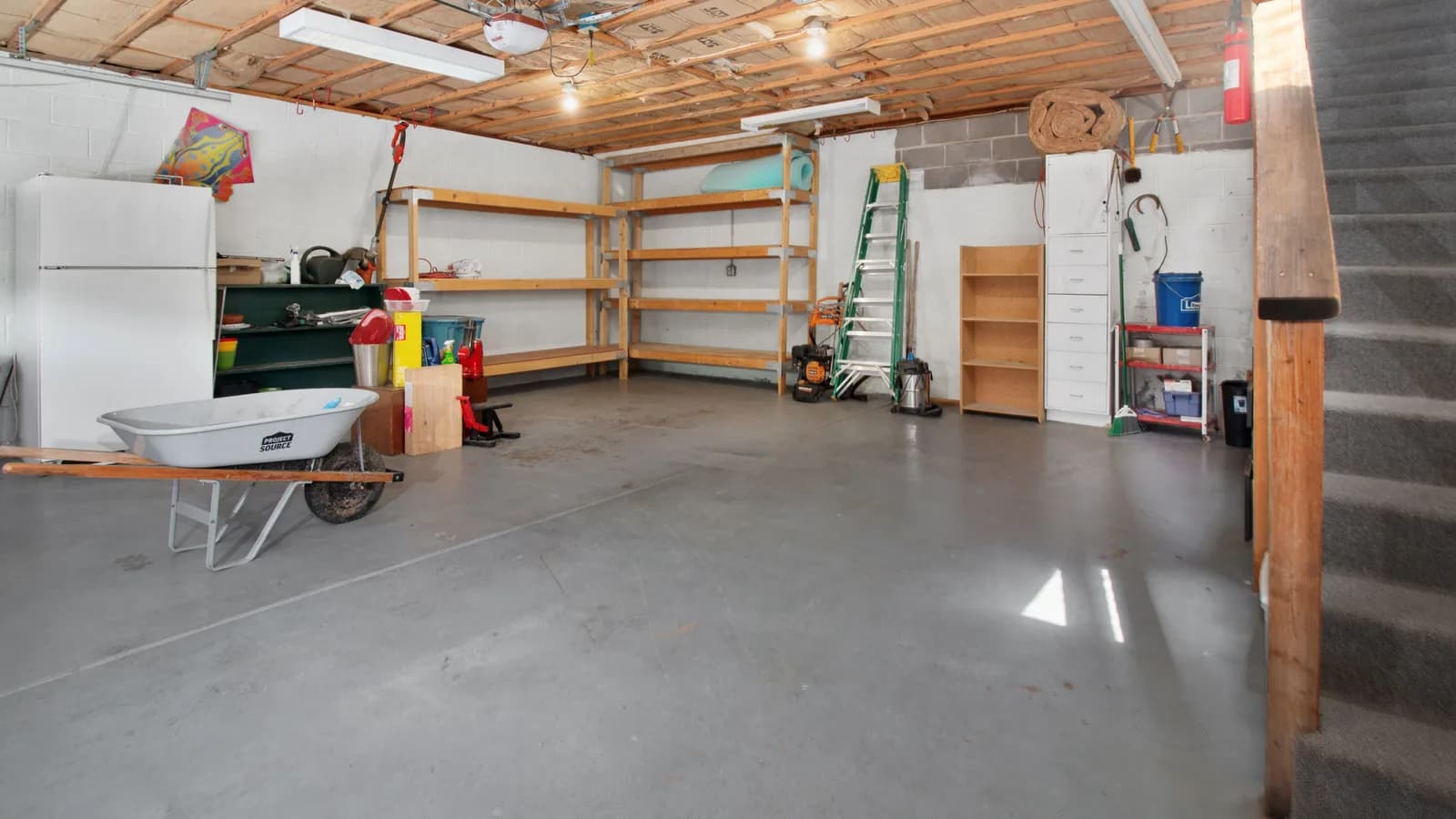
The useful question is not whether a refrigerator can fit in the garage, but whether the exact model fits the temperature, cost, safety, and storage need.
A garage refrigerator is worth it when you need the space often, the exact model is approved for your garage's real temperature range, and the value of that storage exceeds the purchase and operating cost. It is usually not worth keeping an old kitchen refrigerator running year-round for occasional drinks or holiday overflow. Measure first, verify the manual, and put a dollar value on the use.
Use this decision table first
| Your situation | Best decision | Reason |
|---|---|---|
| You need overflow only a few weeks each year | Use temporary cooler space or run an approved spare only for those periods | A second appliance running all year can cost more than the convenience earns |
| You store weekly groceries, meal prep, or drinks year-round | Compare a right-sized garage-ready refrigerator | Regular use can justify the fixed cost if temperatures and installation fit |
| The garage falls below or rises above a candidate model's stated ambient range | Do not use that model there | The garage-ready claim stops at the model's documented limits |
| You mainly need long-term frozen-food capacity | Compare a garage-ready freezer instead | Do not pay for a fresh-food compartment that will sit mostly empty |
| An old refrigerator is available for free | Price its energy use and verify its manual before moving it | A zero purchase price can hide poor location fit and years of higher electric use |
| The unit would block a car door, panel, exit, or storage route | Change the layout or skip it | Cold storage is not worth creating an access or safety problem |
"Garage ready" is a model-specific claim
Start with the owner manual for the exact model number, not a general article or a retailer filter. The manual should state the permitted ambient room-temperature range, required clearances, electrical supply, leveling, ventilation, and any garage mode or control setting. If the seller's page and manual disagree, ask the manufacturer to resolve the difference in writing before buying.
Whirlpool owner manual W11449055 Rev. E shows why one range should never be applied to every refrigerator. That manual describes a general intended location range of 55°F to 110°F, a preferred 60°F to 90°F range for performance and energy use, and separate Garage Ready instructions allowing operation at lower room temperatures under stated conditions. Those numbers explain the principle, not the limits for every Whirlpool or every garage refrigerator. Another brand, product line, or model can have different boundaries.
Record garage temperature near the proposed location during the coldest and hottest conditions that matter. A shaded attached garage may behave very differently from a detached metal garage in the same ZIP code. Direct sun, a nearby dryer or water heater, a frequently open door, and poor air movement can also change the appliance's surroundings.
Separate room temperature from food temperature
The garage temperature answers whether the appliance can operate where you put it. The compartment temperature answers whether the food is being held safely. They are separate tests.
The U.S. Food and Drug Administration says to keep a refrigerator at 40°F or below and a freezer at 0°F. Put a separate appliance thermometer in each compartment, allow the refrigerator to stabilize as the manual directs, and check the readings after loading, a power outage, a major weather change, or any sign of soft frozen food or warm refrigerated food.
Do not use a cold winter garage as a substitute for refrigeration. Outdoor and garage temperatures swing, stored items create warm and cold pockets, and sunlight can warm the cabinet. If temperature control is uncertain, protect the food first. The refrigerator door-seal guide explains the time-and-temperature priority when cooling performance is in doubt, and the freezer organization guide shows how to keep a visible thermometer and reduce hidden food loss.
Price the real 2026 cost
Manufacturer price examples checked October 26, 2026: GE's official page for garage-ready model GTS22KGNRWW showed a $799 sale price and $1,199 list price, while its page for garage-ready model GTS19KMNRES showed a $1,034 sale price and $1,149 list price. Whirlpool's official pages showed garage-ready model WRB533CZJW at $1,110 and garage-ready model WRB543CMJV at $1,438.99. These are dated, model-specific examples, not a universal price range. Prices vary by model, finish, promotion, location, availability, delivery, installation, and haul-away; check the current total for the exact model and address before buying.
| Cost line | What belongs in the number |
|---|---|
| Purchase | Appliance, tax, delivery, required accessories, door reversal, and damage-free placement |
| Site | Approved receptacle or electrician work, floor correction, required clearance, and a safe route into the garage |
| Annual energy | EnergyGuide kWh multiplied by your utility rate, with actual use tracked on later bills |
| Food protection | Two appliance thermometers, outage plan, and any alarm you will actually monitor |
| End of life | Haul-away or proper refrigerant recovery and appliance recycling |
ENERGY STAR's current refrigerator guidance says certified refrigerators are about 9 percent more efficient than models that merely meet the federal minimum. It also says a refrigerator more than 15 years old could cost about $95 per year to run and recommends recycling an old second unit rather than moving it to the garage by default. Treat $95 as national guidance, not your bill. The model's EnergyGuide label and your current electric rate produce the useful estimate.
Use this simple comparison: annual kWh on the label × your price per kWh. Then compare that yearly cost with how much food capacity you truly use. The monthly home-cost audit gives the second refrigerator its own line instead of letting the expense disappear inside the electric bill.
Safety and installation can end the discussion
A refrigerator needs the electrical supply and clearances stated in its manual. Do not use an extension cord as a permanent solution. Keep the plug accessible, protect the cord from tires and stored objects, and do not place the appliance where water, flooding, or physical impact is likely. If the receptacle is damaged, warm, loose, wet, or repeatedly loses power, stop and call a qualified electrician.
Measure the cabinet and every door, turn, step, and overhead obstruction on the delivery route. Leave the specified side, top, and rear clearance, plus room for the doors to open without hitting a parked vehicle. The refrigerator must not narrow an exit, cover a panel or shutoff, or interfere with the garage door and its tracks. Use the parking-and-access method in the one-car garage organization guide before marking the final footprint.
Skip an unapproved water line just to gain garage ice. Freezing conditions, vehicle contact, exposed tubing, and a long route can turn a convenience feature into a leak path. If an ice maker matters, have a qualified plumber review the full route, shutoff, protection, and local requirements before purchase.
The 4Homes weekly email
Every Tuesday: what changed for homeowners this week, plus our newest guides.
No spam. Unsubscribe anytime.
When to call a pro
- Electrician: the outlet is ungrounded, damaged, wet, shared with loads that trip the circuit, or not where the manual requires.
- Appliance technician or manufacturer support: the model's location approval is unclear, temperatures drift outside safe targets, the compressor runs unusually, or controls show an error.
- Plumber: an ice-maker line requires new piping, passes through a freezing area, lacks an accessible shutoff, or could be struck or pinched.
- Delivery installer: the unit cannot be moved, leveled, or door-swung safely within the measured route and final footprint.
Never open sealed refrigeration components or handle refrigerant. At retirement, use a retailer, utility, municipal program, or recycler that properly recovers refrigerant and handles the appliance. ENERGY STAR's recycling guidance notes that refrigerants, oils, and other compounds require proper recovery rather than ordinary curb disposal.
How to save without buying the wrong refrigerator
Buy the smallest capacity that serves the repeated need. ENERGY STAR notes that larger refrigerators generally consume more energy and that top-freezer models tend to use the least among common full-size configurations. Fewer doors, no unused ice maker, and a simple interior can cut purchase price and reduce failure points.
Do not size around one warehouse-club trip. Track four weeks of overflow in your kitchen refrigerator and freezer. Write down what would actually move to the garage and how often it would be retrieved. If the list is mostly party drinks twice a year, year-round refrigeration is an expensive shelf.
Check utility and retailer rebates, recycling pickups, scratch-and-dent inventory, and the total delivered price. A cosmetic side-panel dent may be harmless if it does not affect the door, cabinet, insulation, controls, warranty, or safe placement. Inspect before acceptance and get the condition and warranty treatment in writing.
If the need is seasonal, unplugging an empty approved unit for the unused months saves more than chasing tiny efficiency gains while it runs. Follow the manual for shutdown, cleaning, drying, and door position. Keep the restart date on the seasonal home-care calendar.
Garage refrigerator buying checklist
- The need appears weekly or monthly, not only in an imagined future.
- Garage high and low temperatures have been measured at the proposed location.
- The exact model manual approves those ambient conditions and states any required garage setting.
- Refrigerator and freezer compartments can be monitored at 40°F or below and 0°F.
- Capacity, cabinet dimensions, delivery route, door swing, airflow, and parking clearance all fit.
- The receptacle, cord route, floor, water exposure, and required clearances are safe.
- Purchase, delivery, site work, thermometers, annual energy, and disposal are in the budget.
- The EnergyGuide kWh figure has been compared with the old refrigerator and your utility rate.
- A rebate or responsible recycling option has been checked before keeping an old unit.
- The household has a temperature and outage response plan before food goes inside.
Frequently Asked Questions
Is it okay to put a regular refrigerator in the garage?
Only if the exact refrigerator's owner manual permits the temperatures and conditions your garage reaches. A garage is not automatically an approved location, and 'garage ready' is not one universal temperature rating. Record the garage's seasonal high and low, then compare them with the model-specific ambient operating range, clearance, electrical, humidity, and installation instructions.
What is the difference between a garage-ready refrigerator and a regular refrigerator?
A garage-ready model is documented by its manufacturer for operation across a stated ambient-temperature range or garage mode. The range and required settings differ by model. The label does not mean the appliance can operate at every outdoor temperature, in wet conditions, without ventilation, or on an unsuitable electrical circuit.
How much does it cost to run a second refrigerator in the garage?
Use the model's EnergyGuide annual kilowatt-hour estimate multiplied by your utility's current price per kilowatt-hour, then allow for garage conditions and household use. ENERGY STAR says an older second refrigerator can cost about $95 a year to run, but your actual cost depends on the appliance, local rate, ambient temperature, door openings, seals, and maintenance.
What temperature should a garage refrigerator and freezer be?
For food safety, the FDA says the refrigerator should stay at 40°F or below and the freezer at 0°F. Check with separate appliance thermometers. Those food-storage targets are different from the room-temperature range in the owner manual, which tells you whether the appliance is approved to operate in that garage environment.
Should I unplug a garage refrigerator when I do not need it?
Unplugging can save the full standby operating cost during long periods when extra storage is unnecessary. Empty it, clean it, dry it, follow the owner manual's shutdown instructions, and secure the doors in the manufacturer-approved open position so odors or mold do not develop. Do not cycle it off while food or temperature-sensitive items remain inside.