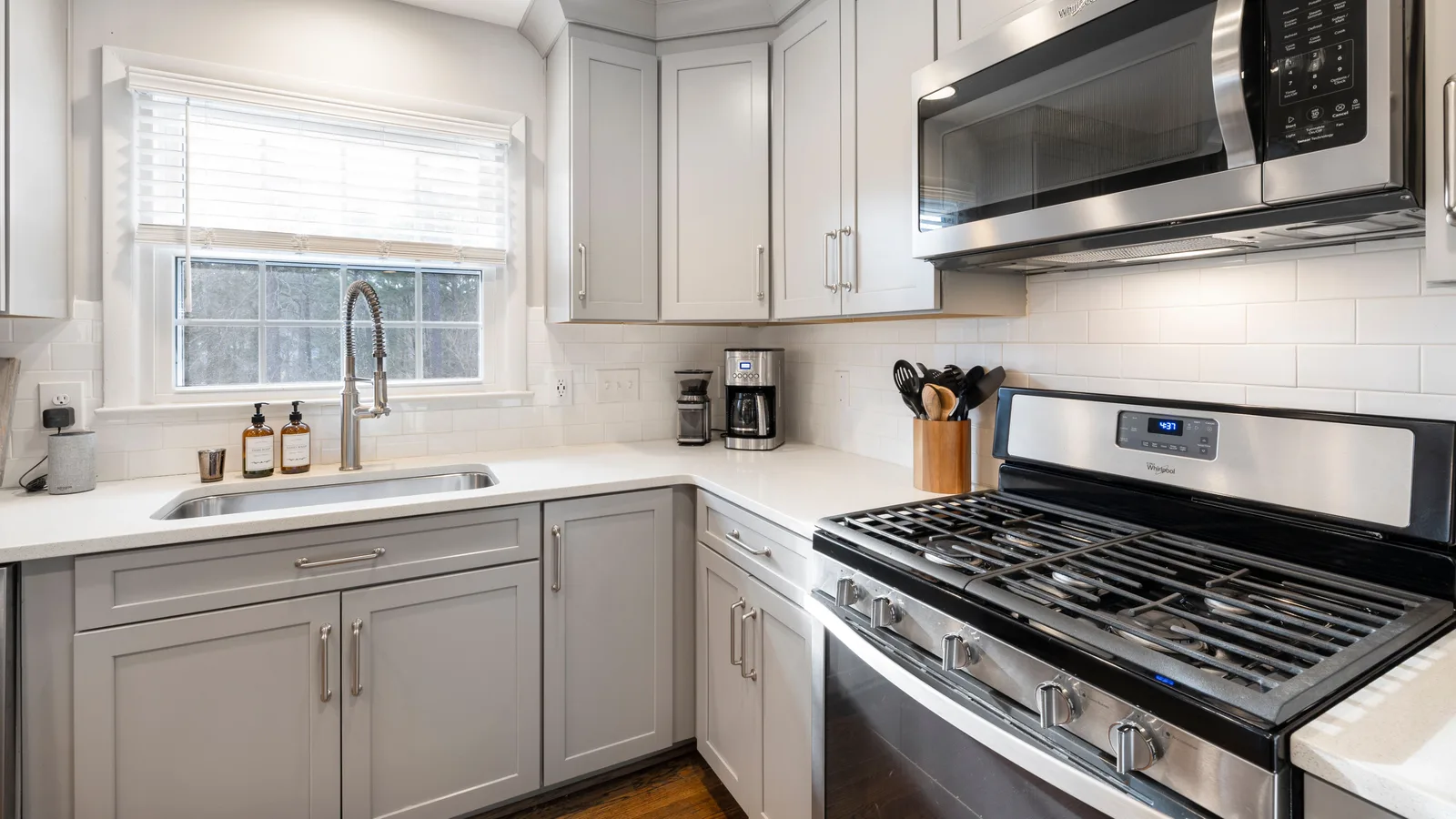
Identify ducted or recirculating operation, clean the correct filter, and require proof of the full capture and exhaust path.
A range hood that leaves smoke or odor in the kitchen may have a dirty filter, the wrong operating setup, poor capture, a restricted duct, or no outdoor duct at all. Do not create more smoke to test it. Turn off the cooking appliance, clear the air safely, and identify what kind of hood you own before changing parts.
My view: a louder fan is not proof of better ventilation. A proposal should explain where the air goes and what prevents the installed hood from capturing it. Motor noise alone proves almost nothing.
First, find where the air is supposed to go
Record the hood model, cooking appliance and fuel, hood width and mounting height, fan speeds, filter type, and any recent cabinet or duct work. Look for an exterior wall or roof termination from the ground. A ducted hood sends air outside. A recirculating hood passes air through grease and usually charcoal filters, then returns it to the room. It cannot exhaust moisture or combustion pollutants outdoors.
Check the owner's and installation manuals for the configured mode. A hood can look ducted while a blocked knockout, closed damper, disconnected duct, or installation choice leaves it recirculating. Do not enter an attic, climb onto a roof, remove fixed cabinetry, or reach into a fan to settle that question.
Use normal cooking observations, not a stunt test
With no active smoke, turn the hood on before ordinary cooking and note whether each speed sounds and feels different. Cook on a back burner when practical. EPA says back burners improve capture and advises running an outdoor-vented hood whenever cooking, then leaving it on for 10 to 20 minutes afterward. Keep a short log: burner used, heat level, pan, visible plume, odor location, fan speed, window position, and how long the room takes to clear.
Do not hold paper, plastic, powder, incense, or an open flame near the intake. Do not intentionally burn oil. If smoke is heavy, an alarm sounds, a gas odor appears, or anyone has breathing symptoms, stop cooking, move to clean air, and follow the appropriate fire, gas, or medical response. A weak hood does not make unsafe cooking conditions acceptable.
Service only the filter your manual identifies
Switch the hood off and let the cooktop and hood cool. Remove a homeowner- serviceable grease filter only as the manual directs. Record grease loading, damage, fit, and cleaning date. Whirlpool says the grease filter must be clean and correctly installed for good performance. Wash or replace it using the model instructions, then reinstall it before operating the fan.
Recirculating charcoal filters are different. Whirlpool says its charcoal filters are not washable and may last up to six months with normal use, but the correct interval and part come from the model manual. A clean grease filter will not turn a recirculating hood into an exhaust hood. That distinction should appear in every contractor estimate.
The 4Homes weekly email
Every Tuesday: what changed for homeowners this week, plus our newest guides.
No spam. Unsubscribe anytime.
Make the installer prove the full air path
If a ducted hood still performs poorly, ask an HVAC or kitchen-ventilation contractor to document the hood configuration, damper movement, duct material, diameter, length, elbows, joints, termination, obstruction, and replacement-air conditions. Whirlpool notes that room air currents, tight construction, nearby cabinets, and incorrect vent installation can impair performance. Higher-flow equipment may also require makeup air under local code.
Keep combustion safety in the scope. EPA warns that some high-airflow hoods can backdraft combustion appliances. Do not experiment by opening appliance panels or adjusting gas equipment. A qualified contractor should evaluate pressure and makeup air when the home has naturally vented fuel-burning equipment, new air sealing, or symptoms that change when windows open.
Verify capture without hiding the limitation
After cleaning or repair, repeat the same ordinary meal with the same burner, pan, heat, fan speed, and window position. Record whether the plume enters the hood, whether odors spread, whether the exterior termination opens, and whether alarms or combustion concerns appear. Save filter parts, duct photos, measured airflow or pressure method, code work, and remaining limits. For broader room airflow questions, use the indoor-air quality reset, but keep this hood's capture and exhaust path as its own job.