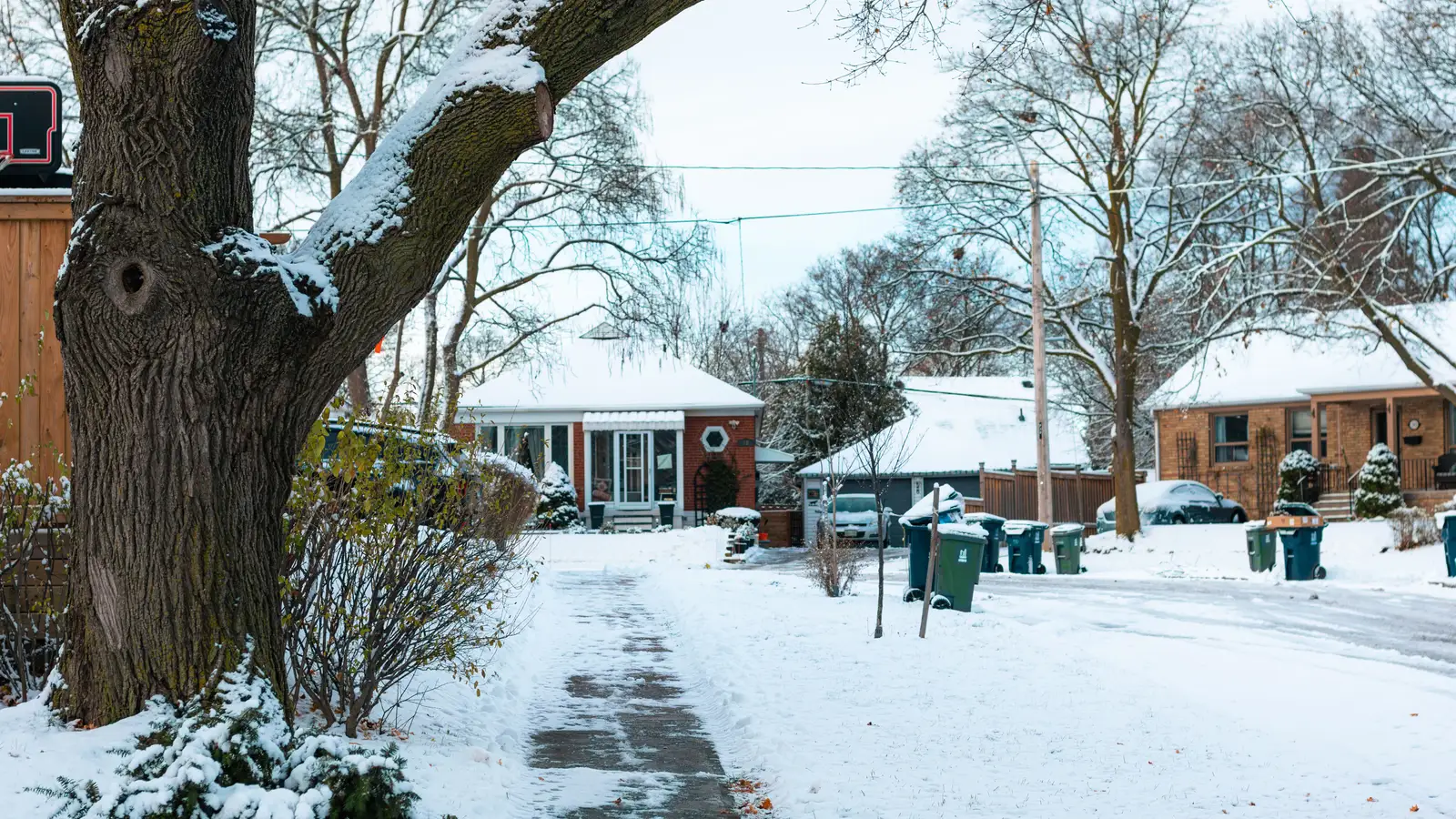
Choose from the full ingredient label, pavement temperature, concrete condition, drainage, and pet route—not a universal safety claim.
The best ice melt for concrete and pets is not one universal product. Choose by the full ingredient label, pavement temperature, concrete age and condition, drainage, and how pets use the route. Shovel first, apply only the labeled amount to the remaining bond, keep pets away during application, and clean paws after contact.
Reject the two promises that cause bad purchases
“Pet safe” does not mean harmless. ASPCA Poison Control says there are no specific requirements for labeling a deicer pet safe. Sodium chloride can irritate paws and can cause dangerously high sodium levels if enough is swallowed; calcium, potassium, and magnesium chlorides can irritate the gastrointestinal tract and alter electrolytes. Urea- or magnesium-chloride products are often marketed as pet friendly, but ASPCA still warns that they can cause stomach upset.
“Safe for concrete” needs the same skepticism. Federal Highway Administration research describes physical and chemical damage mechanisms from chloride deicers, with particular concern around calcium chloride and magnesium chloride. Freeze-thaw cycling, concrete quality, saturation, cracking, reinforcement, age, and dose all matter. Our view: the safest bag is the one you can apply sparingly after the shovel has done most of the work.
Before shopping, inspect the walking route. Mark new concrete, cracks, spalling, brick, natural stone, metal thresholds, drains, planting beds, and the place a dog stops or licks snow. The snow-shovel guide can reduce how much chemical the route needs in the first place.
Use the label to build a short list
| Label ingredient | Decision advantage | Reason for caution |
|---|---|---|
| Sodium chloride | Widely available and usually low cost | Can irritate paws, is hazardous when enough is ingested, harms plants, corrodes metal, and can contribute to concrete damage |
| Calcium chloride | Often selected for faster action and colder pavement | Can irritate pets and people; FHWA identifies concrete chemical-attack concerns; follow the exact minimum working temperature on the bag |
| Magnesium chloride | Often sold for lower-temperature use or as a pet-friendlier choice | Still can irritate paws and stomachs; FHWA identifies concrete concerns; overapplication can leave residue |
| Potassium chloride | May appear in blends and some lower-corrosion claims | Can irritate the gastrointestinal tract and harm plants; verify actual low-temperature performance |
| Calcium magnesium acetate | Non-chloride option often considered where chloride corrosion is a concern | Usually costs more, may work more slowly, and is not a universal pet or surface guarantee |
| Urea | Appears in some pet-oriented products | Can still cause stomach upset and adds nitrogen to runoff; local environmental guidance may discourage it |
| Sand or grit | Adds traction without melting | Can track indoors, clog drains, create cleanup, and does not remove the ice bond |
Do not buy from the front panel alone. Turn the bag over and find active ingredients, application rate, surface exclusions, lowest effective pavement temperature, storage instructions, first aid, and cleanup directions. A blend can contain the ingredient you were trying to avoid. If the label hides the formulation behind vague language, choose a product with a complete disclosure.
Concrete condition can disqualify a product
New concrete, damaged concrete, and sound mature concrete are not the same surface. University of Nebraska–Lincoln Extension explains that deicing chemicals can contribute to scaling as water repeatedly freezes and thaws in the concrete's pore structure. Utah State University Extension warns that new, porous, cracked, aggregated, or unsealed concrete can be especially vulnerable. Follow the concrete contractor's curing and deicer restrictions, the sealer instructions, and the product label; the most conservative requirement wins.
Brick, mortar, natural stone, decorative overlays, colored concrete, and steps with metal rails may carry separate restrictions. Do not assume a driveway-approved product belongs on every surface connected to it. If the route mixes materials, clear mechanically and use traction where possible, or ask the installer which deicer is compatible.
Drainage counts too. Brine that ponds, runs into a crack, splashes a garage door, or collects beside reinforcement creates a different exposure than a small dose that drains and is removed. Fix low spots and downspout discharge rather than salting the same refreeze patch after every storm. The gutter and drainage check helps trace recurring water across walks.
Pets need a route plan, not a marketing claim
- Choose one short pet route. Clear it early and keep the dose low instead of treating the entire driveway for a quick trip outside.
- Store the original bag securely. Keep it dry, closed, and out of reach. Do not transfer pellets to an unlabeled scoop or food container.
- Keep pets inside during application. Prevent access to granules, slush, meltwater, and piles swept from the pavement.
- Wipe or rinse paws after walks. Check between toes and around pads, then dry them. Booties can reduce direct contact when the pet tolerates them.
- Watch behavior. Limping, repeated paw licking, drooling, vomiting, diarrhea, weakness, tremors, unusual thirst, or known ingestion calls for veterinary advice. Save the label for the veterinarian.
Do not induce vomiting or give a home remedy unless a veterinarian or animal poison professional tells you to. If a child may have swallowed deicer, contact Poison Control in the United States at 1-800-222-1222; call emergency services for severe symptoms. For pets, call the veterinarian or a veterinary poison service and have the product package ready.
Apply less by working in the right order
Clear snow promptly before foot or vehicle traffic packs it down. Scrape the thin remainder with a tool suited to the surface. Apply deicer thinly and evenly at the label rate; more is not faster after enough brine exists. Give it the labeled working time, break the weakened bond, shovel the loosened material away, then sweep up excess granules for reuse or disposal as the label and local rules allow.
Do not use hot water. It can refreeze and create a smoother hazard. Do not mix products in a bucket, make homemade brine from unlabeled ingredients, or add fertilizer. Keep runoff out of planting beds, storm drains, door thresholds, and pet water bowls. Penn State and Minnesota Extension both stress that reducing application and sweeping excess limits landscape and watershed damage.
If the pavement temperature is below the bag's working range, adding more product will not fix that mismatch. Use traction, close the route, or choose another cleared path. For a long driveway, prioritize the pedestrian strip, steps, and tire-contact points rather than broadcasting deicer edge to edge.
The 4Homes weekly email
Every Tuesday: what changed for homeowners this week, plus our newest guides.
No spam. Unsubscribe anytime.
Cost and planning table
Bag price is a poor comparison by itself. Compare the labeled coverage at your route's measured area and expected pavement temperature. A more expensive product can cost less per storm if the label allows a smaller dose, while a cheap bag is waste when it cannot work at the actual temperature.
| Budget item | What to compare | Money-saving move |
|---|---|---|
| Deicer | Ingredients, bag weight, labeled coverage, temperature range, and surface exclusions | Buy for one measured route, not the largest bag on sale |
| Mechanical removal | Shovel or scraper fit, surface compatibility, storage, and replacement edge | Remove snow early so chemical handles only the bond |
| Traction | Grit, indoor tracking, cleanup, drainage, and reuse | Apply only at turns, slopes, steps, and unavoidable slick spots |
| Pet protection | Boot fit, towels at the door, paw-rinse setup, and secure storage | Maintain one short cleared pet route |
| Concrete repair | Cause of scaling or cracking, drainage, patch compatibility, and sealer timing | Fix the water path before buying a premium deicer |
When to call a professional
Call a concrete professional when the slab is new, visibly scaling, deeply cracked, settling, holding water, or covered by an unknown coating. Ask the original installer about curing and warranty restrictions when possible. Call a drainage or hardscape contractor when roof runoff, grading, or a low spot keeps rebuilding the same ice. For a large steep driveway or inaccessible entry, a snow-removal service may be safer than asking the household to manage repeated ice.
Get urgent medical or veterinary help for concerning exposure. Keep the product label, ingredient list, estimated amount, time, symptoms, and the person's or pet's weight available. Product choice never replaces controlled storage and cleanup.
Save money without buying more risk
Measure the square feet you truly need open, note typical pavement temperatures, and buy one bag that fits that use. Store it sealed and dry so it does not clump or dissolve. Use a dedicated labeled scoop that stays with the package. Sweep surplus after each event. Those habits stretch the bag and reduce what reaches paws, plants, concrete, vehicles, and floors.
Keep a storm note with temperature, product, amount, route, and result. After two or three events, you will know whether the product works at your site or whether drainage and timing are the actual failures. Add winter slip points to the seasonal home-care calendar, and use the ladder safety guide rather than climbing to attack roof ice from above.
Frequently Asked Questions
What ice melt is safest for concrete and pets?
No chemical deicer is universally safe for every pet or concrete slab. Choose from the complete ingredient label, pavement temperature, concrete age and condition, and pet exposure; remove snow first, apply only the labeled amount, keep pets away during use, and wipe or rinse paws after contact.
Is pet-safe ice melt actually safe for dogs?
Do not read 'pet safe' as harmless. ASPCA says there are no specific requirements for that label, and even products marketed as pet-friendly can irritate paws or cause stomach upset if swallowed. Store the product securely, prevent access to pellets and meltwater, and contact a veterinarian or animal poison service after concerning exposure.
Can ice melt damage a concrete driveway?
Yes. Deicers can worsen scaling, salt exposure, corrosion, and freeze-thaw stress, especially on new, cracked, porous, poorly cured, or already damaged concrete. Read the concrete and deicer instructions, avoid products the pavement installer prohibits, use the minimum labeled amount, and sweep up excess after the ice loosens.
Should I use sand instead of ice melt?
Sand adds traction but does not melt ice. It can be useful when chemical exposure is the bigger concern, provided you apply it sparingly, keep it out of drains, and sweep it up after the event. You still need prompt snow removal and a plan for recurring drainage or refreezing.
When should I apply ice melt?
Follow the product label and weather forecast. A thin preventive application before ice bonds can use less material than trying to dissolve a thick layer later, but rain, temperature, pavement type, drainage, and local rules matter. Shovel first whenever possible and use deicer to loosen the remaining bond, not to consume a whole snowbank.