Size the machine by connected square footage and measured humidity, then make sure its drainage and low-temperature limits fit the room.
Choose dehumidifier size by the square footage that actually shares air with the machine and the room’s measured relative humidity before it runs. For a space under 2,000 square feet, ENERGY STAR starts at 20–30 pints per day for slightly to moderately damp conditions, 25–40 pints for very damp conditions, and 30–50 pints for wet or high-load conditions. Then check room temperature and drainage, because a basement that is too cold for the model or has nowhere safe to send water can make the right capacity the wrong purchase.
First, make sure this is a dehumidifier-sized problem
A portable dehumidifier removes water vapor from air. It does not stop rain entering at the foundation, repair a plumbing leak, empty a failed sump, dry sewage, or make soaked drywall and insulation sound again. If water is dripping, pooling, seeping, or repeatedly wetting one spot, fix or contain that source first. EPA’s mold guidance is blunt about this: moisture control includes fixing the water problem, not only drying the room air.
Look at timing. Dampness that follows rain points toward grading, gutters, foundation drainage, or water entry. A wet area after a fixture runs points toward plumbing. Moisture that rises with showers, cooking, or indoor laundry may call for source exhaust. Use our musty-basement source map when the cause is unclear, and the home water-leak plan for active water. Dehumidification can support drying after the source is controlled; it is not the repair.
Measure the space and humidity before shopping
Measure the length and width of the room and multiply them for square footage. Add an adjoining room only when air normally moves freely between the two. A closed storage room, finished office behind a door, or far end of an L-shaped basement may not get enough circulation from one portable unit even when the total area looks reasonable on paper.
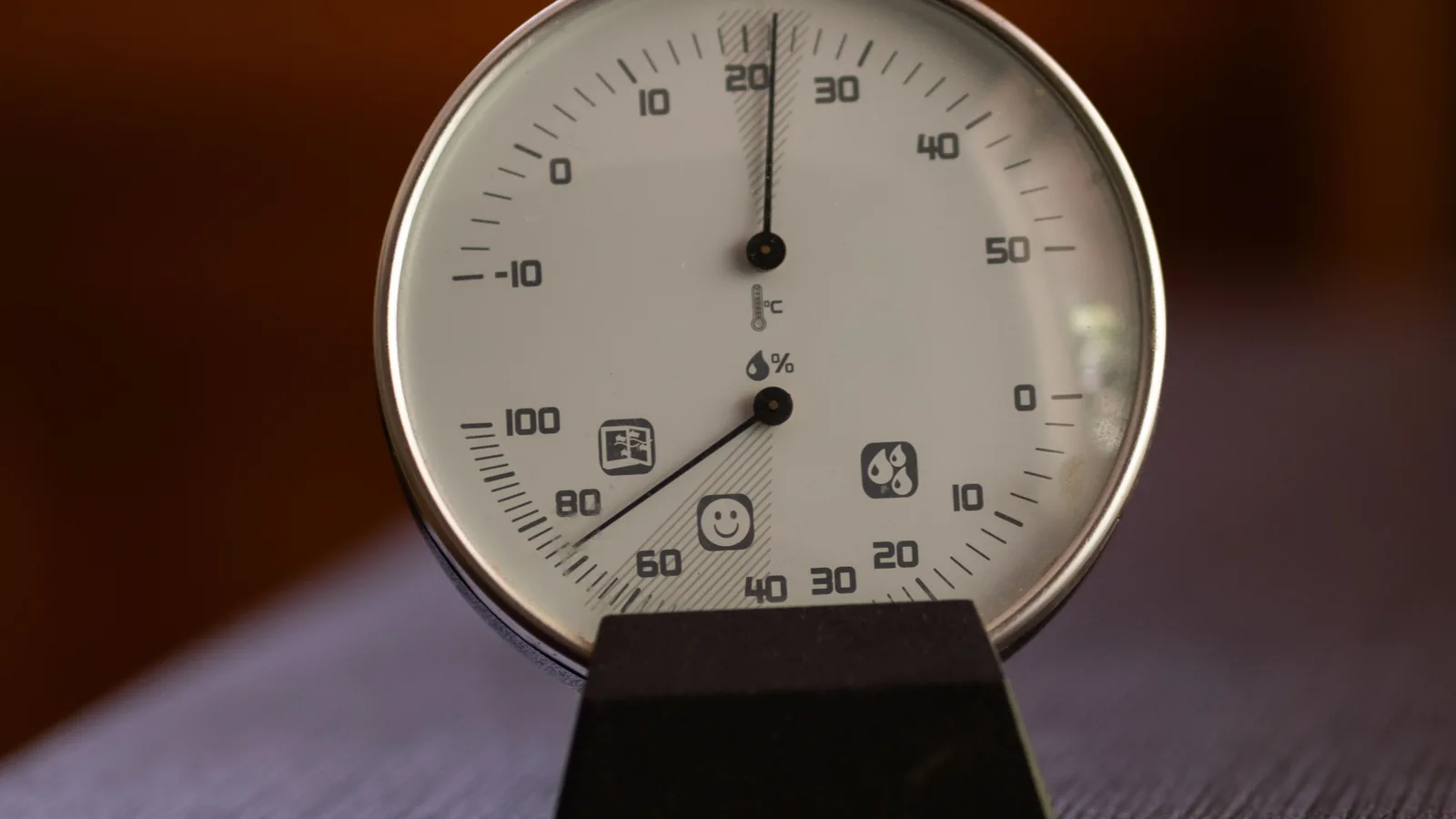
Next, place a hygrometer in the problem area, away from the dehumidifier, supply register, shower, dryer, and direct sun. Record relative humidity and room temperature in the morning and evening for a few representative days. Note rain, laundry, open windows, and HVAC operation. One steamy spike after a shower should not size a basement machine, and one dry afternoon should not erase repeated overnight readings above the target.
EPA recommends indoor relative humidity below 60 percent and ideally between 30 and 50 percent when possible. ENERGY STAR uses the condition without dehumidification to choose capacity. The measured reading matters more than words such as “large room” on a product page.
Use pints per day, not the bucket or carton square footage
A dehumidifier’s capacity is the amount of water it can remove in 24 hours under a standard test. The bucket may hold much less and need several empties during a hard day. Coverage claims are less useful than a current pints-per-day rating because they do not describe your measured humidity, temperature, floor plan, or water source.
| Condition before dehumidifying | Under 2,000 sq. ft. | Over 2,000 sq. ft. |
|---|---|---|
| Slightly to moderately damp: intermittent musty odor, 50%–75% RH | 20–30 pints/day | 30+ pints/day |
| Very damp: consistently damp, damp spots, 75%–90% RH | 25–40 pints/day | 40+ pints/day |
| Wet or high load: sweating surfaces, seepage, indoor laundry, 90%–100% RH | 30–50 pints/day | 50+ pints/day |
These are ENERGY STAR starting ranges, not permission to ignore water entry. In the “wet” row, deal with seepage, standing water, wet materials, and safety before depending on a portable appliance. If two capacities fit the measured condition, a modest step up can provide useful headroom, but buying far beyond the load does not improve drainage, airflow, or source control.
Four checks that can change the size decision
- Temperature: ENERGY STAR warns that frost can form on coils below 65°F and reduce performance. Basements often cross that line. Read the exact model’s minimum operating temperature and defrost behavior instead of assuming “basement” on the box means cold-room operation.
- Air path: One portable unit works on air that reaches it. Follow the manual’s clearances, keep intake and discharge open, and decide which interior doors will normally stay open. Several closed rooms may need a different layout or professional whole-home assessment.
- Drainage: A bucket stops the unit when full. A gravity hose must run downhill to a suitable receptor. A built-in pump can lift water but adds tubing, power, noise, cleaning, and another failure point. Pick the drain plan before the machine.
- Real moisture load: Indoor clothes drying, frequent exterior-door opening, an open stairway, high ceilings, and continuing damp materials add load. Active leaks and flooding are stop signs, not reasons to buy the biggest portable model.
Choose the drainage setup before paying for features
| Water-removal setup | Good fit | Watch out for |
|---|---|---|
| Removable bucket | Occupied room where someone can check and empty it | The machine stops when full; bucket volume is not daily capacity |
| Gravity hose | A nearby approved drain below the outlet | Kinks, poor slope, loose connections, freezing, and trip routes |
| Built-in pump | Condensate must rise to a suitable drain | Added cost and a pump or tubing failure that needs an overflow plan |
| Whole-home system | Humidity stays high across several rooms in a reasonably sealed central-air home | Load, ducts, condensate, controls, and installation need HVAC design |
Never route a hose near electrical cords or devices, and use the grounded outlet required by the manual. Test bucket-full shutoff and the complete drain route while you are present. If a hose backs up or a pump loses power, the result should be a stopped machine or contained water, not a wet finished floor.
What a portable dehumidifier costs
For a dated planning snapshot on October 29, 2026, Home Depot listed a Frigidaire 22-pint bucket model at $208.24, while Lowe’s listed a BLACK+DECKER 50-pint ENERGY STAR model with a pump at $326.99. Those two listings show how capacity and drainage features can move the purchase price; they are not a national market range, and prices, stock, promotions, delivery, and local availability can change.
Add the less obvious costs: a hygrometer if the display is hard to verify, a manufacturer-approved drain hose, filter care, and electricity. Compare current ENERGY STAR certification and integrated energy factor, which reports liters of water removed per kilowatt-hour. A higher IEF means better efficiency under the test procedure. ENERGY STAR says certified models use 20 percent less energy than similarly sized conventional units, but a dehumidifier still adds an electric load.
Save money by controlling runtime and moisture at the source
Do not run the unit against open exterior windows or doors. Set a humidity target and let the humidistat cycle rather than choosing continuous operation by habit. Keep the filter clean, maintain the clearances in the manual, and verify the room with a separate hygrometer. Our dehumidifier cleaning guide covers the model-first care routine.
The larger savings often come before the appliance: extend downspouts, keep gutters open, correct grading and leaks, vent the dryer outdoors, and use bathroom and kitchen exhaust. Those are the moisture-source steps ENERGY STAR identifies. Buying a larger unit to keep up with avoidable water is usually the expensive answer.
The 4Homes weekly email
Every Tuesday: what changed for homeowners this week, plus our newest guides.
No spam. Unsubscribe anytime.
When to call a professional
Call the trade that matches the evidence when water keeps entering, materials remain wet, a sump or drain is failing, or the source may be plumbing, roofing, drainage, or HVAC condensate. Get immediate qualified help for standing water near electricity, sewage, structural movement, or a flooded space. Do not carry or plug a portable appliance through standing water.
Ask for a moisture or HVAC assessment when humidity stays high in several rooms, the layout cannot share air with one unit, a cold space repeatedly frosts equipment, or a correctly placed machine runs without reaching the target. Visible mold over roughly 10 square feet, extensive water damage, contaminated water, suspected HVAC contamination, or health concerns also cross EPA’s homeowner-cleanup boundary. If a larger project is proposed, use the contractor quote-comparison guide to compare diagnosis, scope, drainage, controls, testing, and warranty in writing.
Dehumidifier sizing checklist
- Stop active leaks, seepage, flooding, and unsafe electrical conditions first.
- Measure only the connected space the unit can realistically serve.
- Log relative humidity and temperature before dehumidification.
- Choose the ENERGY STAR pints-per-day range for that area and condition.
- Confirm the model can operate at the room’s lowest temperature.
- Plan bucket, gravity drain, or pump routing before purchase.
- Compare current certification, IEF, filter access, noise, and warranty.
- Verify the result with a hygrometer and investigate moisture that persists.
Frequently asked questions
What size dehumidifier do I need for a basement? Measure the basement area that shares air with the unit and record relative humidity before the dehumidifier runs. ENERGY STAR starts a space under 2,000 square feet at 20–30 pints per day when it is slightly to moderately damp, 25–40 pints when very damp, and 30–50 pints when wet or carrying a high moisture load. A cold, divided, or actively leaking basement needs more than a square-footage label: check the model's low-temperature rating, airflow path, drainage, and the source of the water.
Is a 50-pint dehumidifier too big for a basement? Not automatically. A 50-pint rating describes water-removal capacity under a test procedure, not bucket size. It may fit a wet space under 2,000 square feet or a very damp larger space, but it can be unnecessary for a small mildly damp room. Use measured humidity and ENERGY STAR's capacity ranges, then let the humidistat cycle the correctly placed unit instead of choosing by the largest carton claim.
What humidity should I set my dehumidifier to? EPA recommends keeping indoor relative humidity below 60 percent and ideally between 30 and 50 percent when possible. Start near the middle of that range, verify the result with a separate hygrometer, and adjust for the season and condensation risk. A lower setting is not automatically better; it can add runtime without fixing a leak or drainage problem.
Do I need a dehumidifier with a pump? Choose a pump only when condensate must travel upward to a suitable drain and the model supports that route. A gravity hose is simpler when it can run continuously downhill without kinks or trip hazards. A bucket works when someone can empty it reliably. Before leaving any setup unattended, confirm the full-bucket shutoff, hose connection, drain destination, and what happens after a power outage or blocked drain.
Sources used
Capacity, low-temperature, drainage, efficiency, placement, and source-control guidance: ENERGY STAR, “Dehumidifiers,” current specification effective October 1, 2025. Humidity targets, water-source repair, drying, and professional-cleanup boundaries: U.S. Environmental Protection Agency, “A Brief Guide to Mold, Moisture and Your Home.” Cost examples: Home Depot Frigidaire FHDD2234W1 listing and Lowe’s BLACK+DECKER BDM50PWCDA listing, checked October 29, 2026.
Frequently Asked Questions
What size dehumidifier do I need for a basement?
Measure the basement area that shares air with the unit and record relative humidity before the dehumidifier runs. ENERGY STAR starts a space under 2,000 square feet at 20–30 pints per day when it is slightly to moderately damp, 25–40 pints when very damp, and 30–50 pints when wet or carrying a high moisture load. A cold, divided, or actively leaking basement needs more than a square-footage label: check the model's low-temperature rating, airflow path, drainage, and the source of the water.
Is a 50-pint dehumidifier too big for a basement?
Not automatically. A 50-pint rating describes water-removal capacity under a test procedure, not bucket size. It may fit a wet space under 2,000 square feet or a very damp larger space, but it can be unnecessary for a small mildly damp room. Use measured humidity and ENERGY STAR's capacity ranges, then let the humidistat cycle the correctly placed unit instead of choosing by the largest carton claim.
What humidity should I set my dehumidifier to?
EPA recommends keeping indoor relative humidity below 60 percent and ideally between 30 and 50 percent when possible. Start near the middle of that range, verify the result with a separate hygrometer, and adjust for the season and condensation risk. A lower setting is not automatically better; it can add runtime without fixing a leak or drainage problem.
Do I need a dehumidifier with a pump?
Choose a pump only when condensate must travel upward to a suitable drain and the model supports that route. A gravity hose is simpler when it can run continuously downhill without kinks or trip hazards. A bucket works when someone can empty it reliably. Before leaving any setup unattended, confirm the full-bucket shutoff, hose connection, drain destination, and what happens after a power outage or blocked drain.