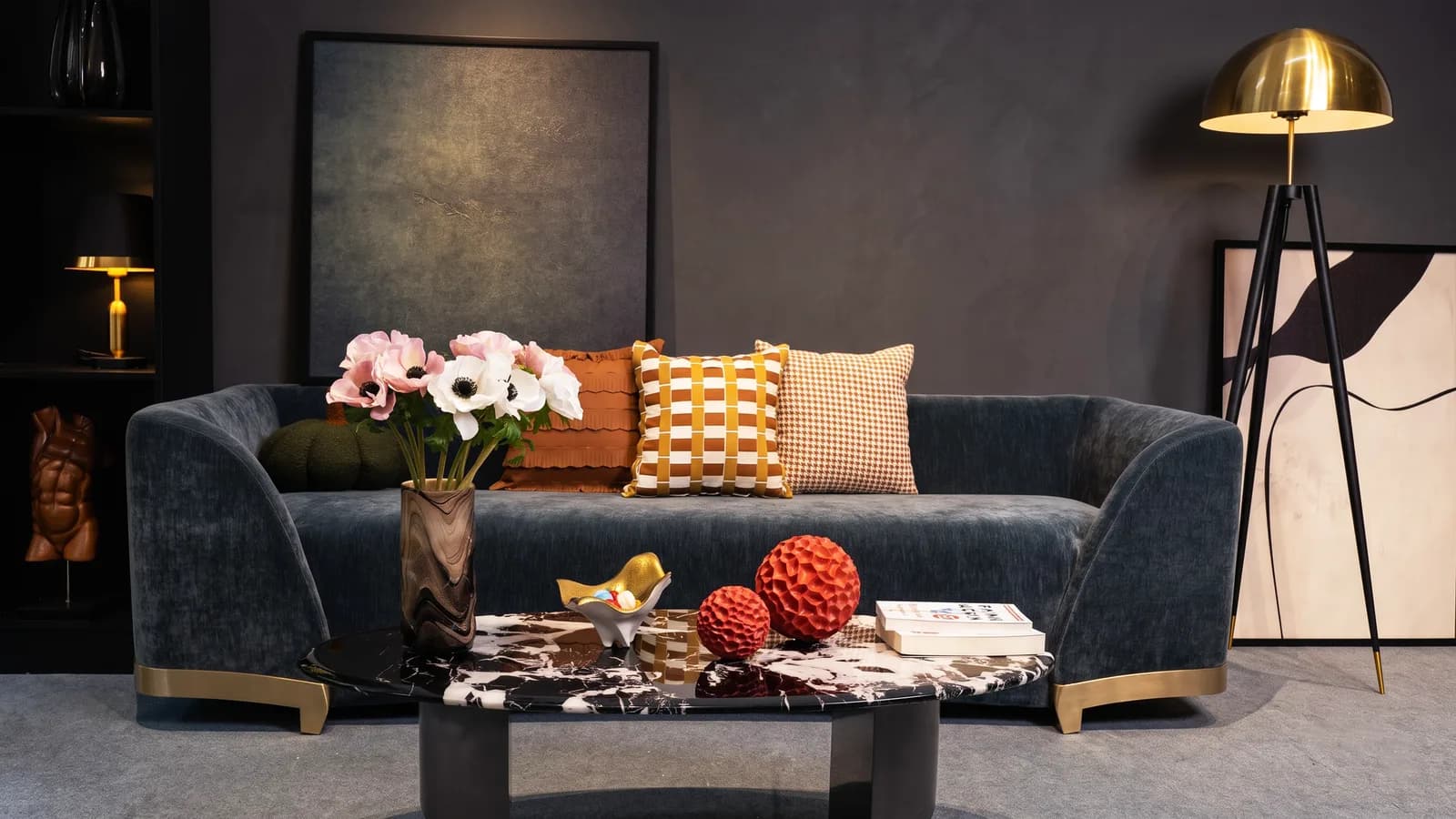
Layer general, task, and accent light with portable fixtures first, then use a room test to decide what belongs permanently and when wiring needs a pro.
Light a room without an overhead fixture by building layers: one source for general visibility, one for the work people do there, and one that softens a dark edge or feature. Start with plug-in lamps and a one-evening test. If the room still has unsafe dark paths, glare, a loose outlet, or a need for new wiring, the project has crossed from decorating into electrical work.
What “layered lighting” means
Layered lighting is a simple planning term, not a requirement to buy matching lamps. Ambient light makes the room generally navigable. Task light is directed at a book, desk, game table, or other activity. Accent light adds depth to a wall, shelf, plant, or corner that would otherwise disappear.
Without a ceiling fixture, asking one bright floor lamp to handle all three jobs usually creates a bright pool and a dark room around it. A better plan spreads modest sources across different heights. Lighting One describes the same three layers for rooms without a ceiling fixture: ambient, task, and accent. The exact number of lamps depends on the room's use, daylight, surfaces, furniture, and outlets—not a decorative rule.
Map the room after dark before shopping
Do this during the hours the room is normally used. Turn on only the lights you expect to keep, then walk the path from the doorway to seating, storage, desk, and any adjoining hall. Note where a step, threshold, control, or object becomes hard to see. Sit where people read, work, watch television, or talk. The goal is to identify a light problem, not to fill every corner.
| What you notice | First planning response | Do not assume |
|---|---|---|
| The whole room feels dim, including the route through it | Test a shaded floor lamp or upward-facing lamp away from the main path | One high-lumen bare bulb will make the room comfortable |
| A chair, desk, or hobby table creates a shadow | Add an adjustable task lamp from the side opposite the working hand where practical | More general light will remove every work shadow |
| One wall or corner disappears at night | Try a table lamp, plug-in sconce, or indirect light aimed at a wall | A mirror or glossy surface is a substitute for usable light |
| The television or screen has glare | Move light to the side or behind the seating area and test the screen at normal use | Dimming the entire room is the only fix |
| There is a dark stair, outlet, or room entrance | Improve the route first and have permanent electrical work evaluated if portable lighting cannot make it safe | A decorative lamp across the room solves a safety path |
Sketch the walls, doors, windows, outlets, furniture, and routes. If the room layout itself is unsettled, use the small living room layout guide first. A lamp should not become an obstacle that makes a narrow passage even tighter.
Build the layers in the least permanent order
- Begin with ambient light. Put a stable floor lamp or a pair of table lamps where light can spread across the ceiling or a light-colored wall. A shade that diffuses light is often easier to live with than an exposed bright source at eye level.
- Add task light where eyes work. Place a reading or desk lamp so the light lands on the page or work surface without shining toward another person's face. Check the product instructions for bulb type and maximum wattage or integrated-LED limits.
- Add one quiet accent only if it solves a visible problem. A low table lamp, plug-in sconce, or light aimed at a blank wall can reduce the cave effect and make the room easier to navigate.
- Control the layers separately. Separate switches, listed smart plugs, or approved dimming products let the household use a bright setting for activity and a lower setting for evening. Check compatibility; a dimmer is not universal.
- Live with the setup for a week. Move portable lights before drilling, mounting, or buying a more expensive piece. Notice whether the lamp is used, whether its cord blocks a route, and whether anyone has to reach behind furniture to operate it.
Keep bulb color and brightness intentional. A room can feel disjointed when one lamp is very cool and another is very warm. Product packaging normally identifies color appearance and brightness; compare the information for the exact bulbs or fixtures rather than relying on a product photo. For a kitchen where shadows at the counter are the issue, the kitchen lighting plan is more useful than copying a living-room setup.
Use outlets and cords as a hard boundary
Portable lighting is only a low-disruption option when its electrical path is sound. Plug lamps directly into a suitable wall outlet. Keep cords visible and protected from foot traffic, doors, heat, water, and furniture legs. The U.S. Consumer Product Safety Commission advises against running cords under rugs or carpets, which can hide damage and trap heat. Do not use a cord as a permanent substitute for a needed outlet.
A power strip is not an automatic answer to a short outlet count. Follow the lamp and strip instructions, stay within the strip's rating, and do not daisy-chain strips or extension cords. Stop using the setup and call an electrician for a hot, loose, cracked, discolored, sparking, buzzing, or repeatedly tripping outlet; a damaged cord or plug; or any moisture around electrical equipment. The electrical-panel safety guide explains what a homeowner can safely observe from outside the panel.
Decide whether a plug-in sconce is actually the right answer
Plug-in sconces can free up a side table or floor area, but they still need a listed fixture, mounting suited to the wall, a reachable outlet, and a cord route that does not cross a walking path. Confirm the instructions identify the mounting hardware, required wall support, bulb or LED limitations, and any location restrictions. A battery-powered decorative light can help with accent light, but its runtime and output should be checked before it becomes a daily route light.
A hardwired sconce, ceiling fixture, new outlet, switch relocation, or concealed wiring is a different project. A qualified electrician should assess the existing circuit, box, grounding, route, local permit requirements, wall repair, and final testing. Do not open a box, splice a cord, or mount a fixture over an unknown wiring path just to improve the room's appearance.
What a no-overhead lighting plan can cost
Start with the room's actual failure instead of buying a coordinated set. The Home Depot listing for the Hampton Bay 70-inch Black Mother Daughter 2-Light Torchiere Floor Lamp, model RS2204257BK, shows $39.97. Use that named retailer listing as a single portable-lamp price check before bulbs, delivery, tax, or mounting supplies—not as a nationwide installed-cost promise. Store, stock, and local prices vary.
| Cost line | Current planning range or decision | What to check |
|---|---|---|
| Move or reuse a lamp already owned | $0 before a needed bulb or outlet repair | Stable base, intact cord, correct bulb, safe route, and enough light for the task |
| Portable floor or table lamp | $39.97 in the named Home Depot torchiere listing; price the exact table lamp separately | Shade, bulb or LED type, base stability, switch access, return terms, and dimensions |
| Plug-in wall fixture | Price the exact listed fixture plus approved mounting hardware and bulb if not included | Wall support, cord path, outlet location, weight, bulb limit, and rental or household rules |
| Hardwired improvement | Written local electrician quote after an on-site assessment | Circuit, box, switch, access, permits, patching, fixture, and final testing |
Do not spend the whole budget on a statement floor lamp before testing whether a smaller task lamp solves the actual problem. If the room refresh also needs furniture, window treatment, or paint, use the room-refresh budget guide to price the full list rather than treating lighting as the only expense.
Save money with a test, not a darker room
Borrow or move a sound lamp from another room for several evenings before buying. Try it at the likely location, with the normal seating and screen use. If it creates glare, takes away a walking path, or still leaves the task in shadow, change the placement or lamp type before upgrading the finish.
Buy the bulb and fixture as a pair. A low-priced lamp that needs a special bulb, has an inconvenient switch, or does not cast light where it is needed is not the less expensive solution. Keep packaging and receipts through the trial period. If a room's comfort problem also involves drafts, solar heat, or poor airflow, make that diagnosis separately with the room-by-room energy reset; lighting cannot repair a building-envelope problem.
The 4Homes weekly email
Every Tuesday: what changed for homeowners this week, plus our newest guides.
No spam. Unsubscribe anytime.
When to call a pro
Call a qualified electrician rather than adding more portable equipment when the plan needs a ceiling box, hardwired sconce, new outlet, new switch, concealed wiring, or circuit investigation. Do the same for any repeated breaker trip, loose receptacle, heat, odor, discoloration, moisture, damaged wiring, or uncertainty about what an existing box supports. Ask for a scope that separates fixture cost, circuit or box work, wall repair, permits, and testing. The contractor quote comparison guide can help you compare those scopes line by line.
No-overhead-lighting checklist
- Walk the room after dark and mark dark routes, task shadows, glare, and unused corners.
- Choose a general-light source before adding decorative accent light.
- Put focused task light where people actually read, work, or play.
- Test lamp placement for a week before mounting or buying a larger fixture.
- Keep cords out of rugs, doorways, pinch points, water, and walkways.
- Check fixture labels, bulb limits, outlet condition, base stability, and return terms.
- Use an electrician for permanent wiring, uncertain boxes, or electrical warning signs.
Related guides
- Plan a small living room layout before a lamp takes away a walking route.
- Layer kitchen lighting around prep, cooking, and cleanup work.
- Measure a room before buying a sofa when the lighting plan changes the furniture arrangement.
- Build a room-refresh budget that includes every practical cost line.
Sources used
U.S. Consumer Product Safety Commission guidance on extension cords and electrical safety; Lighting One guidance on lighting a room without a ceiling fixture; The Home Depot product listing for the Hampton Bay 70-inch Black Mother Daughter 2-Light Torchiere Floor Lamp, model RS2204257BK; exact fixture and bulb instructions; and local electrical requirements for any permanent installation.
Frequently Asked Questions
How do you light a living room with no overhead lighting?
Start with a floor lamp or other source that gives the room general light, then add task light at a reading chair, desk, or table and a smaller accent source for the dark edge of the room. Test the arrangement after sunset before buying permanent fixtures.
How many lamps does a room without a ceiling light need?
There is no dependable number based on square footage alone. The room needs enough general light for safe movement, focused light where people read or work, and a way to avoid leaving the far side in shadow. A compact room may work with two sources; a larger or divided room may need more.
Are plug-in wall sconces safe to use?
They can be suitable when the fixture is listed for its use, mounted according to its instructions, and plugged directly into an appropriate outlet. Do not run a cord under a rug, pinch it behind furniture, overload an outlet, or use a damaged cord or loose receptacle.
Can you install a ceiling light without existing wiring?
Sometimes, but the answer depends on the existing wiring route, box support, switch location, access, building construction, and local requirements. Have a qualified electrician assess the route and provide a written scope; do not treat a plug-in lamp plan as permission to alter wiring yourself.