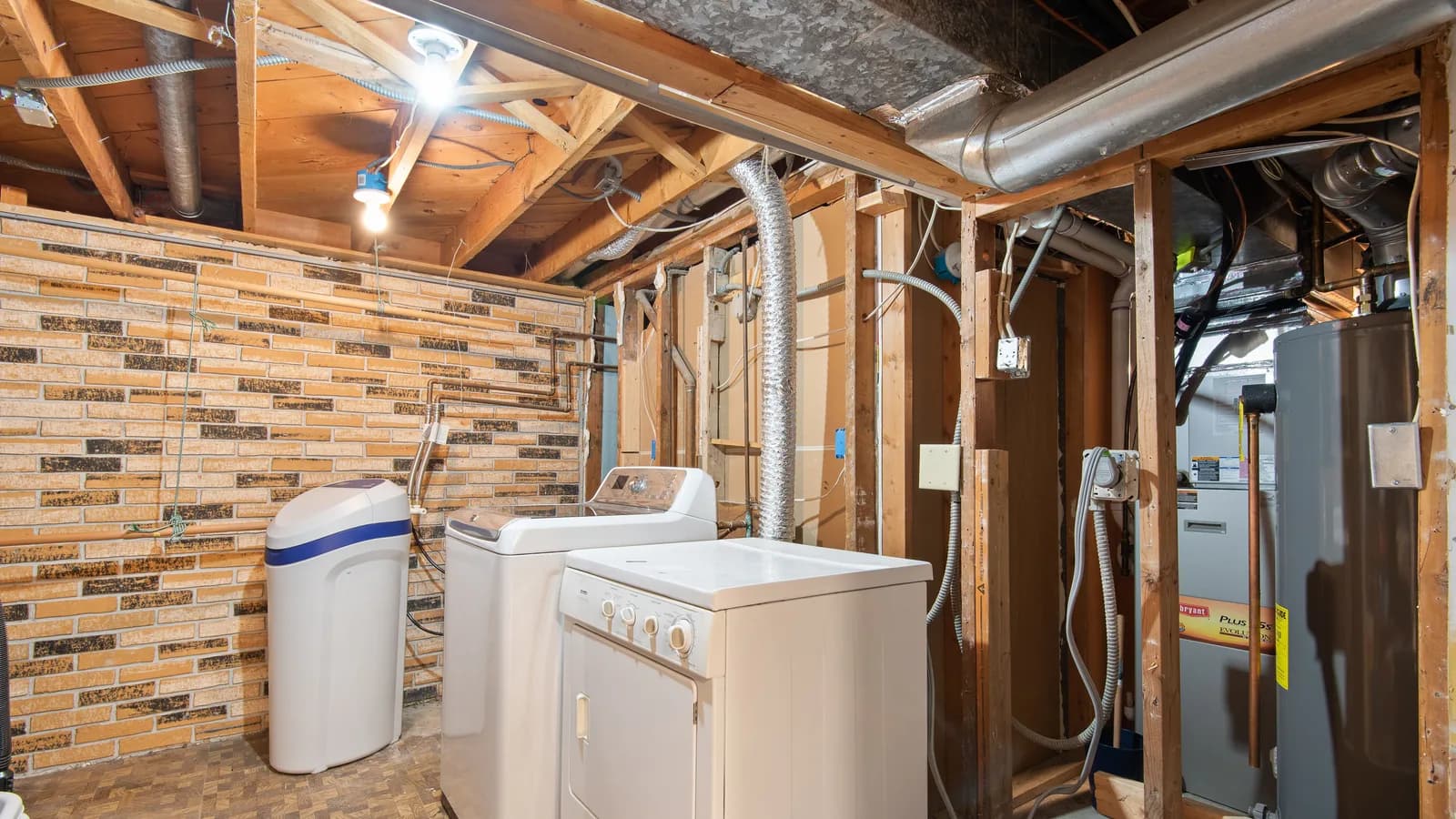
Confirm hard water, bypass position, programming, and one documented recharge before treating a salt bridge as the answer.
If a water softener's salt level never changes, do not assume the resin tank is bad or pour in another bag. Confirm that the water is actually hard, mark the salt level, identify the model and settings, and watch one manual recharge only if the owner's manual allows it. A salt bridge is one possibility, not the diagnosis.
My opinion: breaking up salt before checking bypass and programming is backwards. A softener can sit beside the plumbing, display the time, and use no salt because water is bypassing it or the controller has the wrong hardness and usage information.
Build a before-service record
Photograph the model and serial labels, control display, bypass position, visible plumbing, drain route, brine line, salt type, and current salt level. Mark the level with removable tape and add the date. Record recent outages, clock changes, plumbing work, long vacancies, unusual water use, filter work, and the last time salt was added. Do not rely on memory or on how slippery the water feels.
Test untreated and treated water with a method appropriate to the system and local water. The two samples answer different questions: what hardness enters the home, and what leaves the softener. If the source is a private well or the water has changed in odor, color, taste, or clarity, use a qualified water test and address possible contamination separately. A softener is not a substitute for disinfection of microbiologically unsafe water.
Check bypass, time, and settings against the manual
Verify the bypass handle or stem position without forcing it. Morton lists a bypassed valve and a hardness setting that is too low among the causes of no soft water with no drop in salt level. Check the clock, current time, scheduled recharge, remaining capacity, hardness setting, and any error code. Photograph every original value before changing an allowed user setting.
Use the measured source-water hardness and the manufacturer's instructions, especially when iron is present. Do not copy a neighbor's setting. Do not enter installer programming, alter cycle times, or change salt dose merely to make the unit consume more salt. Consumption is not the goal; verified soft water at an appropriate salt setting is.
Look at the brine tank without turning it into a repair bench
Unplug the unit first if the manual requires power removal for inspection. From above, note crusted salt, a hollow-looking space below the top layer, standing water, dirty water, unusual odor, a loose brine line, or overflow evidence. Keep tools away from the float and internal tubing. Never climb into, lean your weight on, or strike the plastic tank.
A model manual may provide a specific way to break a salt bridge. Follow that method and tool limit exactly, or call service. Do not use boiling water, a metal spear, or repeated hammering. Morton identifies bridging as one cause; its same troubleshooting chart also lists the bypass and hardness setting. Pentair's 5600SXT manual adds plugged injectors or drain controls, low pressure, and control faults to the possible brine-draw failures. Those internal checks are service work.
The 4Homes weekly email
Every Tuesday: what changed for homeowners this week, plus our newest guides.
No spam. Unsubscribe anytime.
Observe one documented recharge
Initiate one manual recharge only if the correct manual permits it and the drain route is secure. Keep the area dry and stay nearby. Record the start time, display stages, sound of water to the drain, visible leaks, error codes, and the brine level before and after. Avoid household water use during the recharge if the manual says untreated water can bypass to the home.
Stop the observation and use the model's shutdown or bypass instructions for overflowing brine, leaking plumbing, a loose drain line, electrical damage, burning odor, repeated clicking, or a stalled motor. Do not dismantle the injector, valve, timer, motor, or pressurized plumbing unless you are qualified and the service manual assigns that work to you.
Require a measured closeout
Give the water-treatment technician the paired hardness results, salt mark, settings photos, recharge log, and water-use history. Ask for the failed layer in writing: bypass, programming, metering, salt bridge, brine draw, drain, valve, resin, or source-water change. After repair, repeat treated-water testing and track the marked salt level across normal use rather than forcing another cycle immediately. Save the final settings, parts, salt specification, test result, and next service date with the home maintenance record.