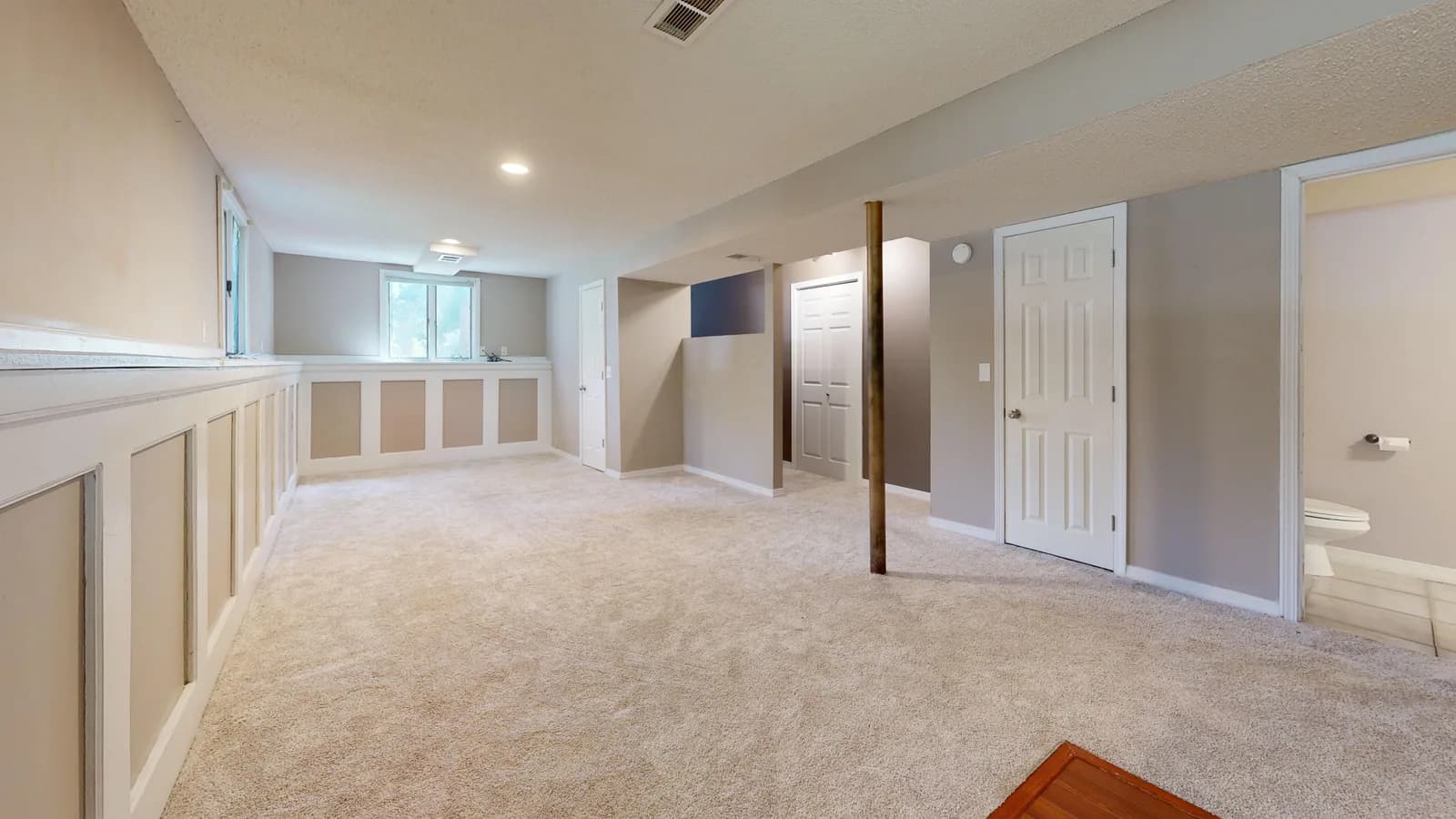
Map the water path, interception point, drainage and discharge, concealed-work rules, safety stops, warranty, and proof before approving a waterproofing system.
A basement-waterproofing proposal should name the water path before it names the product. Ask the contractor to map where water starts, how it reaches the house, where it crosses the enclosure, and where the proposed system will send it. “Install drainage system” is a product line. It is not yet a diagnosis or a complete scope.
Build the wet-weather record first
Give each bidder the same dated record: rain or snowmelt timing, damp locations, wall streaks, floor-edge seepage, efflorescence, musty periods, plumbing events, sump cycles, downspout outlets, window wells, grading, and prior repairs. Mark each observation on a basement plan and an exterior sketch. A stain near the floor does not by itself distinguish surface runoff, saturated soil, a wall crack, a wall-floor joint, capillary moisture, condensation, or a plumbing leak.
EPA's building moisture-control guidanceseparates liquid-water control from condensation management and moisture-tolerant materials. DOE's foundation-floor guidance explains that water can wick through concrete pores and describes a below-slab capillary break as a drainage layer beneath a continuous vapor barrier. Those are different mechanisms. The proposal should say which one the observed evidence supports and what remains uncertain.
Make the proposed interception point visible
Require a section drawing through each treated wall or floor area. It should show exterior grade, foundation wall, footing, slab, crack or joint, drainage material, collection channel, pipe, sump, pump, check valve, discharge route, termination, and any intended drying path. If the work is exterior, add excavation limits, utility locating, shoring or slope safety, protection of footings and adjacent structures, membrane preparation, termination height, protection or drainage board, footing-drain connection, backfill, compaction, paving, landscaping, and runoff restoration.
If the work is interior, state what is opened, how dust and occupied space are contained, where the channel sits, what happens at columns and partitions, how wall drainage reaches it, and which wall or floor finishes will be restored. An interior drain may manage water after it crosses the foundation; it should not be described as stopping exterior entry unless the design actually does that.
My view: “waterproofing” is too broad to approve as a scope item. A good proposal names the control point and the remaining exposure in ordinary words, even when that answer makes the system sound less magical.
Price the pump and discharge as a system
A sump line needs the basin location and dimensions, pump model, primary and backup power arrangement, alarm, float access, check valve, estimated lift, pipe route, freeze protection, exterior outlet, and testing plan. State whether an existing pump or drain is reused and who verifies its condition. The outlet cannot simply move the same water to a place where it returns toward the foundation, crosses a walk, affects a neighbor, or violates local discharge rules.
Floodwater is a separate design problem. FEMA's basement-backup guidance identifies surface openings and utility penetrations as entry points and lists secondary sump pumps, check valves or backflow preventers, water-resistant materials, and entry-point mitigation among possible code strategies. It also calls for building inspectors to assess below-grade areas exposed to urban flooding. A coating or perimeter drain sold for ordinary seepage should not quietly become a claim that the house is protected from a design flood or sewer backup.
The 4Homes weekly email
Every Tuesday: what changed for homeowners this week, plus our newest guides.
No spam. Unsubscribe anytime.
Set stop conditions before demolition
The contract should stop for standing water near electrical equipment, sewage, structural movement, undermined soil, an unknown buried service, or suspected hazardous material. Homeowners should not enter flooded electrical areas, excavate beside the foundation, open the panel, or disturb suspected mold or asbestos. EPA says water-damaged materials should be dried within 24 to 48 hours to help prevent mold growth and that cleaning mold without fixing the water problem is likely to result in its return in its home mold guide. It also warns that investigating hidden mold can release spores when concealed material is disturbed.
For painted surfaces in pre-1978 housing, assign lead-safe compliance rather than treating demolition dust as ordinary debris. EPA's Renovation, Repair and Painting Rule page says paid firms disturbing painted surfaces in covered pre-1978 housing generally must be certified and use trained renovators or trained workers.
Close with proof tied to the water map
Define the warranty by the locations, water path, components, maintenance, exclusions, transfer rules, and remedy it actually covers. Closeout should include concealed-work photographs, product and pump records, permits and inspections, discharge testing, alarm testing, restored surfaces, cleanup, operating instructions, and a map of untreated or inaccessible areas. Keep a rain-event follow-up date and compare the same marked locations.
Use the foundation proposal checklist when movement or structural design is involved, and the sump-pump backup plan when pump capacity and outage performance need their own decision. The useful promise is not “dry forever.” It is a traceable path, a bounded intervention, and a testable result.