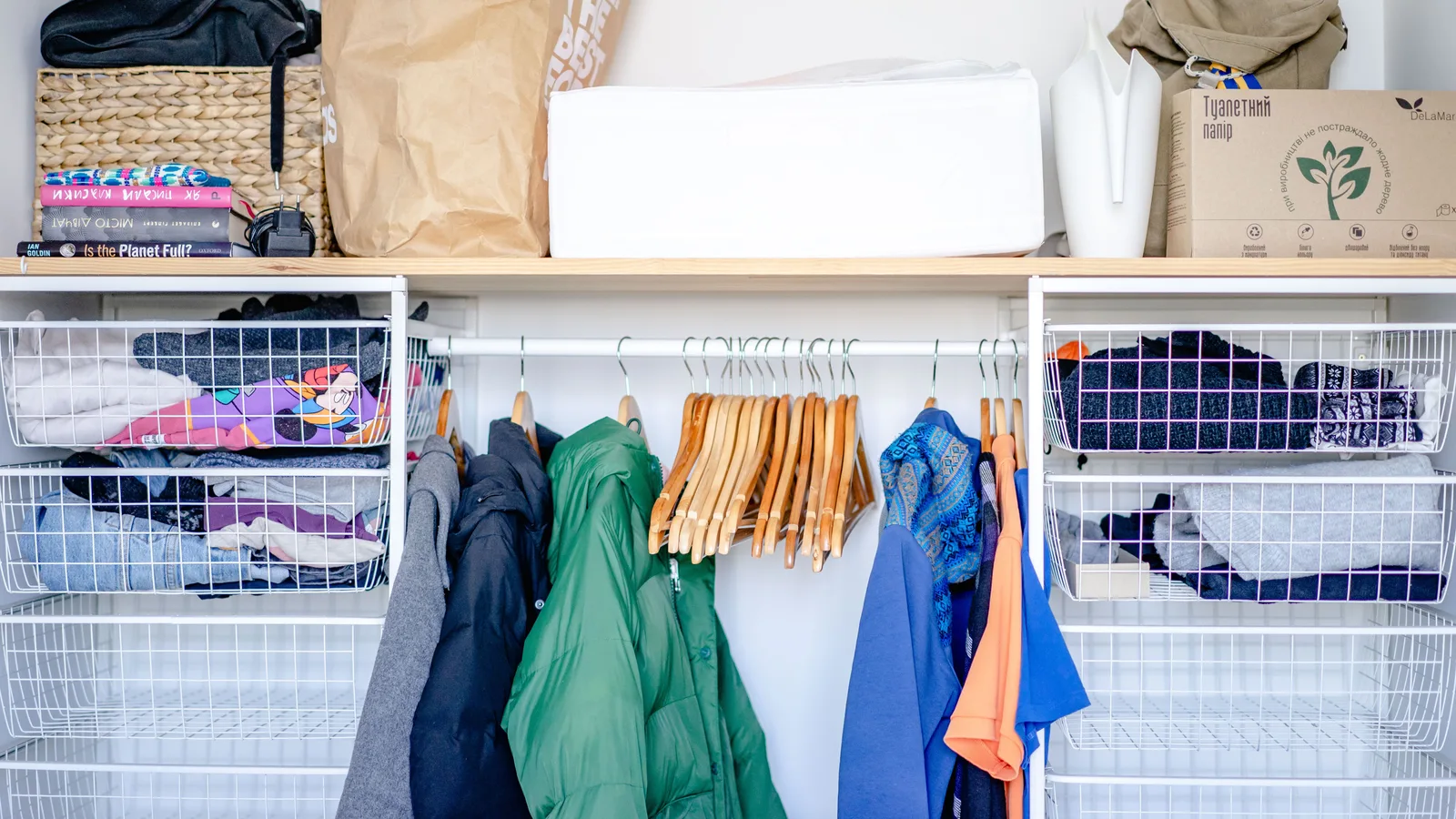
Measure the closet and the household's exit routine, reserve easy reach for current gear, and keep wet items out until they are dry.
Organize a coat closet by giving the current season and daily exit routine the easiest space, then moving dry off-season gear out of the way. Measure the rod, shelf, floor, door, and largest coat before buying bins or hooks. Wet coats and shoes need a drying stop outside the closed closet, not a prettier container inside it.
A coat closet works when one person can take out a coat, shoes, bag, and weather gear without unloading another category. It fails when every available surface becomes storage. My view: a half-empty shelf that lets you see and return things is more valuable than a full organizer that adds another step to leaving the house.
Measure the closet and the routine
Photograph the closet before emptying it. Measure usable rod width, the distance from rod to floor, shelf depth and height, door opening, baseboard projections, and any sloped ceiling or return wall. Measure the longest coat and tallest footwear too. A hanging shoe rack that occupies the same vertical space as a winter coat is not added capacity; it is a conflict.
Then watch the entry for three ordinary days. Record what lands on the floor, what is searched for, and what returns wet. One household may need school backpacks and dog gear at hand. Another needs business coats, umbrellas, and mobility aids. Common organization advice uses doors, floors, and vertical space. The missing step is deciding which of those surfaces should remain open for the household's real route.
Mark anything that is not actually entry gear: spare bedding, tools, bulk paper goods, paint, cleaners, sports equipment, and sentimental storage. Relocate it only to a place that suits the item. Do not solve one crowded closet by hiding chemicals in a food pantry or placing heavy gear overhead.
Sort into five useful groups
- This-week outerwear. Keep the coats and jackets being worn now on the easiest section of rod.
- Weather accessories. Give hats, gloves, scarves, sunglasses, and compact umbrellas one shallow, visible zone.
- Footwear in rotation. Limit the floor or rack to pairs used regularly and suited to the season.
- Daily carry items. Bags, leashes, or helmets need a rated hook or shelf that does not narrow the doorway.
- Off-season and occasional gear. Clean and dry it, then place it higher or elsewhere in a labeled container that can be retrieved safely.
Use a fixed capacity for each group. If the everyday rod is full, one coat leaves before another enters. If the accessory bin will not close without force, edit it. Capacity limits remove the repeated decision about where to squeeze one more item.
Donate only clean, usable clothing through an organization that accepts it. Repair a torn coat only when the task has a person and date attached; otherwise the repair pile becomes permanent inventory. Keep receipts or photographs for valuable items in a home inventory, but do not turn ordinary gloves into a paperwork project.
Build the layout from the doorway inward
| Zone | Best use | Failure to avoid |
|---|---|---|
| Door and side wall | Light, frequent items on rated hardware | Overloading hinges, blocking the latch, or creating a snag |
| Easy rod section | Current coats with enough spacing to dry and slide | Mixed seasons packed so tightly that damp fabric stays hidden |
| Top shelf | Light labeled accessories or off-season soft goods | Heavy bins or loose items falling during retrieval |
| Floor edge | Washable shoe tray or stable low rack | Blocking the door, creating a trip, or trapping moisture |
| Back corner | Rare, lightweight item only when independently reachable | A deep pile that requires removing the daily zone |
Keep the entrance wider than the largest item that must pass through it. A backpack hook at shoulder height may be convenient until a bulky coat catches it every morning. A shoe rack may fit the floor dimensions while preventing the door from opening fully. Mock up the loaded depth with boxes and painter's tape, then walk the routine carrying groceries or a bag.
Use one hanger type only when it truly saves space or supports the garment. Heavy coats need hangers and a rod capable of their loaded weight. Do not add a second rod below long coats without measuring the drop. Install permanent hooks, shelves, or tracks only with the fasteners, spacing, and support specified for the product and wall.
Keep wet gear out until it is dry
Set a washable boot tray, hooks, or drying rack near the entry where air can move. Shake off snow outdoors, remove mud and road salt, empty pockets, and hang garments as their care labels allow. Once fully dry, return them to the closet. Do not seal damp gloves in a bin or press a wet coat against drywall.
The U.S. Environmental Protection Agency says water-damaged materials and areas should generally be dried within 24 to 48 hours to reduce mold growth. That guidance addresses water damage, not a timer for ordinary laundry, but it supports the same practical rule: persistent dampness is a building problem, not an organization style. Investigate a recurring wet floor, stained wall, musty odor, or swollen baseboard before installing new storage over it.
Salt and grit can damage floors and migrate into the house. Use a tray sized for the footwear, clean it before residue builds up, and check beneath it. A waterproof tray does not make a leaking wall or soaked subfloor safe.
Set safety boundaries before adding hardware
Look for electrical panels, access doors, shutoffs, alarms, receptacles, pipes, or equipment before using every inch. Keep required access clear. A closet with a furnace, water heater, air handler, or electrical panel is a utility space first; use the utility closet guide instead of treating it as an ordinary coat closet.
Keep bags and cords away from children's neck and climbing zones. Secure tall freestanding units to the wall when the maker and household safety plan require it. The U.S. Consumer Product Safety Commission urges households to anchor furniture such as bookcases and dressers securely to the wall. Use the supplied restraint and suitable structure rather than improvising a strap.
Do not store fuel, propane, paint, pesticides, or incompatible cleaners with clothing. Keep medicines and loose batteries elsewhere under their own storage rules. Stop for a hot receptacle, damaged wiring, a gas odor, active leaking, visible structural damage, or pest contamination and call the appropriate qualified professional.
The 4Homes weekly email
Every Tuesday: what changed for homeowners this week, plus our newest guides.
No spam. Unsubscribe anytime.
Plan costs from the smallest fix
Start at zero: remove unrelated items, rotate seasons, reuse sound hangers, and test zones with boxes. If hardware is still needed, compare the complete installed scope rather than the shelf or kit alone. Size, wall repair, tools, freight, taxes, and local stock can change the total.
For a larger project, Angi's 2026 cost guide reports DIY closet materials at roughly $200 to $1,200 and professional organizer installation commonly from $627 to $2,525. Its figures cover many closet types, not a promise for a small entry closet. A written quote should separate demolition, patching, paint, shelving, rods, hooks, anchors, door work, labor, cleanup, and warranty.
Save money by buying only after a one-week trial exposes a repeated problem. A washable tray that controls wet shoes may solve more than a full built-in. Standard widths and finishes can cost less than custom work. If installation is needed, use the contractor quote comparison so every bidder prices the same measured layout and wall condition.
Use a five-minute weekly reset
Return dry gear, pair gloves, remove trash from pockets, wipe the shoe tray, and move one out-of-season item when the weather changes. Check that mounts remain tight and that the floor, wall, and shelf show no new moisture or pest evidence. The reset should fit into ordinary entry cleanup; if it requires emptying the closet, the layout is too dense.
For an entry without a closet, the no-mudroom entry storage guide builds a similar landing zone in open space. For seasonal clothing that moves elsewhere, use the off-season clothing storage guide to keep clean, dry garments findable without crowding the entry.
Sources used
U.S. Environmental Protection Agency moisture and mold guidance; U.S. Consumer Product Safety Commission tip-over guidance; Angi 2026 closet-organizer cost data; and the current installation instructions for any organizer or hardware selected.
Coat closet organization FAQs
How do I organize a small coat closet?
Empty it, measure the clear hanging width, shelf depth, door swing, and floor, then reserve the easiest reach for the coats and gear used this week. Give wet items a drying stop outside the closet, move off-season clothing elsewhere, and test the layout with boxes and tape before buying an organizer.
What should go on the top shelf of a small closet?
Use the top shelf for lightweight, infrequently used items that can be lifted down safely, such as labeled hats or seasonal accessories. Do not put heavy bins, loose objects, leaking products, or anything that requires an unsafe reach overhead. A high shelf is not useful storage when retrieval needs a chair or a falling-item gamble.
How do I keep a shoe/coat closet smelling decent?
Let wet shoes dry on a washable mat or tray in open air before closing them in the closet. Remove mud and salt, clean the tray, and address any leak or persistent dampness. Fragrance only masks the source. Recurring mustiness, visible growth, or wet wall and floor materials needs moisture diagnosis rather than another deodorizer.
Can over-the-door hooks damage a door?
They can be useful for light items only when the door, hinges, rack, and loaded clearance support them. Test the door through its full swing and make sure the organizer does not block a latch, strike a shelf, create a tip or pinch hazard, or put small items within a child's reach. Follow the organizer's load and mounting instructions.
Should I DIY or hire a pro to install closet organizers?
Hire a qualified installer when the system needs new fixed shelving, uncertain wall anchors, electrical or plumbing checks, masonry drilling, door changes, or repair of damaged walls. Get help sooner for a leak, mold-like growth, pest activity, loose existing shelving, or a closet that may contain a panel, shutoff, or mechanical access.
Frequently Asked Questions
How do I organize a small coat closet?
Empty it, measure the clear hanging width, shelf depth, door swing, and floor, then reserve the easiest reach for the coats and gear used this week. Give wet items a drying stop outside the closet, move off-season clothing elsewhere, and test the layout with boxes and tape before buying an organizer.
What should go on the top shelf of a small closet?
Use the top shelf for lightweight, infrequently used items that can be lifted down safely, such as labeled hats or seasonal accessories. Do not put heavy bins, loose objects, leaking products, or anything that requires an unsafe reach overhead. A high shelf is not useful storage when retrieval needs a chair or a falling-item gamble.
How do I keep a shoe/coat closet smelling decent?
Let wet shoes dry on a washable mat or tray in open air before closing them in the closet. Remove mud and salt, clean the tray, and address any leak or persistent dampness. Fragrance only masks the source. Recurring mustiness, visible growth, or wet wall and floor materials needs moisture diagnosis rather than another deodorizer.
Can over-the-door hooks damage a door?
They can be useful for light items only when the door, hinges, rack, and loaded clearance support them. Test the door through its full swing and make sure the organizer does not block a latch, strike a shelf, create a tip or pinch hazard, or put small items within a child's reach. Follow the organizer's load and mounting instructions.
Should I DIY or hire a pro to install closet organizers?
Hire a qualified installer when the system needs new fixed shelving, uncertain wall anchors, electrical or plumbing checks, masonry drilling, door changes, or repair of damaged walls. Get help sooner for a leak, mold-like growth, pest activity, loose existing shelving, or a closet that may contain a panel, shutoff, or mechanical access.