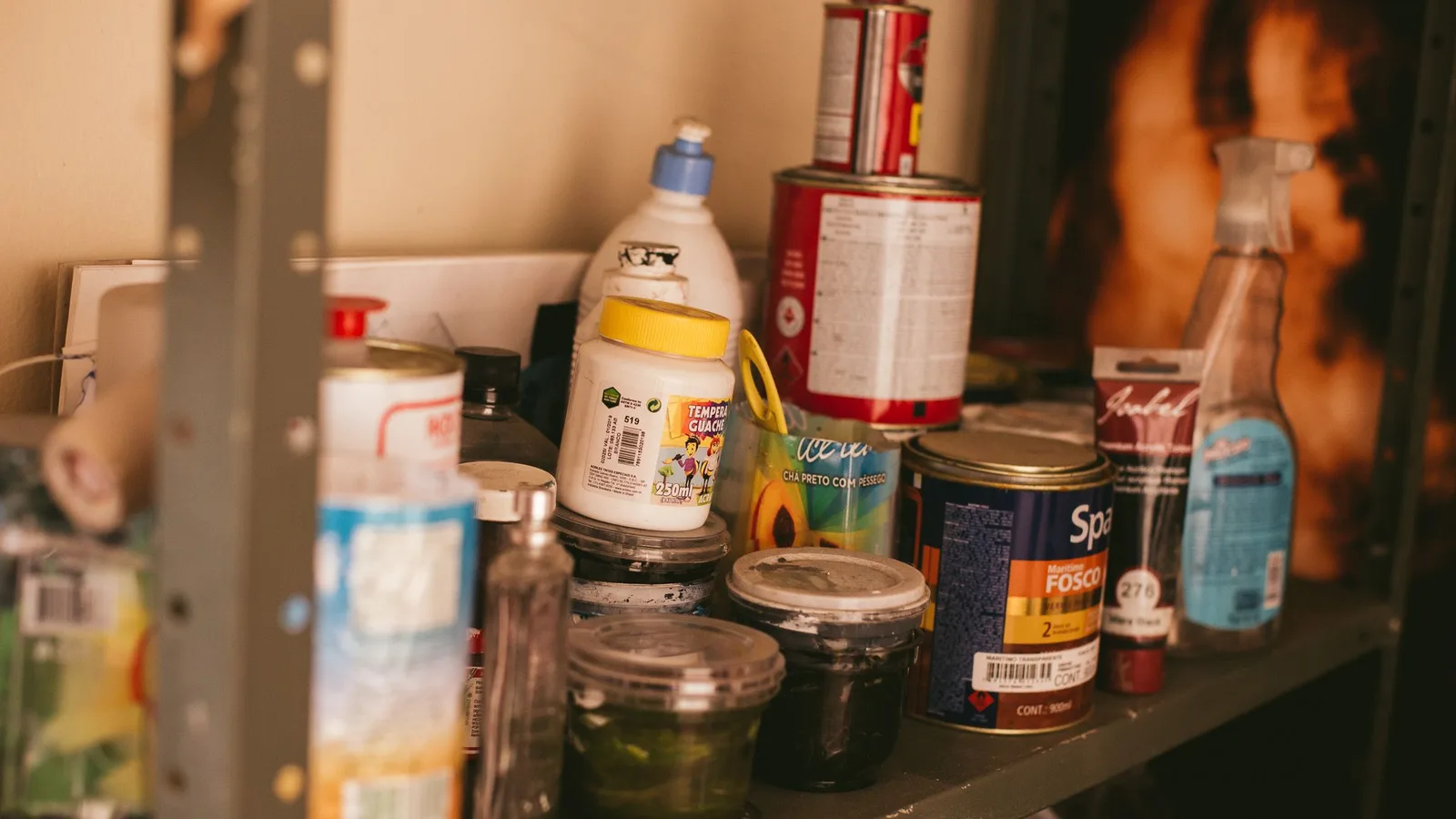
Keep useful touch-up paint sealed, labeled, dry, and within its product limits while sending mystery or spoiled cans to the right local program.
Store leftover paint upright in a tightly sealed, labeled container in a dry place where the temperature stays within the product’s stated range. Keep it away from food, children, pets, flames, sparks, and freezing conditions. Preserve the original manufacturer label whenever possible because it carries the product type, safety directions, color information, and disposal route.
The useful goal is not keeping every can forever. Save enough sound paint for a realistic touch-up, record exactly where it was used, and send duplicate, spoiled, leaking, or unneeded material to the right local program before the label disappears.
Sort by product before you organize by color
Read the full label. Separate water-based wall paint from oil-based paint, stain, varnish, spray coatings, two-part products, thinners, and solvents. Products that look similar can have different storage, fire, ventilation, and disposal rules. Do not combine leftovers to save shelf space.
The U.S. Environmental Protection Agency says paints and other household products that can catch fire, react, corrode, or cause toxicity may be household hazardous waste. EPA’s basic rule is to keep such products in original containers, retain labels, never use food containers, and never mix leftovers. Local programs set disposal details.
Move any leaking, badly corroded, swollen, or unlabeled container out of ordinary storage without opening or transferring it casually. Keep people away and call the local household hazardous-waste office or fire department for handling instructions. Do not carry a leaking can loose in a vehicle.
Decide what is worth keeping
Keep a can when the coating is still used in the home, the label is readable, the container is sound, and the amount could cover a real touch-up. The formula label matters as much as the color name. Sheen, product line, base, and tint formula affect the match.
A mystery beige with no room, date, sheen, or formula attached is clutter, not a repair supply. So is a nearly empty gallon that has dried around a bent rim. Put questionable material into a disposal holding area that follows the product label and local rules; do not test old solvent-based material beside a flame or ignition source.
Use the room-by-room paint plan to connect each saved product to a current surface. If a wall is scheduled for a new color, the old touch-up can probably leave once that project is complete.
Make one complete paint record
| Record | What to copy | Why it matters |
|---|---|---|
| Room and surface | Kitchen north wall, hall trim, porch railing | Prevents using the right color on the wrong sheen or material |
| Manufacturer and line | Exact brand and product family | Color names can repeat across lines and brands |
| Color and formula | Name, number, base, tint formula, and barcode | Gives a paint counter the best available matching record |
| Finish | Flat, eggshell, satin, semigloss, or other exact label term | Sheen mismatch can show even when color is close |
| Use and open date | When it was applied and when the can was first opened | Helps judge age and compare a later failure |
| Surface notes | Primer, number of coats, and repair location | Makes a small future patch repeatable |
Write the room and surface on the side, not across warnings or the printed product label. Photograph the front label, formula sticker, lid, and a dried sample. Save those photos in the house file. A photo does not replace the container label for disposal, but it can preserve matching information if the paper label later gets wet.
Reseal the can without damaging the rim
- Remove paint from the lid channel with a clean tool while keeping dried chips out of the liquid.
- Inspect the rim and lid. Do not rely on a bent, punctured, or heavily rusted seal.
- Follow the product instructions. PaintCare suggests plastic wrap over the opening as a gasket before replacing the lid.
- Seat the lid evenly with a rubber mallet. If only a hammer is available, PaintCare says to protect the lid with a piece of wood and tap carefully.
- Wipe the outside clean and confirm there is no seepage. Store upright.
Do not hammer the center of the lid or use a screwdriver that deforms the rim. PaintCare also advises against storing a can upside down: a sound lid already seals, and an imperfect one can leak.
Pouring paint into a smaller compatible container can reduce air space, and Benjamin Moore permits lined metal, glass, or plastic containers for many of its latex products. But the exact coating label controls, and a transfer loses the printed manufacturer label that EPA and recycling programs use. PaintCare requires original labeled containers for drop-off. For most households, keeping a sound original can and removing excess inventory is simpler than creating a shelf of unlabeled jars.
Choose a safer storage location
Pick a dry shelf in a controlled utility area, away from direct sunlight, food, and living-space traffic. The shelf should hold the full load and have a lip or tray that can contain a small leak. Keep containers within reach from the floor; climbing with a gallon of paint is a preventable spill.
Benjamin Moore specifies 60 to 80 °F for many of its products and warns that the exact technical data sheet may differ. That is a product example, not a range for every can. Read each label. Water-based coatings often say “keep from freezing.” An unheated garage, shed, attic, damp basement floor, furnace closet, or space beside a water heater can fail the temperature, moisture, or ignition test.
Keep children and pets out. Separate paint from medicines, food, and household cleaners. The cleaning-supply storage guide uses the same rule: original labels and controlled access beat matching bins.
Oil-based paint, stain, varnish, solvent, and aerosol products can carry stronger fire and ventilation warnings. Follow the label and local fire code. Never store them near a pilot light, space heater, electrical spark source, or hot appliance.
Handle oily rags before putting supplies away
Rags used with oil-based paint, stain, varnish, and drying oils can heat as the oil cures. The National Fire Protection Association warns not to leave those rags in a pile. Its homeowner guidance calls for taking them outside, spreading or hanging them separately away from buildings, securing them against wind, and then placing dried rags in a covered metal container with water and detergent while following local disposal instructions.
Do not put a warm, wet, oily rag into a plastic tote with the paint cans. Water-based paint cleanup and solvent-soaked material are not interchangeable either. Follow the exact product label and local household hazardous-waste program.
Check paint before a touch-up
Open the container in a suitable ventilated work area away from ignition sources. Look for corrosion, pressure, separation that will not remix, or contamination. Benjamin Moore lists a sour, strong odor and chunks or jelly-like texture that remain after stirring as signs paint is no longer usable.
Do not paint a large patch first. Stir as directed, then test a small hidden area or sample board and let it dry. Stored paint can be sound and still fail to disappear on the wall because the original coating aged, sunlight changed the surface, the patch has a different texture, or the application tool leaves a different finish. Feathering a touch-up is not a cure for a wrong product.
The 4Homes weekly email
Every Tuesday: what changed for homeowners this week, plus our newest guides.
No spam. Unsubscribe anytime.
Storage and disposal cost ranges
| Option | Planning cost | Source and boundary |
|---|---|---|
| Reuse a sound original can and existing shelf | $0 | Only when the lid, label, location, and access are suitable |
| Rubber mallet | About $8 to $21 | Home Depot listings; local stock changes |
| Replacement quart container | Often a few dollars each | Home Depot and paint-store listings vary; confirm compatibility with the exact coating |
| PaintCare drop-off | No additional drop-off charge in participating programs | PaintCare; original labeled, nonleaking containers and site limits apply |
| Local household hazardous waste | Free in many communities, but fees and appointment rules vary | EPA directs households to the local environmental, health, or solid-waste agency |
Do not buy a cabinet before reducing the stock. If solvent-based products remain, a decorative indoor cupboard may not satisfy the label or local fire rules. Ask the fire department or hazardous-waste program about a safe location rather than assuming any locked box works.
How to save money and waste less paint
Buy closer to the measured project amount, while allowing the coverage and coat count on the label. Keep one well-documented touch-up quantity per current finish instead of several nearly empty duplicates. Use the oldest sound matching can first.
Protect the rim during the project by pouring working paint into a tray and closing the main can. A clean rim seals better. Record the formula as soon as the paint is mixed, not months later after the sticker peels.
When the color changes, offer sound, correctly labeled paint to an approved reuse program if local rules allow. PaintCare says some collected paint goes to reuse and much of the rest is recycled. Do not give away an unlabeled or compromised chemical product.
Add a six-month shelf check to the garage and seasonal-storage plan. Catching a rusty lid while the can can still be handled safely is cheaper than cleaning a shelf, floor, and nearby belongings after it leaks.
Leftover-paint storage checklist
- Every kept container has a readable manufacturer label and a sound lid and rim.
- The room, surface, color formula, finish, and open date are recorded.
- No paints, solvents, or finishes have been mixed together.
- Cans are upright on a dry, stable shelf within the label’s temperature range.
- Paint is away from food, children, pets, flames, sparks, and hot equipment.
- Oily rags and solvent waste are handled under NFPA, label, and local disposal guidance.
- Leaking, corroded, spoiled, and unneeded products are queued for an approved local program.
- Nothing is poured into a sink, toilet, storm drain, soil, or curbside bin unless local rules specifically permit the prepared material.
Leftover paint storage FAQs
Can leftover paint be stored in the garage?
Only when the product label permits the temperatures the garage actually reaches. Water-based paint can be damaged by freezing, while heat and moisture can also shorten storage life or rust a can. A dry, controlled indoor utility location is usually safer than an unconditioned garage.
How long does leftover paint last after opening?
There is no universal shelf life. Benjamin Moore says most of its opened products have a two-year shelf life when stored correctly, while conditions and product formulas vary. Before reuse, check the label and data sheet, then reject paint with a sour odor or persistent lumps or jelly-like texture after stirring.
Should paint cans be stored upside down?
PaintCare says turning a can upside down is unnecessary and creates a leak risk if the lid is not fully sealed. Clean the rim, use plastic wrap as a gasket if the product guidance allows, seat the lid with a rubber mallet, confirm the seal, and store the can upright.
Can I pour leftover paint into a smaller container?
Check the paint label first. A compatible smaller container can reduce air exposure for some water-based paint, but it sacrifices the original manufacturer label and may make recycling harder. PaintCare drop-off sites require the original container and printed label, so keeping the sound original can is often the better choice.
How do I dispose of old leftover paint?
Keep it sealed and follow the label plus state and local rules. PaintCare accepts many architectural paints in original labeled containers in participating jurisdictions, while EPA directs households to local hazardous-waste programs for products that can ignite, react, corrode, or harm people. Never pour paint into a drain, storm sewer, or onto the ground.
Frequently Asked Questions
Can leftover paint be stored in the garage?
Only when the product label permits the temperatures the garage actually reaches. Water-based paint can be damaged by freezing, while heat and moisture can also shorten storage life or rust a can. A dry, controlled indoor utility location is usually safer than an unconditioned garage.
How long does leftover paint last after opening?
There is no universal shelf life. Benjamin Moore says most of its opened products have a two-year shelf life when stored correctly, while conditions and product formulas vary. Before reuse, check the label and data sheet, then reject paint with a sour odor or persistent lumps or jelly-like texture after stirring.
Should paint cans be stored upside down?
PaintCare says turning a can upside down is unnecessary and creates a leak risk if the lid is not fully sealed. Clean the rim, use plastic wrap as a gasket if the product guidance allows, seat the lid with a rubber mallet, confirm the seal, and store the can upright.
Can I pour leftover paint into a smaller container?
Check the paint label first. A compatible smaller container can reduce air exposure for some water-based paint, but it sacrifices the original manufacturer label and may make recycling harder. PaintCare drop-off sites require the original container and printed label, so keeping the sound original can is often the better choice.
How do I dispose of old leftover paint?
Keep it sealed and follow the label plus state and local rules. PaintCare accepts many architectural paints in original labeled containers in participating jurisdictions, while EPA directs households to local hazardous-waste programs for products that can ignite, react, corrode, or harm people. Never pour paint into a drain, storm sewer, or onto the ground.