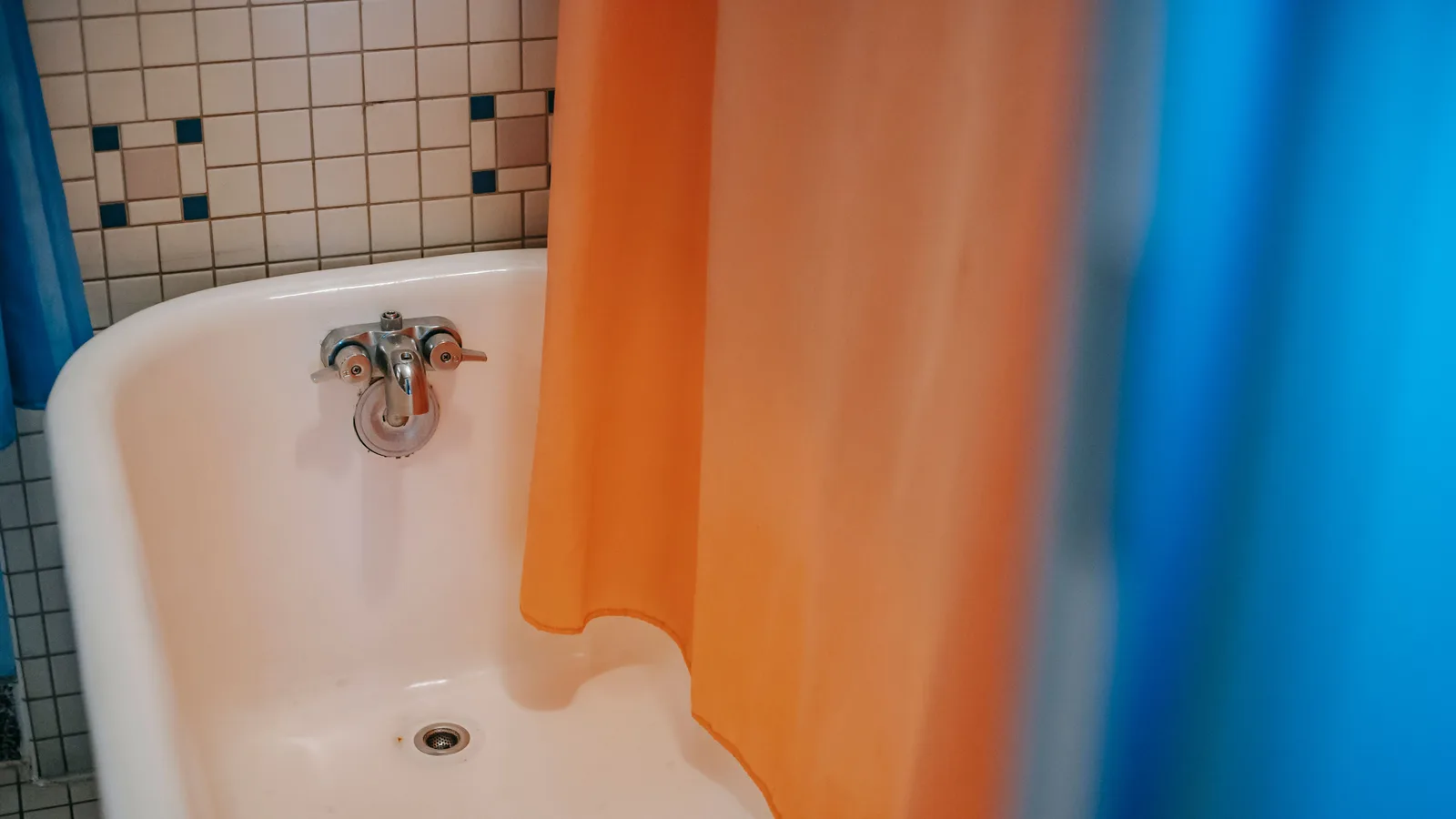
Choose a shower curtain liner by measured fit, material, weight, hem control, cleaning method, and the way it dries in the actual bathroom.
Choose a shower curtain liner that fits the actual opening, stays inside the tub, dries between uses, and has care instructions your household will follow. Measure rod width and rod-to-tub height before shopping. Then compare washable polyester, PEVA or EVA, and PVC vinyl by weight, top-edge reinforcement, hem control, odor, cleaning method, and replacement cost—not by “mildew resistant” marketing alone.
A shower curtain is the visible outer layer. A shower curtain liner is the water-management layer that hangs on the wet side and directs spray back into the tub or receptor. Some curtains are designed to work without a separate liner, but only the product instructions can establish that.
Measure the installed shower, not the package picture
Measure the usable rod span from wall to wall or between the rod stops. A liner needs enough width to close the opening with relaxed folds, but excessive width bunches and dries slowly. Record the distance from the hook or ring attachment point to just inside the tub or shower receptor. The liner should overlap the wet area without pooling on the tub floor or dragging on the bathroom floor.
Common packages are often labeled around 70 to 72 inches wide and 70 to 72 inches long, but a curved rod, claw-foot tub, walk-in opening, high rod, low ceiling, or accessible shower can require a different size or configuration. Treat the package size as a candidate, not a standard your room must accept.
- Measure the rod's usable horizontal span.
- Measure from the installed ring or hook to the desired lower edge inside the wet area.
- Check the tub lip, grab bars, transfer bench, controls, and any place the liner could catch.
- Confirm the package dimensions describe the finished liner, not a nominal category.
- Test that the closed liner directs water inward without blocking a safe exit.
Do not lower a tension rod so far that people hit it or raise it until the liner barely reaches the tub. A permanently mounted rod, unusual enclosure, or accessibility constraint may need an installer who can evaluate the wall and the user's transfer route.
Compare liner materials by the complete care cycle
| Material | Why people choose it | What to verify |
|---|---|---|
| Polyester fabric | Soft drape, many are machine washable, and some can serve as curtain and liner | Water-repellent finish, wash and dry limits, whether a separate liner is required, and how long it takes to dry |
| PEVA or EVA | Water-resistant sheet material without PVC and usually easy to wipe | Specific resin claim, odor, gauge, flexibility, cleaning restrictions, magnets or weights, and recycling availability |
| PVC vinyl | Low purchase price, water resistance, and broad availability | Odor, ventilation, care label, plasticizers or material disclosures, and local disposal options |
| Hybrid or coated fabric | Fabric feel with a water-shedding finish | Coating chemistry, durability, wash limits, and whether heat drying damages performance |
“Non-toxic,” “eco-friendly,” and “chemical-free” are not complete material descriptions. Look for a specific fiber or resin, product certifications where relevant, and an actual care label. A PEVA label distinguishes the liner from PVC, but it does not prove that every additive, seam, magnet, or package claim has been independently tested.
For a household sensitive to a new-product odor, open the package in a well-ventilated area and follow the maker's airing instructions. Return a product that causes persistent irritation or lacks the promised material disclosure. Do not try to mask odor with fragrance in a small bathroom.
Weight and hem design control daily behavior
A liner that blows inward can be too light for the air movement around that tub, too short to stay within the wet area, or affected by pressure and airflow from the shower. Heavier gauge can improve drape, but it can also take longer to dry and add load to weak rings. Compare the whole construction rather than choosing the largest gauge number.
Look for a reinforced top edge and rust-resistant or nonmetal grommets compatible with the hooks. At the bottom, magnets work only with a tub they can attract to; many fiberglass and acrylic tubs are not magnetic. Suction cups can help at smooth sidewalls but require routine cleaning and may not hold on textured surfaces. Sewn weights should remain enclosed and should not strike or scratch the tub.
Reject a liner whose lower edge sits on the floor outside the tub, catches under a bath mat, covers a drain, or interferes with a bench or grab bar. If the bathroom needs a better dry walking route, the bathroom refresh guide helps put leaks, ventilation, lighting, and safe movement ahead of decoration.
Use and dry the liner correctly
During the shower, place the liner inside the tub or receptor and keep the decorative curtain outside. Close enough of the opening to contain normal spray, but preserve safe entry and exit. A liner is not a waterproofing system; water escaping at a wall, failed caulk joint, shower pan, door track, or plumbing connection needs repair.
After showering, remove standing water from the tub, spread the liner across the rod so folds do not remain pressed together, and run the exhaust fan as needed to clear moisture. The fan should exhaust outdoors. Do not drape the liner over a heater, lamp, or sharp fixture to speed drying.
Wash or wipe only as directed. Polyester liners may permit a gentle machine cycle, while sheet liners may call for hand cleaning with mild soap. Never combine bleach with vinegar, ammonia, acids, or another cleaner. Keep products in their original containers and use the cleaning-supply storage guide to separate incompatible products.
Do not buy mold prevention as a label
A liner can reduce splash outside the shower, but recurring growth is a moisture-control warning. Clean the liner on schedule, dry it open, use an outdoor-vented fan, and correct dripping plumbing or failed seals. “Mildew resistant” may describe a treatment or material test; it does not keep a folded, dirty liner dry or protect wet drywall.
Replace the liner when growth or staining remains after allowed cleaning, the top edge tears, grommets pull out, the sheet becomes brittle, coating peels, seams leak, weights escape, or odor persists. If dark staining spreads to caulk, paint, ceiling, wallboard, or flooring, document where water is traveling and use the home water-leak plan. A new liner cannot repair hidden moisture.
The 4Homes weekly email
Every Tuesday: what changed for homeowners this week, plus our newest guides.
No spam. Unsubscribe anytime.
Plan the full cost, not just the shelf price
| Purchase | Typical planning range | Cost question |
|---|---|---|
| Basic PEVA, EVA, or PVC liner | About $5–$20 | Will the size, gauge, and hem stay in the wet area? |
| Washable polyester liner | About $15–$40 | Does the washer and drying method match the label? |
| Heavy-duty, extra-long, or specialty liner | About $20–$60 or more | Is the unusual size actually required by the measured opening? |
| Hooks or rings | About $5–$25 per set | Are they smooth, load-appropriate, and compatible with the rod and grommets? |
These planning ranges reflect Lowe's liner listings and manufacturer listings such as AmazerBath; material, size, gauge, hardware, and retailer can change the total. A custom track, accessible configuration, or permanently mounted rod is a separate project. Get an itemized installation scope rather than treating the liner price as the bathroom-project price.
Save money by measuring once, buying one returnable liner, and testing it with the existing curtain and rings before purchasing a coordinated set. A washable liner can lower replacement frequency only if the household will actually clean and dry it as directed. The lowest shelf price is not a saving when a too-short liner sends water onto the floor.
Use a five-minute buying checklist
- Finished width and length match the measured rod and tub.
- Material is named specifically, not only described with marketing language.
- Care instructions fit the available washer, drying space, and routine.
- Top edge, grommets, and hooks can support the liner without tearing.
- Magnets, suction cups, or weights work with the actual tub surface.
- Return terms allow a careful dry fit before shower use.
If hard-water deposits are part of the maintenance problem, use the showerhead mineral guide for the fixture and the shower-glass cleaning guide for compatible enclosures. Do not transfer an acidic descaler or abrasive method to an unknown liner.
The right liner is ordinary in the best way: it closes without strain, keeps its lower edge inside the wet area, dries when spread out, and survives the care routine printed on its label.
Sources used
Lowe's shower-curtain liner buying and product guidance; AmazerBath material, gauge, size, and care information; supplied Reddit and DIY search results as user-experience leads; U.S. Environmental Protection Agency bathroom moisture and ventilation guidance; CDC household-cleaner safety guidance; and each liner, curtain, rod, tub, and exhaust-fan manufacturer's instructions.
Frequently Asked Questions
What is the best material for a shower curtain liner?
There is no single best material. Washable polyester suits households willing to launder and dry it correctly. PEVA or EVA is easy to wipe and does not use PVC, but quality and longevity vary. PVC vinyl is inexpensive and water-resistant but may have stronger odor and different disposal concerns. Choose from the care label, weight, fit, and ventilation needs.
How thick should a shower curtain liner be?
Thickness is only one clue. A heavier liner may hang more steadily, while a lighter one may dry faster and cost less. Compare the seller’s stated gauge or weight, reinforced top edge, magnets or weights, hem construction, and care instructions. The liner still has to fit inside the tub and clear the floor.
Should a shower curtain liner go inside or outside the tub?
During a shower, the liner belongs inside the tub or shower receptor so water drains back into the wet area. The decorative curtain normally stays outside. After use, spread the liner within the enclosure so it can dry without bunching, while keeping it clear of heaters and following the product instructions.
How often should I replace a shower curtain liner?
Replace by condition, not a fixed calendar. Clean it as its label directs and replace it when seams, grommets, magnets, or waterproof surfaces fail; staining or growth remains after permitted cleaning; odor persists; or it no longer stays inside the wet area. Better drying can extend useful life.
Do shower curtain liners prevent mold?
A liner contains water; it does not prevent mold by itself. Spread it to dry, use a bathroom exhaust fan that vents outdoors, correct leaks, and clean it by the label. Antimicrobial marketing does not replace moisture control, and recurring growth on walls or ceilings needs the moisture source addressed.