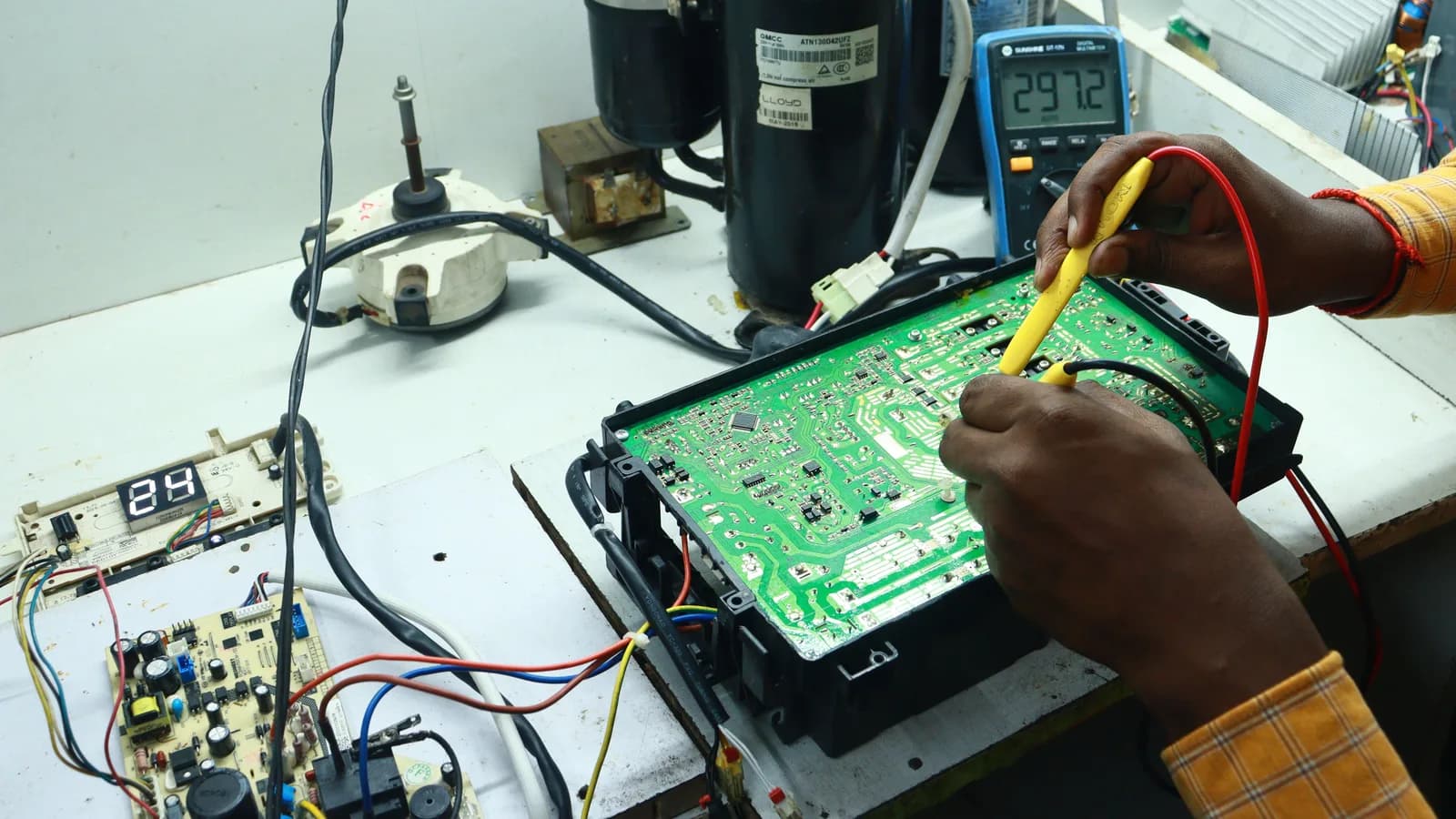
Compare exclusions, caps, service fees, contractor control, and repair reserves before deciding what the contract is worth.
A home warranty is worth considering only after the actual contract has been tested against exclusions, dollar caps, service fees, and the household's repair reserve. It is a service contract, not homeowners insurance, a maintenance plan, or a promise that every covered system will be repaired. The useful question is whether the contract improves the repair plan enough to justify giving up control over contractor choice, timing, and claim rules.
Inventory the house before reading benefits
List the heating and cooling equipment, water heater, major appliances, plumbing and electrical systems, pool or well equipment, and any specialty components. Add model, age if known, service history, current defects, manufacturer or installer warranty, retailer protection, credit-card benefit, and any maintenance requirement. A contract has little value where another warranty already responds, the item is excluded, or a known defect disqualifies the claim.
Separate repairs the household can absorb from failures that would be disruptive. Compare the service contract with a dedicated home repair reserve, not with having no plan at all. Cash reserves allow the owner to choose timing, contractor, equipment, and scope. A service contract may trade some of that control for a defined claims process. Neither replaces emergency planning or proper insurance.
Read the contract in claim order
Begin with definitions. What counts as normal wear and tear, a covered part, a covered system, a breakdown, a pre-existing condition, improper installation, and adequate maintenance? Then read exclusions, coverage limits, waiting periods, service charges, claim notice rules, and dispute terms. Marketing summaries and sample lists do not override the signed contract.
The Federal Trade Commission's consumer guidance on warranties explains the importance of knowing who stands behind coverage, how long it lasts, what the company will do, and what the owner must do. For recently built homes, the FTC's new-home warranty guidance also points to workmanship, materials, system coverage, exclusions, and claims procedures. Read the builder, manufacturer, and service-contract documents side by side so responsibility is not counted twice.
Use a clause test, not a star rating
Consider a hypothetical air-conditioning claim. The contract says a covered mechanical failure may be repaired, but excludes inadequate maintenance, inaccessible components, code upgrades, and certain refrigerant-related costs. It also limits the amount paid for that system and gives the company the right to select the contractor and decide between repair and replacement.
That paragraph does not prove a future claim will be approved or denied. It reveals the questions that matter: What records show maintenance? Is the equipment safely accessible? Does the limit include diagnosis, labor, parts, refrigerant, disposal, and code work? Who pays if the authorized repair addresses one failed part but not the condition that caused it? Can the owner obtain a second opinion, and does doing so require advance approval?
Run the same test with the house's other likely failures. A refrigerator clause may exclude food loss or sealed-system parts. A plumbing clause may cover a stoppage but exclude excavation, access through finished surfaces, or a collapsed line. A water-heater clause may omit venting or permit work. The point is not to predict every breakdown. It is to find where “covered” stops before a real repair is complete.
Inspect the operating model
Ask who accepts claims outside business hours, how quickly a request is assigned, whether the company has active contractors in the service area, and what happens if no contractor accepts the job. Learn whether a service charge applies to each visit, each trade, each issue, or each recall. Ask whether the fee is due when the claim is denied or when a contractor finds no covered failure.
Find out who chooses the contractor and replacement equipment, whether an owner can use a preferred contractor, how authorization works, and what remedy exists after an incomplete repair. Ask how cash-in-lieu offers are calculated and whether accepting one ends related coverage. Verify the company's licensing or registration where required and review complaint patterns with the relevant state regulator, not only testimonials displayed by the seller.
The 4Homes weekly email
Every Tuesday: what changed for homeowners this week, plus our newest guides.
No spam. Unsubscribe anytime.
Know the conditions that erase value
A low system limit, broad pre-existing-condition language, hard-to-prove maintenance rules, weak local contractor coverage, repeated service charges, mandatory arbitration terms, or exclusions for common completion work can make a contract poor protection for a particular house. The same is true when most equipment remains under strong manufacturer coverage or the household already has a repair reserve and trusted trades.
Do not buy coverage to delay an active problem. Existing leaks, unsafe wiring, combustion concerns, failed equipment, or known damage should be inspected and repaired through the right professional. Misstating a condition on an application can create a claim dispute and does nothing to make the home safer.
If the contract fits, preserve the evidence
Save the complete contract, declarations, amendments, receipts, cancellation rules, and claim contacts. Keep maintenance invoices, model and serial numbers, inspection reports, and photos. When a breakdown occurs, stop using unsafe equipment, limit further damage where it can be done safely, and notify the company through the required channel before authorizing work, unless emergency safety demands immediate action.
Record claim numbers, names, times, diagnoses, approvals, denials, and promised next steps. Request coverage decisions and the contract clause behind them in writing. A home warranty can fit a household that understands and accepts its boundaries. It is not a substitute for reading the contract, maintaining the house, carrying suitable insurance, or keeping enough control to respond when the repair falls outside the agreement.
Frequently Asked Questions
Is a home warranty worth it for your house?
A home warranty is a service contract, not homeowners insurance and not a promise that every breakdown will be paid. Its usefulness depends on the actual contract and your tolerance for restrictions.