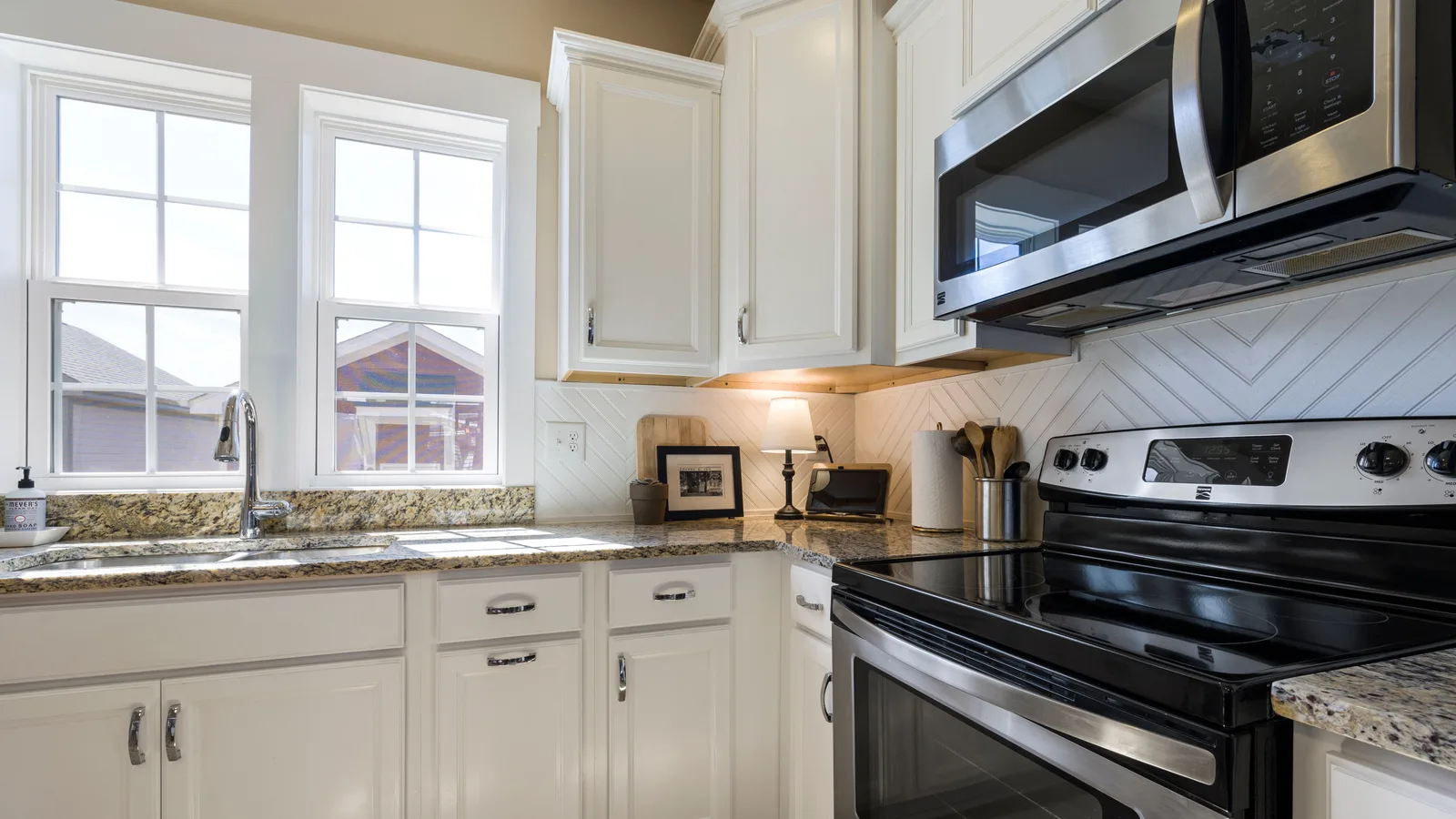
Try Off or Cancel once, clear the heat zone, and distinguish a normal cooling fan from continuing cooking heat before safe isolation and service.
If your oven won't turn off, press Off or Cancel once, clear everyone and anything flammable from the range, and determine from a safe distance whether cooking heat is continuing. For fire, escaping flame, smoke, gas odor, hissing, a carbon-monoxide alarm, or illness, leave the home and call emergency services from outside. Do not open the control panel or move the range.
The first diagnosis is simple: is the oven still adding heat, or is a cooling fan merely running? You do not need to name the failed component to make the safe decision.
Use the emergency branch first
Keep the oven door closed if there is smoke or fire inside. Opening it can add oxygen. If flames escape the oven or the fire is not contained, leave immediately, close the door behind you if that can be done safely, and call 911. Do not carry a burning pan through the house or pour water on a cooking fire.
If you smell gas, hear hissing, or suspect a fuel leak, do not touch a light switch, appliance control, plug, breaker, phone, or valve inside. Leave on foot and call 911 and the gas supplier from a safe location. The separate gas-smell first-response guide covers that branch in more detail.
Sparking, a burning electrical odor, a hot cord or plug, or a carbon-monoxide alarm also ends ordinary troubleshooting. Move away. Emergency responders or the correct utility should decide when the area is safe.
Tell retained heat and fan noise from active heating
Ovens remain hot for a long time, and some models run a cooling fan after the cooking cycle ends. Fan noise by itself is not proof of a stuck oven. From a safe distance with the door closed, note the time you pressed Off, what the display shows, whether a heating icon remains on, and whether a visible element or burner continues operating.
| What you observe after Off | What it may mean | Safe response |
|---|---|---|
| Fan continues, display says Off, no glowing element or increasing heat | Normal component cooling may be occurring. | Check the exact owner manual and continue observing from a safe distance. |
| Interior remains hot but heat appears to decline | Retained heat may be dissipating. | Keep the door closed, keep the area clear, and do not touch or test it. |
| Element stays bright, flame remains active, or temperature rises | The oven may still be producing cooking heat. | Arrange safe electrical or fuel isolation and qualified service. |
| Smoke, fire, gas odor, hissing, alarm, sparking, or worsening hot odor | An emergency condition may be present. | Leave and call the appropriate emergency service from outside. |
Do not open the door to feel for heat, put a thermometer inside, touch an element, or add food as a test. Look through the closed door only if the area remains safe. The owner manual can tell you the normal fan behavior and the proper cancel command for that model.
Make one calm shutdown attempt
- Press the normal Off or Cancel control once. Do not enter service mode or try an undocumented button sequence.
- Move people, pets, towels, paper, packaging, oils, and other combustibles away from the range.
- Keep the oven door closed and note the display, fan, visible element or flame, odor, and time.
- Use the emergency branch immediately if any fire, gas, smoke, electrical, or alarm warning appears.
- If cooking heat continues, isolate the energy source only by a known, safe, documented path or qualified help.
Do not keep pressing controls to see whether one “takes.” Repeated commands can erase useful display clues without changing the stuck-heating condition.
For an electric oven, isolate only a known circuit
An electric oven that is actively heating may need power disconnected at the correct breaker. That is reasonable only when a dry, undamaged electrical panel is safely reachable, the circuit is clearly identified, and no smoke, heat, water, sparking, or other hazard lies on the route. Operate the breaker once from the side, not while standing in front of a suspect panel.
If labels are uncertain, the panel feels hot, there is buzzing or damage, or the path is unsafe, do not guess. Leave and call the fire department or a qualified electrician. Never repeatedly cycle the breaker to test the oven. The electrical-panel safety guide explains the outside-only inspection boundary.
Removing power does not repair the oven. A relay or control can behave normally after a reset and fail again later. Leave the breaker off as directed and keep the appliance unavailable until service identifies the cause and verifies shutdown through a complete operating test.
For a gas or dual-fuel oven, do not move the range
A gas appliance has both fuel and, commonly, electrical controls. Follow the manufacturer and gas supplier emergency instructions. Do not pull the appliance away from the wall, reach behind a hot range, strain a flexible connector, disturb the anti-tip bracket, close an unfamiliar valve, or assume unplugging ends fuel flow.
If there is gas odor or hissing, leave without operating anything inside. If there is no odor and the concern is continuing heat, qualified appliance or gas service should handle an uncertain shutoff. The U.S. Consumer Product Safety Commission has documented gas-range control-panel failure scenarios in which a single component fault could cause unintended heating, which is why guessing at a control failure is not a homeowner repair.
Do not diagnose the component from the symptom
A stuck relay, control-board fault, shorted electric element, thermostat or sensor problem, damaged selector, wiring fault, or gas-control problem can produce overlapping symptoms. A model with a touch panel can fail differently from one with mechanical controls. The visible sign tells you to stop use; it does not prove which part needs replacement.
Keep covers closed. Do not remove the back, open a control panel, test live voltage, disconnect internal wiring, touch a heating element, adjust gas parts, or defeat a lock. Do not move a freestanding range to look behind it. Heat, weight, an anti-tip bracket, and the gas or electrical connection make that unsafe.
Check the model and serial number in the U.S. Consumer Product Safety Commission recall database from another device. Recall history matters: the agency has recalled electric ranges because heating elements could fail to turn off and has issued control-lock guidance for other range hazards. A recall match changes the repair path, so follow the recall remedy rather than arranging an unrelated paid repair.
The 4Homes weekly email
Every Tuesday: what changed for homeowners this week, plus our newest guides.
No spam. Unsubscribe anytime.
Prepare a useful service record
- Model and serial number, plus a photo of the rating label if safely available after cooling.
- Cooking mode, set temperature, start time, and what was in the oven.
- Time Off or Cancel was pressed and the exact display response.
- Whether a fan, element, flame, light, or temperature indicator continued.
- Any smoke, odor, sparking, alarm, error code, outage, surge, or recent cleaning.
- How and when power or fuel was isolated, and who performed that step.
Give the record to a qualified appliance technician. An electrician may also be needed for a damaged circuit, receptacle, disconnect, cord, or panel. A gas utility or licensed gas professional belongs in the path when fuel supply or shutoff is uncertain.
Typical oven repair costs
Angi reports a broad national oven-repair range of about $100 to $600, with many repairs around $200. Its published planning figures put control-board work around $150 to $300 and heating-element work around $150 to $400. Local labor, access, brand, part availability, gas versus electric construction, and whether the oven is built in can move the price.
Those figures are budgeting context, not a diagnosis. A technician should identify the failed condition before a part is ordered. Ask whether the service-call fee applies to the repair, whether the part is new and model-approved, how long the repair is warranted, and what test will prove the oven turns off normally.
Save money without taking another risk
Check warranty and recall status before paying for parts. Preserve the display code and event timing so the first service call starts with evidence instead of recreating an uncontrolled-heating event. Do not buy a control board from the symptom alone, and do not accept a list of possible parts bundled into one open-ended authorization.
For an older oven, compare the complete repair with replacement, including delivery, installation, electrical or gas changes, anti-tip setup, haul-away, and cabinet fit. Use the quote-comparison framework to keep diagnosis, part, labor, and optional work separate.
Do not reuse the oven until shutdown is proven
Cooling down does not clear the fault. Keep the oven unavailable and label it so another household member does not turn it on. After repair, the technician should run a normal cycle, command Off, verify that active heating stops, confirm expected cooling-fan behavior, and check that no error, odor, or abnormal temperature remains.
Save the diagnosis, part number, warranty, recall check, and shutoff method in the house file. If a surface burner on the same range clicks but does not light, use the separate gas-burner guide; do not fold a second symptom into the oven test.
Frequently Asked Questions
What should I do first if my oven will not turn off?
Press the normal Off or Cancel control once, clear people and combustible items from the range, and watch from a safe distance for continuing cooking heat. For fire, escaping flame, smoke, gas odor, hissing, a carbon-monoxide alarm, or illness, leave and call emergency services from outside.
Why does my oven sound like it is still running after I turn it off?
A cooling fan may run after cooking ends, so sound alone does not prove the oven is heating. Continuing radiant heat, a glowing element, visible burner flame, a rising displayed temperature, smoke, or worsening odor after Off is different and should be treated as uncontrolled heating.
Should I turn off the breaker if my electric oven keeps heating?
Only use the correct, clearly identified breaker when a dry, undamaged panel is safely reachable without approaching smoke, heat, water, or another hazard. Do not guess at circuits or repeatedly reset the breaker. If the path or label is uncertain, leave and call the fire department or a qualified electrician.
Can I use the oven again after it finally cools down?
Not until the cause is identified and qualified service verifies a normal shutoff. A stuck control may appear to reset after power is removed and still fail again. Check the model in the U.S. Consumer Product Safety Commission recall database and keep the appliance unavailable until repair and a full test are complete.