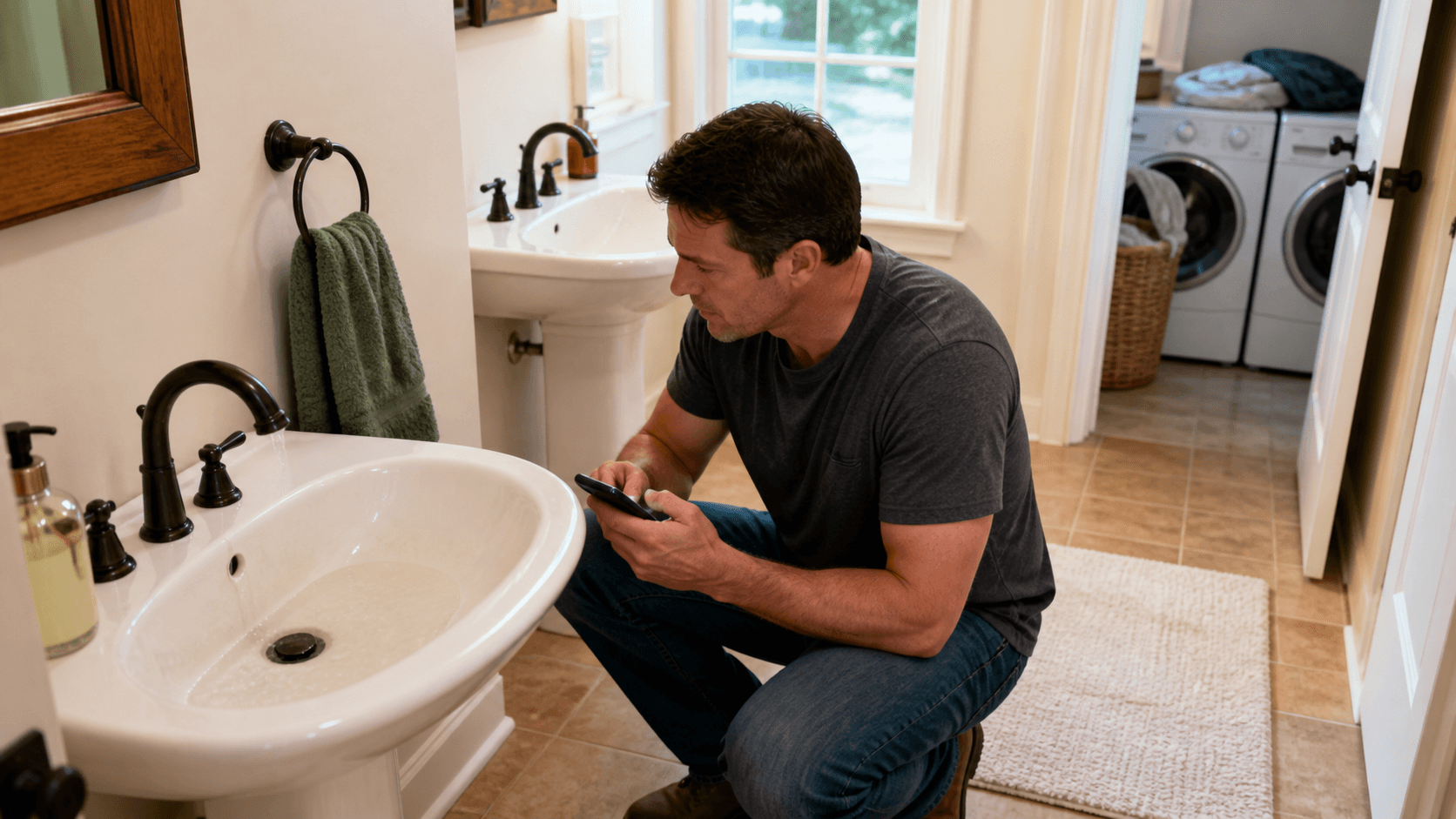
Map the affected fixtures before reaching for a remedy. The way drains interact is often more useful than the speed of one sink.
A slow drain becomes a sewer-line decision when the next wrong call can add wastewater, contaminate rooms, or send a homeowner to the wrong owner of the pipe. This page is about escalation, ownership, and a professional handoff. Stop creating new flow once the warning signs are clear.
Is my plumbing problem limited to one fixture, one branch drain, or the main sewer line?
A single fixture with no cross-fixture reaction may be a local plumber visit. Gurgling toilets, wastewater at the lowest drain, several fixtures changing together, sewage odor, outdoor surfacing, or symptoms after heavy rain move the issue into main-line, utility, shared-line, or septic territory. Do not keep flushing, running laundry, or using the shower to collect more proof.
| What you notice | Likely level | What to do |
|---|---|---|
| One sink or tub drains slowly, nothing else reacts | Single fixture | A local plumber visit is usually enough. |
| Two or more fixtures react together, even if they aren't on the same wall or floor | Likely branch drain | Note exactly which fixtures react together before calling for service — the plumbing layout, not the room layout, determines what's actually connected. |
| Water or gurgling rises at the lowest drain (often a basement floor drain or tub) when another fixture runs | Main line | Stop using water; this often signals a main-line blockage affecting the whole house. |
| Neighbors or a shared building report the same symptom at the same time | Shared or public line | Contact the local sewer utility before authorizing private excavation work. |
| Symptoms appear mainly after heavy rain, at a septic property, or with outdoor wet spots | Septic or stormwater-related | Call a qualified septic provider rather than a general drain service. |
What usually causes a slow drain versus a main-line problem
- Grease and soap buildup narrows a single drain over months, usually in a kitchen sink or a bathroom that drains slowly without affecting anything else.
- Hair and debris catch at a trap or branch junction, often fixable with a plunger or a drain snake at that one fixture.
- Tree roots intrude through joints in an older main line, commonly on properties with mature trees near the lateral — this tends to show up as a slow-building, repeat problem rather than a sudden one.
- A bellied or settled pipe section holds standing water and solids, which can make a main line slow intermittently even when nothing is technically blocked.
- Flushed wipes, grease, or feminine products can catch at a bend anywhere in the system, including well downstream of the fixture where the slowdown is noticed.
- Heavy rain and high groundwater can overwhelm a public main or a septic drainfield, producing symptoms that look like a private blockage but aren't.
The cause matters less than the scope. A plumber or utility will usually need the scope (one fixture, one branch, the main line, or a shared line) before the cause can be diagnosed with a camera, rather than the other way around.
Set a sewage boundary
If wastewater comes up through a drain, tub, shower, sink, toilet, or cleanout, keep people and pets away, stop water use, and avoid moving contaminated items through clean rooms without a containment plan. If water is near electrical equipment, stay out and call emergency or qualified help. Tell any responder whether chemicals were poured into the system.
Find the ownership path before authorizing work
Check the local sewer utility's backup instructions, landlord or association obligations, and whether neighbors or shared buildings report the same issue. Ownership rules vary by city; an owner-side lateral in one place may have a different public/private split elsewhere. Call the utility first when a public-main issue, street surfacing, or local instruction makes that the required path.
A cleared line restores use. It does not prove who owns the pipe or why the restriction formed.
Give the professional a decision record
Write the first symptom time, fixtures affected, lowest drain, any cross-fixture response, rainfall or flood conditions, recent plumbing work, prior backups, chemical use, public sewer or septic status, and photos from a safe distance. Ask whether the visit will only clear flow, also locate the restriction, or include camera evidence and a written repair recommendation.
The 4Homes weekly email
Every Tuesday: what changed for homeowners this week, plus our newest guides.
No spam. Unsubscribe anytime.
Use a septic branch when the property is onsite
Slow fixtures, floor-drain overflow, gurgling, outdoor sewage, damp drainfield areas, or sewage odor at a septic property call for a qualified septic provider or local health department, not ordinary drain improvisation. Do not open tanks, drive over saturated components, or order pumping during flood conditions without local professional guidance.
What's reasonable to try yourself, and what to leave alone
- Reasonable to try: a plunger on a single slow fixture, or clearing visible hair or debris from a sink or tub stopper by hand.
- Leave alone: chemical drain cleaners once more than one fixture is affected (they can mask the real cause and complicate a professional's diagnosis), pouring hot water or grease-cutting products down a drain expecting it to clear a deeper blockage (it can just push grease further into the line, where it re-solidifies), opening a septic tank, and any excavation or main-line work — those require licensed trades and, often, permits.
- Call immediately rather than troubleshoot: wastewater actively rising at any drain, sewage odor combined with multiple slow fixtures, or symptoms appearing right after heavy rain at a property with known drainage issues.
A plumbing snake or auger rented from a hardware store can sometimes clear a single-fixture blockage, but using one on what's actually a main-line problem can push debris further into the line or damage older pipe. If plunging and a basic drain tool don't resolve a single, isolated slow drain within one attempt, that's the point to call a professional rather than escalate the tools.
Close the job with evidence, not a guess
Save the service notes, marked location, video link, photos, cleanup records, utility case number, and the contractor's stated cause. If the recommendation is excavation, lining, hydro-jetting, septic repair, or repeat chemical treatment, ask what evidence supports it and who owns the affected section before authorizing the next scope. Use the water-leak plan for indoor contamination and drying records.
Frequently Asked Questions
Is my plumbing problem limited to one fixture, one branch drain, or the main sewer line?
Check whether the slowdown affects only one fixture, several fixtures on the same branch, or causes wastewater or gurgling to rise at the home's lowest drain when something else runs. One fixture alone is usually a local repair; multiple fixtures reacting together, or water rising at the lowest drain, points to a branch or main-line problem that needs a professional, not a plunger.
What does it mean when my toilet gurgles when I run the washing machine or shower?
Gurgling in one fixture when a different fixture is used is a classic sign of a shared branch or main-line restriction, not an isolated problem with the gurgling fixture itself. Stop using water and have the situation assessed before it progresses to a backup.
Should I call a plumber or the city sewer utility first?
If only your own fixtures are affected and there's no sign neighbors have the same issue, a licensed plumber is usually the right first call. If the symptom is at the home's lowest drain, follows a public-main pattern, or neighbors report the same thing at the same time, contact the local sewer utility before authorizing private excavation — ownership and response obligations vary by city.
Is a slow drain always a sign of a bigger sewer-line problem?
No. A single slow fixture with no other symptoms is often a local, inexpensive fix — grease, hair, or minor debris at that one drain. It becomes a bigger concern when multiple fixtures slow together, wastewater rises at the lowest drain, or there's sewage odor or outdoor surfacing.
What should I do if wastewater is backing up into my house?
Stop all water use immediately, keep people and pets away from the affected area, and avoid contact with contaminated water. If it's near electrical equipment, stay out and call for emergency help. Contact a licensed plumber or your sewer utility right away rather than attempting to clear it yourself.