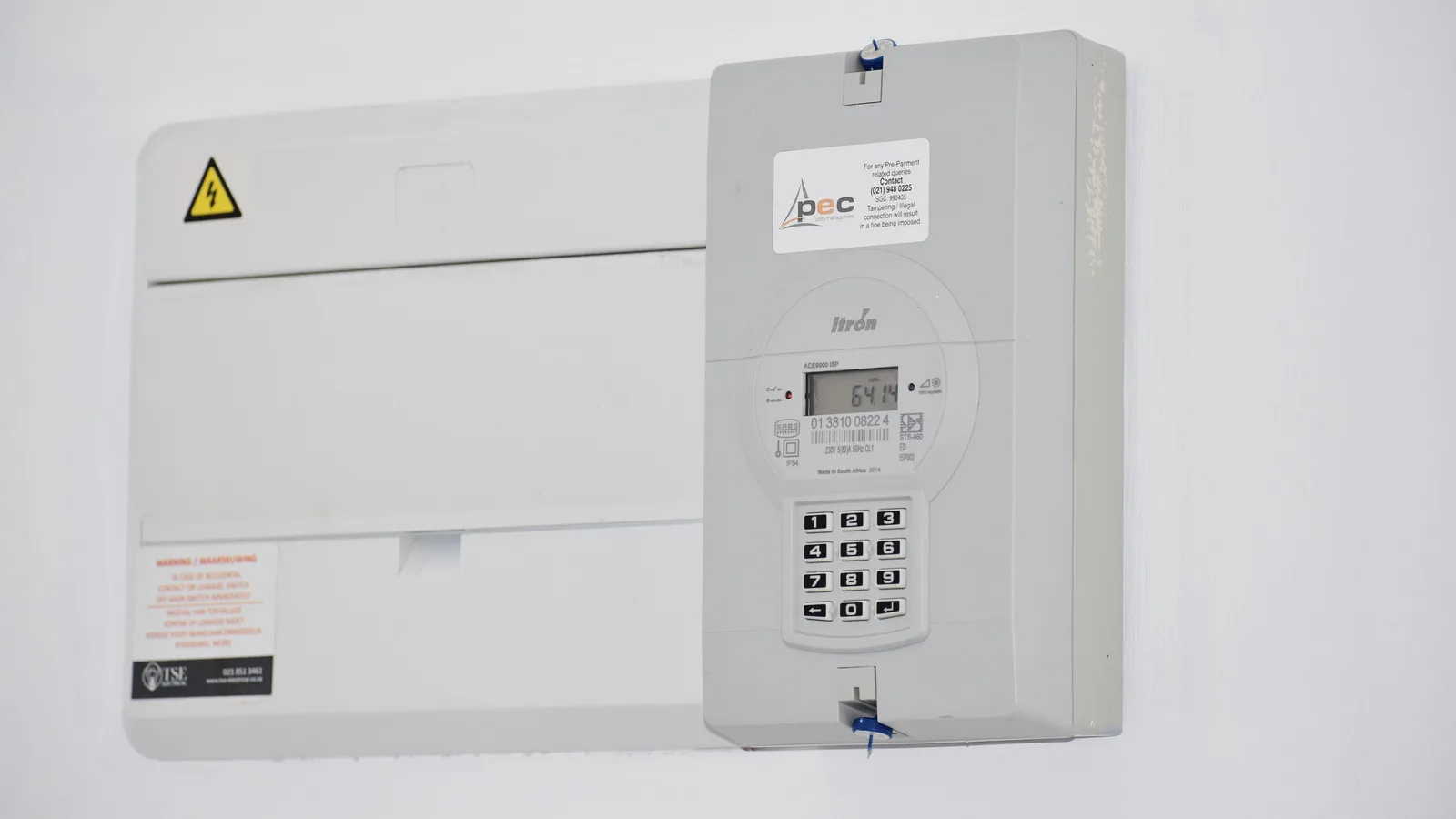
Match the SPD to the service, panel, listing, installation point, and fault-current conditions before comparing protection ratings or price.
Choose a whole-house surge protector by matching its UL type, voltage and wiring configuration, panel connection, short-circuit rating, and installation instructions to your actual service. Then compare protection ratings and status indicators. Do not buy from the biggest kA or joule number alone, and do not open the panel to install or investigate one yourself.
Start with the service, not the product shelf
A surge protective device, or SPD, is not sized the way a main breaker is. A 200-amp service rating describes the continuous current class of the service equipment. The SPD is connected for short transient events, so “200-amp whole-house surge protector” is not the specification an electrician needs.
Before comparing models, have the electrician identify the nominal system voltage and configuration, service-equipment layout, main panel manufacturer and catalog number, indoor or outdoor location, available panel spaces, available fault current, grounding and bonding condition, and any solar, generator, transfer switch, subpanel, or meter equipment that changes the protection plan. You can photograph labels visible from outside or through the normal hinged panel door. Stop there. Do not remove the dead front, touch a breaker or conductor, or rely on switching off the main; service conductors can remain energized.
My view: a product recommendation made before someone identifies the service is only a shopping guess. A familiar brand and an impressive capacity number cannot correct the wrong voltage, an incompatible plug-on design, a low SCCR for the installation point, or a lead route that weakens performance.
Choose the UL type by where it will be installed
| UL 1449 type | Intended location | Buying implication |
|---|---|---|
| Type 1 | May be installed on the line side or load side of the service overcurrent device, as its listing and instructions allow | Useful where the service layout and utility or equipment rules support that connection; it is not permission for homeowner meter or service work |
| Type 2 | Load side of the service overcurrent device, including panel locations | A common retrofit path, but the breaker, panel fit, conductor route, and mounting still have to match the listed instructions |
| Type 3 | Point of use, such as a listed plug-in protector at equipment | A downstream layer for selected devices, not a substitute for the Type 1 or Type 2 device required at dwelling service equipment under NEC 230.67 |
These are installation categories, not gold, silver, and bronze protection grades. UL 1449 defines Type 1, Type 2, and Type 3 by intended placement. NFPA's explanation of 2020 NEC Section 230.67 says new and replaced dwelling-unit services covered by that code need a Type 1 or Type 2 SPD at or immediately adjacent to the service equipment. Local adoption and amendments decide what applies to an existing home today, so the permit authority and electrician must confirm the rule for your project.
Read the label without mixing up the numbers
Ask for the product data sheet and installation instructions, not a cropped retailer description. Put the exact catalog number at the top of the quote. Then compare these fields on the same basis:
| Label or data-sheet field | What it tells you | Comparison trap |
|---|---|---|
| Nominal system voltage and wiring | The power system the device is designed to protect, such as a stated residential split-phase configuration | Assuming every product sold as “whole house” fits every service |
| UL 1449 listing and SPD Type | That the complete device was evaluated for the named category and installation location | Confusing a recognized internal component with a listed complete SPD |
| VPR, or voltage protection rating | The measured limiting voltage under the UL test, shown by protection mode | Calling VPR the turn-on point, or comparing different modes and test bases as if they were identical |
| In, nominal discharge current | The current level used for the UL duty-cycle test; Eaton explains that the SPD is subjected to 15 impulses at the selected In | Confusing In with the manufacturer's maximum surge-current claim |
| Surge-current capacity or Imax | A manufacturer-declared maximum surge-current figure, often promoted in kA | Comparing a per-mode number with a per-phase or combined total |
| SCCR | The short-circuit current rating; NEMA says it must be at least the available fault current at the installation point | Mistaking SCCR for surge capacity. They describe different events |
| MCOV | The maximum continuous operating voltage permitted for each mode | Buying a device whose voltage and configuration do not match the system |
| Enclosure and environment | Where the unit may be mounted, including indoor or outdoor limits | Assuming a weather-resistant enclosure makes every mounting location acceptable |
Lower VPR can mean less let-through voltage when you compare the same UL test and protection mode, but one number cannot rescue a poor installation. Eaton's installation guidance says excessive lead length and sharp bends degrade performance. That is why the quote should name the mounting point and connection method, not merely promise that the unit will be “near the panel.”
Make status and replacement visible on day one
Surge-protection elements do not last forever, and ordinary household power can stay on after protection is lost. Buy a model with a protection-status indicator you can see without removing a panel cover. Two phase indicators, an audible alarm, a remote contact, or replaceable modules may be useful, but only if someone in the household knows what each signal means.
At handoff, have the electrician show the normal indication, the loss-of-protection indication, and which manual page defines both. Photograph the working display and label. Add the catalog number, installation date, warranty, and a reminder to check the indicator after major storms or known utility events. Schneider Electric's SPD instructions call for periodic inspection of status lights and prompt replacement when an alarm state exists.
Do not assume green always means protected or that an unlit lamp always means failed. Indicator logic varies. Loss of supply to the SPD, an installation problem, or end of life can look similar to a homeowner, which is why a changed display belongs with the electrician and the model instructions.
Price the complete installed scope
Angi's 2026 national cost guide puts whole-house surge-protector installation at about $70 to $700, with a $300 average, and lists Type 1 and Type 2 devices at roughly $50 to $250 before installation. Treat that as a broad planning range. A standalone service call, permit, outdoor enclosure, utility coordination, panel compatibility issue, correction of grounding or bonding defects, or other required electrical work can move the quote.
A useful proposal identifies the exact SPD, installation location, compatible breaker or integral mounting method, enclosure, permit and inspection, electrician labor, status test, label, warranty registration, and replacement method. It should separate unrelated panel repairs or a service upgrade rather than hiding them inside a “surge package.” Use the contractor quote comparison guide to put competing bids on the same scope.
The cheapest sensible move is often timing, not a cheaper device. Ask for the SPD as an alternate when you already have permitted panel or service work planned; mobilization and access are already part of that job. Get two or three itemized quotes for a standalone retrofit. Check whether the utility offers a meter-based program, but compare its ownership, monthly fees, replacement terms, and protection scope with a purchased device instead of assuming “utility supplied” is less expensive.
Plan layered protection around real entry paths
A panel-level SPD is the first layer, not a force field. NEMA's Surge Protection Institute recommends distributed or cascading protection: a service-entrance device, downstream protection where distance or subpanels justify it, and point-of-use SPDs near selected sensitive equipment. Use actual surge-protecting products, not ordinary outlet strips.
List equipment that matters because of replacement cost, lost data, safety, or downtime. Computers, network gear, entertainment equipment, and other plug-in electronics may warrant listed point-of-use protection. A UPS can add battery backup for equipment that must ride through an outage, but battery backup and surge protection are separate specifications.
Also map conductors that do not enter through the power panel. Coax, phone, data, antennas, gates, outbuildings, and similar paths need a coordinated assessment with proper bonding and protection for those systems. Separate, improvised grounds can create dangerous voltage differences. Do not add a ground rod or alter bonding as a surge-protection shortcut.
The 4Homes weekly email
Every Tuesday: what changed for homeowners this week, plus our newest guides.
No spam. Unsubscribe anytime.
When the electrician is required
Use a licensed electrician for every Type 1 or Type 2 installation, replacement, panel-space decision, breaker selection, service or meter connection, fault-current check, and grounding or bonding correction. Utility coordination and a permit or inspection may also be required. The main disconnect does not make all service equipment safe for homeowner work.
Stop shopping and request an electrical evaluation first if the panel has water exposure, rust, heat, buzzing, burning odor, discoloration, damaged covers, repeated trips, known obsolete equipment, or unidentified alterations. The outside-only electrical panel safety check keeps that inspection on the safe side of the cover. If replacement is already being discussed, use the electrical panel replacement quote checklist to separate an SPD line item from the rest of the service scope.
Whole-house surge protector buying checklist
- Record the service voltage and configuration, panel make and model, service layout, location, and any solar, generator, transfer equipment, or subpanels.
- Require a listed complete SPD under UL 1449, with Type 1 or Type 2 chosen for its actual connection point.
- Match nominal voltage, wiring configuration, protection modes, MCOV, SCCR, breaker or connection method, enclosure, and panel compatibility.
- Compare VPR by the same protection mode and test basis. Compare In separately from maximum surge-current claims.
- Ask the installer to state how the connection will stay short and direct while following the exact product instructions.
- Choose a visible protection-status indicator and get its normal and fault meanings in writing.
- Price the device, labor, breaker or mounting parts, permit, inspection, testing, labeling, warranty, and any correction work separately.
- Keep listed point-of-use protection on selected electronics and assess non-power entry paths.
- Photograph the indicator and label at handoff, then check the visible status after major electrical events without opening the panel.
Related guides
- Check an electrical panel safely from the outside.
- Compare an electrical panel replacement scope.
- Compare contractor quotes line by line.
- Respond safely when a breaker keeps tripping.
- Plan backup power without confusing it with surge protection.
Sources used
UL Solutions, UL 1449 Standard for Surge Protective Devices and UL surge-protective-device certification material; National Fire Protection Association, explanation of 2020 NEC Section 230.67 for dwelling-unit services; NEMA Surge Protection Institute, SPD type, installation, grounding and layered-protection guidance; Eaton, UL 1449 rating explanations and whole-home SPD installation instructions; Schneider Electric, whole-home SPD product information and status-indicator instructions; Angi, 2026 national whole-house surge protector cost guide; and the exact proposed manufacturer's data sheet, installation manual, listing, and warranty.
Frequently Asked Questions
What size whole-house surge protector do I need for a 200-amp service?
A 200-amp service does not call for a 200-amp SPD. The service rating describes continuous load, while the SPD is selected by system voltage and configuration, Type 1 or Type 2 location, UL 1449 listing, VPR, nominal discharge current, surge-current capacity, SCCR, panel compatibility, and installation instructions. Ask the electrician to show those fields on the proposed model rather than converting 200 amps into an unsupported kA rule.
Is a Type 1 or Type 2 surge protector better for a house?
Neither type is universally better. UL 1449 permits a Type 1 SPD on the line or load side of the service overcurrent device, while Type 2 belongs on the load side. The correct choice depends on the service layout, panel, utility rules, available space, and the manufacturer's listed installation method. Both types can satisfy the dwelling-service requirement in NEC 230.67 where that edition has been adopted.
Do I still need surge-protecting power strips with a whole-house surge protector?
Use listed point-of-use surge protection for sensitive or valuable plug-in electronics when the product instructions and setup allow it. NEMA describes this as layered or cascading protection: a service- or panel-level SPD handles the first layer, while downstream protection is placed closer to selected equipment. A basic power strip without a surge-protection rating is not the same thing.
Will a whole-house surge protector protect against lightning?
It can limit transient voltage that reaches the electrical system from lightning-related events, but it does not make a home immune to a direct strike and is not a complete lightning-protection system. UL 1449 separately points SPDs used as part of a lightning-protection system to UL 96A requirements. Homes needing lightning protection require a qualified assessment of the whole system, not a larger SPD claim alone.
How do I know when a whole-house surge protector needs replacement?
Read the exact model's status legend and check the visible indicator without opening the panel. Schneider Electric instructions say a missing phase-status light can mean loss of surge suppression and call for replacement by qualified electrical personnel. Have the unit assessed after a known major surge, and replace or service it when its indicator or alarm shows the state named in the manual; there is no single replacement interval for every home and model.