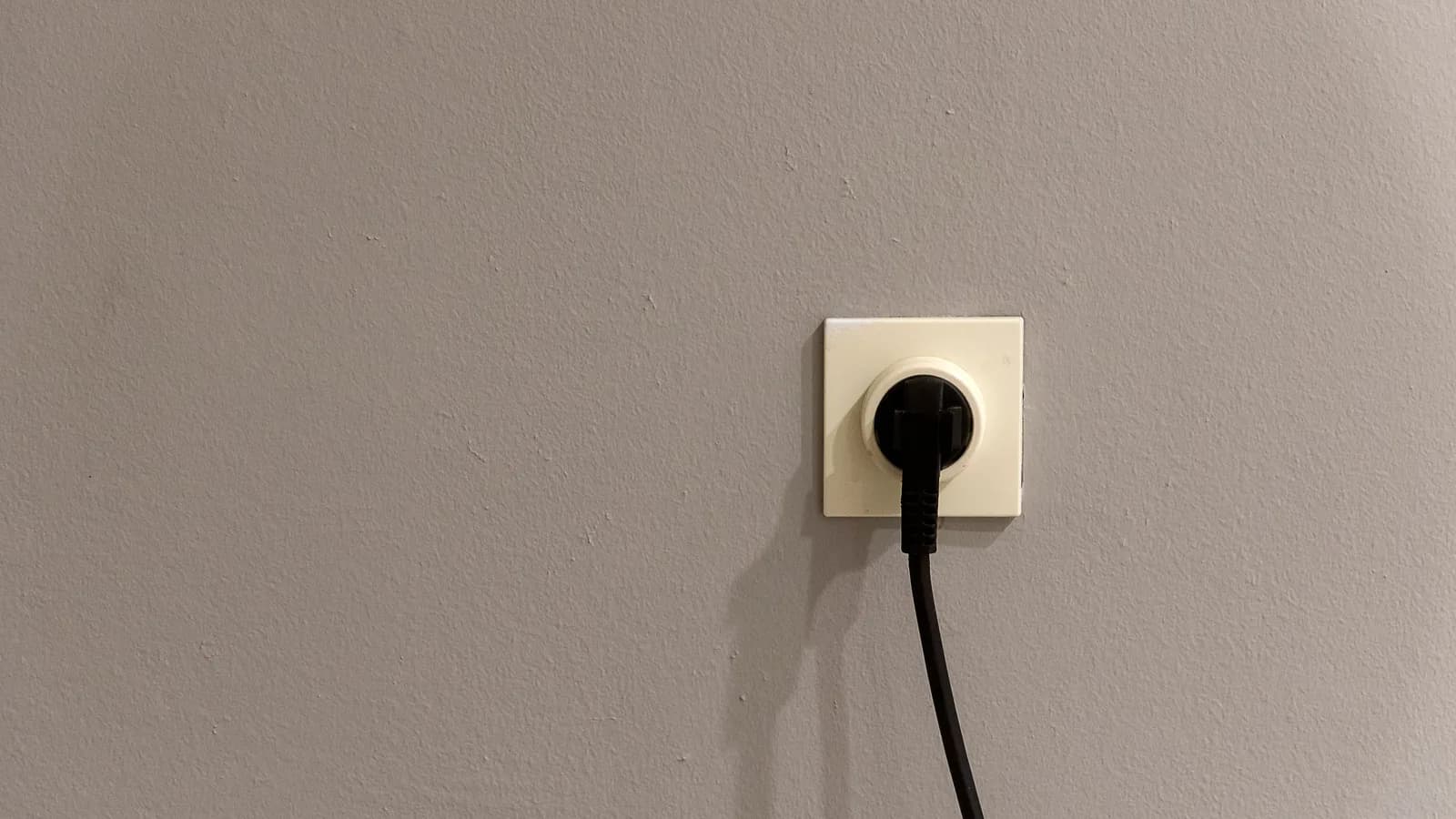
Stop using the outlet, cut power only from a safe panel, and give an electrician the event record without another energized test.
A sparking outlet is a stop-using-it event. Keep your hands off the outlet and plug, move people and pets away, and watch for smoke, flame, heat, buzzing, a burning-plastic odor, discoloration, or sparks that continue. If there is fire, smoke, or an immediate threat, leave and call 911.
Do not throw water on the outlet. Do not pull a plug from a hot, melted, smoking, or actively sparking receptacle. And do not remove the faceplate to look behind it.
Choose the safest way to cut power
If the sparking has stopped and the electrical panel is in a dry, undamaged, safely reachable place, turn off the clearly labeled branch breaker without removing the panel cover. If you cannot identify the circuit with confidence, the main disconnect may be the safer option only when it is familiar, accessible, and there is no evidence of damage at the panel or service.
Stay away and call 911, the utility, or an electrician when the panel is wet, hot, buzzing, sparking, damaged, blocked by smoke, or near the affected outlet. A fallen service line or sparking at the meter belongs to the utility and emergency responders, not the household panel.
What happened?
Give the electrician a short factual description instead of an amateur diagnosis:
- Did the spark occur when a plug went in, came out, or while nothing was being touched?
- Was it a tiny flash at the plug blades or a bright flash or shower of sparks from the outlet, wall, cord, or service equipment?
- What appliance was connected, and was it starting, heating, or under load?
- Did a breaker or GFCI trip? Did lights dim or other outlets lose power?
- Was there moisture, a recent leak, cleaning, construction, a loose plug, or visible damage?
The CPSC lists arcs or sparks, sizzling or buzzing, hot or discolored covers, overheating odors, loose plugs, damaged insulation, and even a mild shock as warning signs. Its wiring guide is explicit that defective electrical-system diagnosis and repair belong to qualified electrical professionals.
Do not run a “one more try” test
Leave the breaker off and the outlet unused until it is assessed. Do not reconnect the appliance elsewhere if its plug or cord is scorched, melted, cracked, loose, or otherwise damaged. Do not use an extension cord to route around the dead outlet, replace the receptacle as a guess, install a larger breaker, or tape over damage and restore power.
My opinion is deliberately conservative: after visible arcing, there is no useful homeowner reset test. The possible causes may be small or serious, but another energized trial cannot tell a homeowner whether the trouble is a worn receptacle, loose connection, damaged cord, overloaded circuit, water exposure, failing appliance, or upstream wiring.
The 4Homes weekly email
Every Tuesday: what changed for homeowners this week, plus our newest guides.
No spam. Unsubscribe anytime.
Make the service call specific
Photograph the outlet and plug from a safe distance after power is off. Record the room, breaker label, appliance make and model, time, odor, sound, heat or discoloration, weather or water conditions, and prior work on the circuit. Tell the electrician if the home has older wiring or if plugs have felt loose there. The U.S. Fire Administration advises replacing outlets that no longer hold plugs snugly and warns against overloaded outlets and power strips.
Ask for a written diagnosis that identifies the failed component, the condition found, the repair made, and any additional testing recommended. If the electrician finds a circuit or panel issue, connect the record to the repeated-breaker-trip guide or the closed-panel safety check.
Before power goes back on
Confirm that damaged equipment has been removed from service, the electrician has stated the outlet or circuit is safe to energize, and smoke alarms are operating. Keep the invoice and photos. If the cause involved water, heat damage, or an appliance fault, close that part of the repair too; a new outlet does not make a wet wall or damaged appliance safe.