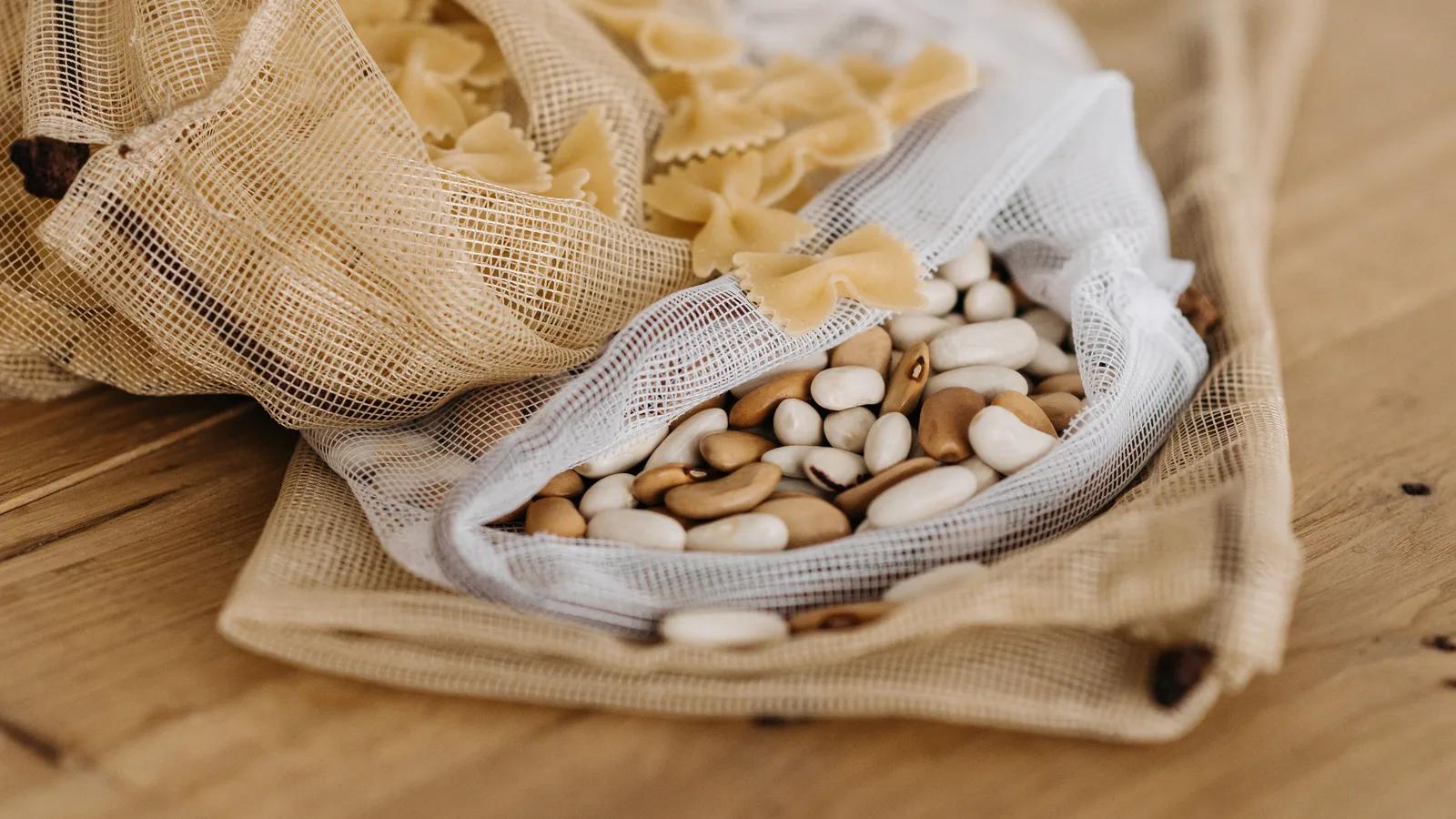
Keep a clean working set beside the departure route, with separate food-safety groups and a return routine the household can repeat.
Store reusable shopping bags by limiting the set, cleaning and drying it, folding each bag to one repeatable size, and placing the group beside the route you use to leave home. One washable bin, basket, or sturdy tote is usually enough. Keep raw-meat bags and insulated bags distinct, and do not compress anything damp.
The storage system has one job: clean bags should leave for the store and return to the same reset point after unloading. If they pile up in a closet but never make it into the car, the location is wrong.
Count bags by a real shopping trip
Gather reusable totes from the kitchen, entry, car, pantry, and coat closet. Remove promotional bags you dislike using, torn handles, peeling insulation, permanent odors, and duplicates beyond a normal need. Then count the bags used on the household's largest routine grocery trip. Keep that working set plus a modest backup for an unplanned stop.
Do not preserve every bag because it was free. A smaller set cycles through washing and return more reliably. Our view: the bag that folds neatly but is awkward to carry has already failed the test.
| Bag group | Storage rule | Reason |
|---|---|---|
| General grocery totes | Fold or roll to one size and stand upright | Each bag stays visible and leaves without disturbing the pile |
| Raw meat, poultry, or seafood bag | Label and keep separate after washing | Reduces cross-contact with produce and ready-to-eat foods |
| Insulated bags | Wipe, air fully, then store loosely | Trapped moisture and odor are easier to notice |
| Produce bags | Keep in a small washable pouch | Stops light bags from tangling with handles |
| Damaged or unwanted bags | Repair, repurpose, or use an accepted disposal route | They should not consume the working zone |
Clean food bags before they disappear into storage
The U.S. Department of Agriculture advises washing reusable grocery bags often and using separate bags for raw meat, poultry, and seafood. Follow the care label: some fabric bags tolerate a washing machine, while laminated, insulated, or rigid bags may call for wiping or hand washing. Do not assume a hot wash or dryer is safe for coatings, seams, inserts, or printed material.
Turn pockets and gussets out where the design permits, remove crumbs, and let the entire bag dry. Check handle stitching and the bottom while it is open. A damp bag folded tightly into another bag can hide odor and growth until the next trip.
Choose a reset point, not a hiding place
Map the route from unloading groceries to leaving for the next trip. Good locations include an entry cabinet, a pantry shelf close to the exit, a mudroom cubby, or a hook and bin by the garage door. Avoid blocking electrical panels, heating equipment, vents, stairs, or door swing. Keep bags away from chemicals, pet supplies, and dirty footwear.
A car set can solve forgotten bags, but it still needs a home routine. Heat, moisture, food residue, and pests make a trunk a poor permanent closet for the whole collection. Return used bags indoors for inspection and washing, then send one clean bundle back to the vehicle.
Fold for retrieval, not for a perfect photo
- Empty every pocket. Remove receipts, produce ties, coupons, and crumbs.
- Check that it is clean and dry. Send questionable bags to the wash area rather than the storage bin.
- Flatten the base. Fold gussets inward so the bag becomes a simple rectangle.
- Bring handles inside. Keep straps from snagging other bags unless the design uses a handle as its closure.
- Fold or roll once more. Use the same finished width for most soft totes.
- File upright. Place bags front to back so one can leave without lifting the stack.
- Set the refill limit. When the container is full, edit before adding another bag.
Large insulated bags may store better upright and open rather than folded. Small produce bags can live in one pouch inside the main bin. The point is a quick return, not a complicated origami rule that nobody follows after a late grocery run.
Use a container only when it solves a measured problem
Start with a sound basket, box, magazine file, or one of the reusable bags you already own. Measure the shelf depth, height, and door clearance. Test the location for two weeks. If bags fall out, add a bin; if they are forgotten, move the reset point rather than buying a nicer bin.
For dated cost planning, a reused container costs $0. Current Target examples include an 11-inch fabric bin at $5 and a 12-by-12-by-8-inch open-front bin at $13 before tax, shipping, or sale changes. The Container Store currently lists an Everything Organizer open-front bin at $29.99 regular price. Those are examples, not a required shopping list. A specialized holder is rarely necessary, and wall-mounted dispensers add hardware, mounting, and return risk.
The 4Homes weekly email
Every Tuesday: what changed for homeowners this week, plus our newest guides.
No spam. Unsubscribe anytime.
Keep the storage area safe
Do not hang a heavy mass of bags from a knob, weak adhesive hook, sprinkler pipe, utility control, or appliance handle. Keep long loops away from small children and pets. A floor pile beside a door or stair is a trip and egress problem, even when every bag is neatly nested.
If adding a wall rail or pullout, verify the wall, cabinet, fasteners, expected load, and hidden services. Stop if drilling meets unexplained resistance or the cabinet material cannot hold the hardware. A carpenter or qualified handyman can handle uncertain mounting; a bag-storage project does not justify blind drilling near wiring or plumbing.
Build a return loop the household will use
Put a temporary “to wash” spot near the laundry or kitchen, not inside the clean bag bin. After unloading, shake out clean bags and return them immediately. Wash soiled bags by label, dry them completely, and move them back to the departure point. Once a month at first, check whether bags are accumulating elsewhere. Those strays identify where the loop breaks.
Pair bag storage with the junk-drawer reset so receipts and small shopping items have a destination. The deep-pantry guide helps protect food storage space, while the cleaning-supply guide keeps chemicals out of the bag zone. If the entry is tight, use the small-entry storage plan before adding hooks.
Reusable bag storage checklist
- Gather bags from every room and vehicle.
- Keep a working set based on the largest routine trip.
- Separate bags used for raw meat, poultry, and seafood.
- Wash by the label and dry every seam, pocket, and insert.
- Choose one reset point on the departure route.
- Fold soft totes to one size and file them upright.
- Store insulated bags loosely and keep the floor and door clear.
- Edit the set whenever the container reaches its limit.
Sources used
U.S. Department of Agriculture food-safety guidance for reusable grocery bags and separating raw animal products; Martha Stewart, How to Organize and Store Reusable Shopping Bags, for the fold-or-roll and upright-container storage pattern; current Target Brightroom and The Container Store open-front-bin listings for dated planning examples; each bag's care label; and the household's municipal or retailer recycling instructions for the exact bag material.
Frequently Asked Questions
What is the best way to store reusable shopping bags?
Keep a limited set near the household's departure route, fold or roll each bag, and stand them upright in one washable bin, basket, or sturdy bag. Separate food-soiled bags for cleaning and keep insulated bags open until fully dry.
How many reusable grocery bags should I keep?
Keep enough for the household's largest normal grocery trip plus a small backup, then remove bags that never return to use. The right number comes from two or three real shopping trips, not a universal quota.
Should reusable bags be stored in the car?
A small clean set can be stored in the car if the bag maker permits the temperature exposure and the bags stay dry. Do not leave food residue, damp fabric, or insulated bags sealed in a hot vehicle. Keep a home reset point so bags return after unloading.
How often should reusable grocery bags be washed?
Wash when soiled and follow each bag's care label. USDA advises washing reusable bags often and separating raw meat, poultry, and seafood from other foods. Let every bag dry completely before folding or nesting it.
Can reusable shopping bags be recycled?
It depends on the material and the local program. Do not put film plastic or mixed-material bags in curbside recycling unless the local collector explicitly accepts them. Check the municipal or retailer program and remove rigid inserts or mixed parts when directed.